Unto You Is Born A Saviour
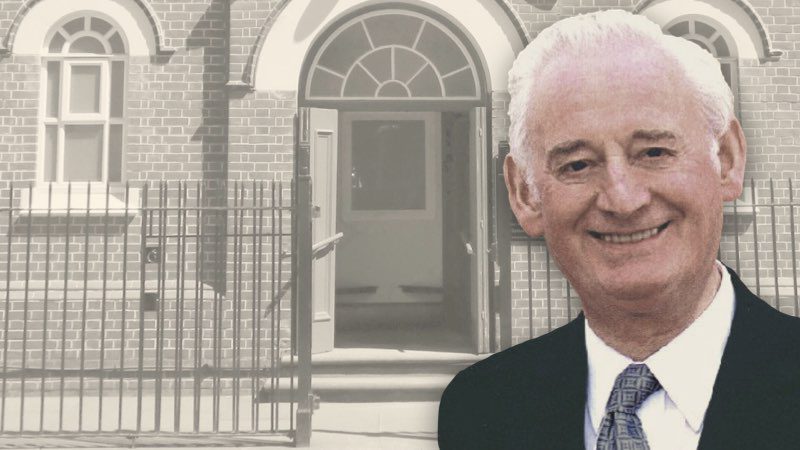
[Posted by permission. Bethel Strict Baptist Chapel.]
Sermon preached at Bethel Chapel, Luton, by Mr. B. A. Ramsbottom, on Lord’s day morning, 22nd December, 2019
“Thou shalt know that I the Lord am thy Saviour and thy Redeemer, the mighty One of Jacob”—Isaiah 60:16
This is a commentary on the chapter we read (Luke 2) and the Holy Spirit’s divine application of the truth in the chapter we read. So I would like you to have your Bibles open at the chapter we read, Luke and the second chapter.
“And it came to pass in those days, that there went out a decree from Cæsar Augustus, that all the world should be taxed.” It seems that this has nothing to do with real religion, nothing to do with godliness, nothing to do with the coming of the Lord Jesus, nothing to do with the Lord and His dealings with Israel. But the hearts of all men are in the Lord’s hands. There was a divine appointment. The Son of God was to come, and according to divine decree He was to come, and He was to be born at Bethlehem. Now Mary and Joseph lived nowhere near Bethlehem. I do not suppose Augustus Cæsar had ever heard anything of Bethlehem. But his decree went forth, just according to his vanity, that the whole Roman world should be taxed, should be enrolled for taxation. Everyone had to go to his own native city. As Joseph was an heir of David, though in a time of great poverty, he must be at Bethlehem. The old truth once again was proved, and may we prove it in our own little lives:
“Great is the mystery, truly great,
That hell’s designs should hell defeat;
But here eternal wisdom shines,
That Satan works what God designs.”
“And it came to pass in those days, that there went out a decree from Cæsar Augustus, that all the world should be taxed…. And Joseph also went up from Galilee, out of the city of Nazareth, into Judæa, unto the city of David, which is called Bethlehem; (because he was of the house and lineage of David.” The appointed moment had come for the world’s redemption, and as I paused in reading the chapter, how simply, how beautifully, how graciously the virgin birth is here set forth.
“So it was, that, while they were there, the days were accomplished that she should be delivered. And she brought forth her firstborn Son, and wrapped Him in swaddling clothes, and laid Him in a manger.” So we linger here on the great truth of the incarnation. I always remember when we were little children, round about Christmas time we wanted to find the hymns in the hymnbook about the birth of the Lord Jesus, and I remember we were told, at the front of the hymnbook, you will not find them under Christmas, but you will find them under incarnation. We used to think, What does incarnation mean? It means coming in the flesh.
“Lost souls to recover, and form them afresh,
Our wonderful Lover took flesh of our flesh.”
He was the Son of God from all eternity, equal with His Father, equal with the Holy Spirit. But how was it possible He could become a Man, be born of a normal birth without partaking of original sin or actual sin? “Eternal Wisdom drew the plan,” that when the Son of God came, He would be a real Man, but completely free in any way from sin. And so He must be born of a virgin. He had a Father in heaven, but He did not have a father on earth in His sacred humanity. It is the great mystery. “Without controversy great is the mystery of godliness: God was manifest in the flesh.” We cannot explain it. We cannot understand it. We believe it.
“The Holy Ghost shall come upon thee, and the power of the Highest shall overshadow thee: therefore also that holy Thing which shall be born of thee shall be called the Son of God.” “Without controversy great is the mystery of godliness.” Some of us have been brought to say,
“I love the Incarnate Mystery,
And there I fix my trust.”
“She brought forth her firstborn Son, and wrapped Him in swaddling clothes, and laid Him in a manger; because there was no room for them in the inn.” We must not sit in judgment on the innkeeper and the people of Bethlehem, because that is the description of you and me by nature. We have not any room in our hearts, in our lives, by nature, for the Lord Jesus. We are interested at this time of the year. We like to sing the hymns, but there is no room for the Lord Jesus in our hearts, in our lives. We do not want to be interfered with. We want to go in our own way. We think it will do later. We think there is plenty of time.
“Ye must be born again.” We often speak about the new birth, that remarkable change that takes place in a sinner’s heart. There are a lot of things that happen when the new birth takes place. This is one: the Holy Spirit will create a place in your heart and nothing, no-one but the Lord Jesus can fill it. I look round our beloved congregation. It is this divides you in two. Which side are you on? Are you one of those who have been brought to that place: there is room in your heart; there is room for the Lord Jesus?
“O come, Thou much-expected Guest!
Lord Jesus, quickly come!
Enter the chamber of my breast;
Thyself prepare the room.”
“And there were in the same country shepherds abiding in the field, keeping watch over their flock by night.” I think it has generally been reckoned by those who understand, that apart from this being the sacred, holy Word of God, there is nothing more beautiful in literature than this account of the angels and the shepherds. Just pondering here about the shepherds. When they had had the wonderful revelation of the infant Saviour, they left their sheep and their lambs and they hastened to Bethlehem. It was a dangerous place and a dangerous time, not only from wolves and bears, but also from marauding robbers who would seek to steal the flock, but they were willing to leave all and they left it in the Lord’s hands.
There is a most beautiful letter still on record written by that godly man, Bishop Hooper, John Hooper, the stalwart for the faith, who because of his faith was burnt to death outside his own cathedral in Gloucester. In the letter he wrote to his fellow-sufferers before they were called to martyrdom in the flames, he took as his subject the shepherds leaving their flocks, leaving everything for Christ, and how they must have felt the Lord could look after their flocks. He spoke of some of the martyrs – their sadness especially as they had to leave their homes and to leave their beloved wives to endure that cruel death, and some of them had to leave so many little children as orphans – but he spoke of how the Lord who looked after the lambs and sheep in the fields would surely, without any doubt, care for their wives, their families, their homes, their little children; that if they left all for Christ’s sake, the Lord would make sure that their families would never suffer.
“And lo, the angel of the Lord came upon them, and the glory of the Lord shone round about them; and they were sore afraid.” Well might they be. I think you and I would be if an angel suddenly appeared in our midst this morning.
“And the angel said unto them, Fear not.” So really this was a kind word, because they were so fearful what was happening. This angelic visitor told them to “fear not.” But never forget, this was the first word spoken from heaven after the birth of our Lord and Saviour Jesus Christ, after His coming into this world. “Fear not.” I believe it was not just spoken to those shepherds; it was spoken to the whole blood-bought church of God down to the end of time, and all the other fear nots in Scripture are based upon this.
There are many of them, and some of you need them, and some of you have felt them, and they are precious. “Fear thou not; for I am with thee: be not dismayed; for I am thy God: I will strengthen thee; yea, I will help thee; yea, I will uphold thee with the right hand of My righteousness.” “Fear not: for I have redeemed thee, I have called thee by thy name; thou art Mine.” “Are not five sparrows sold for two farthings, and not one of them is forgotten before God? But even the very hairs of your head are all numbered. Fear not therefore: ye are of more value than many sparrows.” These things touch everything. They touch salvation; they touch grace; they touch providence; they touch everything. May some of you hear this “Fear not” from heaven this morning. “Fear not: for, behold, I bring you good tidings of great joy.” We often speak of that word, the gospel. What does the gospel mean? Really it is this: good tidings. So really what this angel was announcing was the gospel.
“Hark! how the gospel trumpet sounds!
Christ and free grace therein abounds.”
“Fear not; for, behold, I bring you good tidings of great joy, which shall be to all people. For unto you is born this day in the city of David a Saviour, which is Christ the Lord.” Now this is what is on my heart really to speak to you about this morning, and there are two things here. One is this beautiful name given to the Lord Jesus at His birth: Saviour. And the other: a sinner’s personal interest in it, the need for a personal interest in it.
“Unto you is born this day.” That is where it brings our connection with the word I have read to you as the text: “Thou shalt know” – the vital thing – not just to know about it, but to know it; not just to know the fact, but to know the Saviour Himself. This is a promise to God’s elect, redeemed, sanctified people. “Thou shalt know.” It is personal: thou. “Thou shalt know that I the Lord” – the almighty God, the Creator of all things – “Thou shalt know that I the Lord am thy Saviour and thy Redeemer, the mighty One of Jacob.” Well, you say, that is the very same title as was given in chapter 9: “Unto us a Child is born, unto us a Son is given: and the government shall be upon His shoulder: and His name shall be called Wonderful, Counsellor.” It is the very same word here: “The mighty God.” “Thou shalt know that I the Lord am thy Saviour and thy Redeemer, the mighty One of Jacob.”
Perhaps some of you say, But do all these beautiful chapters in Isaiah really belong to the Lord Jesus? Well, I will just make one comment there. This text that I have read comes from Isaiah chapter 60. How does Isaiah chapter 60 begin? With a sacred promise of the Saviour’s coming. “Arise, shine; for thy Light is come.” Now John chapter 1 opens this up. “Thy light is come.” There was a lot of light about Bethlehem. There were those angels, “and the glory of the Lord shone round about” – the Shekhinah glory. But it was the Child in the manger who was the Light that was come. “Arise, shine; for thy Light is come, and the glory of the Lord is risen upon thee” – the Sun of righteousness arising. What a mercy! “Unto you that fear My name shall the Sun of righteousness arise with healing in His wings.”
“The glory of the Lord is risen upon thee. For, behold, the darkness shall cover the earth.” It was a time of gross darkness when the Saviour came, and even with the little light there was under the ceremonial law, it was still a dispensation of darkness. This is something also we find experimentally in our own hearts. “Behold, the darkness shall cover the earth, and gross darkness the people: but the Lord shall arise upon thee, and His glory shall be seen upon thee.”
“See where it shines in Jesus’ face,
The brightest image of His grace!
God, in the Person of His Son,
Has all His mightiest works outdone.”
“His glory shall be seen upon thee.” This is all concerning the beginning of the Saviour’s life on earth. What about the end of His life? That prayer in the garden for all His people: “Father, I will that they also, whom Thou hast given Me, be with Me where I am; that they may behold My glory” – a prayer for all the Lord’s people down to the end of time. It is a wonderful mercy if we have an interest in that prayer. But in that prayer there is just one solemn thing. The Lord Jesus in His prayer to His Father said, “I pray not for the world.” As the old minister said, “O poor world, for which the Saviour never prayed.” “I pray not for the world, but for them which Thou hast given Me; for they are Thine.” May we have an interest in the Saviour’s birth, and may we have an interest in His all-prevailing prayer, His all-prevailing intercession.
“And the Gentiles shall come to Thy light, and kings to the brightness of Thy rising” – which has always been interpreted of the wise men coming to Jerusalem and then to Bethlehem. It is because of Isaiah 60 that people have tended to speak of the wise men as being kings. “We three kings of Orient are.” That is the beginning, but it is a glorious beginning. It is a gospel beginning. It all relates to the birth of the Lord Jesus. So surely we are not wrong in applying what follows to the Lord Jesus: “And thou shalt know that I the Lord am thy Saviour and thy Redeemer, the mighty One of Jacob.”
“For unto you is born this day in the city of David a Saviour, which is Christ the Lord.” I hope a few hearts this morning might be touched by just the mention of that name, the Saviour. His name was called Jesus, a word which simply means the Saviour. That name was revealed to Mary, and that name was revealed to Joseph. It has been interesting to me that all through this chapter we do not have mention of that name Jesus. The angels did not mention it. I have thought, the honour of it – we have it mentioned a little later in the chapter – the honour, the privilege of it was given to Joseph. He was the one who had the privilege of giving that name, the name of Jesus, to the incarnate Son of God. I have often thought what an honoured man Joseph was, that Almighty God chose him out of the whole of humanity to be the one lovingly to care for our Lord and Saviour Jesus Christ during the days of His infancy upon earth.
“For unto you is born this day in the city of David a Saviour.” He could have been given many other names. He could have been given the name of King; He was a King. He could have been given the name of Prophet; He was a Prophet. It could have been said He was an example; He was an example. It could have been said he was a gracious Teacher; He was. Now this is the great point: He is the Saviour.
Of course, this word relates to man’s lost, ruined condition. A Saviour. It goes right back to the garden, to the first promise, when Adam fell and he ruined all his race, and we fell in Adam. But there is the promise of the Saviour, the Seed of the woman who should bruise the serpent’s head, that at Calvary he should bruise His heel. Immediately there was that revelation, first a little, just a glimmer of what it was, the Son of God to be a Saviour. Adam and Eve tried to hide in the bushes. Then they tried to cover their nakedness with works of their own hands, fig leaves, but the Lord clothed them with coats of skins, which meant that blood must have been shed, and it was the first time that blood ever was shed. It all pointed forward, that the coming Saviour, the Seed of the woman, in the fulness of time should come as a Saviour. Didn’t that truth sound very blessed in Joseph’s ears: “Thou shalt call His name Jesus: for He shall save His people from their sins” – save them from the guilt of sin, from the power of sin, from the dreadful penalty of sin!
But it is all looking to the cross. He was born that He might die. He came to Bethlehem that He might go to Calvary. In some of those little controversies we have had, some of the Lord’s people who do not believe in celebrating the Saviour’s birth have said there is nothing made at all in Scripture about the Saviour’s birth. There is everything made about it. If He had not been born, He would never have come. If He had never come, He could never have lived. If He had never lived, He could never have died. It is the coming of the Saviour.
“Unto you is born this day in the city of David a Saviour.” And the great point in religion is to be brought to know and feel that you, that I need a Saviour. It is the only way we can get to heaven, and it is a solemn thing if we have not got a Saviour. I wonder how many here this morning can really by faith put their hand on their heart and say,
“Here’s my claim, and here alone;
None a Saviour more can need;
Deeds of righteousness I’ve none;No, not one good work to plead;
Not a glimpse of hope for me,
Only in Gethsemane” – and Calvary, and the resurrection, and the ascension into heaven.
“Unto you is born this day in the city of David a Saviour.” Now in the passage I read as a text – “Thou shalt know that I the Lord am thy Saviour and thy Redeemer” – it means, thy Saviour because thy Redeemer. Because if the Lord Jesus had not been our Redeemer, He never could have been our Saviour. That is why, “When the fulness of the time was come, God sent forth His Son, made of a woman, made under the law, to redeem them that were under the law.” That is why the Saviour came, that He might be a Redeemer. Redemption means paying a price, and the Saviour came to pay the price – “The price, His own heart’s blood” – that His people might be redeemed, that they might be forgiven, set free. “Not redeemed with corruptible things, as silver and gold, from your vain conversation received by tradition from your fathers; but with the precious blood of Christ, as of a lamb without blemish and without spot.”
“Thou shalt know that I the Lord am thy Saviour and thy Redeemer” – thy Saviour because thy Redeemer. You cannot separate the manger from the cross. “Unto you is born this day in the city of David a Saviour.” So that precious, precious point, that the Lord Jesus came as a Saviour, that the Babe in the manger is the Saviour of sinners. But the second thing: it is that personal interest. Did you notice the difference between Isaiah and the angel? The angel said, it is “Unto you.” The Lord Jesus did not come to save angels.
“Never did angels taste above,
Redeeming grace and dying love.”
The angelic nature is superior to the human nature, but lost sinners saved by grace are exalted higher than angels. So Isaiah in chapter 9 says, “Unto us a Child is born.” Isaiah was a sinner. He had a personal interest. “Unto us a Child is born, unto us a Son is given.” The angel – O the love with which he said it! O the love that filled the angel’s heart. He said it in love, in delight, honouring and glorifying his God, his Master. “Unto you is born this day in the city of David a Saviour.” Isaiah said, it is “Unto us.” O what a mercy!
And so in that word I read to you: “Thou shalt know that I the Lord am thy Saviour and thy Redeemer.” There it is brought so personally. It is thee, and it is thou, and it is thy. Not just the Saviour; thy Saviour. Not just the Redeemer; thy Redeemer.
The Holy Spirit says, “Thou shalt know.” If you are one of these favoured people, “Thou shalt know” it. It will not be with an angel coming down from heaven to tell you. How will you know it? Well, you will want to know it. You will feel your need of knowing it. You will say, “None a Saviour more can need.” But this is how you will be brought to know that it is thy Saviour, thy Redeemer. As you are brought to feel your helplessness as a sinner, your great need, and you cannot supply it yourself, and then you see the glory of the gospel, and venturing on the promise, led by the Spirit of God, you are brought to the Saviour, not just to Bethlehem, but to the foot of the cross, and there you are brought to build your everlasting hope on your incarnate God. Once born, once crucified, now risen, now glorified, Jesus is “Christ in you, the hope of glory.” There will be room in your heart, and He will enter and take up His abode, and He will come to dwell with you for ever. O to know it!
“Thou shalt know that I the Lord am thy Saviour and thy Redeemer.”
Come, ye redeemèd of the Lord,
Your grateful tribute bring;
And celebrate, with one accord,
The birthday of our King.
Let us with humble hearts repair
(Faith will point out the road)
To little Bethlehem, and there
Adore our infant God.
In swaddling bands the Saviour view!
Let none His weakness scorn;
The feeblest heart shall hell subdue,
Where Jesus Christ is born.
No pomp adorns, no sweets perfume
The place where Christ is laid;
A stable serves Him for His room,
A manger is His bed.
The crowded inn, like sinners’ hearts,
(O ignorance extreme!)
For other guests, of various sorts,
Had room; but none for Him.
But see what different thoughts arise
In our and angels’ breasts;
To hail His birth they left the skies,
We lodged Him with the beasts!
Yet let believers cease their fears,
Nor envy heavenly powers;
If sinless innocence be theirs,
Redemption all is ours.
J. Hart
Benjamin Ramsbottom (1929-2023) was a Strict and Particular Baptist preacher. In 1967, he was appointed pastor of the church meeting at Bethel Strict Baptist Church, Luton, Bedfordshire, a position he held for fifty-five years.