God’s Incredible Work
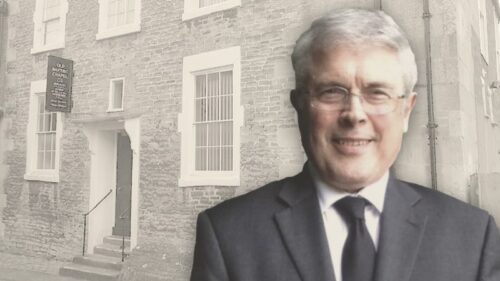
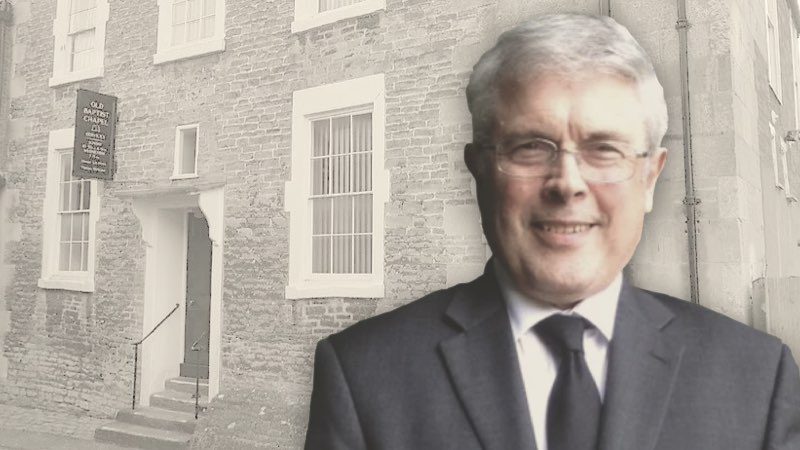
[Posted by permission. Chippenham Old Baptist Chapel.]
Sermon preached at Old Baptist Chapel, Chippenham by Mr. G. D. Buss on Lord’s Day Morning, 7th April, 2019
“Why should it be thought a thing incredible with you, that God should raise the dead?”—Acts 26:8
One of the persistent sins of the Church of Christ is the limiting of Almighty God. We have such low views of who He is, what He can do and what He has promised to do that, very often, when we come up against difficulties and impossibilities we immediately come to the conclusion that all is lost and no good thing can come out of it. We forget how great our God is. Friends, how true it is. May the effect of our poor message this morning (poor in me, but not in the Word), be to raise some of us to a larger view of what God can do. This was something incredible to Agrippa, Festus and Bernice; that Jesus of Nazareth, whom they knew had been nailed to a cross, had died between two thieves and had been buried – to think that He had risen again! And, not only that, to think that He had ascended on high and taken His place at the right hand of God; was far beyond their comprehension. Their natural man could not receive it, nor understand it. And, because of that, they came to the conclusion it was an impossibility, something “incredible.
But, dear friends, the reasoning of our natural man and our carnal mind is not gracious. We read in the Book of the Proverbs from the hand of Solomon as the Holy Ghost guided His pen: “Trust in the LORD with all thine heart;” now listen: “and lean not unto thine own understanding.” It is when we lean to our own understanding that the things that God has promised to do are incredible to us. We sit down in unbelief and think and feel that all is lost. Friends, remember – the throne of God is not vacant. Remember who sits on it. Remember what He has promised to do for His dear people. Paul says, writing from experience: “But my God shall supply all your need.” What measure does He use? No earthly measure! “According to His riches in glory by Christ Jesus.” Perhaps some of you have sat down and looked at the things that surround you and have come to the conclusion that all is lost. Many of us are like it; I have to join with you. Sometimes the point of prayer seems almost seems to be gone.
“Begone, unbelief, my Saviour is near,
And for my relief will surely appear;
By prayer let me wrestle, and He will perform;
With Christ in the vessel, I smile at the storm.”
“Why should it be thought a thing incredible with you, that God should raise the dead?”
Let me, first of all, speak as it applies to the resurrection of our Lord and Saviour, Jesus Christ. Secondly, as it applies to those experiences that God’s dear people come into where they need the same resurrecting power; whether it be in their heart and soul, or in their life. Those of us who have had to take many funerals, and have stood around the graves of many as we commit the mortal remains to the ground, it is a question that the natural man asks, ‘Do you really believe that the day will come when the grave will open? Do you really believe that immortal bodies will arise where God’s dear people have been buried?’ The carnal man and the natural man says, ‘No.’ But, what does the Word of God say? “I am the Resurrection, and the Life.” What does the Word of God say concerning the matter? “Because I live, ye shall live also.” What does the Word of God say about the matter? “For the Lord Himself shall descend from heaven with a shout, with the voice of the archangel, and with the trump of God: and the dead in Christ shall rise first: Then we which are alive and remain shall be caught up together with them in the clouds, to meet the Lord in the air: and so shall we ever be with the Lord.”
Let us think then, for a moment, of this precious subject; the resurrection of Christ. It is a wonderful subject; that the dear Son of God, the second Person of the glorious Trinity, equal with His Father and the dear Spirit should have taken into union with His divine Person that other nature with the express purpose of living on the face of this earth as the Man, Christ Jesus. And, with the express purpose of laying down that life He sovereignly took up, having laid it down, He took it again on the third day, rose from the dead and ascended on high. He now sits in the same body; bearing the nail-prints in His hands and feet, the marks of the sword in His side. The same head that was once crowned with thorns is now crowned with glory. Friends, oh, the stupendous nature of it! Salvation depends on it. “And if Christ be not raised, your faith is vain; ye are yet in your sins.” If we are yet in our sins, what prospect is there for us when our time shall end; when we appear before the judgment seat if we are yet in our sins? The salvation of God’s people depends on this great fact: He “was delivered for our offences, and was raised again for our justification.”
The empty tomb tells us the law is satisfied. The empty tomb tells us God is satisfied. The empty tomb tells us the sins of the Church are put away for ever and ever, never to be recalled again. So, when the dear Redeemer does appear again, as He will, it will be without sin. You say, ‘Did He come with sin the first time?’ Not personal sin, indeed not. He had no original sin. He never sinned once in His holy life in thought, word or deed. But, He came with the sins of His Church on His holy shoulders. That is why He was “a Man of sorrows, and acquainted with grief.” And, the nearer He got to Gethsemane, the heavier that burden became in His holy soul. As the comprehension of what was required to put away those sins; to satisfy divine justice and cast them forever behind His back – oh, what a work lay before Him! Some of us anticipate days when we have great mountains before us. How are we going to manage this, that and the other? Think of the Lord Jesus Christ. No man had a greater work before Him than He did, and no man had a more sorrowful day before him that He did. No man had a more lonely day before Him than He did. And no man, my dear friends, came through more victoriously than He did. “I am He that liveth, and was dead; and, behold, I am alive for evermore.” He sits at the right hand of the Father, presenting the merits of His perfect life, His full atonement:
“For all that come to God by Him,
Salvation He demands;
Points to their names upon His breast,
And spreads His wounded hands.”
Let us now come right down to your experience, poor sinner – those of you who think it incredible that your sins could ever be forgiven. It seems an incredible thing to you that you could ever be washed clean. Friends, why do you say that?
“The dying thief rejoiced to see That fountain in his day;
And there ‘may you’ as vile as he, Wash all my sins away.”
W. Cowper
You say, ‘But, they are black sins!’ I am sure they are. They are much blacker than you realise. ‘But they are deep-rooted sins!’ Yes, that is quite true. They are rooted deep in your fallen nature. It has borne its fruit in thought, word and deed. That is true. ‘But they are repeated sins!’ That is also solemnly true. We could go on describing the negative nature. It is right to consider it, mourn over it and grieve over it. But the answer does not lie in you. It lies in this God who has done that which is incredible: “He is able also to save them to the uttermost that come unto God by Him.”
“The vilest sinner out of hell,
Who lives to feel his need,
Is welcome to a Throne of Grace,
The Saviour’s blood to plead.”
Why, poor sinner, do you think it is incredible that your sins could be forgiven? Are you limiting the holy One of Israel? Are you saying the blood of Christ cannot cleanse sins like yours? Do you think His love cannot reach a bad, extreme case like you feel to have? Well, He who has opened your eyes to see your extreme, bad case has the remedy. He has the remedy.
“See the Lord of glory dying!
See Him gasping! Hear Him crying!
See His burdened bosom heave!
Look, ye sinners, ye that hung Him;
Look how deep your sins have stung Him;
Dying sinners, look and live.”
J. Hart
“Why should it be thought a thing incredible with you, that” a sinner as bad as you feel to be could ever be saved? I know I lived many days thinking just that. I was seemingly beyond salvation, beyond the gospel until the Lord showed me differently. May He show you differently. There is a welcome in the heart of the suffering, now exalted Saviour for the vilest of wretches who approaches His holy Majesty, with not one good thought, not one good work, not one good word and not one good reputation to bring. Just come, as a vile sinner needing mercy. Friends, He will not turn such away.
“Why should it be thought a thing incredible with you, that God should raise the dead?” Those who come under God’s holy law come under that sentence of death, don’t they? It is a solemn sentence. It is one you cannot evade or appeal against. You will know that, if you are convicted in one of our courts, you have the right to appeal against that conviction. You can have a retrial, or you can go to a higher court, and so on. Well, dear friends, there is no appeal beyond the court of heaven. The decree that goes forth from that concerning your salvation is the one that will stand. But, the point I want to make to you this Sabbath morning is this. There are those of you who feel that solemn sentence in your heart. The Word of God, the law of God and God Himself has said in your heart that you are worthy of eternal misery. And, if God were to deal justly with you, you would be in eternal misery even this Sabbath morning. But, what does the same God say to you? Go to Galatians and you read these words: “But when the fulness of the time was come, God sent forth His Son, made of a woman, made under the law,” the very law that condemns you, curses you and brings you low; “To redeem them that were under the law.” That is what it means. For those of you who have come under that law by the Spirit’s teaching, there is a Redeemer. There is an Advocate. There is a door of mercy.
“A door of hope is opened wide,
In Jesus’ bleeding hands and side.”
W. Gadsby
“Why should it be thought a thing incredible with you, that God should raise the dead?” When salvation comes it is indeed a stupendous mercy, a mighty miracle that astounds the soul: ‘Lord, why me?’
“Why me, why me, O blessed God,
Why such a wretch as me?
Who must for ever lie in hell,
Were not salvation free.”
D. Herbert
Again. Those of you here this Sabbath morning who know your own heart – how often it feels dead, doesn’t it? Cold, indifferent. You sang of it in both your opening hymns this morning; what we are by nature [929 & 678]. The living child of God feels it. ‘Can this soul live? Can it believe? Can it repent? Can it hope? Can it love?’ Well, it cannot without God’s help that we know. But, oh, this solemn sentence of death in that respect! We are ready to come to the conclusion that we have no life in us at all. But, dear friends – not that I would build you up on a negative evidence (God forbid I should do that) – but it is true that it is the living child who feels like you do. Be honest, there was a day when you never felt like that. You never felt anything spiritual at all. Although your heart was full of sin and you were serving the flesh and Satan, you had no conscience about it. You had no thought that you were really doing anything really wrong. You perhaps acknowledged there was sin in it, but others were sinning with you, and that was the way the world goes on and why not you? But, when God began to work in your heart it was different, wasn’t it? One of the things which was different was that you felt the enmity of your old nature. It was a burden to you. And the opposition to grace within: there was a feeling there. So, what I am saying this morning is this. Those of you who feel so hard, so cold and so dead this Sabbath morning, look at our text. “Why should it be thought a thing incredible with you, that God should raise the dead?” He can touch your heart in a moment with His love. He can sprinkle His precious, atoning blood on it and the difference will be known immediately. Oh, what He can do! So, those of you who are despairing this Sabbath morning in that respect take courage from our text. The fruit of Christ’s resurrection is to soften hearts like yours, to melt consciences like yours, to give faith where there was unbelief, to give hope where there was despair and to give love where there was enmity. That is why Christ died; that these very things should come into the hearts of poor sinners whom He is determined to save.
Then again. There are those of you who have loved ones, in whom you see no evidence of grace whatsoever. I thought, in meditation in this respect, of the Prodigal Son. One of the things that his father said about him was that he was dead. He was alive in one sense, and very active. He was very active in sin, wasn’t he? He turned his back upon his father and shut the door on his father’s prayers, the Word of God, the counsel of God and the godly home he had been brought up in. Out he went into the far off wilderness, seeking happiness. Fleshly happiness: that to satisfy the carnal mind and the natural man. While he had money to spend, he thought he was happy. And, while he had money, there were other sinners around him who were quite happy to consort with him. But, when he became bankrupt, he soon proved the futility of that friendship. He was a lonely man. He was in the wilderness, in the desser; feeding the swine. How low he had come! Is that what he expected to be doing when he took his inheritance? Is that what he planned? Was that what he envisaged? Not at all. But, my dear friends, God mercifully put his hand upon him. What happened? We read: “He came to himself.” That means two things. One, I think he literally fainted because he was so hungry. It was through God’s mercy he did not pass away, but was revived. But, secondly, “he came to himself” in a much better sense: “he came to himself” spiritually. He became alive to his condition. He became alive to the folly of his ways and the foolishness of his ways. The only thing he could do was to return to his father, perhaps as a servant rather than a son, but, nonetheless, his father’ house was what he wanted. Blessed be God, he was received as a son. And that is how God receives returning sinners. He receives them as sons. “Is Ephraim My dear son? is he a pleasant child? for since I spake against him, I do earnestly remember him still: therefore My bowels are troubled for him.” ‘He is still My son,’ says the Father. The Lord receives returning sinners as sons and daughters.
So, there may be many dear friends this Sabbath morning who are in this trial and trouble; there are those with whom you have to do and you long to see the work of grace in them. It seems impossible, doesn’t it? You have advised, you have prayed, you have wept with them and over them. Still no answer! They still go on as far from God as they can go. Don’t give up, dear friends. “Why should it be thought a thing incredible with you, that God should raise the dead?” Just think what the Church of God must have been thinking while Saul of Tarsus was yet breathing out threatenings and slaughters. Just think what they must have been thinking! I wonder what they were praying for? The secret purposes of God were to bring that man to spiritual life. We read his own account of it on the Damascus Road. What a day that was! But, the great point was that Paul became alive unto God. What an answer to the Church’s prayers! They must have been praying in one way or another, either: ‘Lord, stop this man!’ Or: ‘Lord, save him.’ And the Lord saved him. And, this man that was called Saul, which means ‘destroyer’ (he was destroying other people’s lives as well as his own), now became Paul, ‘the worker.’ In the hand of God he was a labourer. Who made the difference? The One who raises from the dead. Yes. “Why should it be thought a thing incredible with you, that God should raise the dead?”
That is why, friends, we should never give up praying for those who seem to be wandering, wayward and far off from God. We should never give up praying. Plead this word. The Pharisees came to John the Baptist thinking they would be well received, but he says “Think not to say within yourselves, We have Abraham to our father.” Why did he say that? Because the Pharisees were proud and self-righteous. They were full of their own works and despised others. They were not fit in their spirit for the matter of baptism. John said: ‘You think you are sons and daughters of Abraham, but do not think that. Look at this stone.’ “God is able of these stones to raise up children unto Abraham.” And, when God finds a sinner, in his raw state, that is what he finds him as; a stone. He is dead, cold, hard, unfeeling, unyielding, firmly embedded in the Adam fall. That is the quarry that God goes to. He goes by His blessed Spirit, He goes by His Word and He goes by His servants to the quarry. He applies the Word; the axe, as it were. He applies the hatchet into the quarry and separates that stone out and makes a child of a stone. Some of us here, if not awfully deceived, can say that is what the Lord did for us. We were just like stones. We heard good gospel sermons and law-condemning sermons, but they did not move us one bit. People died around us, but it did not have any effect until the work of grace began. Then, life; divine life in the soul changed us. We had to pray in our prayers. We had to read the Word of God to find out what it would say to us, and it often read us. When we came to the House of God we came to hear what God the Lord would say through His servants. We did not despise what means He might use, either. Remember, God sometimes uses the meanest of his servants to accomplish the greatest of ends. God is a sovereign.
“Why should it be thought a thing incredible with you, that God should raise the dead?” Last week I was preaching at the anniversary services at Cranbrook, St David’s Bridge. Cranbrook is a very old, established Church. (I think it was about 1630 when the Church was first established). About seventy or eighty years ago, the Church got into a very low state, and there was only one man left to attend it. He was laughed at by his neighbours. They saw him going to the Chapel for 10.30am every Sabbath morning, and he would stay there until the afternoon service would have ended at 3.30pm. As they saw him coming and going, they said: ‘Whatever is this man doing?’ One time he came out of the Chapel and those neighbours asked him: ‘How many were there today?’ He said: ‘There were four of us.’ They said: ‘We only saw one go in!’ ‘Yes,’ he said, ‘but there were four of us. There was God the Father, God the Son, God the Holy Ghost, and me.’ And, do you know, dear friends, through the prayers of that man that place began to revive. Think what God can do!
Go to the prophecy of Ezekiel. In a vision, the Lord took Ezekiel to a valley. In that valley there had obviously been a terrible battle. There were bones scattered all over the valley; dry bones. They had been there years, scattered abroad. It was total confusion and total chaos. But the Lord said to Ezekiel: “Son of man, can these bones live?” Ezekiel was a man of great discernment. He did not have a low view of what God could do, but he also knew God had a sovereign purpose, as well. He said: “O Lord GOD, Thou knowest.” In other words, he knew what God could do, but he did not know what God would do. And some of you with your trials and troubles this Sabbath morning are just where Ezekiel was. There is the valley before you. There is the confusion, the chaos, the deadness and the dryness. But, friends, listen. “O Lord GOD, Thou knowest.” What did the Lord command Ezekiel to do? “Prophesy upon these bones.” If you had seen Ezekiel do that, you may have said: ‘Man, are you mad? Prophesying over these dry bones! Whatever are you doing?’ Ezekiel had been bidden to do it. And that is why the gospel is to be preached wherever God sends His servants. God knows what He will do with it. We should proclaim the whole “counsel of God,” “whether they will hear, or whether they will forbear.” Law and gospel, and all the precious principles of grace are to be declared, even though some may be as dead as the seat they sit on, as we once were.
But, as Ezekiel preached, what happened? The dry bones came together. The Holy Ghost came and they “stood up upon their feet, an exceeding great army.” The Lord told Ezekiel that the interpretation was this: God’s people were in captivity. They felt they were like people who had been buried. They felt like they were in a grave. They had no prospect of returning to the Promised Land. They thought they would live and die there, that their nation would die out, and there would be no prospect at all. “Therefore prophesy and say unto them, Thus saith the Lord GOD; Behold, O my people, I will open your graves, and cause you to come up out of your graves, and bring you into the land of Israel.” So, dear friends, here is blessed hope this Sabbath morning for those of us who have so many concerns. There are so many things when looking around. This poor, wretched nation – it is like a valley of dry bones, isn’t it? What confusion reigns! If we looked at men we would despair. Look higher than that, dear friend, to He who sits on the throne and think it not incredible what God can yet do in this God-forsaken nation that we feel it to be. Think it not incredible what God can yet do in your life, in your circumstances, in the Church of God and, above all, in your poor heart, where it needs it most. “Why should it be thought a thing incredible with you, that God should raise the dead?”
Come with me to John 11. There is dear Martha. Martha’s faith, like most of God’s dear people’s, was not always on the mountain top. When our Lord seemed to be unware (or at least indifferent to the sickness of Lazarus), it was a great trial to those two sisters, Martha and Mary. They sent a message to the Lord: “He whom Thou lovest is sick.” Not ‘whom we love,’ but “he whom Thou lovest is sick.” What a handle that was in their prayer! ‘He, whom the Son of God loved, is sick.’ I think they probably thought that the Lord would come to the bedside and touch dear Lazarus and he would be raised up from his sickness, or at least sent a word, as He did to the centurion, and, the nobleman’s son. But, no. All He did, I say it most reverently, was to send back one sentence: “This sickness is not unto death, but for the glory of God, that the Son of God might be glorified thereby.” They had that one sentence – in their trouble, in their trial, in their darkness, in their cloudy path – just one sentence to hang on. And that maybe all that you have: just one thing, one glimmer of hope. “Do not interpretations belong to God?” Beware of laying down a line for God to work in. I am sure those dear women did lay down a line. ‘If He says that, Lazarus will not die. There will not be a funeral. A grave will not be dug.’
But, Lazarus did die, and there was a funeral. A grave was dug. The sisters went back to their home, bereaved. And, not only that, where, oh where was the Lord who had said: “This sickness is not unto death?” Where is He? Where is God in all this? Oh, when God hides His face from His people, behind a seemingly frowning providence, or some deep, dark cloud! You have just sung of it [678]. Sometimes it is because of our sins; let’s be honest. He hides His face. What are we to do? We want light, don’t we? We want life. We want resurrection power.
At last, seemingly too late to these two sisters, the Lord comes. Remember, the Lord never comes too late. He is never before His time, but He is never too late. Do remember that. So the Lord comes, and Martha hastens out. “Lord, if Thou hadst been here, my brother had not died.” That ‘if’ – a reproachful ‘if.’ ‘Lord, if only Thou hadst been here!’ At the end of Acts 26 we read of another ‘if.’ If Paul had not appealed unto Caesar, he would have been let free. What an ‘if’! But God had decreed that he should go to Caesar and testify before him. So there was no ‘if’ in God’s account. It was the same with Martha and Mary. There was no ‘if’ in God’s account. The ‘ifs’ are all with you and me. The ‘ifs’ and the ‘buts’ and the ‘hows’ and the ‘whys’ and the ‘wherefores’ are not with God.
And so the Lord says: “Thy brother shall rise again.” Martha had a degree of faith. She knew he would rise on the Last Day, as I have been telling you. But the Lord says: ‘No, he will rise now, Martha.’ That is what He was saying. ‘Lord, that is impossible! He has already been buried.’ “I am the Resurrection, and the Life: he that believeth in Me, though he were dead, yet shall he live,” He told Martha. So He went on; that glorious declaration of divine Truth. Martha said, ‘I believe that, Lord.’ “I believe that Thou art the Christ, the Son of God.” She goes her way, uplifted in spirit. After all, this impossible matter was in the hands of her God, her Jesus, her Friend.
Then Mary goes out, using the same language. And our Lord groans in spirit and weeps sympathetic tears. He comes to the grave, and poor Martha’s faith sinks. Friends, does your faith ever sink? It does when this word ‘incredible’ comes before us. ‘Lord, it has all gone. Everything is over. We are beyond prayer now. Lord, don’t you know Lazarus has been buried four days? Don’t you know that in this country the body decays very quickly? That is why we have to have such quick funerals. We have left the body now four days.’ ‘I know all that, Martha.’ And the Lord says about your trouble and mine this Sabbath morning: ‘I know all about it.’ Those words in Jeremiah have been such a help over many years now. You come into things incredible. “O LORD, thou knowest.” You cannot get any further than that, and you do not need to. He knows. “O LORD, thou knowest.” There is your anchor, there is your foundation, there is your security and there is your rest. The Lord knows. It is not an indifferent knowledge, nor is it a cold knowledge. It is the knowledge of One who knows what He will do.
And so it was. The Lord said to Martha: “Said I not unto thee, that, if thou wouldest believe, thou shouldest see the glory of God?” ‘Martha, is it incredible to you that I can raise your brother from the dead? And she stands and witnesses that very act. “Why should it be thought a thing incredible with you?”
How slow the disciples were on this point, were they not? There were the five thousand to be fed. And the Lord says to Philip: “Whence shall we buy bread, that these may eat?” Philip began to work it out with his natural man; it seems he was some kind of mathematician. He quickly added up how many people there were and how much food might be required, and how much money might be needed. Then he began to think where he would have to go to try and find it. The more he reasoned, the lower he sunk. In the end he realised it was impossible. And that is just what you have been doing with your trouble, isn’t it, friend? You have reasoned this way and that way and you have sunk down. ‘Lord, it is impossible. It is incredible. We cannot go any further with it.’ Listen! “Why should it be thought a thing incredible with you?” We read concerning the dear Saviour in that account: “He Himself knew what He would do.” He knew there was a little lad. That was a divine ordaining. He knew that little lad had five loaves and two fishes. It was divine faith in that little lad’s heart to give them to the disciples to give to the Master. I believe a little child led them that day. It was not incredible to that little lad to think what the Lord could do with just five loaves and two fishes. “Bring them hither to Me,” says the Saviour. “What are they among so many?” says Philip, Andrew, Peter, and the rest of the disciples. They had forgotten who they were speaking to. They were speaking to the Son of God who made heaven and earth by the very breath of His mouth. Why do you limit Him? He took that food in His dear hands and gave thanks while it was still so limited. Friends, you are to give thanks in your trouble even though you have not yet seen the end of it. You are to be thankful that you have a God to go to; One before whom you can pour out your heart and leave your cares with, as enabled from time to time, although you have not seen your cares resolved.
But, you see how it is with the dear Saviour. While there were yet only five loaves and two fishes, He prayed and gave thanks. Then, my friends, the miracle occurred. Five thousand were fed, and there was enough for the disciples as well. And, as they gathered a basket each for themselves, they must have thought how small their faith was. Has He given you a basket of fragments to gather? Look back over your life, dear friend; you dear believers here this Sabbath morning. You could fill your basket with fragments, couldn’t you? Answers to prayer, promises fulfilled and past deliverances. You say: ‘Lord, but it is now!’ The Lord knows that. But you fill your basket with fragments and see how encouraged you can be. “Set thee up waymarks, make thee high heaps: set thine heart toward the highway, even the way which thou wentest,” says the Word of God.
“Why should it be thought a thing incredible with you, that God should raise the dead?” So friends, I end where I began. Those limiting thoughts of our God! “He is able also to save them to the uttermost that come unto God by Him.” He is “able to do exceeding abundantly above all that we ask or think.” “He is able to succour them that are tempted.” He is “able to do.” He is “able to keep.” What is He not able to do?
“When most we need His helping hand,
This Friend is always near;
With heaven and earth at His command,
He waits to answer prayer.”
J. Swain
And, if you need a miracle, the God of miracles is still here to perform miracles. There is nothing – I say nothing too hard for Him. “Why should it be thought a thing incredible with you, that God should raise the dead?” I have told you many times that the godly puritans used to say that when God gives a promise, He often buries it first before He raises it, just like you bury a seed. Joseph had those promises in early days, but they were buried. Oh, the cruelty of his brethren! The misunderstanding of his father! The humiliation of slavery, the terrible injustice of Potiphar’s wife and the butler’s faulty memory; all those things buried it! We read that “he was laid in iron.” I think the word ‘incredible’ came into Joseph’s experience. He just could not see a way out. It seemed no one cared for his soul or his body. “Until the time that His word came.” Then he proved our text. In one tremendous day he went from a dungeon to a throne; from bondage to liberty; from disgrace to honour. And, that is what happens when a believer is taken home to glory. “Beauty for ashes, the oil of joy for mourning, the garment of praise for the spirit of heaviness,” and a throne far better than the one Joseph sat on during his earthly realm here below. It is to be with God’s dear people in heaven above, when all the toils and tears of this time state are over, yes, within the realms of bliss.
“The city to which I am travelling
Will more than my sorrow repay
And the toils of the road will seem nothing
When I get to the end of the way.”
C. D. Tillman
You may have told the Lord it will be incredible that you can get to the end of the way. “Be not faithless, but believing.”
Amen.

Gerald Buss is a Strict and Particular Baptist preacher. In 1980, he was appointed pastor of the Old Baptist Chapel meeting at Chippenham, Wiltshire.