The Life And Testimony Of Francis Covell
Earthen Vessel 1880:
The Late Mr. Francis Covell, Of Croydon
“He was a good man in every sense of the word.”
Personally, we never knew, never heard, never saw Mr. Francis Covell in the whole course of our life, but from his published sermons; from the testimony of many friends; from the secret witness of the Spirit within, we esteemed and honoured his name, and had confidence in his work, because we fully believed he was a minister called, qualified, and successfully employed by that Almighty and Eternal LORD GOD, whose saving and anointing power alone can make a man’s testimony the power of HIMSELF unto the salvation of others. Never before did we (on reading the account of his departure) so feelingly, so weepingly exclaim, “Let me die the death of the righteous, and let my last end be like His “which was, doubtless, a prophecy, in its most superlative sense, of the “LAST END” of our gracious ”PRINCE OF PEACE,” when He shall come “the SECOND ‘l’IME without sin unto salvation;” albeit, in the relative mood, it was expressive of the safe and happy end of all the spiritual seed of that patriarch of whom the eternal God hath said, “JACOB HAVE I LOVED”—that is, the whole family of the election of grace in the great covenant Head, of which the late Francis Covell, of Croydon, was abundantly manifested as being one, even one exceedingly favoured and blessed of his God.
As we stand ourselves on the brink of Jordan—it may be on the edge of the grave—we would not nourish one unhappy feeling, nor write one unkind word against other sects or parties of professed Christian worshippers; for the LORD giveth even unto all of them a being and a place in the earth, and what His will concerning them may be, is not, in all cases, known to us. But unto those who “have the mind of Christ,” it must be clear that, from time to time, the Church’s great High Priest hath, by His Spirit, raised up MEN,—chosen, regenerated, justified, heavenly-minded MEN—who have stood as God’s witnesses on the earth. They have been faithful, fruitful, devoted, decided GOSPEL-MEN, whose gracious principles within, and whose holy practice without, shone forth most powerfully, declaring that that prophetic promise of all promises was truly verified in them: “Ye are the temple of the living God; as God hath said, I will dwell in them, and walk in them; and I WILL BE THEIR GOD, and they shall be My people.”
Our conviction is that the late Mr. Francis Covell was a strong link in that chain of God-made ministers who were unusually numerous in the middle part of this our nineteenth century.
Our memory carries us backward over the last fifty years. We can go farther back than that, and it is encouraging to observe how—
“As one Elijah dies—true prophet of the Lord—
Doth some Elishas rise to preach the Gospel Word.”
Hence it came to pass that before William Huntington died (which was in 1813, and we are not confining ourselves to what are now called “Strict Baptists,” although the Church’s Register will prove that they—the New Testament Baptists—have wonderfully increased since William Huntington’s death, which, as we have said, occurred in August, 1813, in the 70th year of his age. But ere his lamp went out, the Lord had raised up that Enoch-like Puritan, Isaac Beeman, of Cranbrook (who once dressed himself up in a countryman’s frock, and went to hear George Abrahams, so the Jew told us in his own study; and we have seen and heard Isaac Beeman preaching the grandeur of God’s revelation to at least a thousand people on a Sunday morning in his own chapel); not Isaac Beeman only, but several other mighty men: Chamberlain, of Leicester; Samuel Turner, of Sunderland; John Vinall, of Lewes; Henry Fowler, of Birmingham and of Gower-street: and in 1810—three years before ”the coal-heaver” departed—Joseph Irons was set up on Zion’s walls with such a burning zeal, in so preaching “SALVATION,” as to effect the conversion of many souls. Four years after Huntington’s death, Joseph Irons was planted in Camberwell, where, for over thirty years, he exalted and extolled CHRIST as “God over all, blessed for evermore”—sometimes denouncing the Baptists, but on one remarkable occasion being God’s mouth to us so preciously that we thank the Lord for Joseph Irons.
WILLIAM GADSBY—of ever-blessed memory—was, however, the most extraordinary, and, to us, the most powerful successor of the late William Huntington we have ever known. In those days, when, as Mackenzie said:—
“The clouds of providence were dark,
While the skies of grace were clear,
Satan had set us for his mark,
But the Saviour’s name was dear;”
in those days, Gower-street was crowded, and old Zoar, in Alie-street, was crammed, when William Gadsby came up with his two sermons on that fine outburst of the ancient prophet Moses, “O NAPHTALI! satisfied with favour, and FULL with the BLESSING of the LORD, possess thou the West and the South.” The good old Manchester bishop took Naphtali (first) into Gethsemane’s garden, and then the whole of the morning was he wrestling, sweating, rolling in blood, and crying, “O My Father, if it be possible, let this cap pass from Me.”
We sat wedged in on a form in the aisle, but how God Almighty (through that richly-anointed man, William Gadsby) did melt our hearts, causing the tears of godly sorrow; the tears of fellowship with Christ in His agony and in His bloody sweat; the tears of compunction and of the bitterest self-abasement; the tears ran down in streams; and when he had done, as we came weeping out, we inly said:—
Well, if He send us down to hell,
The glories of His grace we’ll tell:
His love did draw with mighty power,
It was indeed an awful hour
Of hope and dread suspense!
Aye, sirs, if Francis Covell preached with the Holy Ghost sent down from heaven upon his soul—as blessed William Gadsby often did—we wonder not that crowds flocked to hear him; we marvel not at the fact that when they brought his remains into the densely-packed West-street chapel, Croydon, on that sharp winter’s morning—Tuesday, December 2, 1879—the whole place was a Bochim of heart-breaking wail!
“Francis Covell’s preaching, sir,” saith “A Poor Returning Prodigal,” “was like bringing Jesus into your hearts to talk with ye awhile. Like the wandering, ruined one, who stumbled into a church, not knowing whither he went; and the preacher at the very moment that this ruined wreck of humanity fell on a seat—at that moment the preacher said: ‘I will arise, and go unto my father.’
“Ah! ” said the “Prodigal,” “but father would never look upon me.”
“Hearken!” said the preacher, “the father saw him when he was yet a great way off, and four things the father did:—
“1. ‘He ran, fell upon his neck, and kissed him.’
“2. He cried, ‘Bring forth the best robe and put it on him.’
“3. He killed the fatted calf on purpose for him.
“4. He brought him into the best room in the house, and sang out, with tears sparkling in his eyes, ‘This my son was dead, and is alive again; was lost, and is found; and they began to be merry.'”
“O Banks,” says ”Poor Prodigal,” “I besought you to hear our Covell, but ye never coom’d.”
“Francis Covell talked and walked with Jesus all the week; then he coom’d and told us what his Saviour to him said. And—
‘A little talk with Jesus! How it smooths the rugged road!
How it seems to help me onward when I faint beneath my load!
When my heart is crush’d with sorrow, and my eyes with tears are dim,
There’s nought can yield the comfort like a LITTLE TALK WITH HIM!’”
“All hail!” saith “Prodigal;” “our pastor Covell is dead.”
I say to them, “No! he is not dead; his living soul is gone to be with his living Christ, and to talk with his Jesus for ever.”
To return to the chain of ministerial genealogy. Just at the very time (January 27, 1844) when the Lord was calling William Gadsby home to his rest, the same blessed Lord was calling Francis Covell into the work of the ministry; and in his native town, where Francis was born, brought up, and where everybody knew him, there, for nearly forty years, was he made to be a faithful witness for the God of all his mercies.
WHO SHALL BE HIS SUCCESSOR?
With that we have nothing to do. Mr. Thurston has for many years been a useful and truthful servant of Christ in Croydon, and by him the good old Gospel is still expounded to the joy of not a few. Then “‘A Croydon Correspondent” says, “The Tamworth-road Church has made a happy choice in the pastorate of Mr. Willis.” But the future is with God alone. There, unto the throne of grace, the “Providence” people will go for direction and for help.
In his memorial poem, Thomas Whittle truly says:—
“And now ye faithful men who heard his voice,
That faithful voice you’ll hear no more;
You have cause to weep, yet greater to rejoice,
For he has safely gained the peaceful shore.
On wings of faith he mounted to the throne,
To join the songs of all the glorified;
To praise his God for sovereign love alone,
That made him one with Christ the crucified.”
Now, as we reflect upon the departure of Wm. Allen, Geo. Abrahams, James Wells, and a host all over the land, what breaks in the ministerial chain have been made!
THE ORIGIN OF MR. COVELL’S MINISTRY.
That Francis Covell made full proof of his ministry, thousands have testified; he stood in no doubtful position. But how was he brought into a work so full of grace and power? We have his own confession, and that, like the whole of his public life, is so marked with the finger of God that we give it entire as it came from his own lips.
On completing his seventieth year, twelve months ago, his Church and congregation presented him with a very substantial expression of their regard, the collection of which they managed to keep an entire secret; and the fact that the names of donors and the amounts of their contributions were studiously kept from him rendered the presentation as a token of affection all the more acceptable to him. In acknowledging the testimonial, the following extract from an address he delivered refers to a striking incident in his career, as well as illustrates some points of his character:—
“When I trace back, and see how He began to work in my heart, with such a desire to tell of that Jesus who had saved me from a burning pit; how God saves poor sinners, manifesting that love which knows no bound; to tell them there was hope in God; none were too vile for Him to save; none too far off for His arm to reach the heaven He had to take them too, and the hell from which to save. Oh, the working of my mind, the heaving up of desire continually in my heart and soul. Not three hours together, my friends, morning, noon, nor night for seven or eight years, except during the hours of sleep, but these things worked up and down in my poor anxious heart and mind, to tell of that Three-One-God that saves sinners, takes them to His bosom, and makes them eternally happy. But—I stammered! I stuttered! having an impediment in my speech. Oh, how often, while walking the fields, or upon my knees in my room have I cried, ‘O Lord, that I could tell poor sinners!’ When I thought of the hundreds of blind guides, who, as professed preachers, only deceived men and women; when I thought of such as had no real love to the souls of the people, that they should be permitted to inculcate their lies, and scatter the seeds of error, while my soul longed to tell of Him who is boundless in mercy, of what the blood of His Son can do, what the power of His Spirit could effect; O, to think and feel that I was bound, set fast, and hindered! O, that He would loose my tongue! O, what tears I shed, what cries, what entreaties, what supplications I made, that I might be of some use to His quickened, anxious people, and tell sinners the way from hell’s door to heaven, that they might be brought to love His Son Jesus Christ, that His truth might shine, that grace might be magnified, and that hundreds, yea thousands, of sinners might he saved! O, how I longed to tell of these things! But, as I said, my tongue was tied, there was that impediment in my speech. But when it pleased God, in July, 1844, to operate powerfully upon my heart, to move my spirit so as to make me feel that unless I did say something of that mercy, love, and goodness I had found and experienced, He would cut me down as useless; although at the same time I felt a fear and trembling lest I should be presuming and doing wrong, and had much questioning as to how the thing would turn out, yet I was so moved in my spirit as to make the attempt to speak in His name. The Lord having, a year before this, when meditating upon His Word, and being pressed in my spirit to speak to the few friends who met in my house for prayer, I said in secret before Him, ‘Lord, Thou knowest I cannot speak, for I stutter,’ when, in a moment, like a voice from heaven, these words echoed in my heart, ‘Who made man’s mouth?’ and I felt persuaded in my mind that the Lord would cure me, though this I kept secretly to myself. As I laid before, I was urged to make the attempt notwithstanding the conflict of feeling, and immediately my tongue was loosed. Lo! The impediment was gone! And from that time to this I am not aware that I either faltered or failed in my speech, and most of you are witnesses of the fact.”
Here is a testimony sufficient to prove that love to Christ, love to sinners’ souls, love to Divine truth, constrained him. It was not a temporary passion, it was not a fleshly excitement, it was not an ambition to be seen and known of men, it was the long, deep, and unfailing work of the Holy Ghost alone; it led to close wrestlings in prayer, it led to a miraculous deliverance, it resulted in a long life of steady blessedness in dispencing the words of eternal truth, wherewith the Iiving Church of God was fed, strengthened, increased, and meetened for an inheritance with all the saints in light.
No one on earth can estimate the value, the real good flowing from such a man’s life and labour.
All the local journals write in high terms of this now deceased minister. The Croydon Guardian says:—
“Mr. Covell belonged to an old and respected family of Croydon tradesmen, and was himself to have followed a business occupation. Indeed he did so in his earlier life, but a strong conviction was even then upon him that he was intended to become an instrument for the salvation of souls. He was prompted to teach people openly, but a wretched impediment in his speech rendered the attempt difficult, until one day the call seemed so urgent that he summoned several friends together, and to his own astonishment, as well as to that of his hearers, he was enabled to preach to them with a fluency seldom equalled.
“This little gathering led to other and larger ones, all, however, in a private room, until the apartment became too small to accommodate those who came to hear, and the result was the building of Providence chapel in West-street, nearly forty years ago, with Mr. Covell as the appointed pastor of the congregation connected therewith, under the denomination of ‘Particular Baptists.’ Since the opening of the chapel Mr. Covell has continued his ministrations there, and always with success. His congregation was a mixed one, high and low, rich and poor, thronging his chapel.”
HIS CHARACTER WAS CHRIST-LIKE.
We write not of Francis Covell’s character with any impure motive. We were never in his counsel. We never, at any time, sought his favour. Mr. Covell was a chief in a companionship and of a party who stand high in the estimation of their fellows, and who have invariably held themselves at a great distance from all and from any who were not by them considered sound enough, clear enough, high enough, deep enough, or good enough, to be associated with them. We do not, for a moment, blame them for their strictness and seclusion. For forty years, and more than that, we have silently watched their movements. We have read their printed productions, we have seen their illustrious sires rise, and reign, and, lo! they have passed away. When those nobles, the Messrs. Gadsby, Warburton, Kershaw, McKenzie, Tiptaft, Tite, and others, were their leaders, there was much spiritual, much ministerial power in their Churches. But they are gone! Another generation has sprung up of whom, comparatively speaking, we know nothing. Yet we are of the same faith, of the same order, holding forth the same doctrines of distinguishing grace, and observing the same discipline, yet never recognised as of the same family. We have learned
“The furnace of affliction may be fierce, but it refineth thy soul;
The good of one spark of grace shall outweigh years of torment.”
We write not to curry favour with any of the peculiar sect to which Mr. Covell belonged. We are no friends to associations formed by men. We see they win the allegiance and obedience of many who, in no other way, could creep out of obscurity. We prefer, we covet, we only desire so to walk with God as to glorify His name, and through His grace to be of some use to His bruised, burdened, bleeding children, whose souls have been cast down, trodden down, and almost left to perish.
Mr. Francis Covell was, so far as man is concerned, like ourselves, an Independent, an unfettered, a free man. He knew, we rejoice to know, that “if THE SON make you free, ye shall be free indeed.” Free to the sonship and saintship of a holy God.
Of his character, then, we only write because we feel a pleasure in holding up to view the fruits, the features, the feelings, the strong gushings out of Divine grace. Like the living creatures in the Apocalypse, whenever, wherever we get a clear view of
THE REIGNING OF GOD’S GRACE IN A MAN’S LIFE,
we cry out, “Come and see.”
Such characters are so rare that when we meet with one, we rejoice exceedingly; and as the ignorant say that the doctrines of grace lead men to licentiousness, we proclaim such assertions to be false. Experimentally we know the grace of God is holy in root and in all its results.
We pronounce Francis Covell to have been a holy living, a Godly-walking, a Christ-honouring man.
Faith and Works says:—
“In our Lord’s own life it is manifest that He did, day by day, a multitude of things for the mere sake of soothing trouble, of calming irritation, of smoothing asperities, of producing amiable feelings. While He instructed men, while He inspired them with noble heroisms and ambitions, His life was also filled up with a thousand small shades of goodness, whose very nature it was to make men contented and happy, and His example is quoted for our imitation. ‘For even Christ pleased not Himself.'”
The deceased minister of Providence chapel, Croydon, illustrated the foregoing declaration. His loving heart and his willing hand poured out. one constant stream of benevolence. He was ever giving to all and to any wherever real distress was found. “The life of the pastor was itself a power for good.” We shall leave others presently to confirm this.
HIS LAST DAYS ON EARTH.
Almost to the last Mr. Covell was in his work; but some unexpected internal derangement occurred; an operation was effected, but he rapidly sunk. Previous to his departure, he calmly conversed with his family and friends, and the following from his memorial card expresses sufficient to prove his end was peace:—
“In loving remembrance of Francis Covell, for thirty-one years minister of Providence Baptist chapel, Croydon, who triumphantly entered into his eternal rest on the 26th of November, 1879, in the 71st year of his age.”
Thus ended the career on earth of one of the most devoted servants of Christ the Church has been honoured with in these days.
Charles Waters Banks
A NOTE FROM MR. WHITTLE
DEAR BROTHER,—ln our late brother, Mr. Covell, I found one of the kindest friends I have met with for the last nine years since I have been in Croydon. I preached for him three times since I have been here. I met him the morning after his son died; he said, “I have lost my poor son. Will you preach for me tonight?” I replied, “I will try.” “That’ll do, that’ll do,” he said. As he did not feel fit to preach, he came to hear me, and was most kind. I write this to show he did not shut men of truth out of his pulpit if they did not see eye to eye with him in non-essentials. Two or three times, when I met him, he put a sovereign into my hand. I said, “I do not wish to take it.” “Oh, yes,” he returned, “it will help pay your printer, as printers cannot work for nothing.” He said from the pulpit, “God’s people were not hypocrites, but there was a great deal of hypocrisy about them.” Another time, “If you are convinced of sin by the Holy Spirit’s application of the law, it will lower your topsails.” When speaking of Christ, and the glories of heaven, he said, “Don’t it make your mouth water? it does mine.” He observed to a lady whom he well knew, ”I find you have not yet lost all your buckram.” He said to me one morning, “If Christians never fell out, there would be nothing for them to forgive.” When he received his testimonial, I gave him one of my paintings of fruit. He was pleased with it, and said, “My family will preserve it as an heirloom; and when they see it, they will think of you and me.” By the grace of God he was what be was.
“Yours sincerely,
“Thos. Whitle
“5, Devonshire-terrace, London-road,
“Croydon, Dec. 16, 1879.
(FROM OUR OWN CORRESPONDENT.)
On Tuesday morning, Dec. 2nd, a large concourse of people assembled at West-street chapel. Croydon, to be present at the funeral services of the late Mr. Francis Covell.
At half-past eleven the chapel was full, every available seat being occupied and the aisles crowded, numbers being unable to gain admission; but, owing to the admirable arrangements, no confusion or disturbance occurred. The chapel presented a mournful appearance, almost every person being dressed in mourning. The sorrow depicted on the countenances of all present evidenced the fact that a great and irreparable loss had been sustained by those who had been favoured to sit under the ministry of so faithful a minister of the Gospel. Many friends from a long distance came to pay their last token of respect to the loved and esteemed pastor of West-street chapel, feeling” There is a great man fallen in Israel.” Mr. Rolleston (vicar of Scraptoft). Mr. Willis (of Croydon), Mr. Whittle, Mr. Knill, Mr. Ashdown, and several other ministers were also there.
At twenty minutes past twelve the mournful procession arrived at the chapel, and the mortal remains of the beloved Francis Covell were borne down the aisle and placed in front of the pulpit, which was draped in black. It was then the Church and congregation fully realised their loss, and felt that their beloved minister was no more, and they should never again hear his voice from that pulpit pleading with God in prayer on their behalf, or preaching with earnestness, sincerity, power, and affection the Gospel of the grace of God. It was then their pent-up grief burst forth, and but few dry eyes were to be seen in that large assembly.
Mr. Hazlerigg, having ascended the pulpit, commenced the service, referring briefly but affectionately to his dear brother, their late minister, in a voice that was broken by emotion, and in words which betokened how deeply he was affected. Whilst speaking of the loss that both the Church and himself bad sustained in the removal by death of one so honoured of God, he said their late dear pastor was a man mighty in prayer, favoured with much intercourse and communion with his God, and a faithful preacher of the truth as it is in Jesus. In concluding his address, he expressed his desire that those who were present might be favoured in their last moments even as their late pastor was. Mr. Hazlerigg then read a part of the fifteenth chapter of Paul’s first epistle to the Corinthians.
Mr. Hull (of Hastings) followed, and with much fervour poured out his soul unto God on behalf of the widowed Church and congregation, praying that God would solemnise this event, and, if it were His will, raise up one to take the place of their highly-favoured and greatly beloved minister.
Mr. Hatton then occupied the pulpit, and addressed the congregation. He spoke of the late Mr. Covell as a “good man,” but he was so by the grace of God; and if there he would say, “By the grace of God I am what I am.” He also mentioned that Mr. Covell was a very liberal man, for he gave away a pound every day of his life, so that the poor of Croydon had lost a true friend. Mr. Covell was in every way a Christian man; and whatever good he was enabled to do arose from the grace of God that was in him, as he so repeatedly and earnestly declared.
The following hymn, a favourite one of Mr. Covell’s, and which was repeated by him on bis dying bed, was sung:—
“At length he bow’d his dying head,
And guardian angels come;
The spirit dropp’d its clay and fled—
Fled off triumphant home.
An awful, yet a glorious view,
To see believers die!
They smile and bid the world adieu,
And take their flight on high.
No guilty pangs becloud the face,
Nor horrors make them weep;
Held up and cheer’d by Jesus’ grace,
They sweetly fall asleep!
On death they cast a wishful eye,
When Jesus bids them sing,
‘O grace, where is thy victory?
O death, where is thy sting?
Releas’d from sin and sorrow here,
Their conflict now is o’er;
And, feasted well, with heav’nly cheer,
They live to die no more!
The pronouncing of the benediction brought the service in the chapel to a close.
The coffin was then placed in the hearse, and conveyed to Addington church, followed by a large number of broughams and carriages of various kinds, and many hundreds of persons on foot. Here the funeral arrived at half-past two, and was received by Mr. Rolleston and the Rev. E. W. Knollys (the vicar), Mr. Rolleston reading the beautiful words of the Saviour, “I am the Resurrection and the Life,” &c., with great expression and feeling.
The church being crowded to excess, many hundreds were compelled to remain in the churchyard till the conclusion of the service, when the body was taken to the family vault. It was lowered into the grave in “sure and certain hope of resurrection unto eternal life,” Mr. Rolleston conducting the service. The coffin bore the following inscription:—“Francis Covell; died Nov. 26, 1879; in his 71st year.”
Croydon has lost a bright and shining light; the Church and congregation, amongst whom be laboured for over thirty years, a faithful minister and an affectionate friend.
T. C.
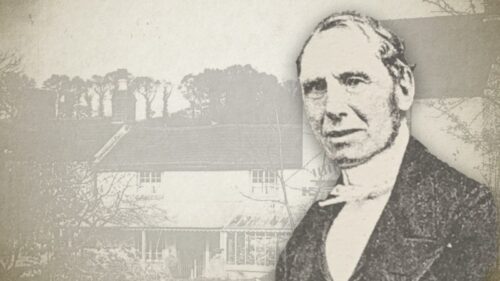
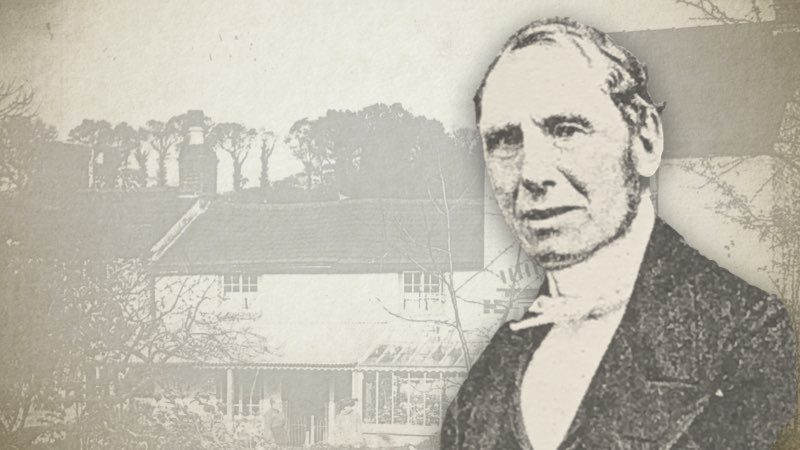
Francis Covell (1808-1879) was a Strict and Particular Baptist preacher. He was appointed the Pastor of Providence Chapel, Croydon, England.
Francis Covell Sermons


Further Study