Jesus Was Born At Bethlehem
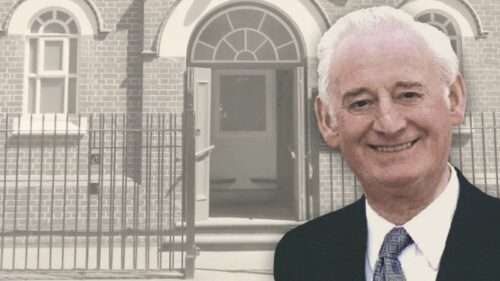
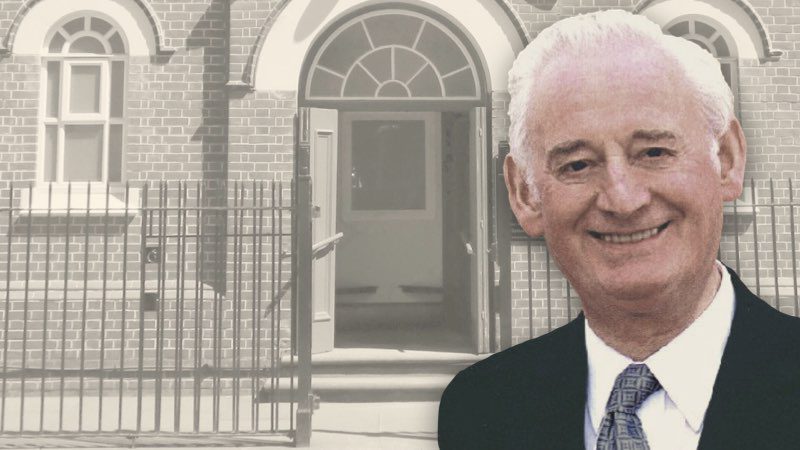
[Posted by permission. Bethel Strict Baptist Chapel.]
Sermon preached at Bethel Chapel, Luton, by Mr. B. A. Ramsbottom, on Lord’s day morning, 20th December, 2020
“Jesus was born in Bethlehem”—Matthew 2:1
There is not a more simple statement in the whole Word of God than this, that “Jesus was born in Bethlehem.” But there is not a more sublime, more sacred word in all Scripture than this.
How especially it rests on my spirit at the beginning this morning is exceedingly solemn. When we come across a word like this, when we read it, when we hear it read, our hearts should be filled with absolute amazement, with wonder, with love. We should be filled with repentance, a sense of unworthiness, that the great God of heaven should send His beloved Son, that the Son of God should come. And yet let me appeal to you this morning: when this word is read, “Jesus was born in Bethlehem,” if we are honest, how often our thoughts are, But everyone knows that, and that is not anything new; and we almost read it with hard hearts and with indifference. I have felt this year that is an awfully-solemn thing, and that is our condemnation – our poor, wretched, unworthy response to such a glorious word sent from heaven to lost, ruined sinners upon earth, and apart from this short, simple sentence, you and I, each one of us, would have been lost to all eternity.
“Jesus was born in Bethlehem.” And so as we meet this morning, and as we hope to meet on Friday morning [Christmas day], may it be with that desire that we might be different, that our hearts might be touched. It is a solemn thing if we go through our lives and our hearts are never really touched by glorious tidings such as these. Now it is not every year that our hearts are touched, but it is nice if we can just think, and go back to the spot and place and time when words like this completely overwhelmed us, and melted our hearts, and caused us to bow our heads in tears, that “Jesus was born in Bethlehem.”
Now it is nice that our children listening here this morning, listening over the relay, have been taught to know this and to believe it. It is nice that this afternoon they will be thinking and singing of it. But you know what often it is when the Lord works. We know this; we are told it, taught it when we are children: “Jesus was born in Bethlehem,” and then as we grow older, we begin to realise what it is all about, what it all means, and then there comes a time when we are concerned to know: Was it for me? Was Jesus born for me? We want to have a personal interest. We want to know the Lord Jesus for ourselves. And perhaps there are one or more Christmas times in our lives when some of these things have laid hold upon us so much that we see the world going by, but there is something wrong within, some deep, some solemn concern. And then that glorious time comes when this season comes round, and we greet it with a smile, because we have that sweet hope in our hearts now of a personal, saving, eternal interest in these things.
“Jesus was born in Bethlehem.” Well, here in these simple words we have a fact, a fact of history, and every year, or almost every day of the year, when we look at the date on our calendar, it is a reminder that it is the year of the Saviour’s birth. The year 2020 – 2020 what? The remembrance of the time when the Saviour was born. So there is a fact here, and it is a glorious fact, a fact that can never be destroyed.
I am sure with the prime minister’s announcement yesterday, many of your hearts were made sad by all the further restrictions which were coming, that during the Christmas period so many things that have always taken place can no longer take place, and even things which a week or two ago we thought could take place, they no longer can take place. Yet this glorious truth stands, that “Jesus was born in Bethlehem,” and though the covid virus has affected so many things, this is one thing it can never touch. What a mercy that in the Word of God there are those things which cannot be shaken, which remain. Scripture talks of a time when not only earth, but heaven itself, shall be shaken, and there will be a removing of those things which can be shaken. Of course, in its fulness that speaks of the last great day, but in its little measure it is happening at present. And then that beautiful word comes, “that those things which cannot be shaken may remain.”
The fact, the glorious fact: “Jesus was born in Bethlehem.” And straightaway, of course, there are the two vital questions, and they are vital: Who is this Jesus who was born at Bethlehem? And then secondly, Why was He born? Why did He come? O what a question!
Who is this Jesus? We have that question, it comes sometimes in the gospels: “Who is this?” We realise so clearly that this is not just an ordinary baby, just growing up to be an ordinary man, but this is the eternal Son of God. Well, how in the Gospel according to John it is opened up: “All things were made by Him.” Who? This Babe at Bethlehem. “All things were made by Him; and without Him was not any thing made that was made.” He is the almighty Son of God. All things were created by Him. He is our Creator. He is our God. Of course, we have in Scripture the mystery of the Trinity. It is, “Bow down, sense and reason, faith only reign here.” One God, but three Persons – God the Father, God the Son, God the Holy Spirit. These Three are One, and completely equal in power, and in love, and in holiness. This was the second Person who
“left His radiant throne on high!
Left the bright realms of bliss!
And came to earth to bleed and die!
Was ever love like this?”
I could never forget years ago the singing of that hymn. It was in that strange, quaint old chapel at Willenhall. It never had a notice board. It never appeared in any magazine. It had no church members. It had no ordinances. It had a big congregation. It went fifty years when they did not ask anybody to preach, but in my early days I was asked to go there. I was preaching in the Midlands, and was asked to go there one Sunday afternoon. It was a large chapel with a good congregation. It was quite an awesome place, and they did everything the old-fashioned way, reading out every hymn verse by verse. The old clerk at the desk, when I had finished preaching (it was Christmas Sunday, and I did not think I had got on much at all), he gave that hymn out, and read two verses, and said, “Now we will start at the third verse.” If I ever heard anyone weep a hymn out – it seemed as though he did.
“He left His radiant throne on high!
Left the bright realms of bliss!
And came to earth to bleed and die!
Was ever love like this?”
They sang it to that old tune Twyford. If you go home and look at it, it comes in, “Was ever, was ever, was ever love like this?” I believe that was one time when my heart was touched.
So that has partly answered our second question: Who is this? But, Why did He come? O why did He come? He came with a covenant engage- ment. He came as sent by His Father. He came on an errand of mercy. We sang the reason why He came:
“Lost souls to recover, and form them afresh,
Our wonderful Lover took flesh of our flesh.”
“Jesus was born in Bethlehem,” that He might live a life of perfect obedience to His Father’s law, and then reckoned it to the salvation and account of His people who had none of their own, that as by the obedience of one man – Adam – many were made sinners, so by the glorious obedience of this one Man – Jesus – many might be made righteous. For “when the fulness of the time was come, God sent forth His Son, made of a woman, made under the law, to redeem them that were under the law.” That is who this Jesus is. That is the reason why He came.
“Jesus was born in Bethlehem.” So this is the time when we should stop and we should consider, and think of these things in one or two different ways, in wonder and amazement that ever the Son of God should have come to this sinful earth, and then in love to the Saviour, in consider- ing His matchless love. “Was ever love like this?” But then to think of His condescension. That simply means how low He stooped. What would you think if one of the greatest men laid aside all his honours and all his glory, and he just lived in poverty as a simple man, he had some reason for it? You would be amazed. Do you ever think what we sing:
“O what matchless condescension
The eternal God displays”?
It is that beautiful word which so many of you love, which sums it all up: “Ye know the grace of our Lord Jesus Christ, that, though He was rich, yet for your sakes He became poor, that ye through His poverty might be rich.”
“Jesus was born in Bethlehem.” This is vital, and the vital thing is that we should know Him – not just about Him, not just that He was born in Bethlehem, but know Him, know Him personally, savingly, for ourselves.
“We humbly for Thy coming wait,
Seeking to know Thee as Thou art;
We bow as sinners at Thy feet,
And bid Thee welcome to our heart.”
“Jesus was born in Bethlehem.” Now having tried to speak of the wonder and glory and importance of it, I would just like to emphasise three or four of the details in this word I have read to you: “Jesus was born in Bethlehem.” And the first and most important of all: Jesus, which means the Saviour. The name was given to Him before His birth. “Thou shalt call His name JESUS: for He shall save His people from their sins.” Just a word to the children here and the children listening. I hope the name of Jesus will be made precious to you. I think in a very young person, in their beginnings, there are often so many beautiful thoughts about the Lord Jesus and those longing desires, those reachings after Him, Jesus the Saviour.
So when we have this name of Jesus, we are immediately reminded that there is a solemn, awful, dark background to all this. Jesus came as a Saviour, so that means that the whole human race was in a lost condition, you and me, through the fall in Adam, through our own personal sin, and we cannot save ourselves or do anything to prepare ourselves for being saved. Then this beautiful truth that there is a Saviour, and His name is Jesus, and He is an almighty Saviour, and He is a willing Saviour. He is willing to save all who come unto God by Him, because ours is a lost condition, and our works cannot work any remission. Our goodness cannot do us any good. O but to see the Saviour, to look on that holy Babe in the manger, to believe that He is true, almighty God, to believe He is my Saviour, and then to trust Him.
We are told His goings forth were from of old, even from everlasting. But then to see His goings forth even to the cross, even to Calvary, to suffer, bleed and die. Now we do not believe in pictures of the Lord Jesus. For one thing, no one knows really, exactly what He was like, and secondly, however beautiful the picture, it can never set forth that He was God as well as Man. But there is a well-known picture of Jesus in the carpenter’s shop in Nazareth, and the sun is shining, and casting its shadow, and as there are pieces of wood in the carpenter’s shop, the shadow bears the shape of the cross across the holy Child Jesus. Now that is just a picture, but there is a very sacred truth there: the shadow of the cross over our Lord Jesus from Bethlehem until at Calvary that dreadful cross appeared, and He was crucified on it. That is what it means, that first word, “Jesus.”
And then the second thing: He was born. “Jesus was born.” So we have this great and glorious mystery. “Without controversy great is the mystery of godliness: God was manifest in the flesh.” “Jesus was born.” He was born of a virgin. How was it possible the Son of God could come into this world, become a real Man without ceasing to be God, become a real Man without partaking of original sin? It was a mystery, and, “Eternal wisdom drew the plan; in all things ordered well,” that our Lord Jesus should come and He should be born of a virgin. Now it is a mystery. Ever keep from prying into it. I heard a minister at Haslingden say, “I am going to explain to you just how the virgin birth took place.” We can go no further than this: dear Mary said, “How shall this be?” “The Holy Ghost shall come upon thee, and the power of the Highest shall overshadow thee: therefore also that holy Thing which shall be born of thee shall be called the Son of God.” Now we venture no nearer than that.
And then the third thing: that “Jesus was born in Bethlehem.” It must be so. As the Son of David, He must be born in the city of David. It was divinely appointed. It was fixed in the prophecies. “But thou, Bethlehem Ephratah, though thou be little among the thousands of Judah, yet out of thee shall He come forth unto Me that is to be Ruler in Israel; whose goings forth have been from of old, from everlasting.”
You notice how clearly it says, “Jesus was born in Bethlehem of Judaea.” There were two Bethlehems, but it was this one, not that. The Word of God is accurate on every point. But Joseph and Mary lived in Nazareth. Bethlehem was miles away. The Word of God must stand, and what happened? An ungodly Roman emperor, August Caesar, decided – he had no thought of God or Jesus or anything else – he decided there was going to be a census. There was going to be a taxation. It said “all the world.” He thought he was the ruler of the whole world. Every man had to go to his native city. So according to divine appointment, when the time came for the Lord Jesus to be born, Joseph and Mary had to be found in Bethlehem. And there was no room in the inn. It is a mercy if there is room in our hearts. But there the Lord Jesus was born, and He was laid in a manger in a stable.
Then the fourth thing, and finally, it was “in the days of Herod the king” – another king. If you read the background, the history, he was a most evil man, a most cruel man. I cannot remember all the details; I rather think he literally with his own hand murdered some of his own sons. He was determined to destroy the Lord Jesus. “Herod will seek the young Child to destroy Him.” I think I preached from that once. We had a baptism in Christmas week. “Herod will seek the young Child to destroy Him.” When a person makes an open profession of the Lord’s name, the fury of Satan, but the wonderful thing is this. Herod with all His raging, Herod with all his wickedness and enmity, could not destroy the infant Saviour. He could not destroy Him. And all the powers of hell can never destroy Him, and all the powers of hell can never destroy you, poor, unworthy, trembling sinner, whose only hope is in Him.
So may the Lord bless this simple word to you this morning. “Jesus was born in Bethlehem.”
Ye souls redeemed with Jesus’ precious blood,
Proclaim the grace of your incarnate God;
Sing that amazing, boundless, matchless love,
Which brought the Lord of glory from above.
The eternal Word, who built the earth and skies,
Takes on Him flesh, and in a manger lies;
In that dear Babe of Bethlehem I see
My God, contracted to a span for me.
Mary’s first-born was God and Man in one;
David’s own God, and David’s blessed Son.
Well might the angels wing their way to earth,
To celebrate so glorious a birth.
They sang, with new surprise and fresh delights,
Glory to God, in all the angelic heights;
Surrounded with God’s glory, in a blaze
To heaven they fly, the incarnate God to praise.
Shall angels sing the honours of His name,
And sinners, saved by grace, silent remain?
Good God, forbid! inflame us with Thy love,
And set our grovelling minds on things above.
This God-like mystery we will gladly sing,
And own the virgin’s Babe our God and King;
Jehovah Jesus, we will Thee adore,
And crown Thee Lord of all for evermore.
And did the Holy and the Just,
The Sovereign of the skies,
Stoop down to wretchedness and dust,
That guilty worms might rise?
Yes, the Redeemer left His throne,
His radiant throne on high,
(Surprising mercy! love unknown!)
To suffer, bleed, and die!
He took the dying traitor’s place,
And suffered in his stead;
For man (O miracle of grace!)
For man the Saviour bled.
Dear Lord, what heavenly wonders dwell
In Thy atoning blood!
By this are sinners snatched from hell,
And rebels brought to God.
What glad return can I impart
For favours so divine?
O take my all, this worthless heart,
And make it wholly Thine.
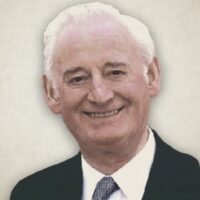
Benjamin Ramsbottom (1929-2023) was a Strict and Particular Baptist preacher. In 1967, he was appointed pastor of the church meeting at Bethel Strict Baptist Church, Luton, Bedfordshire, a position he held for fifty-five years.