
The Faith And Practice Of The Strict And Particular Baptists
Waymarks Vol 3 (1931):
To All Our Readers,
Dear Friends,—“Another year of our short life is gone,” and by the goodness of God we have been spared to open our eyes upon a new epoch of time. Back looks of a gracious character produce mingled feelings of sorrow and joy, while, by gazing at the present in the light of the past, there is every cause apparent for mistrusting ourselves, and real reasons why the children of God should continue to trust in their ever-wise, gracious and well-proved Redeemer and Friend. A glance at the heading of this Address will be sufficient to convey to former readers the fact that a change has taken place in the management of this Magazine, seeing that by amicable agreement with the previous Committee at Rowley Regis, the control of “Waymarks” has been transferred to the friends whose names appear below, for the purpose, after much prayerful consideration, of circulating “Waymarks” more widely in our denomination. (Hitherto it has been published as the Monthly Magazine from “Providence” Strict Baptist Chapel, Rowley Regis.)
New Committee:
Pastor E. A. Brooker, 52 Oulverden Park Road, Tunbridge Wells.
Mr. W. E. Goodchild, 12 St. Nicholas Road, London, S.W.1T.
Mr. B. Harris, Arch Hill Street, Netherton, Nr. Dudley.
*Pastor S. R. Hunt, Chapel House, Rowley Regis, Staffs.
Pastor J. Kemp. ‘‘Elsworth” Arundel Road, Luton, Beds.
*Pastor J. T. Sharples, The Manse, Evington, Nr. Leicester,
Mr. E. Sturman, Treasurer, Park Street, Blackheath, Staffs.
*Pastor E. H. Wright, “Hopedene,** 231 Edenfield Road, Rochdale, Lancs.
* Editorial Sub-Committee
Let us say at once that no ill-will or competitive spirit towards any other editors or magazines prompts our undertaking. We are very conscious that such unworthy principles would not only grieve the Holy Spirit, whose gracious aid we deem indispensable, but would rightly dissuade all sober-minded people from reading our pages. As a Committee, we are not associated with any union or party. Our object is to provide a periodical for all Strict Baptists who seek humbly and faithfully to abide by the Word of God as their final appeal in all matters relating to faith and practice; for we firmly believe in the plenary and verbal inspiration of this precious Book.
The Eternal Sonship Of The Lord Jesus Christ
By Divine aid we are determined ever to maintain a clear testimony concerning the Doctrine of the Eternal Sonship of the Lord Jesus Christ, and strongly do we deprecate either an open denial of this fundamental truth, or the attitude of mysterious silence and indifference concerning it.
The Committee will be glad indeed if “Waymarks” is used by God as a means of giving clear views of this profound mystery, believable only by faith; but we are only too conscious of danger being very near to all who, with this, or any other glorious doctrine, attempt by carnal reason to rush in where angels fear to tread.
“Where reason fails with all her powers,
There faith believes and love adores.”
Furthermore, may the Lord preserve us from false charity, or injustice. We do not intend to sink principles in order to be “kind,” or to disgrace principles by being unjust. And, while earnestly contending for the faith once delivered to the saints, may God forbid that any other contention whatever shall have any place in “Waymarks.”
Contending Earnestly For The Faith
A word, in the next place, may be desirable regarding the general plan which we purpose to follow when compiling this Magazine. Many gracious people will be glad to read as the months come round, not only savoury articles culled from the writings of God’s servants now in glory, but sermons and papers from living preachers whose testimony is being divinely blessed in these dark days. Men, alas! there are who, assisted by science “falsely so-called” and infidelity, write much to poison the minds of their readers; but let us not forget that God still has His ambassadors who are not ashamed, by tongue and pen, to—
“Tell out His wondrous faithfulness,
And sound His praise abroad.”
Our readers will soon observe our intention to recognise this great benefit in a regular and practical manner. May they profit thereby. Another object we have before us in sending forth this little “Monthly” is—the recognition of passing events in the light of God’s Word. While we refuse to dogmatise upon unrevealed prophecy, or to speculate, we firmly believe that-—
“God’s providence unfolds the Book,
And makes His counsels shine;
Each opening leaf and every stroke
Fulfills some deep design.”
So let us seek wisdom that we may learn by passing events, and thus “Despise not prophesyings” (2 Thess. 5:20), lest we be found among those of whom the prophet Isaiah says: “Lord, when Thy hand is lifted up, they will not see” (Isa. 26:11).
A Loving Care Towards The Young
Then we have our dear children to consider. They are growing up in very different surroundings from those which we should choose for them. Gladly would we shelter them entirely, if it were possible, from the “filthy conversation of the wicked,” and all that this means to-day. So we propose that our pages shall contain messages particularly addressed to them. How good it will be to know, if the Lord will so favour us, that parents, children and young people, in many Strict Baptist homes, look forward to the monthly advent of “Waymarks” as they do to the visits of their friends!
The Doctrine Of The Resurrection
A word may be anticipated by our readers concerning the Doctrinal Basis of the Magazine. The Apostle Paul had good reason for saying: “My beloved brethren, be ye stedfast” (1 Cor. 15:58). Because Christ is risen. Therefore, says he, “Be ye steadfast.” What a glorious doctrine is that of the Resurrection! Yes, indeed, we believe it, and in all spiritual affection would hold it fast as the very bed-rock of our most holy faith. “If Christ be not risen, then is our preaching vain, and your faith is also vain” (1 Cor. 15:14). But because grace divine has broken up our cell of death, and living faith has been given to go to the ever-living Christ of God for eternal life, we know, seeing He has heard our prayers, that the tomb He occupied for three days and nights is for ever empty. “He ever liveth to make intercession for them” “that come unto God by Him” (Heb. 7:25), and says, “Because I live, ye shall live also” (John 14:19). We believe equally in the resurrection of the dead. Beyond a knowledge by faith of an ever-living Christ, is the promise of seeing Him as He is in glory. This means the “resurrection of the just” (Luke 14:14). “For now we see through a glass, darkly; but then face to face” (1 Cor. 13:12). Truly, “If in this life only we have hope in Christ, we are of all men most miserable. But now is Christ risen from the dead, and become the firstfruits of them that slept” (1 Cor. 15:19, 20). And, by His brief occupation of the grave, the last resting-place of the saints has been softened, for the dear flesh of Jesus has left a long perfume, where otherwise there must ever have been the existence of unrelieved horror. By His vacation of the grave, death has been robbed of the victory. Hence, all who die in the Lord may and do exclaim with gratitude: “O death, where is thy sting? O grave, where is thy victory? The sting of death is sin; and the strength of sin is the law. But thanks be to God who giveth us the victory through our Lord Jesus Christ” (1 Cor. 15:55-57). Yet what of the ungodly? The tomb can afford them no escape from “the wrath to come”; and Jesus uttered these words in the days of His flesh, “Marvel not at this: for the hour is coming, in the which all that are in the graves shall hear His voice, and shall come forth; they that have done good, unto the resurrection of life; and they that have done evil, unto the resurrection of damnation” (John 5:28, 29). How much we need to be kept “stedfast” and “unmoveable” concerning the doctrine of the Resurrection, and all that it teaches!
The Doctrine Of Salvation By Grace—Denouncing Baxterianism, Antinomianism And Duty-Faith
We believe, too, in Salvation by grace. “For by grace are ye saved through faith; and that not of yourselves: it is the gift of God; not of works, lest any man should boast” (Eph. 2:8, 9). The Word of God and experience prove that sovereign grace is no more frustrated by sin, than it is conditional upon works. Manasseh’s well-known crimes could not hinder God from saving him, while all the good works (so-called) proceeding from a natural religion cannot save the soul. “If by grace, then is it no more of works’’ (Rom. 11:6). And all is in accord with the eternal purpose of a Triune Jehovah. Scripture knows nothing of chance in this matter, so that all such erroneous teaching as the Baxterian theory advances we strongly deprecate. Peter, speaking of the Divine will concerning the heirs of grace, says they are “Elect according to the foreknowledge of God the Father, through sanctification of the Spirit, unto obedience and sprinkling of the blood of Jesus Christ” (1 Peter 1:2). Thus “the election of grace” (Rom. 11:5) exclusively, and always by Regeneration, are effectually called and saved with an everlasting salvation. Furthermore, we declare our scriptural persuasion that the foregoing tenets give no licence to Antinomianism: “Shall we continue in sin that grace may abound? God forbid” (Rom. 6:2). Again, while creature-power and duty-faith we deny, the fruits and effects of grace must be earnestly contended for, because—“The grace of God that bringeth salvation hath appeared unto all men, teaching us that, denying ungodliness and worldly lusts, we should live soberly, righteously, and godly, in this present world” (Titus 2:11, 12).
The Doctrine Of Particular Redemption
The Doctrine of Particular Redemption is also a most important part of our belief and basis. We believe that all whom God the Father chose, He gave to His dear Son Jesus Christ to redeem by His precious blood, which alone could satisfy the demands of justice and completely free the sinner from all the bondage and guilt of sin (Heb. 9:22; 1 Pet. 1:18, 19; 1 John 1:7). Blessed be God for this “Fountain opened to the house of David and to the inhabitants of Jerusalem for sin and for uncleanness ” (Zech. 13:1); and blessed be God for the work of the Holy Ghost, who
“Convinces men of sin, then leads to Jesus’ blood;
And to their wondering view reveals the secret love of God.”
The Doctrine Of Justification
We believe in Justification by faith. Some of us have wept tears of wonder and love in secret over these lines:
“Jesus, Thy blood and righteousness
My beauty are, my glorious dress;
’Midst flaming worlds in these arrayed,
With joy shall I lift up my head.”
The Doctrine Of Predestination
We also heartily value the Doctrine of Predestination. God’s plan has never broken down or become altered, for “He is of one mind, and who can turn Him? and what His soul desireth even that He doeth.” For, says Job, “He performeth the thing that is appointed for me: and many such things are with Him” (Job 23:13, 14). This well harmonises with Paul’s inspired words: “In whom also we have obtained an inheritance, being predestinated according to the purpose of Him who worketh all things after the counsel of His own will” (Eph. 1:11). The woman of Samaria stands out in Scripture as a prominent instance of predestinating love, while David’s testimony to the “everlasting covenant, ordered in all things and sure” (2 Sam. 23:5), indicates his gratitude for pre-ordained salvation.
The Doctrine Of Perseverance
The Final Perseverance of the Saints is another cardinal doctrine most surely believed among us. We are confident that original sin, like a deadly disease which is transmitted by natural generation, has not only produced alienation from God, but irremediable weakness in the creature, of a kind that completely disqualifies him from assisting God in the least degree. While grace saves the sinner, sinful weakness, ever known and felt by that sinner, makes preventing and preserving grace indispensable to him—grace to prevent him being overcome by sin, and grace that he may endure to the end, and be saved. And such grace we know is earnestly applied for by the whole family of God, who frequently have to pray: “Hold Thou me up, and I shall be safe”(Psa. 119:117). They are “preserved in Jesus Christ” (Jude 1), who is their “Sun and Shield,” and the Lord will give them “grace and glory” (Psa. 84:11). We are confident that not a single child of God will ever be lost (John 17:12).
The Meaning Of Strict Baptist
Having made the foregoing statements, showing the doctrinal basis of our Magazine, it remains for us to describe as briefly as possible, How and why we are Strict Baptists. What has been written hereto, we entirely, through Divine grace, believe. What we now advance, may the God of all grace help us ever believingly to practise. The Word of God tells us very plainly of two ordinances that are to be observed down to the end of time by all true believers of the Lord Jesus Christ. These ordinances are: Baptism and the Lord’s Supper. The great Head of the Church instituted them both in the days of His flesh, personally submitting to the first, and personally presiding at the first observance of the second, thus leaving us an example that we should follow in His steps.
Both these ordinances are commands, and all true believers are enjoined to yield obedience by walking in them. Jesus says: “If ye love Me, keep My commandments” (John 15:10); and in commissioning His disciples to preach, He gives clear and abiding direction as to baptism and the Lord’s Supper. His words are these: “Go ye therefore, and teach all nations, baptising them in the name of the Father, and of the Son, and of the Holy Ghost: teaching them to observe all things whatsoever I have commanded you: and, lo, I am with you alway, even unto the end of the world. Amen.” (Matt. 28:20). Hence it is evident that when the disciples preached the gospel, and the Holy Spirit’s promised blessing followed in the conversion of sinners, the persons thus divinely taught and profited under the preached Word were to be baptised—that is, immersed—not in man’s name, or by man’s mode, but in the name of the ever blessed Trinity. We have a wonderful instance of God’s blessing attending the fulfillment of this commission, in Peter’s sermon on the day of Pentecost. Look at the reception of the Word and the obedience which followed: “Then they that gladly received His Word were baptised” (Acts 2:41). How clearly, too, Church membership and Strict Communion is set forth in this same chapter. These baptised persons were the same day added to the church, in number about three thousand souls I (ver. 41.) Then, and not before, do we read that they observed the Lord’s Supper: “And they continued stedfastly in the apostles’ doctrine and fellowship, and in breaking of bread, and in prayers” (ver. 42). Another important point is also apparent in tins verse: the members of this church were right characters. They had “gladly received His Word” before their baptism, and “they continued stedfastly in the apostles’ doctrine” afterwards. How necessary it is for ministers and churches to exercise discernment in the reception of candidates for membership!
Further, we find these believers not only continued stedfastly in the apostles’ doctrine, but in “fellowship, and in breaking of bread” (ver. 42). In these divinely ordained and revealed paths they continued “with one accord” (ver. 46). Yea, and their gracious obedience and stedfastness were conspicuously honoured, for “The Lord added to the church daily such as should be saved” (ver. 47). Hence to-day may we be helped to say in true gospel affection to the people of God, in these matters: “Therefore, my beloved brethren, be ye stedfast, unmoveable.”
Another feature concerning Strict Communion for which we must contend is surely very distinctly shown in this same chapter in the Acts of the Apostles. We refer to our practice of excluding from the Lord’s Table, not only unbaptised persons, but those belonging to churches not of the same faith and order. We maintain that a heartfelt belief in the doctrine and practice described herewith is essential to the admission of persons to the Lord’s Table. How can something different, anything different to “the Faith” and God’s order, be called, “The same faith and order”? Therefore, all who are of “one accord,” being members of churches who thus “continue stedfastly in the apostles’ doctrine, and fellowship, and in brealdng of bread, and in prayers,” we maintain are divinely invited and welcome to
“Sit at His table and record
The love of their departed Lord.”
Brethren, let us remember that it is the Lord’s Table. He has given specific instructions as to its provision, even plain bread and wine, to signify His broken body and shed blood. “He took bread, and gave thanks, and brake it, and gave unto them, saying, “This is My body which is given for you: this do in remembrance of Me. Likewise also the cup (not a number of tiny glasses) after supper, saying, This cup is the new testament in My blood, which is shed for you” (Luke 22:19, 20). So from the lips of a precious Redeemer we are told who may come to the Table, what they are to come for, and how they are to obey His command when they thus come. This is rightly called the Communion Service, but obviously only when persons of “one accord”sculpturally observe it. “What communion hath light with darkness?” (2 Cor. 6:14.) “Can two walk together except they be agreed?” (Amos 3:3.) Therefore, though evil men and seducers wax worse and worse, what real reason there is, of an abiding nature, why the people of God may safely build, and remain stedfast land unmovable upon “the foundation of the apostles and prophets, Jesus Christ Himself being the chief corner Stone” (Eph. 2:20).
An Invitation For Strict Baptist Churches To Unite Around Their Doctrine And Practice
Finally, let us not forget those means which the Lord will have used for the making known of His truth. Here is “the work of the Lord in which by prayer and supplication His servants are to “abound.” They are to cast their bread, the Bread of Life which they themselves have first received, upon the waters, by tongue and pen; and to each one God says: “Thou shalt find it after many days” (Ecc. 11:1), They are not to sow “sparingly,” but “bountifully” (2 Cor. 9:6). They are not to be overcome by discouragements, for “He that observeth the wind shall not sow; and he that regardeth the clouds shall not reap” (Ecc. 11:4). Nay, they must press through many difficulties, pondering the path of their feet, that all their ways may be established, “always abounding in the work of the Lord.” The Apostle knew what it ‘was to “abound.” Hence, he practised by grace what he graciously proclaimed. “I will very gladly spend and be spent for you” (2 Cor. 12:15) are his inspired words concerning his labours. Let us, then, who humbly and prayerfully desire to attend to this “work of the Lord,” seek by means of this Address to invite all who love the truth to help1 us in every way possible to circulate this little Magazine. If the truths set forth in this opening Address are dear to you, refuse not their publication in this form, but kindly take “Waymarks,” and place it before your friends, praying that God will bless it abundantly, to them. It may be objected: “But we have other good magazines.” We are persuading none to dispense with one good thing to take up another, but would ask, is there an abundance of good religions periodicals to-day? Oh the contrary, there is an abundance of erroneous religious literature in circulation. Forget not, then, this abiding scripture teaching, “Always abounding in the work of the Lord.” Can we have too much of that which is good? So we cast this little book upon the waters, not to be lost we are sure. The act of casting must be one of faith, in a financial as well as a spiritual sense, seeing that the Magazine costs considerably more to produce than its sales will yield. We therefore commend our “Waymarks” Fund to all our friends. By sending donations towards this Fund, valuable assistance will be rendered in paying our Printers’ accounts, and running expenses. We have no paid officials. With the Committee this work is a labour of love, and the Apostle reminds us that labour in the Lord is not in vain. What encouragement there is, then, for us to go forward, ,and for the people of God to labour with us! May we be enabled to labour together in the Lord, watering our gifts, whether spiritual or financial, with prayer and thanksgiving, watching patiently for such gracious intimations from on high as will help us to say, “Not unto us, O Lord, not unto us, but unto Thy name give glory, for Thy mercy, and for Thy truth’s sake ” (Psa. 115:1). Here let us take the opportunity of thanking those friends who have so kindly contributed to the Inauguration Fund (now one with “Waymarks” Fund), which was opened at the commencement of the new scheme, to provide for initial expenses.
One word more. We greatly desire for ourselves and all our readers, even above and beyond the regular provision of sound spiritual reading within the covers of “Waymarks”—the unspeakable good which, is found in a living experience of those things which are most surely believed among us. We are told that, “With great power gave the apostles witness of the resurrection of the Lord Jesus; and great grace was upon them all” (Acts 4:33), Oh for this great power in witnessing, for great power in hearing and reading of that precious gospel which is still witnessed, and for great grace that we may truly seek the honour of God and His truth, the peace and prosperity of Jerusalem, and the advancement of the kingdom of His grace in the hearts and lives of our fellow men.
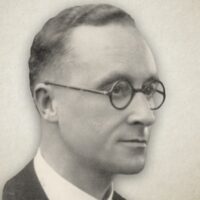
Samuel Hunt (1893-1956) was a Strict and Particular Baptist preacher. He served as pastor for the churches meeting at Wivelsfield (1922-24); Rowley Regis (1924-38); Providence, Bedford (1939-1945); Newquay (1947-1955). He was also the founder and editor of “Waymarks”, a Strict Baptist magazine running between the years 1929-1955.


Further Study