Formed For Himself
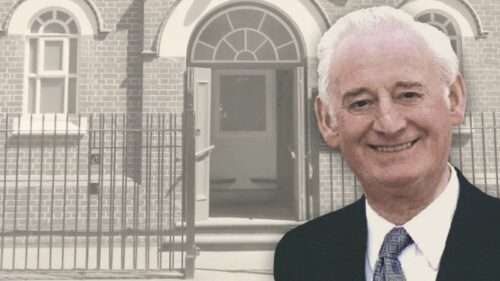
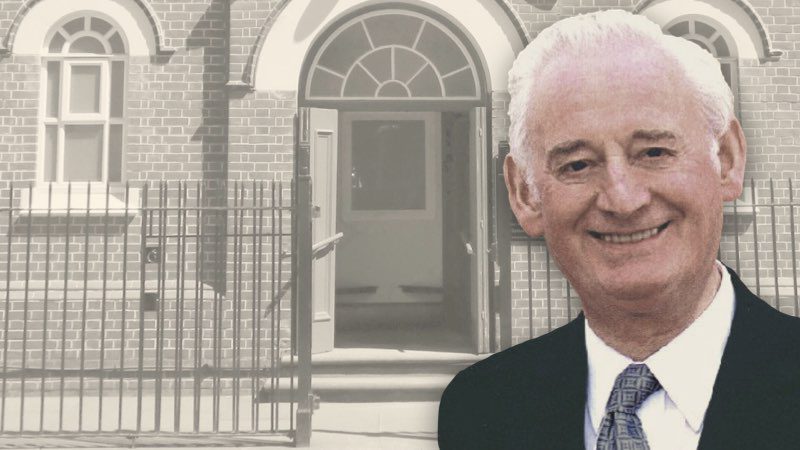
[Posted by permission. Bethel Strict Baptist Chapel.]
Sermon preached at Bethel Chapel, Luton, by Mr. B. A. Ramsbottom, on Lord’s day evening, 24th January, 2021
“This people have I formed for Myself; they shall shew forth My praise”—Isaiah 43:21
What people? The beloved people of God, eternally chosen, loved with an everlasting love, redeemed by precious blood, sanctified and led and taught by the Holy Spirit. “This people.” The Lord has decreed that He shall be glorified in them. He has done so much for them, He has saved them with an everlasting salvation, and He has decreed that they shall glorify His name. “They shall shew forth My praise.”
So as the Lord in love and mercy deals with His people, as He saves them by His grace, as they are born again, as the Holy Spirit begins to work, He forms them for Himself. Now it is an interesting expression, and it is an important expression, that every one of the Lord’s people in His own gracious, all-wise, almighty hands shall be formed. When they are brought from death to life they are formed anew. But throughout their lives, long or short, the Lord is dealing with them in wisdom, in love, in mercy, and He is fitting and forming and fashioning them for Himself.
So when the Lord deals with a sinner and reveals Himself, makes Himself precious, it is a time of happiness and peace and rejoicing. But beloved friends, it is not the end. In one sense, it is the beginning. “He which hath begun a good work in you will perform it until the day of Jesus Christ.” The Holy Spirit is going to bring the people of God into living conformity with the image of God’s beloved Son There is going to be the nearness, the reality, the family likeness, and it is spoken of as the Lord forming a people for His own praise.
Of course, in His eternal purposes, this was planned from ever-lasting in the covenant of grace. This people that He chose, that Christ was to redeem, “by nature” they are “the children of wrath, even as others.” There was no difference. But the Lord is going to have dealings with them. If you are a child of God, the Lord will have dealings with you. You will be brought to possess the family likeness, and there will be this forming of you for Himself. There is something solemn, sweet and sacred there: “For Himself.” They belong to the Lord Jesus. They are so dear so Him, so precious to Him, and so He is going to be glorified in their hearts and lives, and so He forms them for Himself.
Different people have given different illustrations of how the Lord takes a sinner in his unworthiness, his sin, how He takes him in hand and how He forms him for Himself. One illustration that has been given is that of the sculptor. He takes a piece of stone, of granite, marble, with no shape or form in it, and perhaps he decides that he is going to make a sculpture of a lion, and so he begins to work, and his work is not finished until he has made that piece of stone look like a lion. Now there was a famous sculptor once who was asked to explain his skills. They said, “How do you manage to take a block of stone and make it look like a lion?” He thought a moment, and said, “What I really do, I begin to work on that block of stone and cut away everything bit by bit that does not look like a lion, until when I have cut something off here and smoothed something off there, that piece of stone little by little begins to look like a lion, and I am not satisfied until it does.” Now that is like the work of grace which is going on in the lives of all God’s people, a forming them to the likeness of God’s dear Son.
Well, I read three different chapters to you this evening (1 Peter 2. 1- 10; Jeremiah 18. 1-10; Genesis 39), each one I believe shedding some light on this text. My last reading was of Joseph. Joseph is often spoken of as the one who so clearly displays the work of this text: “This people have I formed for Myself; they shall shew forth My praise.” Well, when you come to the end of Joseph’s life, he is there showing forth the Lord’s praise. When you think of his love to his brethren, how he would do everything for their welfare, though they had treated him so shamefully! He said, “Ye thought evil against me; but God meant it unto good,” and he freely forgave them, and he freely loved them, and he would do anything for them. Look at all the tenderness towards his aged father, Jacob. That was the end, but there is a lot that happened before that, and really it was this: “This people have I formed for Myself; they shall shew forth My praise.”
It is so difficult to talk about Joseph in his beginning, but reading that first chapter about Joseph’s life, there did still seem to be a lot of the flesh, still a lot of Joseph about him. He delighted in being the favourite of his father, and he seemed to delight in those wonderful dreams he had – how he was going to rule over all his brethren. You wonder perhaps if he spoke a little unadvisedly to them. It is not for us to judge, but it does seem that Joseph in his beginning, though blessed with the grace of God, had a lot to learn. And beloved friends, in our beginnings we have a lot to learn, and we have a lot to unlearn, and it is going on until the end of our lives. You think of William Cowper’s beautiful hymn: “Thou shall see My glory soon.” When, Lord? “When the work of grace is done.” The Christian cannot die until the work of grace is done.
Now you are all familiar with the fascinating life of Joseph. O how he was being cut and shaped and fashioned like that sculptor working on his piece of stone! God’s work will prevail. God’s work will not fail. So falling into the hands of his brethren, the cruel way they treated him – throwing him down into the pit, selling him to the Midianites, and then being sold as a slave down in the land of Egypt. In that first verse we read it twice: he went down into the land of Egypt; he went down into Potiphar’s house. It seemed he would never see his home, his father again. It was a time of deep sorrow. And then things seemed to be going well, and we read all along in his sorrows and in his joys, “The Lord was with him.” That did not mean everything went smoothly for him. That did not mean he had no troubles. But it meant he would be brought safely through, safe in the hands of his Lord and Saviour.
And then you see that cruel trial with Potiphar’s wife, and how he was blessed with the fear of the Lord, and how that stood. “How then can I do this great wickedness, and sin against God?” He was kept continually in the Lord’s eye, and his religion, as he knew it and walked it out, it was beneath the Lord’s eye. How dreadfully he suffered for it – being treated unkindly, wrongly, unfairly, falsely accused, thrown into prison, his own witness not believed. Then the Lord was with him again, still helping him, upholding him, teaching him. He had much time to think about the Lord’s mysterious dealings with him, and often the Lord’s dealings are mysterious when He is forming a sinner for Himself, for His honour and glory.
And then what seemed to be a wonderful deliverance, when he was enabled to interpret the dreams of the butler and the baker, and it seemed now deliverance was at hand. “Think on me when it shall be well with thee.” “Yet did not the chief butler remember Joseph, but forgat him.” That must have been a dreadful disappointment – after all these other things, a dreadful disappointment. We are told he had to wait a further two years in that prison.
Then we all know the wonderful end of the story. The Lord did not leave him and forsake him. The Lord brought him through. “Grace will complete what grace begins.” How the Lord can change things in a moment! And we are told that Joseph prayed his way along. He had to wait, but he saw the answer to his prayers. His God was faithful to him. So Pharaoh had his dream. No one could interpret it. The butler remembered Joseph. Joseph was sent for. He interpreted the dream. Not only was he set free, but he was exalted in the kingdom next to Pharaoh himself. O how strange that those potentates in ancient times, almost we could say in a moment, could make a decision casting someone away for ever, or lifting them up for ever. That was the exaltation, that was the work of grace being carried on, still carried on to its completion. “This people have I formed for Myself; they shall shew forth My praise” – eminently portrayed in the life and witness of that godly man Joseph. It was grace that did it and it was grace that formed him to be what he was.
Now a few moments ago, I did speak to you about the example of the sculptor and his work, but I think more often, and certainty the scriptural example is given: the potter and the clay. So I read to you this evening, “Arise, and go down to the potter’s house, and there I will cause thee to hear My words.” The potter’s work is different from that of the sculptor. He is not so much cutting and separating. He is more moulding and forming and smoothing. There is something here a bit rough; it needs to be smoothed. There is something there which is better if it is taken off. What is the emphasis there tonight in the reading of Jeremiah 18? It is in the potter’s hand, his skilful hand, his all-wise hand, his loving hand, he is determined the vessel is to be fitted, fashioned according to his own will. “And the vessel that he made of clay was marred in the hand of the potter.” He was not satisfied with it. It did not seem just right. Something else needed to be done. “So he made it again another vessel, as seemed good to the potter to make it.” Those two things: “in the hand of the potter” – that is where God’s people are. And this: “As seemed good to the potter to make it.” Can the clay say to the potter, Why makest thou me thus? But we do. But we do need to be made to lie passive in the Lord’s hand as clay in the hands of the potter.
“This people have I formed for Myself; they shall shew forth My praise.” Now how does the Lord accomplish this work of grace in forming His people for Himself, for His own honour and glory? Well, to put it simply, essentially in two ways: one is by His Word, the second is by providence. But it is all in the Lord’s hand. It is all in the hands of the Holy Spirit. Often it is a mysterious way. Often the Lord’s people cannot under-stand it. But,
“He keeps eternity in sight,
And what He does is always right.”
So the use of the Word of God. The Word of God will show you what to do. The Word of God will correct you when you are acting wrongly. The Word of God will lead you when you have choices to make. The Word of God will enable you to confess when you are wrong, to put things right in your life when you realise they are not for the honour and glory of the Lord. In this you will be brought to be a follower of the Lord Jesus. “These are they which follow the Lamb whithersoever He goeth.” But what I was trying to speak of this morning – “The humble shall see this” – thinking of the cross of Christ: “Reproach hath broken My heart; and I am full of heaviness.” But when the Holy Spirit leads you there, this will be a special time where your heart is moulded. Why? Because it will be made soft at the cross of Christ. It will be made pliable. The love of Christ will constrain you.
“If once the love of Christ we feel
Upon our hearts impressed,
The mark of that celestial seal
Can never be erased.”
“This people have I formed for Myself.” So it should be our desire to be taught by the Spirit of God, that we might “grow in grace, and in the knowledge of our Lord and Saviour Jesus Christ.” We should pray to be delivered from false exercises, confirmed in right exercises, and that the Word of God will speak to us, the Word of God will lead us aright. How many prayers there are, especially in the Book of Psalms: “Shew me Thy ways, O Lord; teach me Thy paths.” We want the Lord to be with us in this. We do not want to be left just to drift along. We do not want to think that once we have begun in the things of God, that we have arrived. We want to be in the Lord’s hand, and so there will be much prayer for it. “Commit thy way unto the Lord.” Put everything in His hand. “Trust also in Him; and He shall bring it to pass,” fitting, forming, fashioning this vessel to the honour and to the glory of His name.
“This people have I formed for Myself.” But then providence, as it is so often appearing in the life of Joseph, or affliction. How many of the Lord’s people have known this fitting and fashioning in trouble when they find that their nest is stirred up, they are delivered from carelessness and deadness, darkness and sin. But the Lord’s way is mysterious. “Thy way is in the sea, and Thy path in the great waters, and Thy footsteps are not known.” But all this for the honour and glory of His name. So you need to stop and pause and think: Why has this come? What is happening? It may even be, What about this virus that is affecting so many at present? Is this part of the Lord’s plan in His hand to teach His people, to humble them, to confirm them, conform them to His likeness?
“This people have I formed for Myself.” It is because the Lord loves them, because He will not let them have just their own way, go their own way. He is fitting, fashioning, forming them, to the honour and glory of His name. And that is what the Word of God means when it is talking about divine chastening, that it is not pleasant, that it is profitable, and it is “nevertheless afterward” that it is seen. That is it. A child of God cannot judge this very well himself, but it is afterwards that it is seen. “What I do thou knowest not now; but thou shalt know hereafter.”
“This people have I formed for Myself.” And this is the end of it: “They shall shew forth My praise.” So there must be the thanksgiving, and there will be the thanksgiving. The Lord will not have His people carelessly unthankful, and so there will be praising the Lord for all that He is, all that He has done, especially for the great work of salvation. “They shall shew forth My praise.” But it does not just say, They shall speak My praise, or, They shall sing My praise. They shall show it forth – show it forth in a life which is made so different, show it forth in a life which is lived to the honour and glory of God, show it forth so that the Lord’s people shall see it, that our children shall see it, that the world shall see it. So are you familiar with that hymn of Horatius Bonar:
“Not for the lip of praise alone,
Nor e’en the praising heart,
I pray, but for a life made up
Of praise in every part”?
Now that is it:
“A life made up of praise in every part.”
O may we know it, experience it!
“This people” – may we be one of them – “This people have I formed for Myself; they shall shew forth My praise.”
Now to the power of God supreme
Be everlasting honour given;
He saves from hell (we bless His name),
He calls our wandering feet to heaven.
Not for our duties or deserts,
But of His own abounding grace,
He works salvation in our hearts,
And forms a people for His praise.
’Twas His own purpose that began
To rescue rebels doomed to die;
He gave us grace in Christ His Son,
Before He spread the starry sky.
Jesus the Lord appears at last,
And makes His Father’s counsels known;
Declares the great transactions past,
And brings immortal blessings down.
He dies! and in that dreadful night
Did all the powers of hell destroy.
Rising, He brought our heaven to light,
And took possession of the joy.
God moves in a mysterious way
His wonders to perform;
He plants His footsteps in the sea,
And rides upon the storm.
Deep in unfathomable mines
Of never-failing skill,
He treasures up His bright designs,
And works His sovereign will.
Ye fearful saints, fresh courage take;
The clouds ye so much dread
Are big with mercy, and shall break
In blessings on your head.
Judge not the Lord by feeble sense,
But trust Him for his grace;
Behind a frowning providence
He hides a smiling face.
His purposes will ripen fast,
Unfolding every hour;
The bud may have a bitter taste,
But sweet will be the flower.
Blind unbelief is sure to err,
And scan His work in vain;
God is His own interpreter,
And He will make it plain.
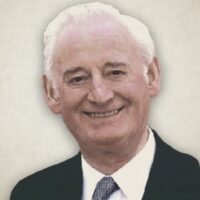
Benjamin Ramsbottom (1929-2023) was a Strict and Particular Baptist preacher. In 1967, he was appointed pastor of the church meeting at Bethel Strict Baptist Church, Luton, Bedfordshire, a position he held for fifty-five years.