Faith – Tried, Tested And Proved
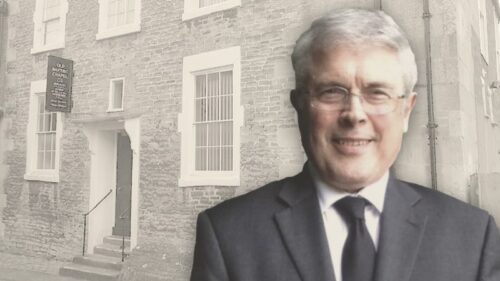
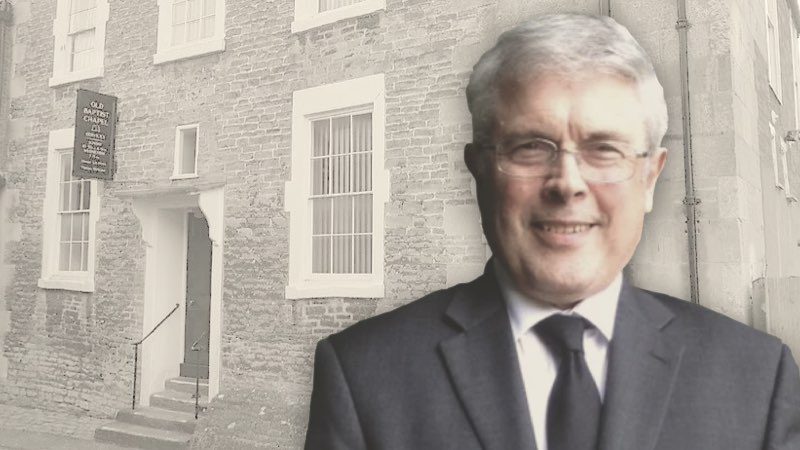
[Posted by permission. Chippenham Old Baptist Chapel.]
Sermon preached at Old Baptist Chapel, Chippenham by Mr. G. D. Buss on Lord’s Day Morning, 1st March, 2020
“And immediately Jesus stretched forth His hand, and caught him, and said unto him, O thou of little faith, wherefore didst thou doubt?”—Matthew 14:31
What a paradox is real religion! One moment, in perhaps one of the strongest evidences of faith the world has witnessed, from a poor sinner upheld by grace; Peter walks on the water. Then, but a few steps later, there he is, his faith almost gone, spark out. It hadn’t gone completely, as Christ was in possession of it. But, what a change from one moment to another! And this maybe something which perplexes some of you here this Sabbath morning. You want a constant faith. You want a solid faith, and you want a faith that continually feels and enjoys the sweet presence of the Saviour. This is a good desire. But don’t be surprised if you find there are degrees of faith in your life. Sometimes, yes, you will be strong in faith, proving what Paul says: “I can do all things.” How? “Through Christ which strengtheneth me.” At other times, for the good of your never dying soul and for the humbling of your proud spirit, you have to learn the other side of the matter: “Without Me ye can do,” not a little: “nothing.”
“If Thou shouldst leave us, we must fall;
Without Thee, cannot rise;
For when our Jesus hides His face,
Our hope, our comfort, dies.”
But Jesus doesn’t die.
No, blessed be His holy name.
“O thou of little faith, wherefore didst thou doubt?” A strange thought, but a precious thought came to me. Those of us who know what this experience is, I wonder if that is the first word our Lord will say when He welcomes ‘little faith’ home to glory. “O thou of little faith, wherefore didst thou doubt?” Well, may we be received home to glory, even though many of us here this Sabbath morning feel to have little faith. Have we any faith at all? That is often the question.
You will notice it wasn’t only Peter in this chapter who knew degrees of faith. John the Baptist, the one who baptised our Lord Jesus Christ; the one who saw the Spirit descending upon Him like a dove and who said: “And I saw, and bare record that this is the Son of God,” we now find asking a question. “Art thou He that should come, or do we look for another?” John, we might say, how could you ask a question like that with such an experience as you have had? Surely, surely you of all people, know the answer! Dear friends, when Jesus hides His face, we have to prove we cannot maintain the comfort of our faith or the strength of it. It is God given and God maintained.
“O thou of little faith, wherefore didst thou doubt?” Let us then examine Peter’s faith as the Lord may help us this morning. It may be an encouragement to the many here who feel like Peter. They have not any faith to boast of, but you are not to boast of your faith, are you? You are to boast of Christ! “O magnify the LORD with me, and let us exalt His name together.” When you start boasting of your faith, you can be sure a fall is just round the corner. We are not to boast of our faith, or any grace God may give us: our boast, our admiration, our honour must be where faith is fixed, on Christ.
Now, this precious event took place on the lake, Galilee. I pondered this because, just like Bethany, Galilee seemed to be a sweet place to the Saviour. How many things were wrought on its shores or on its waters! It was on the shores of Galilee that Peter, James, John and Andrew were called. They heard the voice: “Follow Me,” and they left their nets and followed the dear Saviour. It was on that memorable morning after they had been fishing all night and caught nothing that the Lord bid them cast their nets (plural) into the sea and to draw forth. “Launch out into the deep, and let down your nets for a draught.” Peter said: “Master, we have toiled all the night, and have taken nothing: nevertheless at Thy word I will let down the net.” But Peter forgot one little letter in what the Lord said. He let down one net. He should have let down more than one because the Lord said nets. Friend, the Lord never makes a mistake. If there is a plural in your promise, then the plural will be fulfilled. “Let down your nets.” Peter let down one net, and the fishes were so numerous that the boat almost began to sink; the net could not hold them. That was on Galilee. And, as we read in the previous chapter, our Lord had already risen and stilled the storm on Galilee, bringing a great calm to the waves and the winds. By this lake, He had given what we call the Sermon on the Mount. And I thought of those precious words when He had risen from the dead: “He goeth before you into Galilee; there shall ye see Him: lo, I have told you.” Friends, there is much meditation on Galilee. May God give it to you and me.
And now we have a fresh lesson to be learned on Galilee. Already the disciples had proved the blessing of having the Lord in the boat with them. When the Lord was in Peter’s boat, He filled it. And earlier in this very chapter in the book of Matthew, we find Him in the boat when the sea was rough, roaring and raging, rising for their help at their anxious cry. But now, physically, He was not present. He was putting their faith to a different test. The test was to trust Him where they could not trace Him; to believe, even when He was not physically with them. He tells them, He bids them and He commands them to go before Him to the other side. There were two things inferred there. Firstly, they would get to the other side. The Lord has never yet sent His people on an errand where they do not reach the place to which He sends them. And secondly, that they should go before Him. That implies He would follow on after. You say, but you have told us many times, as it says in John 10: “When He putteth forth His own sheep, He goeth before them”. Yes, and He was still doing that by His word and by His presence. But, for a moment, He was withholding from them the comfort of His physical presence to deepen their faith and trust in Him.
So, at His command, they launch forth and begin to row to the other side of the lake, wondering when the Lord would come to them. And while they were so doing, He went up into a mountain. And we read those poignant words: “He was there alone.” In the prophecy of Isaiah we read: “I have trodden the winepress alone.” Although our Lord often did have the company of His dear disciples (eleven were true followers of Him; we will leave Judas out), nonetheless it was a very lonely path. How lonely Gethsemane’s Garden was when these very disciples forsook Him and fled! In the judgement hall He stands alone, spat upon, mocked, railed, scourged and crowned with thorns. How lonely when He hung between two thieves! And the loneliness of all; the loneliness which you can never describe: “My God, my God, why has Thou forsaken me?” Friends, our Lord’s path was a lonely path, because only He could tread that way. No other could do the work He was doing. He alone could do it.
“There was no other good enough
To pay the price of sin;
He only could unlock the gate
Of heaven, and let us in.”
He was there alone. Was He idle? Had He forgotten those who He had sent on this little voyage? Was He so occupied with other things? No. Friends, He was praying, and His eye was upon them. We read in one of the other gospels: “He saw them toiling in rowing.” The omniscient eye of His divine nature pierced the darkness, pierced the clouds and pierced the dim gloom of Galilee that night. He knew exactly where they were. And He knows exactly where you are in your voyage this Sabbath morning. You have lost, as it were, your co-ordinates. You could not tell anyone the exact place where you feel to be, all you know is you feel rather like the hymnwriter did:
“I seem forsaken and alone;
I hear the lion roar.”
That is how you may feel this morning, but His eye is upon you. His eye was upon Joseph in the pit, and in Potiphar’s house, and in the prison, though he had to wait two full years to prove it. He found in the end the Lord’s eye was upon him. And so it is. It is the eye that never sleeps, the ear that ever hears and the heart that continually feels. Oh, that we had a larger view of our God!
This precious Jesus then, both as God and man, was up the mountain, praying. And while He was praying, His disciples were making their way, at His command, across the lake. And things became difficult. It wasn’t quite what they expected. It wasn’t long before the wind began to rise and the waves began to beat against the boat. To make any headway, there was much toiling in rowing. Sometimes they felt driven back by the winds and the waves. Perhaps you feel like that this morning. You are toiling in rowing. Good Samuel Rutherford’s hymn says:
“I’ve wrestled on towards Heaven,
’Gainst storm, and wind and tide.”
What with indwelling sin, what with the temptations of the evil one, what with the crook in the lot and the thorn in the flesh, you can’t make quick headway, can you? I think it was Pliable who said to Christian: ‘Why can’t you walk faster?’ Christian said: “I cannot go so fast as I would, by reason of this burden that is on my back.” And we know, blessed be God, that his burden rolled off at the foot of the cross – a blessed moment for Christian, but He always carried the burden, nonetheless. It is a narrow way. It is not an easy way. The flesh dislikes it, and we are often toiling in rowing. Our prayer seems to be so weak; our faith seems to be so small and the things that oppose us seem to be so great we don’t seem to make any headway. Have you made any headway since last Sabbath? What progress have you made this last week in your way of faith? How many of us seem to be driven back, don’t we?
Well, here were the disciples then, toiling in rowing. Mark tells us a very poignant word: “It was now dark, and Jesus was not come to them.” It was not dark when they left the shore; it was light. That was very pleasant wasn’t it? But now, it was dark. The sun had set and the night had set in. Things are always different at night, aren’t they? If you are ever awake at night worrying about something, it’s much worse in your thoughts than it is in the day when there are other things to occupy your mind and perhaps help you lose the intensity of it. If you are awake at night, anxious about matter, you toss and turn, and your mind cannot rest. Very often, things are worse at night, according to our feelings. And this is how it was with them: it was now dark, and things seemed much worse! Perhaps this is how it seems to you this Sabbath morning: it is now dark. You cannot see the way ahead, and you are not even sure if you are going in the right direction, as the wind is so boisterous. It has turned the boat around, perhaps. ‘Which way am I going?’ You may feel very tossed about, this Sabbath morning, like these disciples were.
“It was now dark, and Jesus was not come to them.” The inference is that they were expecting Him. And there are some of you here this Sabbath morning – you are expecting Him, aren’t you? You have good ground too, as well. He has promised: “I will see you again, and your heart shall rejoice, and your joy no man taketh from you.” He has promised to come to His seeking people; His mourners. “They shall not be ashamed that wait for Me.” He has said it. And if He has said it friends, He means it. He will come. But when will He come? That is the question, isn’t it? How many of you have taken the good psalmist’s language: “O when wilt Thou come unto me?” You have seen Him come to others, perhaps. Like the man at the pool of Bethesda, you have seen the healing touch. But there you lie: paralysed and impotent in your faith, hope and everything, with no man to put you down. May Jesus draw near. May He come. Friends, that man was healed in a different way than he thought he would be. Don’t lay down a line for God to work in, in the way you will be healed. If He passes by and sees your condition, His loving heart will touch you.
Come back to these disciples. They were waiting for Him, but He had not come. That is one of the most trying experiences for a believer: when the Lord does not come. They are expecting Him to come, they are waiting for Him to come and they cannot do unless He comes, but still He waits. Still He waits! We read that He waited until “the fourth watch of the night.” The fourth watch of the night was the darkest part of the night, just before the dawn. It was also the coldest part; the coldest part of the night is just before the sun begins to rise. There they were, cold and in the dark, expecting, yet not finding! Oh, where would it all end? “The fourth watch of the night.” What happens? As they continue their toiling in rowing, exhausted in strength and probably in patience as well (as you might be this morning), they see a most mysterious sight. There, on the choppy waves of Galilee, they see One walking; walking as if it were solid ground! He was walking on the waves to their poor little boat, where they were. And immediately they came to the conclusion that it was another trouble. How quick we are to jump to wrong conclusions!
“Creatures of fear, we drag along,
And fear where no fear is.”
I speak to myself, but often troubles we anticipate, do not actually come. True, troubles we have not anticipated have come, and many of you know what that is as well. But, how often we jump to wrong conclusions!
“Blind unbelief is sure to err,
And scan His work in vain.”
Not ‘might err’ – “is sure to err.” It always comes to a wrong conclusion. Perhaps you have come to a wrong conclusion this Sabbath morning because you are being governed by blind unbelief. You have come to the wrong conclusion about matters. May God open your eyes, and mine.
“Visit, then, this soul of mine;
Pierce the gloom of sin and grief;
Fill me, Radiancy Divine!
Scatter all my unbelief;
More and more Thyself display,
Shining to the perfect day.”
Well, the disciples thought it was another trouble. Think of Joseph again. If you had been Joseph when you heard that call that memorable day to go to the king, you must have wondered what it might have meant. You say: ‘Surely, you would have thought it was good news.’ Friends, Joseph knew the baker had been hung. The devil would not have been slow to say: ‘Look, Joseph, this is the end. You will be hung ’ere the day is out, just as the baker was.’ The devil is very quick to suggest such things. We know the outcome; we know what happened. Joseph did not know what would take place when he met the king. But the Lord was in it, and He brought him through it. Well, these disciples thought it was another trouble, but it was their deliverance. And the Lord may come to you in that very same way. It may seem to you to be yet another trouble, yet it is actually the door of deliverance. It is the way of escape, and it is the Lord’s perfect way to take up your case, your cause and your concern.
So the dear Saviour draws near to the boat, and the disciples cry out for fear. That is unbelief, isn’t it? Fear and unbelief go together. They cried out for fear. They thought it was a spirit. Immediately His loving voice came over the choppy waves: “Be of good cheer: it is I; be not afraid.” My dear friends, they knew His voice. Some of us here this morning would know if He spoke. We have heard it! We have heard the power of it, the love of it, the unction of it, the suitability of it, the help of it, the counsel of it and the reproof of it. We would know His voice, as the disciples knew it. None can speak like that but my Saviour! Just like Mary felt at the sepulchre when she stood there weeping. “They have taken away my Lord, and I know not where they have laid Him.” She was in a dark place, wasn’t she? Then Jesus said one word: “Mary.” Immediately, the whole scene changed. She knew that voice! No one else could speak like that. It is “the voice of my Beloved.” Can you say that this morning? “The voice of my Beloved.” “My Beloved spake, and said unto me, Rise up, My love, My fair one, and come away. For, lo, the winter is past, the rain is over and gone; The flowers appear on the earth; the time of the singing of bird is come, and the voice of the turtle is heard in our land.” ‘Mary, rise up! It’s springtime, it’s resurrection time, the winter is gone!’ What a mercy when the Lord comes like that!
Well, He came to these disciples. “It is I, be not afraid.” And friends, when He comes walking on your sorrows, your temptations, your crook in the lot, your thorn in the flesh, your difficulties and your corruptions; whatever it may be that is rocking your boat this Sabbath morning, if you hear Him say: “It is I,” you can be sure that everything that has rocked your boat is under His control. Whichever way the wind has come and however high the waves have beat into your boat, you will know that it is under His control. “It is I, be not afraid.”
And so, dear Peter, the one in our text this morning, hears the voice. Loving Peter, loyal Peter, I love the dear man: what an example he is to us! “Lord, if it be Thou, bid me to come to Thee on the water. And He said, Come.” There was a power in it. Peter would never have dared to come over the side of that boat had not there been power accompanying that word. It would have been presumption. But Jesus said, “Come.” Oh, the power of it! On the strength of that word he went, his faith relying on the naked word of God. That is what faith is. “So then faith cometh by hearing, and hearing by the word of God.” Here was the Son of God speaking. One word, four letters: “Come.” And on the strength of that, Peter’s faith laid hold, and the word laid hold of him and he climbed over the side of the boat and began to walk towards the Saviour.
The authority it had was because it was the Word of God. In 1 Peter 1, Peter tells us himself about faith in four different ways. He crowns the end of that remarkable chapter with these words: “Being born again, not of corruptible seed, but of incorruptible, by the word of God, which liveth and abideth for ever.” And when the Holy Ghost; when the dear Saviour (it is the same thing), speaks to your heart a living word, it is incorruptible. Waves cannot destroy it, winds cannot rend it from you and unbelief cannot take it from you. They will ever strive to. You will feel the attack, the assault and the assail, but they cannot take it from you. It is done for ever. It is a living word from a living God, with a living expectation. It is an incorruptible seed: that is what living faith is. It is the fruit of the incorruptible word of God planted in the heart by the Holy Spirit. “Thy word have I hid in mine heart, that I might not sin against Thee.” And friends, if that word is hid in your heart, it will be a speaking word. It will be a voice that sometimes reproves, sometimes encourages, sometimes constrains and sometimes restrains. Sometimes it will comfort you and sometimes it will convince you. It is a living word. That is real religion; not in the head but in the heart. It will change your life, as well. There are things you did before that word came that you didn’t think twice about doing, but now the word speaks: “Come out from among them, and be ye separate, and touch not the unclean thing.” The word is speaking. And there are many other ways it will speak, as well. “So did not I because of the fear of God” That fear is produced by this living word in the heart.
Well friends, how is it with you this Sabbath morning? Is that incorruptible seed working in your life like a leaven; that is, leavening the whole lump? Your relationships, the workplace, your personal life, your prayers, your reading of God’s word and your praises? If the incorruptible seed is there, it will have an effect. It is a sanctifying word. Our Saviour says: “Sanctify them through Thy truth.” What is truth? “Thy word is truth.” That is why this Book is so precious to some of us. It has been the living word of God to our hearts, and we have blessed God for it.
Let us come back to these dear disciples. Here is Peter climbing over the side of the boat, and for several steps, we are not told how many; he walks towards the dear Saviour, upheld by an unseen hand; the hand of the Saviour who said: “Come.” And the faith that God gave Peter to take each step was a mighty miracle. But then, what happens? Peter takes his eye off the dear Saviour. He forgets the word “Come” that he had, and he begins to calculate with his mind. He begins to calculate with his natural man, “which receives not the things of the Spirit of God, for they are foolishness to him.” “The carnal mind is enmity against God.” The devil begins to sow seeds of unbelief and puts a “Hath God said?” in Peter’s heart. ‘Peter, are you sure you are wise to be walking like this? Do you know how deep the lake is beneath you? And do you know how you are you going to manage that wave that is coming now, this wave that is bigger than ever before? Peter, you are a long way from the boat now, and you are not near the Saviour yet!’ And Peter begins to sink, doesn’t he? Unbelief brings fear, fear brings doubt, and down he begins to go into the waves of Galilee’s lake. Does he to sink to rise no more? Is this the end of Peter? Is this the end of his religion? No! Nor is it the end of yours either. Not for the first time in Peter’s experience, he begins a big Peter, and becomes a small Peter. All he is left with is one of the shortest prayers in the whole of word of God. And if you are left with a short prayer like that, thank God for it. “Lord, save me.”
There are three things about that prayer. Firstly, it was an urgent prayer. Life and death hung on it! Peter’s very existence hung on the answer to it. And friends, that is when we begin to pray aright. When we pray in earnest, when we realise the solemnity of having a never-dying soul and that the day of judgement before us; when we realise what our sins deserve: how God, if He were just according to the covenant of works, would cast us into eternal misery! Then you begin to pray, then you begin to wrestle, then you dare not take ‘No’ for an answer, and then you cry: “Lord, save me.”
Secondly, what about Peter’s prayer? You will notice it was directed to the right place. Though his faith was small, he didn’t call back to ask Andrew to throw him a line, or ask anyone else to jump into the sea and swim and rescue him. He didn’t look back. He still looked forward, though his faith was small. “Lord save, or I perish.” Friends, do look in the right direction. “Looking unto Jesus the Author and Finisher of our faith.”
The third thing which strikes me so beautifully in our text this morning is this; the immediate answer to the prayer of little faith. Yes, you may have told the Lord your faith has almost gone spark out this morning. You may feel more like a smoking flax, or even less, or a bruised reed. Perhaps you feel you couldn’t pray any more, as things have got to such a point in your experience or in your pathway. But see how the Lord answered – immediately! He was ready to save. Psalm 46: “God is in the midst of her; she shall not be moved: God shall help her, and that right early.” That means He is never too late. He is never too late to come to the aid of His people. I think of poor Abraham and Sarah. Remember, Abraham was the father of the faithful. He had great faith in the end, but that faith got very small when he listened to what Sarah had to say. He took Hagar to be his wife, and Ishmael was born. ‘Abraham, why couldn’t you wait?’ ‘Oh, but my wife said that it was too late, and we had to go this way.’ ‘But, what did My words say, Abraham? – Sarah shall bear a son.’ You see, Abraham forgot the word. He turned away from the naked word of God. And when we do that, dear friends, we begin to sink. That is why you are sinking this morning, poor trembling child of God. You have forgotten the word God gave you, you have forgotten the God who gave the word and you have forgotten that He means what he says.
“What Christ has said must be fulfilled;
On this firm rock, believers build;
His word shall stand, His truth prevail,
And not one jot or tittle fail.”
Friend, have you got, and I ask myself as well, such a low view of our God? We think He is like ourselves. We judge Him like ourselves, but He is not like us. “Lord, save me,” says sinking Peter. “Immediately.” Notice, friends, Peter was not beyond the reach of the Saviour’s arm. And no sinking Peter is beyond the reach of the Saviour’s arm. Those of you who think you are sinking: perhaps you feel you are sinking in the sea of unbelief or infidelity, or in the sea of temptation, the sea of disappointment, the sea of discouragement, (there are many things in which God’s people think they’ll sink) but, blessed be God, the arm of the Saviour is such that whatever the sea maybe you are sinking in, He is able to stretch it out and catch His sinking Peters. “Lord, save me. And immediately Jesus stretched forth His hand and caught him.” He caught him in two ways. Firstly, physically. He caught him, literally. That was a mighty thing, wasn’t it? He grasped this sinking man. He is both God and man. What a grasp it was! And secondly, the Lord laid hold of his faith, for that was what was sinking really. What did He say? “O thou of little faith, wherefore didst thou doubt?” And, laying hold of Peter’s faith like that, dear friend, the Lord renewed its strength, renewed its vigour and renewed its life. And when the Lord lays hold of your faith and mine like that, it revives. Though it seems to be like smouldering ashes, it revives. Job puts it in another way. He speaks of a tree that has been cut down. “For there is hope of a tree, if it be cut down, that it will sprout again, and that the tender branch thereof will not cease.” The stock died in the earth, and it seems as though there is no possibility of any life left to it. But through the scent of water, it will revive again. Friends, don’t despair! You may feel just like that tree that Job describes: cut down, dying, even dead. You feel it. It is a mercy if you feel it. ‘Will my soul ever revive again? Will my prayers ever have life in them again? Will my praises be lively again? Can it ever be, Lord?’ The scent of water will do it. That is the work of the Holy Spirit. It is just the same as the Lord Jesus Christ speaking. In spirit and life it revives the soul. There is nothing like it. He “stretched forth His hand.” He caught Peter’s literal hand, and He caught his spiritual hand of faith. He held him by his right hand. That is what faith is: the right hand. They ascended into the boat, to the wonder of the watching disciples.
Then friends, we find something very amazing in one of the other gospels. “Immediately the ship was at the land whither they went.” That was a miracle, wasn’t it? Suddenly, they found they were at home. Yes, a blessed place to come when the Lord brings you there. And I do believe that when the believer is called home, it is a sweet surprise. At last they find themselves with the storms behind them, the darkness behind them, sin behind them, temptation behind them, guilt behind them, the devil behind them and the world behind them. They enter that place where we read, there is “no more sea.” God says in the Book of the Revelation that there will be no more separation, no more sins and no more sorrow.
“The King there in His beauty,
Without a veil is seen:
It were a well spent journey,
Though seven deaths lay between.”
“I’ll bless that hand that guided,
I’ll bless that heart that planned,
When throned where glory dwelleth
In Immanuel’s land.”
Poor, trembling believer, you will get there. Good John Bunyan in his Pilgrim’s Progress speaks of Little Faith, doesn’t he? He was a man who had to lean on a crutch all the way through his journey. When he got to the river of death, he threw the crutch away. He didn’t need it anymore. He threw it away, because he had the arm of Jesus to lean on, which carried him safely to his eternal home. “Fear not, little flock; for it is your Father’s good pleasure to give you the kingdom.” Little in faith you may be, and often will feel to be. Sometimes, the Lord may even have to say to you: “How is it that you have no faith?” We sometimes act as unbelievers, more often than we think. That is a rebuke, isn’t it? But even then, though we believe not, “yet He abideth faithful.” “O thou of little faith, wherefore didst thou doubt?”
What was the end the dear Son of God had in view in this matter? It was that they should have one more testimony concerning His Godhead and His care over them. “Of a truth Thou art the Son of God.” They had to go through this experience to prove Him. We do not prove Him by sitting by the fire and reading good books. Do not get me wrong, I hope you do sit and read good books sometimes, and not evil ones. But real religion is not gained by that. You may profit by reading other men’s writings; the Lord can bless them. But living faith has to pass through fires, deep waters and darkness to prove the truth of our text: “Of a truth Thou art the Son of God.”
Now, how many this Sabbath morning can honestly say before God, in one way or another, you have learned this truth? True, you want to learn more of it. True, you wish you were a better follower – and we should wish that because we are poor followers. But there are some of us this Sabbath morning who would be denying our very existence and certainly lying if we denied that He is the Son of God. We have proved it to be so, for there are certain things in our little lives which only the Son of God could have done for us. Is there anything in your life like that? Can you say with these disciples who came and worshipped Him: “Of a truth Thou art the Son of God?” I think of when our Lord was being tried by that ungodly rabble in the Judgement Hall, and He confessed His own Godhead. That was the only time, dear friends, that He opened His lovely mouth in defence of His divinity. They said: ‘What need we any further witnesses? For we ourselves have heard of His own mouth.” They took that the wrong way. But a believer can say, and Peter could say: ‘What need I of further witness? I know by experience that He is the Son of God to a poor sinner like me.’ And later, on when our Lord asked that question, “But whom say ye that I am?” It was Peter who said: “We believe and are sure that Thou art that Christ, the Son of the living God.” We read on a similar occasion that the Lord said: “Blessed are thou Simon, Bar-Jona: for flesh and blood hath not revealed it unto thee, but My Father which is in heaven.” In other words: ‘You have been taught it. You have not learned it by others passing it on to you; you have learned it by experience.’ “We believe and are sure, that Thou art that Christ, the Son of the living God.”
You can go right through Scripture and you will find it is the way the Lord teaches all. Why were Martha, Mary and Lazarus called to pass through all that we read in John 11? It was that the Son of God should be glorified. At the end of that severe trial they could say: ‘We know He is the resurrection and the life. We have stood by the grave of Lazarus, and we have seen it with our very eyes.’ You say: ‘I wish I could see it with my eyes. Then I might believe.’ That was what Thomas said, wasn’t it? “Except I shall see in His hands the print of the nails, and put my finger into the print of the nails, and thrust my hand into His side, I will not believe.” Oh, Thomas! Where have you got to? I have no stones to throw at the dear man. Is there one here this morning who is saying: ‘I will not believe, unless I see with my very eyes’? Thomas, it is not the eye of literal sight you need; you need the eye of faith. So, our Lord came, and He had heard what Thomas had said. Though He wasn’t present physically; His ear heard every conversation. Remember that. There is not a conversation on this earth, but what the Lord doesn’t hear it. You think of that. What sort of conversations have you had this past week in your home, or at work? He heard it. And He heard what Thomas said: “I will not believe.” Eight days later, our Lord appears in the same place. They are gathered in that upper room on the Lord’s Day. He stretches out His hand to Thomas. ‘See Thomas; see the nail print. Thrust your finger into it. See this side riven. Thrust your hand into it. “Be not faithless, but believing.” It was the same truth for Thomas as it was for Peter. “O thou of little faith, wherefore didst thou doubt?” And the Lord said to Thomas: ‘Thomas, because thou hast seen with your literal eye, you have believed. But blessed are they who have not seen with the literal eye, yet have believed with the eye of faith.’
So, dear friends, our closing thought is this: ‘Lord, increase our faith, and with it our hope and our love.’ And, whatever trial our faith may go through, if God is the Author of it, God will be the finisher of it. Whatever comes can never destroy what God has done.
May God add his blessing.
Amen.
Gerald Buss is a Strict and Particular Baptist preacher. In 1980, he was appointed pastor of the Old Baptist Chapel meeting at Chippenham, Wiltshire.