The Faith Of Joseph, The Husband Of Mary
[Posted by permission. Chippenham Old Baptist Chapel.]
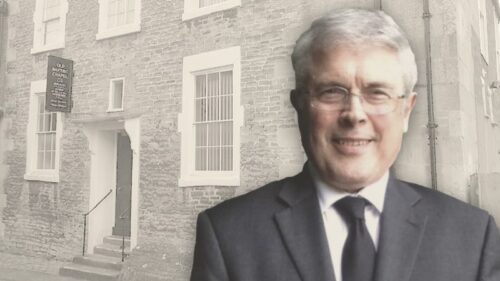
Sermon preached at Old Baptist Chapel, Chippenham by Mr. G. D. Buss on Lord’s Day Morning, 26th April, 2020
“But while he thought on these things, behold, the angel of the Lord appeared unto him in a dream, saying, Joseph, thou son of David, fear not to take unto thee Mary thy wife: for that which is conceived in her is of the Holy Ghost. And she shall bring forth a Son, and thou shalt call His name JESUS: for He shall save His people from their sins.”—Matthew 1:20-21
Some of you might think that this is an unseasonable word, as it is usually another day we set apart towards the end of the year to remember this sacred, solemn event of which our text is speaking. But you would be very wrong to think that, because this is a word for every day of the year; every season of the year. Our thoughts should never be far removed from what we have here. For, while we recognise that we are sinners, those who are taught by the Holy Spirit will be thankful that there is the precious name of Jesus to plead every day, whatever the season may be.
So, it is a seasonable word, although you might not think so. It was a seasonable word, of course, to Joseph, of whom we will speak in a moment. The Lord knows how to speak a word in season to those who are weary and those who are out of the way. And Joseph must have felt very much like that at this time of great trial to his faith. And may it be a word in season to some poor sinner listening this morning – that they might know that that “name which is above every name” may still be pleaded and still be proved, even as Joseph proved it.
Now, we read in the Word of God of three Josephs. Remarkably enough – and it is not by accident – each of them were appointed guardians. The first Joseph we read of is the one in the Book of Genesis, who was appointed the guardian of his family in time of famine. We know the amazing way the Lord led him, tried his faith and proved him to be His dear child.
We read of another Joseph at the end of the life of our dear Saviour here on earth; Joseph of Arimathaea. He was the guardian of the body of our Lord Jesus Christ. The Saviour’s body was taken down from the cross, and lovingly and tenderly laid in Joseph of Arimathaea’s tomb, where man had never laid before.
Now we have the other Joseph. He, dear friends, was appointed by God to be the guardian of the dear Saviour in His infancy and childhood as he grew up verily God and verily Man on the face of this earth. Three guardians; each appointed by God for a peculiar, particular purpose. It was no accident that it was the Joseph in our text who had this honour. We know that Mary had an even greater honour. She was “highly favoured,” as the Word of God says. But Joseph himself was highly honoured to be chosen of God as that one to be the guardian of the dear Saviour. And how faithfully he fulfilled that office! In every step of the way, when warned by God, he moved the way the Lord guided him. The steps of this good man were indeed “ordered by the LORD” and He delighted in His way. As he reflected on this he must have thought what a humbling privilege it was, that he, of all the sons of Adam, should be chosen to be the one to be the guardian of the dear Saviour, in that natural sense. And friends, we may just add this at this point. There is no path to which the Lord calls His dear people to walk in by accident. When He calls them into that path, He will make provision for them, both in providence and in grace. What a mercy the Lord is gracious in that way! “And when He putteth forth His own sheep, He goeth before them.” May He go before you in whatever path He has called you to walk in and to obey Him in. In the keeping of His commandments, in that respect, “there is great reward.”
But, dear Joseph was in a very difficult path. We read a wonderful word in the Book of the Proverbs. “Heaviness in the heart of man maketh it stoop: but a good word maketh it glad.” If ever a man needed a good word, it was Joseph. You meditate on that for a few moments. There are many things that make a heart heavy. Sin, temptations, the world, the thorn in the flesh, the crook in the lot and the difficulties in the way – many of these things make our heart heavy. We sometimes stagger to and fro under the burden “like a drunken man,” seeming at our wit’s end. “Heaviness in the heart of man maketh it stoop.” Nonetheless, Proverbs goes on: “But a good word maketh it glad.” Think how heavy the dying thief must have felt, with his sins lying heavily upon him like a millstone and eternity before him! But that good word made him glad: “Verily I say unto thee, To day shalt thou be with Me in paradise.” Think of poor, blind Bartimaeus. All those years, blind from his birth – a beggar! But he hears of Jesus of Nazareth. He knows He is passing by, and he hears these words: “Rise; He calleth thee.” With what gladness the dear man heard that word! The heaviness lifted, and soon his sight was restored. Then there was the woman taken in adultery. Think of her case; she had all her accusers around her. Yes, she was a guilty woman. We have no stones to throw at her, in that respect. But the Lord had a good word for her. “Woman, where are those thine accusers? hath no man condemned thee? She said, No man, Lord. And Jesus said unto her, “Neither do I condemn thee: go, and sin no more.” It was a good word. Dear friends, do you know what it is to have a good word? Perhaps during a time of heaviness under guilt, temptation, difficulty or fiery trials the Lord has spoken. And when the Lord speaks, there is nothing to be compared with it. It is the voice of our Beloved. “Behold, He cometh leaping upon the mountains, skipping upon the hills.” “Heaviness in the heart of man maketh it stoop: but a good word maketh it glad.”
Well, it would be a mercy if one of you had a good word this morning to lift your heavy heart from its low estate. Joseph needed it. Just put yourself in the place of Joseph, for a moment. He had become espoused (we would say engaged) to Mary. He was hoping she would be his wife before long. Then, to all human understanding, it appeared that she had been unfaithful. It appeared that she was with child with another man. How this must have tried and tested Joseph! Think of the things that must have crowded into his poor mind and made him feel heavy. First of all, what a disappointment it was! He had been looking forward, no doubt, to being married, to entering into life with Mary and having a happy marriage. And then it all seemed to be thrown to the winds. He must have been a very disappointed man. Again, he probably felt disillusioned. He thought and felt Mary was a godly woman. We know she was. He had had no reason to believe anything else, but now this evidence seemed even to point against that. How distressed he must have felt! If he was wrong in this, it would seem he was wrong in everything. It seemed to cast a shadow over all his exercises and all his pathway. He must have felt very disturbed and wondered whatever to do. How could he act? How should he act? How could he be honourable, and yet kind to Mary whom he loved? Yet, he felt he really could not, at this time, proceed with the marriage that had been planned. Here was a man on the very borders of despair. Here was a man in great distress. Here was a man who needed a good word. If ever a man was heavy, it was Joseph. “Heaviness in the heart of man maketh it stoop.” But friends, what did he do? And what must you do when you are heavy in heart? We read: “He thought on these things.” Similar words appear more than once in the account of the birth of our dear Saviour. We read: “But Mary kept all these things, and pondered them in her heart.” She didn’t just think about them, she prayed over them and asked for divine wisdom concerning them. What was the meaning of them? What was the interpretation of them? Mary was indeed one who pondered, and so was Joseph. He was a pondering man; a man who had thoughts toward God. There is no doubt that in his ponderings he laid this terrible enigma, this terrible paradox before the Lord. Friends, have you got something like that – a terrible enigma in your life? You cannot lay it straight. You cannot put all the pieces together and put it all in order. It seems totally out of order, as you look at it. It is totally contrary to what you had hoped and expected and indeed had been planning for. There it is. It seems to be lying in ruins around you. And that is how Joseph must have felt. The dear man was indeed in a very low state; a staggering state. He was in a state in which he must have wondered wherever this scene would end. Just one thought here: does it not seem that any who follow a precious Christ have a cross to take up? Looking back, he would realise that this was a cross he was taking up for Christ’s sake. When it was all revealed to him, he could see the wisdom of it. But it was a cross, nonetheless, at this time.
Well, here was a stooping, heavy hearted man. What did he need? A good word; perhaps what some of you feel to need this morning hour. A word in season. A word to lift you up from your downcast state. A word to set you on the Rock that is immutable, unshakeable and unfailing. A word to bring you into fellowship with your God; that nearness you have longed for, for so long. A word of forgiveness for your many sins. A word of defeat for temptation which seems to so often beset you and so often bring you to nought. Indeed, dear friends, there is this that is good for God’s dear people. “But a good word maketh it glad.”
Well, what good word was given to Joseph? There were three things. First of all, he had a wonderful consolation: a “fear not.” “Joseph, thou son of David, fear not to take unto thee Mary thy wife.” Secondly, he had a most blessed command. He was to name this Child, now conceived. God gave him the name. And the third thing was (and this was most blessed to him) that in understanding what that name meant, it would be to him a blessing as well. “Thou shalt call his name JESUS.” If ever a man had a good word, Joseph did. He had a “fear not,” he had a command that enabled him to go on when he thought he could not go on and he had a blessed communication: forgiveness. Let us meditate on these things for a little while, as the Lord may help.
First of all, we have this precious “fear not.” It was as if the Lord looked on all the disappointing, disillusioning and distressing things Joseph was surrounded with and said: ‘Joseph, they are in My hand. They are under my control. These are waves that I can still. These are winds that I can command to be silent. These are things to which I can say: “Peace, be still.” Fear not, Joseph.’ Dear friends, if the Lord says ‘fear not,’ then you have no need to fear.
“Fear Him, ye saints, and you will then Have nothing else to fear;
Make you His service your delight, Your wants shall be His care.”
‘Fear not, Joseph.’ “Let not your heart be troubled,” the Lord said to His disciples near the end of His days here below, “ye believe in God, believe also in Me.” “Peace I leave with you, my peace I give unto you: not as the world giveth, give I unto you. Let not your heart be troubled, neither let it be afraid.” What a mercy when there is that peace! “The peace of God, which passeth all understanding, shall keep your hearts and minds through Christ Jesus.” “The peace of God.” “Fear not.” Oh, what a reassuring, comforting word this must have been to Joseph! It was like the Lord coming, “leaping upon the mountains,” and “skipping upon the hills” which seemed to come between him and his God.
“Fear not, I am with thee; O be not dismayed;
I, I am thy God, and will still give thee aid;
I’ll strengthen thee, help thee, and cause thee to stand,
Upheld by My righteous, omnipotent hand.
Oh, the blessings of a “fear not!” We do not deserve them. We are poor, unworthy sinners. Were we not sinners, we would not fear. Fear is one of the fruits of sin within us. It is a mercy when the Lord comes over our sinful unbelief and sinful fears and says: “Be still, and know that I am God.” ‘Be still and know that I have this matter in hand. Be still and know that even these very things that have come to you – I have appointed them.’ It is even as the first Joseph said when his brethren came to him at last: “Ye thought evil against me; but God meant it unto good.” Indeed, that Joseph was walking in a very different path compared to the Joseph in our text, but the principle is the same. “God meant it for good.” It was the same message from the angel to Joseph: ‘Fear not, Joseph, this is for good. This will be for your good, and for the good of a number that no man can number out of every kindred, nation, tribe and tongue.’ “Fear not.” It is a blessed thing to have a ‘fear not.’ Nothing can be compared to it. It is “the peace of God, which passeth all understanding,” which keeps our “hearts and minds through Christ Jesus.”
The second thing Joseph had was a command; a command to do the very thing he had almost decided not to do. He had almost decided that he would not proceed with the marriage. He would put Mary away in a quiet way, and then go forth into life without her. But he was commanded to take Mary for his wife. Furthermore, he was to take her knowing this: that that “which is conceived in her is of the Holy Ghost.” Now, we speak of Mary’s faith, and Mary had tremendous faith. Perhaps no poor, sinful person on earth ever had such faith given to them as was given to Mary when she said: “Behold the handmaid of the Lord; be it unto me according to Thy word.” But Joseph had faith as well. He believed that which was told him of Mary was true. He believed it was a word of the Lord. It was as it was with Jeremiah when Jeremiah was in prison. We read: “Then I knew that this was the word of the Lord.” And when the angel came and spoke to Joseph, Joseph knew it was “the word of the Lord.” “Fear not to take unto thee Mary thy wife: for that which is conceived in her is of the Holy Ghost.” We would speak very tenderly and very carefully here, but here we have a type. Is not the new birth in the child of God conceived of the Holy Ghost? Is not He the Author of it? Is not He the Quickener of it? Is not He the One who is indeed bringing life where there was death, and light where there was darkness? He is the One who forms in the heart, as Paul put it writing to the Colossians: “Christ in you, the hope of glory.” You are privileged, dear friend, if you can say concerning the work of grace in your heart that that which is conceived in you “is of the Holy Ghost.” A new nature that is born of God within you that cannot sin – a new heart and a new Spirit. What a miracle! What a mystery! What a privilege! “Fear not to take unto thee Mary thy wife: for that which is conceived in her is of the Holy Ghost.” And don’t some of you long to have the witness of it? I do like Psalm 51 in so many ways. It is the psalm of repentance and the psalm of forgiveness. But it is also the psalm of the Holy Ghost. Listen to these words: “Create in me a clean heart, O God; and renew a right spirit within me. Cast me not away from Thy presence; and take not Thy holy Spirit from me. Restore unto me the joy of Thy salvation; and uphold me with thy free Spirit.” A right Spirit, a holy Spirit and a free Spirit. It is all one and the same, dear friends. It was the Holy Ghost in the heart that David longed for, yea, and that David had. What a mercy!
So, Joseph has this command, and the command was the very thing he had purposed not to do. But God showed him what to do. It is as if He said to Joseph: “This is the way, walk ye in it.” What a mercy it is when the Lord overrules our decisions! It is a mercy when He takes our will in His hand and we fall under it, saying: “Not my will, but Thine, be done.” What a mercy it is when we can put our hand in the hand of God, and, although we cannot see the way ahead, prove this: “I will bring the blind by a way that they knew not; I will lead them in paths that they have not known: I will make darkness light before them, and crooked things straight. These things will I do unto them, and not forsake them.” That is just what the Lord did for Joseph. He took his hand; his hand of faith and said: ‘Joseph, come with Me. As you walk it out, I will go before you. I will manage everything for you in the way. Fear not to receive this command.’
But, it went further than that. This wondrous Child that was to be born was to be named. We know that when children are given to parents, it is their joy to choose the name. But it was not left for Joseph or Mary to choose the name of this Child. The name was chosen by God the Father. It was He who sent His dearly beloved Son into the earth. He had the divine right to choose the name of His dear Son here below. Joseph and Mary had to lay aside any other thoughts they might have had about the matter, and submit. This was the name He was to be called: “JESUS: for He shall save His people from their sins.” It is the same blessed name we have in Jeremiah: “This is His name whereby He shall be called, THE Lord OUR RIGHTEOUSNESS.”
So, Joseph received this command to take Mary to be his wife whatever the reproach may be; to take her in love and do the Lord’s bidding, and secondly to name the Child according to the will of God the Father whose holy Child it was. “Thou shalt call His name JESUS.” But there was something personal to Joseph. I will come back to that in a moment. ‘Joseph, it is not just that you are naming Him because I am telling you to. Joseph, you will have an interest in the name. It will mean something to you.’ We sometimes sing:
“How sweet the name of Jesus sounds
In a believer’s ear!
It soothes his sorrows, heals his wounds,
And drives away his fear.
Dear name! the rock on which I build;
My shield and hiding-place;
My never-failing treasury, filled
With boundless stores of grace.”
Oh, the wonderful name of Jesus!
Now, just as there are three Josephs in the Word of God; there are two Joshuas. Joshua is the same root name as Jesus. We have Joshua in the Book of Joshua, who succeeded Moses. Joshua was a wonderful type of Christ in many ways. He may be likened to a governor or a king, appointed by God to lead His ancient people. Then in the book of Zechariah we have Joshua the High Priest. He was fulfilling that office in a time of great stress and great need. Those two men were distinct. They were distinct in this way: their offices were to be kept separate. Only in Christ were they to be fulfilled together: Priest and King. You will remember how King Uzziah tried to fulfil the priest’s office and was struck with leprosy for so doing. Only in Christ are the two offices to meet: a precious Jesus. And they do meet wonderfully there. The Kinghood, the Priesthood and the Prophet, as well. Prophet, Priest and King all in one glorious Person! His name is Jesus, meaning Saviour. “JESUS: for He shall save His people from their sins.”
What does the name of Jesus mean? How can we explain it? Well, the Word of God interprets it for us. We are told three things. First of all, God has a people; Christ has a people. Secondly, they are a people who are sinners, and they need saving from their sins. And thirdly, we are told that He shall save them. There is no doubt about it. There is not an ‘if,’ or a ‘but,’ or a ‘how,’ or a ‘perhaps.’ This is the blessed, determined purpose of the dear Saviour to “save His people from their sins.” It is a wonderful thing if you are numbered among God’s people. By nature, you and I are children of wrath, even as others. We have to remember that. It is a solemn thing to have to acknowledge. Indeed, Peter, who knew both sides of the matter, tells us: “Which in time past were not a people, but are now the people of God: which had not obtained mercy, but now have obtained mercy.” Before the Lord comes and calls them by grace, before He conceives in them that new nature and that new heart, they are not a “people of God” in their experience. They are “children of wrath, even as others.” They are serving sin, serving self and serving the world under the curse of the world and knowing it not. It is a solemn condition to be born in sin and “shapen in iniquity.” And, even after a child of God is called by grace, he is made conscious that he carries about with him that sinful nature. I think of dear Peter again in that respect. We read he “followed afar off.” ‘Peter, what is it that is keeping you from following closely?’ It was the sin of unbelief, the fear of man, self-righteousness and independence. All those things were keeping him, otherwise he would have been leaning on the arm of Christ. He had to learn the folly of his ways. The wonderful thing is the Lord had an answer for Peter, even as he followed afar off. And there may be one of the Lord’s dear people listening this morning, and you feel you are following afar off. You know the reason; you can see what has come between you and the Saviour. ‘Will He ever draw me near again?’ He did Peter, didn’t He? If ever a man had a good word, Peter did. How heavy he must have been when he went out and wept bitterly! How heavy he must have been as he pondered his denying of our dear Lord over those three days when the Lord lay in the tomb! But then we read these words: “But go your way, tell his disciples and Peter.” The very mention of the name Peter was a good word. The Lord had not forgotten him. The Lord had not abandoned him. The Lord had not forsaken him. “I will heal their backsliding, I will love them freely.” What a mercy! And so it was, dear friends. Peter had a good word, didn’t he? And here is a good word: “He shall save His people.” Yes, those people given by the Father for Him to redeem in the covenant of grace. “Thine they were,” said the dear Saviour, “and Thou gavest them Me.”
Secondly, what does it mean? It means they are a purchased people. They fell in Adam, and they needed to be redeemed from what they were by nature. And so the Lord sent His dear Son. “But when the fulness of the time was come, God sent forth His Son, made of a woman, made under the law, To redeem them that were under the law, that we might receive the adoption of sons.” They are His people by gift and by purchase. Wonderful blessing! Wonderful truth! And then they are His because they are drawn by the dear Spirit. When the Holy Ghost conceives in their heart that new nature, that new heart and that new Spirit; when He begins to form in their heart Christ, “the hope of glory,” they come into the ways of God’s people in their experience. His people walk in the “footsteps of the flock.”
And, the wonder of it is that He loved them from all eternity. He loved them before they were born. He loved them while they were yet wandering in the ways of sins. He did not love their sins: their sins were to cost Him the agony of Gethsemane and Calvary. But friends, He loved their persons.
“He saw me ruined in the fall,
Yet loved me notwithstanding all;
He saved me from my lost estate;
His loving-kindness, O how great!”
Friends, have you ever pondered that? “He shall save His people from their sins.” In due time He sends His blessed Holy Spirit, determined to save them. He changes their state from darkness to light, from death to life, from the bondage of sin to the liberty of the gospel and from the covenant of works to the blessed covenant of grace in their experience. “He shall save His people from their sins.”
In what way does He save them? First of all, He saves them from their fallen state. He restores that which He “took not away.” Blessed be His holy name, He restores them from what they lost in Adam. This second Adam comes and puts in them that new nature and that new heart. God has promised that this “is the victory that overcometh the world, even our faith.” Oh, for more of it; blessedly more of it! “He shall save His people” from their sinful pedigree. He plucks them as brands from the burning. He takes them from the quarry of nature and makes them His own. Again. “He shall save His people from their sins” in this respect: from the dominion of their sins, the power of their sins and the domineering nature of their sins. He puts in them a greater love for holiness than the love of sin that is in their old nature. It is a great mercy when He does that. Again. He saves them from the consequences of their sins. Yes, they are chastened; rightly so. But, the vengeance has gone.
“Vengeance, when the Saviour died,
Quitted the believer;
Justice cried, “I’m satisfied,
Now, henceforth, for ever.”
Blessed be God! Oh, the wonder of it, that He has indeed cancelled the payment of the law! He has answered all its demands, given a perfect obedience for that sinner and made full atonement for that sinner’s sins. “For He shall save His people from their sins.” They must pass through the hour and article of death because of their sins. “The wages of sin is death; but the gift of God is eternal life through Jesus Christ our Lord.” “And she shall bring forth a Son, and thou shalt call His name JESUS: for He shall save His people from their sins.”
What witness do you and I have in calling His name Jesus? How can we understand this in an experiential way? Well, here is one way. Have you ever pleaded the name of Christ successfully? Have you ever taken that name upon your poor, unworthy lips and named it before His Heavenly Father? Perhaps you have said: ‘For Jesus’ sake, hear my cry.’ ‘For Jesus’ sake, attend to my want.’ ‘For Jesus’ sake, come over the mountains and hills and bless my soul.’ Have you ever proved that name?
“This is the name the Father loves
To hear His children plead;
And all such pleading He approves,
And blesses them indeed.”
It is a wonderful thing to plead that name and prove that name. “Thou shalt call His name JESUS.” And don’t you call His name Jesus when He comes to you in your need? When He came to the disciples on the Galilean Lake, He said: “It is I; be not afraid.” And we read: “Then they willingly received Him into the ship.” It was their Jesus who had come. It was their Lord and Master who had come. They knew Him. They could receive Him, as it were, into that boat with such a welcome in their troubled, tried hearts. “Thou shalt call His name JESUS: for He shall save His people from their sins.”
So, we name Him in prayer, and we name Him in praise when He comes to our aid. And don’t we sometimes name Him when we read the Holy Word of God? Perhaps you read a portion, and suddenly there is something of Christ that stands out on the page. Perhaps it is something you have never seen before and never felt the same about before. But, there it is, and your heart leaps like John the Baptist leapt in the womb of Elizabeth when our Lord’s mother went to see her. He leapt in her womb for joy. And so your heart leaps for joy when you see Christ on the sacred page. When you hear Him preached in the House of God, does your heart rise up? ‘This is my Jesus being spoken of.’ Then you “call His name Jesus.” You lose sight of everyone else. On the Mount of Transfiguration the dear disciples lost sight of Elijah and Moses, didn’t they? To see those two men must have been a wonderful sight; they had been gone from this earth for many years. It was a miracle. Yet, the disciples “saw no man, save Jesus only.” “For He shall save His people from their sins.”
But, you may say: ‘Am I one of His people?
All I seem to know is my sinner-ship!’
“For sinners, Lord, Thou cam’st to bleed;
And I’m a sinner vile indeed;
Lord, I believe, Thy grace is free, O magnify that grace in me.”
It is a great mercy when we can come as a sinner. You say: ‘I dare not come as one of God’s people; I do not feel to be one. I cannot show any marks of grace. I do not feel to have anything to commend myself.’ Friend, come as a sinner! The publican went as a sinner, didn’t he? “God be merciful to me a sinner.” Think how Peter must have gone to the Lord when the Lord met him. He must have gone as a sinner, mustn’t he? But, a sinner saved by grace. How the Lord covered his infirmities and covered his sin! He showed him how He had kept him in Satan’s sieve. “Thou shalt call His name JESUS: for He shall save His people from their sins.”
So, we have this precious truth. And you will notice that there are two names mentioned in this chapter. One was Jesus, the one we have been trying to hint of, and the other was Emmanuel. The first name speaks of His office: the Saviour. He is the Saviour of the lost and the Saviour of sinners. This is why He came to do the Father’s will. What burdens lay on His holy soul! “Wist ye not that I must be about My Father’s business?” He was saving His people – that was His holy office. The woman of Samaria said to the men of Samaria: “Come, see a Man, which told me all things that ever I did: is not this the Christ?” And later on, those men said themselves: ‘We know that this is indeed the Christ.’ They could say it personally. “Now we believe, not because of thy saying.” They did not disbelieve what she had said, but they had proved Him for themselves. “For we have heard Him ourselves, and know that this is indeed the Christ, the Saviour of the world.” ‘We are now calling His name Jesus. We have proved it. We have known it, we have felt the power of it and we have felt the unction of it. This is none other than the Christ, the Saviour which should come into the world.’ Bless God for His office as Saviour! He has wonderfully fulfilled that office. Some of us have been given offices to fulfil, but how poor we feel to have been in them! May all we think, or speak, or do, be sprinkled with His blood. What a “needs be” there is.
Yet, dear friends, this Saviour still receives sinners, doesn’t He? The office that the Lord Jesus Christ fulfilled, He fulfilled perfectly. When He said: “I have finished the work which Thou gavest Me to do,” it was finished. It was a completed work. It was not as if He said: ‘I have done all I can, but there remains something yet to do.’ No! He had finished it. He had completed it. He magnified the law. He made it honourable. Bless His dear, holy name for that. He fulfilled His office to the full, and He still fulfils it at the right hand of His Father. “For there is one Mediator between God and men, the Man Christ Jesus.” He still bears the name Jesus in heaven above, because He is still the Man.
But, the other name was Emmanuel. Here we have His natures; two natures in one glorious Person. He is truly Man; the true and proper Child of Mary, so wonderfully given to her by the overshadowing of the Holy Ghost – a deep, deep mystery. On the other hand, He was God from all eternity. “From everlasting to everlasting, Thou art God.” He is not just a god, with a little ‘g.’ He is not just the Son of God – indeed He is the Son of God – but He is God the Son. “Thou art God.” “Emmanuel…God with us.” God in our nature. God, uniting to His divine Person this other nature of body and soul. Oh, the wonder of it! “Emmanuel…God with us.” God with us in our need under the law to obey it. God with us under divine chastisement to pay the price of sin. God with us to conquer the devil. God with us to overcome the world. God with us to help us through our fires, our deep waters and our dark places. God with us, to bring us safely through, even in “the valley of the shadow of death.” God with us, and we with God to all eternity. I do like the way the Apostle Paul speaks of it in 1 Thessalonians. He says: “For the Lord Himself” – this same precious Person – “shall descend from heaven with a shout, with the voice of the archangel, and with the trump of God.” What a day that will be! “And the dead in Christ shall rise first: Then we which are alive and remain shall be caught up together with them in the clouds, to meet the Lord in the air: and so shall we ever be with the Lord.” Together with them – the whole election of grace; all God’s people. But, the great point is that it will be with Him. “And so shall we ever be with the Lord.” This is the outcome. This is the final outworking of our text, to bring His dear people to that place of happiness where sin no more defiles, where the devil no more interferes, where the world can no more afflict and where fires, temptations, deep waters and death itself is forever left behind. What a wondrous Person we have before us here! “Emmanuel…God with us.” Friends, is He precious to you, this morning? With what loving words Joseph must have named that Babe when at last He lay in Mary’s arms! He said to all around: ‘His name is Jesus.’ Jesus, the Son of God in our nature. “Emmanuel…God with us.” “JESUS: for He shall save His people from their sins.” Dear Simeon saw Him in the Temple and took Him into his arms and looked on Him with his natural eye, but he also looked on him with the eye of faith. “Lord, now lettest Thou Thy servant depart in peace, according to Thy word: For mine eyes have seen Thy salvation.” Yes, Simeon had seen it; he had seen a precious Christ. He called His name Jesus that day.
So, Joseph had a good word. The name of Jesus lifts the soul up, doesn’t it? Once spoken into a sinner’s heart, it raises him up above his sins, above his guilt, above his temptations, above the waves, the darkness and the difficulties of the way. It puts him on the Rock, and it says to that favoured sinner:
“I love thee well, My child.”
‘You are one of My people. You were given by the Father to Me to redeem. I have laid down My life for you.’ “Come in, thou blessed of the Lord; wherefore standest thou without?” “He shall gather the lambs with His arm, and carry them in His bosom” – the place of love and the place of affection; the place (I say it most reverently) where they can feel the heart of the dear Saviour beat for such as us, the love of Christ constraining us.
“Fear not.” What a word it was to Joseph! It was a word of consolation. “Fear not.” It was a word of command. He could go on with Christ in the vessel.
“The way I walk cannot be wrong,
If Jesus be but there.”
It was a blessed communication to his own soul, personally. ‘Joseph, you are among those whose sins are forgiven; blotted out forever.’ “I have blotted out, as a thick cloud, thy transgressions, and, as a cloud, thy sins: return unto Me; for I have redeemed thee.” May God add His blessing to His word this Sabbath morning.
Amen.

Gerald Buss is a Strict and Particular Baptist preacher. In 1980, he was appointed pastor of the Old Baptist Chapel meeting at Chippenham, Wiltshire.