
The Exceeding Riches Of His Grace
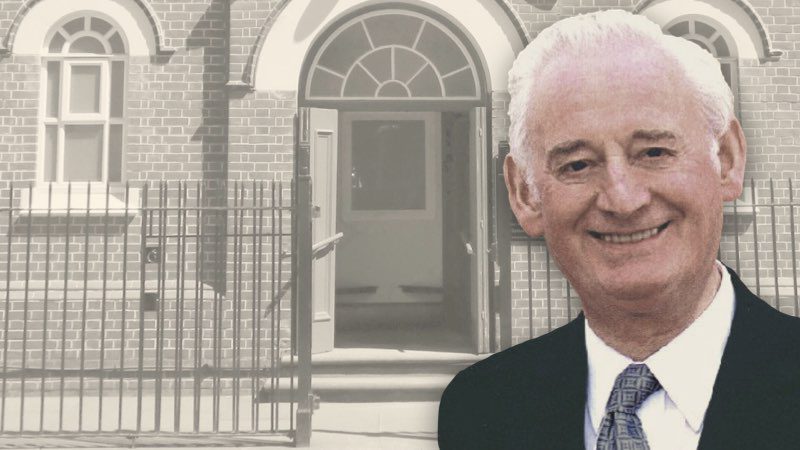
[Posted by permission. Bethel Strict Baptist Chapel.]
Sermon preached at Bethel Chapel, Luton, by Mr. B. A. Ramsbottom, on Lord’s day morning, 9th August, 2020
“That in the ages to come He might shew the exceeding riches of His grace in His kindness toward us through Christ Jesus”—Ephesians 2:7
One thing a gospel minister does need to beware of: that is, continually repeating himself. Over the years there have been some most godly ministers who in their latter days have kept on repeating themselves. Now may the Lord ever deliver us from that.
But beloved friends, there are occasions when repetition has been overruled and abundantly blessed. Now let me give you one instance. Years ago, a godly minister was taking an anniversary away from home. I am not absolutely certain who it was, though I think it was Mr. Curtis of Southill, and he was really troubled. He had the same text for that anniversary that he had the year before, and try as he would, he could not think of one different thing to say. It seemed to him that it was just going to be almost a word-for-word repetition of the sermon before. When he arrived at the place where he was preaching, he felt utterly ashamed of himself. So it was. But there was a godly woman who in recent months had been bitterly tempted by Satan that her religion was wrong, and for one last time, as she came to this anniversary, she said, was it possible – is such a thing possible – that she could have the year before’s sermon preached to her almost word-for-word as it was the year before! And beloved friends, her request was granted, and the poor, dear man in the pulpit, when he left the pulpit did not know where to put himself. But the repetition was made an abundant blessing and complete deliverance to that godly woman.
I think what has led me to begin in this way: last Lord’s day evening, the text contained the same words as we have in this verse: “the riches of His grace” (Ephesians 1. 7). But pondering it over before the Lord, there is a difference. Last week, the emphasis was on those two great blessings: forgiveness and redemption. And then at the end, it was emphasised that if a sinner ever received these things, it can only be in one way: “according to the riches of His grace.” Now in a sense last week, “the riches of His grace,” just giving a reason for those two great blessings. Now today as this text appears, “the exceeding riches of His grace,” it embraces the whole of the gospel, the whole of the finished work of Christ, the great plan of salvation. It is summarising all these blessings of chapter 1: election, predestination, adoption, acceptance, forgiveness, redemption, and it is adding to them the glorious work of the Holy Spirit in making these things known.
“The exceeding riches of His grace.” Really that is what the gospel is, what the gospel preaches, and what it sets forth, and all these exceeding riches of God’s grace are treasured up in the Lord Jesus. We have here His Person, God and Man in one glorious Christ. We have His office as the Mediator. We have that wonderful righteousness which is our hope. We have the precious blood that He shed, by which sinners “who sometimes were far off” are now “made nigh by the blood of Christ.” W e have the Saviour’ s death. W e have His resurrection, His exaltation, and His all-prevailing intercession. And then we have the wonders of His love and mercy. All these things are embraced here: “The exceeding riches of His grace.”
One of the godly divines has remarked that in this verse Paul almost seems to be carried away. He cannot emphasise it enough. In the light of our sin and our unworthiness, our guilt, “saved in the Lord with an everlasting salvation.” Why? We do not deserve it. We would never have sought it. It is freely given. There is only one reason for it, and that is the grace of God made known in our Lord Jesus. “The exceeding riches of His grace.”
So he begins this chapter with the awful condition in which each one of us is by nature: “Dead in trespasses and sins,” walking “according to the course of this world … our conversation in times past in the lusts of our flesh … the children of wrath, even as others.” This is where these exceeding riches of God’s grace come in. “But God” – one of those wonderful buts of Scripture. “But God.” “But God, who is rich in mercy, for His great love wherewith He loved us, even when we were dead in sins, hath quickened us” – made us alive, with great blessings of everlasting life by the Spirit – “quickened us together with Christ, (by grace ye are saved).” And here comes the top stone, the conclusion: “the exceeding riches of His grace.”
Have you thought why the apostle adds this word exceeding? Not just grace; not just the riches of God’s grace; “the exceeding riches of His grace.” Well, they exceed everything that you and I deserve. They exceed everything you and I could have hoped for. They exceed the best words that even the apostle can speak. It is only the Lord Himself who can really comprehend this wonderful word: “The exceeding riches of His grace.”
Of course, the point is the preciousness of them. They are not earthly riches; they are heavenly riches. They can never be stolen; they can never be lost; they can never grow old. They exceed all earthly riches. They exceed the best that man can give. They are precious, and their preciousness all centres in a Person, and that is our Lord and Saviour Jesus Christ. For “unto you therefore which believe He is precious.” I do not know whether I have ever preached from that at Bethel. I would love to preach from that to you. I remember in my early days, it was one of my favourite texts, if it is right for us to have favourite texts, but we do in our early days. I know we used to sing – but we have been tried on it since –
“Not health, nor wealth, nor sounding fame,
Nor earth’s deceitful, empty name,
With all its pomp and all its glare,
Can with a precious Christ compare.”
These are where true riches are to be found. The wonderful thing is that they can be possessed. We think of the parable, the treasure hid in the field, and the other parable, the pearl of grace price, and when we say it is Christ who is precious, well, it is Christ precious in His finished work, but it is Christ made precious as He is revealed to His people. Could we ask that question this morning: has Christ ever been made precious to you? Or perhaps bringing it just a little lower, can you really say, “Be precious to us; all beside is as dross”? Be careful what you say; do you mean it? “All beside is as dross, compared with Thy love and the blood of Thy cross.” Now that is where the preciousness lies. “The exceeding riches of His grace.” “Unto you therefore which believe He is precious.” A few verses before, Peter says, “Not redeemed with corruptible things, as silver and gold … but with the precious blood of Christ, as of a lamb without blemish and without spot.”
“The exceeding riches of His grace.” Now these are made known, and these can be possessed, and the one who possesses them is made truly rich. But beloved friends, you know how this priceless treasure comes to an unworthy sinner: “Ye know the grace of our Lord Jesus Christ, that, though He was rich, yet for your sakes He became poor, that ye through His poverty might be rich.” So go to the stable in Bethlehem. Go to the Mount of Olives, where the Lord Jesus spent long nights in prayer. See Him riding on a borrowed ass – He had none of His own – into Jerusalem. See Him buried in a borrowed tomb, and His humiliation at the hands of wicked men. The poverty of the Lord Jesus! “That ye through His poverty might be rich.”
“That in the ages to come He might shew the exceeding riches of His grace.” So this beautiful subject has to be made known, and it has to be possessed and enjoyed by God’s people. “In the ages to come.” That means from the moment onwards when Paul spoke these words, throughout those dark ages, in those glorious periods in the history of the church of God, at present in this dark day, but never to end, to be known to all eternity, in all their glorious fulness in heaven.
“That in the ages to come He might shew the exceeding riches of His grace.” Now it is the Holy Spirit who is going to show these things, show them in the gospel, and show them personally to God’s chosen, redeemed ones. That is where the reality of vital godliness stands, beloved friends, in the Holy Spirit showing things to sinners. Do not be frightened when we speak of divine revelation. We are not speaking and thinking of dreams and visions and things like that. It is the Holy Spirit showing these things to sinners. We have this truth right through holy Scripture, till it comes to that beautiful word: “He shall glorify Me: for He shall receive of Mine, and shall shew it unto you.” O do you pray things like that: “Show us that loving Man”? That is where these exceeding riches of His grace are to be made known and found.
“Show us that loving Man
That rules the courts of bliss,
The Lord of Hosts, the Mighty God,
The eternal Prince of Peace.”
“That in the ages to come He might shew the exceeding riches of His grace.” Now lingering on this point, because it is an important thing: divine revelation, the teaching of the Holy Spirit. When a sinner is born again, blessed with divine life, he is not left just to find his way along now. The Holy Spirit is not going to leave him. He is going to teach him. He is going to show him things he has never seen before. He is going to show him things in the Word of God. He is going to show him hidden things.
Very, very briefly, let me give two examples, one from the Old, one from the New Testament. Israel at Marah. The waters were too bitter, the people murmuring, Moses not knowing what to do. “And the Lord shewed him a tree.” It represents Christ. “The Lord shewed him a tree,” and when that tree was cut down and cast in, the waters were healed. And then the closing chapter in Scripture, where the apostle says that he was shown the “river of water of life, clear as crystal, proceeding out of the throne of God and of the Lamb.” It must have been a beautiful sight, and of course John himself was a partaker. But the Lord showed it him.
Here we have it: “That in the ages to come He might shew the exceeding riches of His grace in His kindness toward us through Christ Jesus.” There is a very sacred, solemn emphasis here. These things are toward us, not against us, and when the Lord shows us these things, He shows that these things are for us; they are toward us. They are coming towards us as divine favours, as blessings, and we are pleased they are coming towards us. We do not want them to pass us by. We want them to come right where we are.
When the Holy Spirit shows these things, His normal way of working: He shows us our need of them. Grace is not precious to us by nature. We read of it in the Bible; we perhaps like to sing some of those hymns. But we do not really feel our need of it. The whole point of grace – the old people always used to say, grace is God’s free, unmerited favour to hell-deserving sinners. It is quite a good explanation of it: God’s free, unmerited favour to hell-deserving sinners. That is the whole point of grace. It is something not only we just do not deserve, but actively in our life, walk and conversation, we have thrown ourselves out of deserving it. That is the whole point of grace, and especially the exceeding riches of His grace, and the whole emphasis he is coming to here: that we do not deserve it. He is really thinking of all those opening verses of this chapter – what we all were by nature, what we still are, unworthy sinners, not worthy of the least of God’s mercy, and yet these things flowing toward us, not in a niggardly way or a resentful way, not just coming, flowing towards us in love, in mercy. O the emphasis there, toward us, such unworthy, undeserving sinners! Yet, “where sin abounded, grace did much more abound.”
Really, when Paul is writing this beautiful word, this word I have read to you, he has all chapter 1 on his mind; and then he comes to the opposite at the beginning of chapter 2, our wretched condition; and then he bursts forth in praise: “But God, who is rich in mercy, for His great love wherewith He loved us, even when we were dead in sins, hath quickened us together with Christ, (by grace ye are saved).” And here he comes to this glorious conclusion. These two opposites meet together: the sinner’s dreadful need, the glorious Person of the Son of God. Here they meet together, and you know where they meet together.
“O the sweet wonders of that cross,
Where God the Saviour loved and died!”
That is where the rich and the poor meet together, at the cross of Christ.
“That in the ages to come He might shew the exceeding riches of His grace in His kindness toward us,” and then he says this: “through Christ.” It comes in all through the gospel; it comes in all through the epistles; it comes in all through our hymns, that any favour that unworthy sinners have received must be through Christ. There is a channel here, and it is the only channel: “Through Christ.”
“Every grace and every favour
Comes to us through Jesus’ blood.”
If every good thing a sinner receives, every true blessing, can only come in one way, through Christ, that is where we must seek it. That is a lovely word to our young people who are here this morning and those who are listening. Perhaps you listen to all these doctrines; perhaps you admire them, and perhaps some of them you do not understand. You older ones might meditate on these things, and we cannot attain them. Well, we do not attain them; they flow towards us. But you young ones, if there are so many things you do not know, I hope many of you know your need of a Saviour. I hope many of you feel your need of a Saviour and this salvation you know you must have, this preparation for eternity you must have, that you know you cannot do for yourself. It is here; it is through Christ Jesus. That is the place where the Saviour is to be known, where the Saviour is to be found, and that is the place where the Holy Spirit makes Him known: “through Christ Jesus.”
I do not want to confuse you, but I just want to turn off the point for a moment. As we recently have read through Ephesians chapter 1 and chapter 2 and part of chapter 3, one place has “Jesus Christ,” and sometimes “Christ Jesus”; sometimes it is the one, sometimes the other. There must be some reason for this. I have been pondering over this ever since I was young, and never really found the answer, and never come across any of the godly divines who have tried to open it up. I think the nearest I have come: if the word speaks of Christ Jesus, it speaks of Christ Jesus coming toward the sinner; if it speaks of Jesus Christ, it is from the sinner’s side coming to the Lord. I think we should ponder some of these things. I have been thinking of it for many, many years: Jesus Christ, Christ Jesus.
“That in the ages to come He might shew the exceeding riches of His grace in His kindness toward us through Christ Jesus.” Which leaves us only one other thing to speak about. There are so many different things in this verse, such a fulness in it, but he brings this in: “His kindness … through Christ Jesus.” As the Holy Spirit makes these things known, they are made known in the Lord’s kindness to us.
You cannot help but think of that beautiful verse in the Epistle of Titus: “But after that the kindness and love of God our Saviour toward man appeared.” That is where Titus begins this little cluster of verses (Titus 3. 4- 7). It was after the kindness and love of God our Saviour had appeared. That is where it all began in eternity. “But after that the kindness and love of God our Saviour toward man appeared, not by works of righteousness which we have done, but according to His mercy He saved us, by the washing of regeneration, and renewing of the Holy Ghost; which He shed on us abundantly through Jesus Christ our Saviour; that being justified by His grace” – this same grace – “we should be made heirs according to the hope of eternal life.” So in this verse you have really the whole plan of salvation, and it all begins here, in the kindness of God.
But here the apostle brings it toward the end, the way in which these things are made known. “In His kindness toward us through Christ Jesus.” Now we have this word kindness many, many times in Scripture. I am sure some of you are going a little bit ahead of me. It is not usually just called kindness; it is lovingkindness, which I take to mean that the Lord Jesus is kind towards them because He loves them. I have often given you the illustration: a lot of you in months past outside chapel, all kinds of people have been coming in need, and you have been kind to them; you have shown them real kindness. But you perhaps have never seen them before and you may never see them again. You cannot say you love them. The kindness the Saviour shows is lovingkindness. It is like the old minister when he came out of hospital, and he said, “They showed me kindness there, but when I came home to my wife, it was lovingkindness shown me.”
“His kindness toward us through Christ Jesus.” It is no wonder the psalmist says, “How excellent” – it is this same point – “the exceeding riches of His grace” – the exceeding riches of His lovingkindness. “How excellent is Thy lovingkindness, O God! therefore the children of men put their trust under the shadow of Thy wings.” And then one of the prophets says, “I will mention the lovingkindnesses of the Lord.” We can only mention them. And then when David fell so dreadfully, when he was brought to make that humble confession in the fifty-first Psalm, he makes that his only plea: “Have mercy upon me, O God, according to Thy lovingkindness: according unto the multitude of Thy tender mercies blot out my transgressions.”
So we have an amazing verse here, and it is not vain repetition, beloved friends. Well, there is not repetition at all. If there is anything, it is Holy Ghost emphasis. But it is to have these things shown to us. “That in the ages to come He might shew the exceeding riches of His grace in His kindness toward us through Christ Jesus.”
Benjamin Ramsbottom (1929-2023) was a Strict and Particular Baptist preacher. In 1967, he was appointed pastor of the church meeting at Bethel Strict Baptist Church, Luton, Bedfordshire, a position he held for fifty-five years.