

Whom Having Not Seen, Ye Love
[Posted by permission. Bethel Strict Baptist Chapel.]
Sermon preached from his own home by Mr. B. A. Ramsbottom, on Lord’s day evening, 3rd May, 2020, when chapels were closed owing to the coronavirus. The preaching was relayed.
“Whom having not seen, ye love”—1 Peter 1:8
I wonder about how many of us here this evening, this beautiful word could be spoken – the sweet assurance that we love our Lord Jesus Christ. O but may there be that prayer tonight in each heart, young and old, that we might know this blessed, vital experience and that the love of Christ might be shed abroad in our hearts by the Holy Ghost, that it might truly be witnessed of us, “Whom having not seen, ye love.”
Now Peter himself had seen the Lord Jesus, but these elect strangers scattered abroad, like us, had never been favoured with that personal, mortal sight of the Lord Jesus. But Peter could bear witness of them that they loved that Saviour whom they had never seen. “Whom having not seen, ye love.” Now how did Peter know that? Of course, it was partly he was writing by divine inspiration as led by the Holy Ghost, but he knew it because they had testified of it, they had borne witness to it, they had not been silent. They had known what it was to be “begotten … again unto a lively hope by the resurrection of Jesus Christ from the dead,” and as a result of that lively hope, like faith it worked with love in their hearts.
But then there was a second thing, and that was the witness that they bore. They were in much affliction and persecution and opposition, but their love stood the test. They did not turn back. They did not deny their hope. They knew what it was not only to feel love, but to walk in love. How important that is for us, that through the Holy Spirit’s work we should know something of love to the Saviour, but then that in our little lives, as upheld by the power of God, as graciously enabled, we should walk worthy of that love which has been made known in our hearts. “Walk in love, as Christ also hath loved us, and hath given Himself for us.”
“Whom having not seen, ye love.” Now Peter was writing this, and Peter was one of those favoured apostles who were favoured to see the Lord Jesus, to walk with Him, to follow after Him. In walking with the Saviour, Peter was blessed with that love, that sweet love, freely flowing from his heart to that Saviour who loved him so much and did so much for him. Peter truly walked that out: “We love Him, because He first loved us.”
But of course Peter had that dreadful fall. Three times, even with oaths and curses, he denied that he ever knew his Lord and Master. Now what has happened to the love of Christ in his heart now? Ah, he had an interest not only in the Saviour’s love, but the Saviour’s prayer. “I have prayed for thee, that thy faith fail not.” And his faith did not fail, and because his faith did not fail, his love could not fail. It was truly a bruised reed; it was truly smoking flax.
But the time came after the Saviour’s resurrection when they had gone fishing, and on the sea shore the Lord called Peter aside by himself and He put that pointed question to him: “Simon, son of Jonas, lovest thou Me?” O but He was going to ask it three times, and he was going to have that three-fold confession where he had had the three-fold denial. And Peter did not fail then. “Peter was grieved because He said unto him the third time, Lovest thou Me?” and he came out with one of those noble confessions. There are a number of them in the New Testament – noble confessions. “Lord, Thou knowest all things; Thou knowest that I love Thee.”
So with Peter it was different. He had seen the Saviour and he loved Him. Now none of us have been favoured to see the Saviour with our mortal eyes. Some people have had remarkable revelations and it has almost seemed as if they could see the Lord Jesus with their mortal eyes, but it is not this side of the veil that any mere mortal eyes shall look upon the Saviour. That is reserved for the nevertheless afterward. But this in greater or less measure is true of all the Lord’s people: “Whom having not seen, ye love.”
Well then, how does this come to pass? How does it take place in the life of a child of God? Because by nature we do not love the Saviour. We may have some sentimental feelings at times, but we do not love the Saviour. Satan is our master. We are Satan’s blind slaves, and our affections are bound up to sin and Satan and the world. With the Lord’s chosen, His redeemed, there comes a time when they are born again, when He calls them by His grace, and there are many things, but feeling in greater or less measure their lost condition as sinners with eternity before them, they are brought into a real concern, in humble confession, in prayer to be made right. And so led by the Spirit they flee to the Savour, and that is where the seeds of love, however feeble, begin to be sown in their hearts, when they first get a glimpse of the beauty of the Saviour and the suitability of the Saviour, and they see an attraction in the Saviour, and they want the Saviour for themselves, to be their Saviour.
So as the Lord leads them on, especially when He makes Himself known, when He raises them up to a good hope through grace, then they do feel a love to the Lord Jesus. They cannot help it; they do not have to create it; it flows. Especially it is so when they realise on the one hand, how unworthy and sinful they are, and on the other, how much the Lord of life and glory has done for them, especially in going to the cross, enduring such agonies even unto death, bearing their sin in order that they might be saved from sin and death and hell. And when they know that in any measure and realise it, then they know something of this wonderful love to the Saviour.
Now especially some by faith are led close to the cross of Christ, and that was the place of love. As they enter by faith into what He suffered for them, how He wore the crown of thorns that they might wear the crown of glory, how His hands and feet and side were pierced for them, then they know something of being overwhelmed. It is that “love of Christ, which passeth knowledge.” O it does, doesn’t it!
“It passeth knowledge, that dear love of Thine,
My Saviour, Jesus; yet this soul of mine
Would of Thy love, in all its breadth and length,
Its height and depth, its everlasting strength,
Know more and more.”
And so a sinner is brought into this experience:
“Whom having not seen, ye love.”
There is a very beautiful passage in the Song of Solomon. The daughters of Jerusalem asked a question. I take these daughters of Jerusalem to be seeking, enquiring souls, and the beloved bride of Christ, the church of God, has just closed all she has to say with this: “I am sick of love.” What an expression! “I am sick of love.” So really the daughters of Jerusalem say, Why is it that you really love Him? What is there special about Him? What is there wonderful about His love? “What is thy Beloved more than another beloved, O thou fairest among women? what is thy Beloved more than another beloved, that thou dost so charge us?”
And then we have that wonderful description of what Christ means to a sinner, and what His love means, and how that sinner loves Him in return (Song of Solomon 5. 9-16). “My Beloved is white and ruddy, the Chiefest among ten thousand” – His Godhead, His sacred humanity, the spotless purity of His sacred humanity, but red with that blood that was shed, that dyed His garments. “His head” – once crowned with thorns – “is as the most fine gold, His locks are bushy, and black as a raven.” In the Book of the Revelation, He appeared as the Ancient of Days. His hair is white as snow there, but here He appears in all the glory of His everlasting youth. “His locks are bushy, and black as a raven.”
Now then, “His eyes” of love, so tender, so loving, so com- passionate, “are as the eyes of doves by the rivers of waters, washed with milk, and fitly set. His cheeks” – His face – “So fair a face bedewed with tears” – “are as a bed of spices, as sweet flowers: His lips” – that speak such sacred words of love and mercy, are “like lilies, dropping sweet smelling myrrh. His hands” – that once were nailed to the cross – “are as gold rings set with the beryl: His belly” – where He received the wound of the spear – “is as bright ivory overlaid with sapphires…. His countenance” – “Whom having not seen” – the bride of Christ in the Canticles longs so see His face. “He is altogether lovely. This,” she says, this is who He is. This is why I love Him. “This is my Beloved, and this is my Friend, O daughters of Jerusalem.” And she seals it all with this: “Yea, He is altogether lovely.”
Now that is why a sinner saved by grace, and blessed with the Holy Spirit making the Lord Jesus precious, enters into this word: “Whom having not seen, ye love.” Now if we do not see Him face to face, if we only see Him as with a glass in between, how is it that we do see Him by faith? Well, we see Him in His Word. We see Him in the gospel of His grace. We see His suitability there. That is where we come to love Him. So we love Him in the preaching of the everlasting gospel. Does the gospel ever touch your heart, and if you were asked, could you say, “Yea, I love Him”?
Sometimes we love the Lord Jesus in some of our hymns, don’t we! I am sure many of you can look at a favourite hymn. “How sweet the name of Jesus sounds!” Have you felt a little love to your Saviour there? “Immortal honours rest on Jesus’ head.” What about that? And especially some of those beautiful, solemn, sacred hymns on Gethsemane and Golgotha, the cross of Christ, and there in the bitter sufferings of the Lord Jesus we have felt our heart drawn out in true love towards Him.
“Whom having not seen, ye love.” Now I think with the Lord’s dear people there are these various characters and offices and relationships the Lord Jesus bears, and perhaps one and another are made special to us, made sweetly attractive. You probably have your own. I think with most it is that beautiful word: the Saviour. His name is Jesus. But let me just mention one or two of the offices of Christ where He is made precious to His people and where, though they see Him not, yet by faith they love Him. Now one is, the Friend of sinners. We were singing of it at the beginning this evening (hymn 133), who the Friend of sinners is, what He has done, what He is to His people. I am sure many of His people really love Him as that Friend who loveth at all times, that Brother born for adversity.
Sometimes they specially love Him because of what He is doing for them. Sometimes they specially love Him because He answers their poor prayers. O but that Friend who loves the same from eternity to eternity! His love never changes. Others may fail you, forsake you, let you down, ill-treat you, turn against you, even those you have specially loved, but the Friend of sinners is always there. Sometimes you will feel it, but whether you feel it or not, He is always there. I am sure at times you will see a sweet attraction in this, and you will know something of loving this Friend who loves you so dearly. “Can two walk together, except they be agreed?” But you can walk together with Him.
“Whom having not seen, ye love.” And then another precious office of our Lord Jesus that His people dearly love is that of a great and glorious High Priest. Well, they love Him because He once made the sacrifice. They love Him because risen, exalted in heaven, He still intercedes, He still stands between. “This Man” – O how the affections of God’s people at times run out towards this Man, this glorious Man! “But this Man, because He continueth ever, hath an unchangeable priesthood. Wherefore He is able also to save them to the uttermost that come unto God by Him.” We can love Him for that, can’t we! “Seeing He ever liveth to make intercession for them.”
“Whom having not seen, ye love.” There are so many of these beautiful offices and characters. I will just mention one more: the Lamb of God. “Behold the Lamb of God, which taketh away the sin of the world.” By faith, living souls behold Him, the Lamb of God, in His spotless perfection, and in His tenderness and compassion, and especially as the One who was slain in the sinner’s place.
“Whom having not seen, ye love.” When we turn to the Book of the Revelation, there are many things there that we cannot altogether under-stand. Why, even the great John Calvin, counted the greatest commentator on Scripture of all time, was asked why he had commented on every Book of the Bible except the Revelation, and he simply said, “Because I do not understand it.” But in those opening chapters, the Lord Jesus keeps appearing, “a Lamb as it had been slain”; “Worthy is the Lamb that was slain” – the glory of all heaven. What love is flowing to the Saviour in the Book of the Revelation chapter 5, as they put the crown upon His head! When you and I feel a little love towards Him, then we too would put the crown upon His head.
“Whom having not seen, ye love.” I am sure as you meditate, and I hope you do meditate, you will think of so much in the Lord Jesus.
“Of Him what wondrous things are told!
In Him what glories I behold!”
At times your heart will be touched with His love.
“Whom having not seen, ye love.” I do not want to be tedious, but I have thought of the life of our Lord Jesus. I do not know whether it is so with you, but with me there are one or two places in His life that seem so specially attractive. I can only just mention them this evening. His wonderful birth, as you see the holy Infant lying in the manger, and yet true Almighty God, where all our hope of heaven rests. That is one place. His baptism. O the beauty of His baptism! “This is My beloved Son, in whom I am well pleased.” The Mount of Transfiguration, when they were favoured to see “no man, save Jesus only.” And then Gethsemane and the hall Gabbatha. “Behold the Man!” And then the cross at Calvary. There is something with the empty grave: “Come, see the place where the Lord lay,” and His glorious ascension, and then, “Him hath God exalted … to be a Prince and a Saviour” – exactly what we want. Surely, surely beloved friends, as you read of these things, as you think of them, sometimes your heart is sweetly touched, especially if you are brought to feel a personal interest and if you feel, All this was done for me, for one so unworthy as me. Why should the Lord and Saviour Jesus Christ have loved even me!
“Whom having not seen, ye love.” There is just one point I wish to touch on. Especially the Lord’s dear people, and many of them His favoured people, as they grow older, they do not feel that same love that they felt in their beginnings. It is a trouble to them. We sang of it even this evening with Cowper, godly man that he was.
“Lord, it is my chief complaint
That my love is cold and faint;
Yet I love Thee and adore;
O for grace to love Thee more!”
Now it may seem a strange thing that a child of God in his beginning should have his heart overflowing with love to the Saviour and be able to testify of the love they bear, and then in later days they do not feel altogether the same. Now John Newton wrote that hymn:
“Do I love the Lord, or no? Am I His, or am I not?”
When I was a boy, in Evangelical circles and in Evangelical magazines, that hymn was constantly held up for scorn and mockery. “Do I love the Lord, or no?” They used to parody it and say, “Do I love my wife or not?” and they used to mock it, but not so much so more recently, since John Newton became more famous and people realised what an amazing conversion he had, and they also realised he was the author of that well- known hymn, “Amazing grace.”
Now let John Newton speak for himself, as he often did in his letters. He said, “The problem is, as I grow older, I see more and more clearly what a child of God ought to be, and I see more and more clearly how different I am, how far short I come, how different I am from what I ought to be.” But in the reality of it, that person growing older is tried and tempted, has to walk it out, but with a real child of God, in every case they stand every storm and stand at last, and at the bottom of their heart there is that love which can never, never be destroyed. For,
“The love which Jesus’ blood secures,
And fixes in our hearts,
To all eternity endures,
Nor finally departs.”
You can never, never lose the love of Christ if once you have felt His love and if you have loved Him in return, because you are bound up with the Saviour’ s love. “Y ea, I have loved thee with an everlasting love: therefore with lovingkindness have I drawn thee.” Love to Christ is not always just having our hearts warmed. What about the godly martyrs? Why were they willing to go and be burnt to death for Jesus’ sake in agonies? Because of the love they felt towards Him. But if you had spoken to them, they would not have boasted of their love. O it was this: “The love of Christ constraineth us.”
We are told that that love is stronger than death. Sin, Satan, self and the world can never destroy it. It will stand; it will overcome at last; and the proof of it will not just be in the feeling or the confession, but in walking it out, following the Saviour, honouring Him, obeying Him, counting Him your Lord and Master. These are the real proofs of what the love of Christ in your heart is.
May this word be blessed to us this evening: “Whom having not seen, ye love.” May we be able to say,
“Do not I love Thee, dearest Lord?
Behold my heart and see;
And cast each hated idol down,
That dares to rival Thee.
“Do not I love Thee from my soul?
Then let me nothing love;
Dead be my heart to every joy,
When Jesus cannot move.”
“Whom having not seen, ye love.” But beloved friends, this is not the last word, the final word. The final word takes us beyond the grave. The final word takes us to heaven, and the final word is this: “Thine eyes shall see the King.” We see Him by faith now. It is only those who see Him by faith now who shall see Him by sight eternally. This is the everlasting prospect. Now, it is, “Whom having not seen, ye love”; there, “Thine eyes shall see the King in His beauty: they shall behold the land that is very far off.”
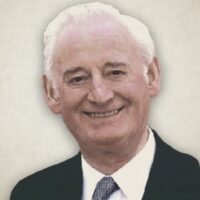
Benjamin Ramsbottom (1929-2023) was a Strict and Particular Baptist preacher. In 1967, he was appointed pastor of the church meeting at Bethel Strict Baptist Church, Luton, Bedfordshire, a position he held for fifty-five years.