The Lord Will Appear
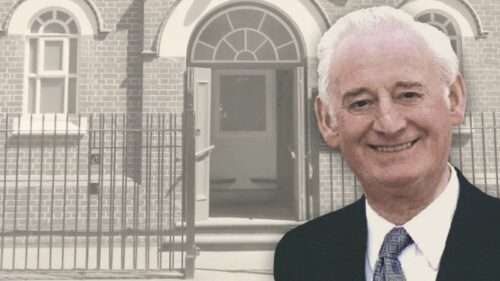
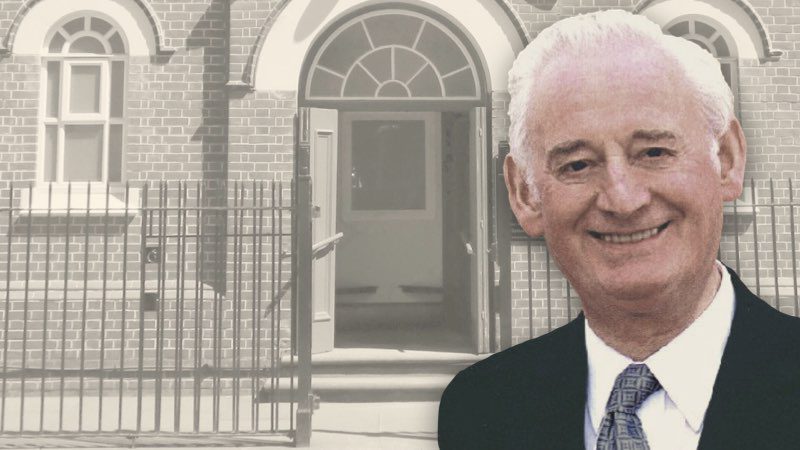
[Posted by permission. Bethel Strict Baptist Chapel.]
Address given from his own home by Mr. B. A. Ramsbottom, on Thursday, 4th June, 2020, when chapels were closed owing to the coronavirus. The address was relayed.
“Who will bring me into the strong city?”—Psalm 108:10
It is generally agreed that this strong city referred to here in the land of Edom was the city of Petra. Apparently, that city was so situated that it was impregnable. It seems that as yet David had not been able to capture that strong city, and in this verse he realised the difficulty. There was only one entry into this city of Petra, which was high up in the rocks, and that was by a narrow gorge which went on for about two miles. It was extremely narrow, and on each side there were over-towering rocks, and in places barely two people could get through side by side. So you can see what the situation was, and what the meaning is of this strong city, and how it was almost impossible to get into that city.
What a picture we have here, beloved friends, of so many of the problems and difficulties, things that come in our little lives. We cannot see how we are ever going to get through, or how ever we are going to get in, or how ever we are going to come out. So this, I am sure, is often the spirit of our hearts: “Who will bring me into the strong city?” Who can do this impossibility for me?
What a mercy that there is an answer, and David knew the answer, and I hope you and I know the answer. “Who will bring me into the strong city?” “Wilt not Thou, O God?” What an answer to this question, and it is a hard question. “Wilt not Thou, O God?” That view that with our God there is no such thing as impossibilities; that view of the Lord as omnipotent; that view we have throughout Scripture, how often the Lord performed miracles. As we look at a word like this, we not only see the impossibility of these things, but we realise well our own helplessness and our weakness. But that is not the point at all. That is something that does not matter. The power is with the Lord.
So you may be in the spirit of David here. He had had a lot of impossibilities, and the Lord had brought him through. He had had a lot of closed doors, a lot of times when there was no way, but he proved that his God never failed. I am sure some of you are in the spirit of this this evening. You have things in your life, in your home, the difficulties at this time with the virus, things with your family, your children, things in your business, things in the unknown way, things tomorrow, trials, problems, difficulties, not least in spiritual things, the concerns of your soul. “Who will bring me in? … who will lead me? … Wilt not Thou, O God?” I do hope that tonight you might be given faith to look away from your helplessness, and your sinfulness, and your unworthiness, and to look by faith in complete dependence on our Lord and Saviour, and resting on Him, looking to Him, you might sweetly be encouraged that the Lord can bring you through. I do like that line in one of our hymns: “He that has loved us bears us through” – not even brings us; not even leads us. “He that hath loved us bears us through.”
So right at the beginning this was an impossibility to David, and sets forth many of the impossibilities that we have, and they trouble us, and try us. But in asking this question, we have that sweet hope of the answer, the only answer, knowing where it is to be found, and so to pray on, and so to look up, and so to rest on unchanging grace, and so to plead the merit and finished work of the Lord Jesus on your behalf to do all these things that you cannot do for yourself.
“Who will bring me into the strong city?” Now some in meditating on this verse have thought of how this strong, impregnable city, Petra, represents a sinner’s heart by nature – your heart and my heart (see Luke 11. 21, 22). No way in. The gates are so tightly closed. There are so many barriers in the way – the sinner’s unbelief, the sinner’s deadness in sin, the sinner’s ruined condition through the Fall in Adam, the sinner’s unbelief, with no desire to believe, the sinner feeling, “We will not have this Man to reign over us,” the sinner desiring to have no knowledge of His ways. It is an impossible thing.
“Who will bring me into the strong city? who will lead me into Edom? Wilt not Thou, O God?” Now the mercy of it is, the wonder of the gospel is this: that there is a way even into this impregnable city of the human heart, and who shall lead us in? “Wilt not Thou?” We see the Holy Spirit, that He is almighty, that the hearts of all men are in His hand, that He can open a way into that strong city, fulfil those blessings we have just been reading about in hymn 1020.1 The strong man armed has to give in to a stronger than he; that word fulfilled, “Thy people” – the Lord’s chosen, the Lord’s redeemed, though they are still in that strong city – “Thy people shall be willing in the day of Thy power.” It is the Holy Spirit who makes them willing, and He opens the way into the strong city, and He opens the way into the sinner’s heart, and He touches the sinner’s eyes and the sinner’s ears, and He gives life where everything was death before, and that wonderful change takes place. No sinner could make that change himself. He has not the ability to do it, neither does he desire to do it. But this is it: “That as sin hath reigned unto death, even so might grace reign through righteousness unto eternal life by Jesus Christ our Lord.”
So there is encouragement for us here to pray. Gospel preachers, their words will all fall helpless to the ground apart from the Holy Spirit’s work. O but we have this promise, and we see it fulfilled. It has been fulfilled ever since the Day of Pentecost. It will still be fulfilled to the end of time. Now we pray that it might be fulfilled at Bethel, that the preaching of the gospel might enter where, apart from grace, it was impossible it could enter, because apart from grace, it is like the seed that falls on the stony ground. It just bounces up and bounces back. It does not have any effect. It does not do any good at all. But we have an almighty God and Saviour, and He can soften the ground, and He can open the heart, and He can make a way.
So there is something here to encourage ministers, but then there is something here to encourage parents, as you are praying for your children, if some of them do not seem responsive to the gospel at all. O but there is something that can cause the truth to enter in, the Word of God to have an effect: the Holy Spirit’s gracious work. And then thinking of our Sunday school teachers. Do you get downcast at times? Perhaps occasionally there is one here and one there especially
1 “The castle of the human heart, strong in its native sin.”
laid on your heart. Well, pray on. The work is not yours; the work is the Lord’s, to the praise, honour and glory of His name.
And then at our prayer meetings, as we pray one for another, and as we pray for those who are still dead in trespasses and sins; and going beyond Bethel, right through our various congregations, “Who will bring us into the strong city?” Who shall cause my words to enter, my prayers to enter? It is the Holy Spirit’s work. It is for sinners. And it is all based on the Saviour’s righteousness and precious blood.
“Who will bring me into the strong city?” Now I want to have another look at this word, “the strong city.” I think there is only one other place in Scripture where we have this mentioned: “the strong city,” and you will be familiar with the word. “In that day shall this song be sung in the land of Judah” – that is the gospel day. “We have a strong city; salvation will God appoint for walls and bulwarks” (Isa. 26. 1). This strong city is Zion, the church of the living God, made up of all His chosen, His redeemed, His sanctified, in all ages from Adam’s day to the end of time. “Glorious things are spoken of thee, O city of God.” It is a strong city. O the strong foundation on which it is built! O the strength of those walls of salvation that surround it! And this is a blessed truth, for here is the safety, the everlasting security of the people of God, those who through grace are citizens of this strong city.
Well, you perhaps say, This is so opposite from that last city you spoke of, the sinner’s carnal, hard heart. This is a blessed city. “Who will bring me into the strong city?” Now the burden of my heart, my exercise this evening, is this. I believe there are many people in our congregations, and I hope many at Bethel, who see the blessedness of this strong city, the church of God. They see the beauty, the privilege, and they have to say, “Blessed inhabitants of Zion,” but they are not convinced that they are inside the city. They can see the blessedness of the city and its inhabitants, but they feel to be outside. Am I speaking to some of you this evening? You see what a blessed thing it is to be one of the Lord’s dear people, but you do not feel inside; you feel outside; and this is the very question of your heart this evening: “Who will bring me into the strong city?” Is it possible? Can I come in? It must be by being brought in. I do not deserve it. I am unworthy.
It is a similar question to that we have in the Book of Jeremiah, where the Lord Himself, speaking to His favoured people, says, “How shall I put thee among the children?” (Jeremiah 3. 19) – speaking reverently, as if it is almost a difficulty with the Lord. Is there any way that lost, ruined, guilty sinners can be put among the children? Is there any way those who feel outside, who long to enter, is there any way they can be brought in? “Wilt not Thou, O God?” What a mercy there is an answer for you. It is “looking unto Jesus,” to Jesus in His precious blood, in His all-prevailing intercession, in His love to unworthy sinners, in His power to save unto the uttermost, looking to Him, praying to Him, resting only upon Him, seeking the Holy Spirit’s work to perform it for you, to do the deed. O, “Who will bring me in?” “Who will bring me into the strong city?” Who will put me among the children? In mercy, Lord, “Wilt not Thou?” Well, if that is your exercise, I am sure the Lord will do it for you.
Address given from his own home by Mr. B. A. Ramsbottom, on Thursday, 11th June, 2020, when chapels were closed owing to the coronavirus. The address was relayed.
“The Lord will appear”—Leviticus 9:4
This glorious truth is scattered throughout the whole Word of God. You find it in so many places – the preciousness of it, the certainty of it, one of God’s yea and amen promises. But this is the only place in Scripture where hidden away we find this statement simply put: “The Lord will appear.” Beloved friends, it is like so many of the doctrines. Take the vital doctrine of the Trinity – God the Father, God the Son, God the Holy Ghost. It would be very hard to try to find a verse which clearly establishes it. I know in the benediction at the close of the service we have the Three together. We have the Trinity also in the baptismal formula. It is so difficult to find a clear statement on the doctrine of the Trinity, but it comes all through Scripture again and again. So it is with this little word here, “The Lord will appear,” and yet this sacred truth appearing throughout the Word of God. I hope it will be made a suitable word to those of you listening this evening who are waiting, longing, praying for the Lord to appear.
Now in the chapter that I read to you this evening (Hebrews 9. 11-28) we have it three times – the Lord will appear – and each time in a gospel sense. The first, verse 24: “For Christ is not entered into the holy places made with hands, which are the figures of the true; but into heaven itself, now to appear in the presence of God for us.” What a precious truth that is, our Lord and Saviour Jesus Christ once crucified, but now risen, exalted, glorified at the Father’s right hand, ever living, ever interceding, almighty to save! And what about this, where the apostle says it is for us! Then,
“Ye children of Zion, now dry up your tears;
For you the Redeemer in glory appears.”
“Now to appear in the presence of God for us.”
And then the second thing concerning His appearing, verse 26: “For then must He often have suffered since the foundation of the world: but now once in the end of the world hath He appeared to put away sin by the sacrifice of Himself.” This is the foundation truth of the gospel. Our Lord and Saviour did appear on earth, and the purpose of His appearance was to make an atonement for sin, which He did once, once and for all, a finished work, never to be repeated. And in dying, in rising again, He for ever put away all the sin of all His people by the sacrifice of Himself. O what a mercy that in His love He appeared!
And then the third mention of His appearance, in verse 28, the closing verse of the chapter: “So Christ was once offered to bear the sins of many; and unto them that look for Him shall He appear the second time without sin unto salvation.” Do not be troubled about this word, which could be misunderstood. It says when the Lord comes the second time, He will come without sin. Well, of course, the first time He came without sin. The point of the verse simply is this: that the second time He will not have to come to deal with sin, to suffer for sin, to put it away. So there is that solemn yet glorious truth of the Lord’s second coming. “Unto them that look for Him.” O through the Holy Spirit’s teaching may we be found amongst those who look for Him in that great day, and those who are looking for Him now. “Unto them that look for Him shall He appear the second time without sin unto salvation.”
Now I just want to linger here for a few moments. We have just looked together at those three very gracious accounts of the Lord’s – shall we say – gospel appearances. What I want to say is how Paul in his Epistle to Timothy speaks of those who “love His appearing.” Surely, beloved friends, there are quite a lot of those, and apart from all your faults, sins and infirmities, you do love the Lord’s appearing. You love His appearing for salvation, as we have looked at it this evening, and you know what Paul did say: “I have fought a good fight, I have finished my course, I have kept the faith: henceforth there is laid up for me a crown of righteousness, which the Lord, the righteous Judge, shall give me at that day.” Now this is it; it is a wonderful word: “and not to me only, but unto all them also that love His appearing.” O may we be helped in mercy to put our claim in there, that we trust we do love His appearing – His appearing in the Word, His appearing in the gospel, perhaps above all that appearing of which He so graciously speaks: “The Lord hath appeared of old unto me, saying, Yea, I have loved thee with an everlasting love: therefore with lovingkindness have I drawn thee.” O do we love that appearing? So the Lord has appeared, and the Lord still appears, and the Lord will continue to appear.
“The Lord will appear.” Now just a few words on the context of how this word appears in the Book of Leviticus chapter 9. All the arrangements under the Levitical law had been made for the services of the sanctuary. There was the altar set up, all the garments for the priests had been provided. Now chapter 9 speaks of the actual entering of the Old Testament priesthood for the first time upon this office. So it was a very solemn, sacred, important occasion in Israel, and after the Lord had explained to Moses and Aaron the things to be prepared, and how there was going to be the offering and the sacrifice – “For to day the Lord will appear unto you” – but then in verse 6, Moses added something else. He said, “And the glory of the Lord shall appear unto you.” And it did! If you read through that chapter, the glory of the Lord did appear. “And Moses and Aaron went into the tabernacle of the congregation, and came out, and blessed the people: and the glory of the Lord appeared unto all the people.” So Almighty God most graciously honoured this little four-word promise, “The Lord will appear,” almost exactly a few hours after the promise was made – the faithfulness, the grace of God the Father, the Son, the Holy Ghost, one God.
So it just remains for me to speak to you of two very important aspects of this little promise to us personally in our own lives and our own concerns, in our troubles and our difficulties. “The Lord will appear” to His people. He will appear to His people in His holy Word, to His people by faith, as they seek to worship Him in the sanctuary, under the preaching of the gospel, as the Holy Ghost shall take the things of Jesus and show them to us. This is a promise to plead: “The Lord will appear.” He will appear to His people. Mind you, we must not omit to say that there are some solemn appearances in fulfilment of this word. We think of that word in Malachi: “Who shall stand when He appeareth?” Who can? When the great and awful day comes, “Who shall stand when He appeareth?” But O these blessed appearance to His people in love and in mercy!
“The Lord will appear.” But then the Lord will appear for His people. That is what they need in their weakness and helplessness. They need the Lord. They need the Lord Himself. They need the Lord to appear. They need the Lord to be with them, especially when there is sadness and sorrow and disappointment and difficulty and trouble, when there are the crooked things, when there are the mountains. We have this word that shines forth through it all, above it all: “The Lord will appear.” Now there is a resting place for faith there. “The Lord will appear” to help His people. “The Lord will appear” to supply all their needs. “The Lord will appear” to answer their prayers. “The Lord will appear” to uphold them. “The Lord will appear” to sanctify to them their deepest distress. “The Lord will appear” to deliver them, which is what they are praying for, longing for. “The Lord will appear” to forgive their sins, to wash them in the Saviour’s blood, and at last “the Lord will appear” to bring each one of them, despite all their sin, to bring each one of them safely through, safely through to heaven.
So what a word is this, a word for which we should be thankful, a word we can rest upon, a word we can plead, a word which the Lord in His faithfulness will not fail to perform! “The Lord will appear.”
My soul, Lord, inflame with zeal from above,
Thy praise to proclaim and sing of Thy love;
To lift up my voice in thanksgiving sincere,
This truth to rejoice in, The Lord will appear.
How joyful this sound, while daily I find
Afflictions abound in body and mind!
It oft has afforded relief from my fear,
To find it recorded, The Lord will appear.
I have, as I seem, when left in the dark,
Of light not a beam, of love not a spark;
And though thus in pain for an evidence clear,
I can’t wait in vain, for The Lord will appear.
A warfare I find without and within,
With legions combined, world, Satan, and sin.
Though sore they annoy me, I’ll be of good cheer,
They cannot destroy me, The Lord will appear.
My fears sometimes say I never shall find,
In death’s awful day true peace in my mind;
But though thus surrounded, yet, when I come there,
I can’t be confounded, The Lord will appear.
My dust He will raise, and glory He’ll give;
And I to His praise in heaven shall live;
There He will deliver my soul from all fear,
And to me, for ever,
The Lord will appear.
S. Medley
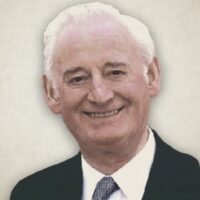
Benjamin Ramsbottom (1929-2023) was a Strict and Particular Baptist preacher. In 1967, he was appointed pastor of the church meeting at Bethel Strict Baptist Church, Luton, Bedfordshire, a position he held for fifty-five years.