
Loyalty To Christ
That every true subject of King Jesus is jealous for His crown right is an undoubted fact. To be careless whether He reigns, or sin and Satan triumph, proves the heart of a traitor, and not a loyal subject. The very mention of His name causes His true followers to cry with united voice, “O King, live for ever.” Anything which touches His sacred rights causes a holy indignation to burn in their breasts; and truly there is enough to raise that feeling in these degenerate days, when His Person, His work, His truth, are made the subjects of attack by those who claim to be so much wiser in the things which are written than others. It is this which has induced the writer to take his pen in hand. In Nehemiah’s day, when enemies were rife, every labourer became a warrior also; and while we feel our great work is to build up the walls of the city of our King, if men will seek to cast them down, we must defend them, “For if the foundations be destroyed, what shall the righteous do?” That many hearts are grieved by the contempt cast upon those truths, which are of divine origin, we verily believe, not that they can be overthrown or refuted. But when the children’s bread is sought to be taken away, it makes us zealous for the Lord of hosts and the blood-bought people; a well nourished people will be strong, and there is nothing will more strengthen the soul than loyalty to Christ.
I. To be loyal to Christ we must have and hold right views respecting His sacred Person. Every heresy in the Church of Christ has had its rise here. Some error has been started respecting Himself, and as a planet, when it gets out of its orbit, goes farther and farther from the sun, so have men, when they have embraced error, gone farther and farther from Christ. I am of the opinion of good John Newton,—
“We cannot be right in the rest,
Unless we think rightly of Him.”
I do not wish to discuss the mysterious subject of His complex personality; this has been done by far abler writers than myself. But the question I would ask, In what relation does He stand to the Church? Is He Supreme Head and Legislator? Are His commands law? Has He left us ignorant respecting His claim? I trow not. We have not to evoke out of our inner consciousness theories and speculations about our Lord, and then say no one can know anything satisfactory. The highest wisdom is to hold everything in doubt. “We have not so learned Christ.” To the spiritual He is clearly revealed. They would doubt their existence as soon as they would doubt the reality of what Christ is. He can only be known by spiritual experience. By that I mean the teaching of the Holy Spirit. Some think that they can understand all about Christ, by intellectual reasonings and deductions, as they would a mathematical problem. They start with wrong premises, therefore their conclusion must be wrong. We must know Christ as Paul did, not by man, “but by the revelation of God.” If we have been taught of Himself by Himself, we shall be loyal to Him in thought, word, and deed.
2. Loyalty to His word. Reason will lead to reverence for His word. We shall not think of sitting in judgment upon it, accepting such facts as inspired which, in our superior judgment, we consider are so. Our enquiry will be, What saith the Scriptures? not what shall we make them say. We shall not set up a pet theory of our own, and then try and make the Scripture stand sponsor to it. Our fathers spent much time and hard study to find out the mind of Christ in the Word, now men try to show what great minds they have by contradicting the Word. But I still think those are the greatest minds who try to understand God’s ancient thoughts rather than follow the modern thoughts of men. If you are loyal to Christ you will wait at His posts, listening to His word.
3. Loyalty to Christ will also involve public identification with His people. We shall be anxious to know in what way He has commanded that public avowal to be made. Satisfied upon that point from the word of God, we shall not hesitate to go forward, feeling His example and commands binding upon us. Then, having taken this step, we shall feel called upon to maintain the interests of His kingdom, to side for Him on all occasions. Let the cost be what it may, a sense of our indebtedness to Him demands this of us. His purchase of us by His blood, His constant intercession for us and interest in us above, the protection He casts round us, the nearness we have to Him as our elder Brother and great High Priest of our profession.
4. Loyal to Christ. We shall make no compromise with those who hold error. Just now there is an outcry that we ought to accept every man who is sincere in his belief and moral in his conduct. The Romanist may be sincere when he crawls up the steps of St. Peter’s, and kisses the Pope’s toe; but am I to accept him as a loyal subject of Christ, when he worships the creature more than God? The Unitarian may be sincere when he praises the manhood of Christ, His holy deeds, His unique character, but while he denies His divinity, and seeks to undermine the very foundation of my hope (for if He be not God, I dare not trust Him), can I hold intercourse with such who do this? Nay! A man may be sincere who believes that he is doing God service by holding np the benevolent aspects of His character, and denying the sterner, righteous attributes, that he needs an atonement of blood to satisfy the claims of his justice, thus seeking to make the substitutionary sacrifice of our blessed Lord nothing more than an example of a submissive spirit to the will of God, which we are to copy. Such deny Scripture. Can we be loyal to our Lord and His cross if we protest not against this, and its advocates? A person may be sincere who assures me he has studied the New Testament and cannot see believer’s baptism, or that it is incumbent. But am I to say it does not matter if you cannot see it, if it is not laid upon your conscience? This is to set up man’s judgments instead of Christ’s plain command.
5. Loyal to Christ. We shall endeavour to spread His Gospel, to promulgate the principles which He has taught us with universal diligence. The more we feel the importance of them, the more love we have to Him. We have found, and do find, these precious truths of increasing value to our own souls, and we are sure others need them, for there is no salvation, no peace, apart from an interest in the Person, blood, and righteousness of Christ. May we labour on, spreading, defending these truths, and though not brilliant, may we hear His voice at last, saying, “Well done, thou good and faithful servant, enter thou into the joy of your Lord.”

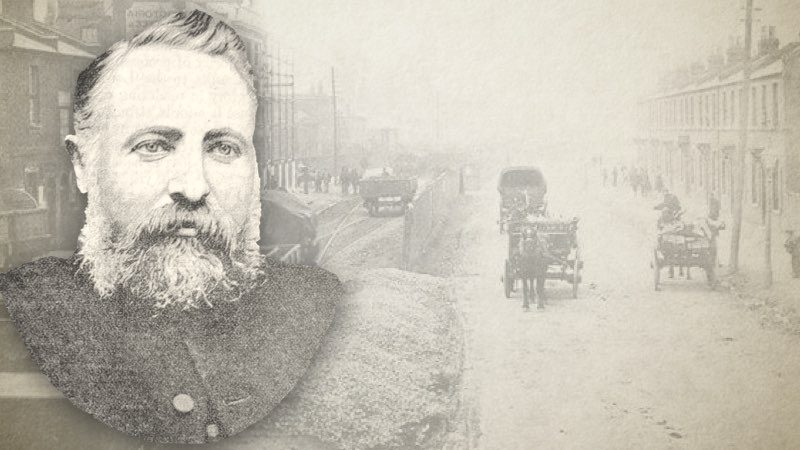
Edwin White (1846-?) was a Strict and Particular Baptist preacher. His first pastorate was with the church meeting at Orphington (1877-1879). After two years, the communion question cropped up, the majority of members deciding to throw the Table open. He forthwith resigned his office. His second pastorate was with the church meeting at Clare, Suffolk (1881-1887). After six years of blessed ministry, he resigned the office due to health reasons. His third pastorate was with the church meeting at Woolwich, Enon Chapel (1891-1919). In 1911 was elected president of the Metropolitan Association of Strict Baptist Churches.