
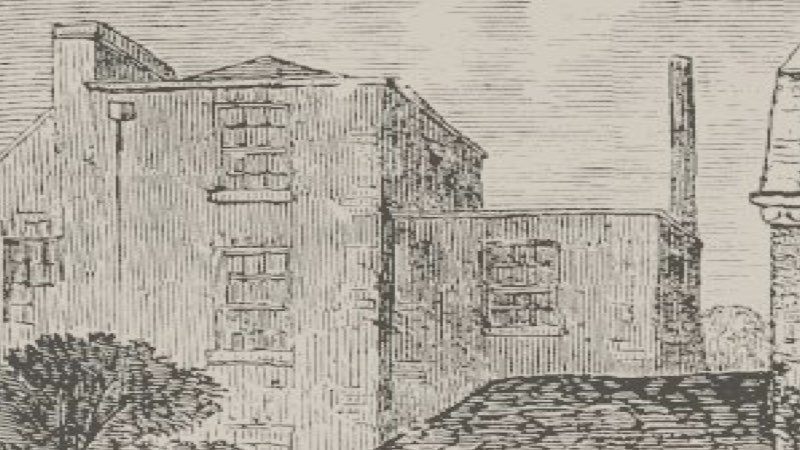
The Life And Testimony Of Ruth Bodman
Gospel Standard 1897:
Death. On Feb. 18th, 1897, in her 73rd year, this deeply tried and true child of God (a member with us at Zion Chapel, Trowbridge,) was gathered home. For over 50 years she had, by the living power of God, known the truth as it is in Jesus, and in 1846 she first contributed to the pages of the “Gospel Standard.” She was truly a captive taken from the strong. She found great encouragement in reading the pages of the “Standard;” and she appeals to God, in writing her first account of her signal call by grace, that her motive was to show the electing love of God, and desired that it might prove a blessing to some poor quickened soul.
The Lord hath said, he “will have mercy on whom he will have mercy.” It was in 1846 she wrote, “A few years ago I was Satan’s willing slave, led captive by him at his will, and should have continued so until I had filled up the measure of my iniquity, had not God interposed and saved me. I can truly say that I did not first seek him. Having God-fearing parents, I was brought up to attend the house of prayer (Zion Chapel, Trowbridge), but when I became about 15 years of age I took a delight in reading any infidel book with which I could meet. I left off attending a place of worship, and soon after left home. In a short time I removed to London, and joined myself to the Social Institution, and so far imbibed their sentiments as to question the existence of God, disbelieve the authenticity of the Bible, and mock at prayer. While living in this awful state of rebellion against God, I often had qualms rising in my mind, and felt convictions of the sinfulness of my course, so that I sometimes wished I had never been born, or had been anything rather than a human being; I was, at times, also strangely tempted to put an end to my life.
“In course of time, however, I left London for Bath, then being about 19 years old. And this was the time at which it pleased the Lord to put a most earnest cry in my soul. Now I began to try and get better, but found that I got worse and worse. I truly believed there was a God now, and my carnal reasonings were knocked on the head. I viewed the Lord as my just Judge, and with awful feelings thought it impossible that I could by any means escape. I sometimes feared to ask him for forgiveness, lest he should cut me off in the act, and banish me to everlasting torments. And I felt that, if I were sent there, I should tell all that were in hell that God was a just God, and that he never would have consigned me to that place had I not deserved it.
“The Lord was pleased to make me stay under Mount Sinai for eight months, before the set time came to favour Zion, and here I was looking into the law of Moses for justification. But when I was led by the Spirit to see that whoso offended in one point became guilty of all, and that I could not be saved by this law, I was at a stand, and knew not what to do. I found I could make myself no better, and was resolved not to return to my old practices; nor had I the least desire so to do. I found that God would not have mercy upon me, yet I could not help asking him for it. I asked for mercy, not as many in the Church of England ask it, out of mere form, or because it was a duty; no, no; I asked it with a wrestling spirit, as though life or death depended upon the answer. And the Lord graciously enabled me to say, like Jacob, ‘I will not let thee go unless thou bless me.’ I rose from my knees, and opened Gadsby’s hymn book at the 396th hymn. This hymn on the prayer of necessity, written by Newton, was brought home to me with such power, especially the second verse, that I could exclaim, with tears of joy and love and gratitude, ‘O Lord, I know that thou art my God, and I am thy child.’ I enjoyed this satisfaction for several days; after which it was removed, when I thought the first line of that second verse could not be for me, as it was meant for believers. This caused me such distress of soul as I cannot describe. When I had been delivered from this distress, I had the enjoyment of God’s presence for some months. It appeared as if I had nothing to do but ask, and I received. I say this without exception; it appeared so easy, compared with what I feel now. Had any person told me, while I was living so near to God, and enjoying so much of his presence, that my neart was as rebellious, deceitful, wicked, and depraved as I have since found it to be, I should have been inclined to think that they spoke unadvisedly. But I have now learned that I cannot raise a desire heavenward, but as the Lord works in me ‘to will and to do of his good pleasure.’ Well might our dear Redeemer say, ‘I have many things to say unto you, but ye cannot bear them now.’
“When I had received an enjoyment of the Lord’s presence, I could not rest until I had made an open profession by being baptized and joining myself to his dear people. I felt as though I could say, “Come and hear, all ye that fear God, and I will declare unto you what he has done for my soul.”
She left England for America, where she lived many years. This part of her life I must pass over, not being sufficiently acquainted with it; but I know she was allowed to walk contrary to God’s word, and was “unequally yoked.” For this she was severely chastened of the Lord, and was compelled to be divorced from her husband. She resided in America upwards of forty years, and scarcely ever met any of the Lord’s people with whom she could associate. As she grew older she very much desired to come home to England to end her days; and the reading of one of Mr. Coughtrey’s New Year Addresses greatly increased the desire. After much prayer to God to make the way plain, she, at a sacrifice, sold all, and came to Trowbridge to live, in April, 1893. Mr. Coughtrey came to Zion for two Lord’s days, and this was a very special season to her. During that visit Mr. Coughtrey presided at a church meeting, when she related her experience; this she regarded as a great privilege; for she had wished to come into full membership months before. The Lord greatly favoured her soul many times in hearing the word and in listening to the prayers of the brethren. On one occasion she had a special lift in hearing our old friend, Jacob England. The ministry of Mr. Moxon was also made a blessing, and she welcomed his annual visits. She told a friend, in January, 1896, she had been many weeks in great darkness of soul no light in reading, no felt nearness in prayer. “‘When I cry and shout, he shutteth out my prayer.’ Last Lord’s day, as I was hearing Mr. Peet, the Lord so broke into my soul, that I was deeply humbled and softened; I sat in my seat, and felt assuredly that for me he shed his blood, and I could say ‘Bless the Lord, O my soul.’”
Soon after this, when the church were about to meet and vote on the question of inviting me to be pastor, she was greatly exercised before the Lord; she desired a special word for personal direction; and as she wrestled with the Lord upon her bed, the night before the meeting, the words of the 395th hymn, the second and third verses, were with solemn, quickening power, renewed in her experience, so that her soul was filled with sacred gratitude, and her steps made plain. She spoke to the friends, before the vote was taken, of the blessed visit, and many felt that she had been favoured with sanctified exercise of soul.
She was taken ill with paralysis in April, 1896, and for some weeks was in great darkness of soul, and a fear of death and eternity became her experience. About the end of May, in reading Isaiah 40, she felt what she called “some little giving way,” and hope again sprang up.
On January 6th, this year, when I visited her, I found her in great pain of body, she having got out of bed, and falling, she had fractured her hip. She said, “I am glad you have come: Can his pity and his power Suffer me to wait in vain?’ I have hoped in his salvation; he has answered, in the past, many prayers.” I said, “Then you can say with the Psalmist, “I love the Lord, because he has heard the voice of my supplication.” Her reply was, “Yes, many prayers he has heard, but I am now very tried.” I prayed with her, and realized that her days on earth would be few, but that she was sure of a blessed eternity; in fact, her agonies of body were such that I could not help but ask the dear Lord to take her home; but, should it not be his will, to give her power to suffer, and patience to bear the great and sore affliction he had laid upon her.
On February 17th I found her near to death, quiet as a child. I said, “You are very near to the stream. Can you say, ‘I know that my Redeemer liveth; and that he is able to keep that which you have committed unto him?'” Very feebly, so that you could only by great care hear; opening her eyes, she said, “Yes.” I said, “I am glad; then all is well.” And she again breathed forth, “Yes.” By her will I believe both the poor of our own chapel and the “Gospel Standard” Poor Relief Society will be benefited.
Alfred Peet

Ruth Bodman (1824-1897) was a Strict and Particular Baptist believer. She was a member of the church meeting at Zion Chapel, Trowbridge.

