2 Three Branches Of The Gracious Covenant
This series of studies began with a friend requesting help on how to discover the structure of the Scriptures. While students of the Bible are familiar with the poetic parallelism of the Psalms, they do not realize the whole of God’s Word shares the same type of symmetry. Indeed, this is further proof the Scriptures are divinely inspired, for He Who made the heavens and the earth by indelible wisdom also spoke the words of Scripture. I selected 2 Thessalonians 2:13-17 as a sample text to demonstrate the perfection and beauty of God’s “structured” Word.
In the first study, I explain how one should go about discovering the structure of Scripture, and in this instance, a fourfold division emerges from the text. There is a twofold statement on the privileges of brotherhood and a twofold statement on the Covenant of Grace.
In the second study, I explore verses 13 and 14, which highlight three branches of the gracious covenant, unfolding a substructure complimenting the first study. Within this substructure, we discover a twofold statement on the electing love of God the Father, interspersed with a single statement on the sanctifying power of God the Spirit and the redeeming grace of God the Son. This statement on the Covenant of Grace reflects the 18th century covenant theology which became the mainstream view of the Particular Baptists.
Although it was my purpose to end this series by exploring verses 16 and 17, unfolding another substructure to the text, the Lord impressed the subject matter of verses 13 and 14 upon my heart, leading to an expansion of this series of studies. Henceforth, it is my purpose to present a theological and historical overview of 18th century covenant theology, especially as it differs from the leading confessional statements of the 17th century and mainstream “Reformed” groups of modern times. There will be around eighteen studies in total.
Although there is not a transcript for the first two studies, there will be transcripts for the remaining teaching videos.

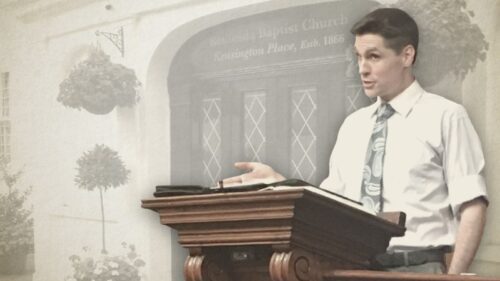
Jared Smith served twenty years as pastor of a Strict and Particular Baptist church in Kensington (London, England). He now serves as an Evangelist in the Philippines, preaching the gospel, organizing churches and training gospel preachers.
Jared Smith's Online Worship Services
Jared Smith's Sermons
Jared Smith on the Gospel Message
Jared Smith on the Biblical Covenants
Jared Smith on 18th Century Covenant Theology (Hyper-Calvinism)
Jared Smith on the Gospel Law
Jared Smith on Bible Doctrine
Jared Smith on Bible Reading
Jared Smith's Hymn Studies
Jared Smith on Eldership
Jared Smith's Studies In Genesis
Jared Smith's Studies in Romans
Jared Smith on Various Issues
Jared Smith, Covenant Baptist Church, Philippines
Jared Smith's Maternal Ancestry (Complete)