Comfort For The Afflicted
“Lord, behold he whom Thou lovest is sick.” This was the tender, urgent appeal of the sisters of Lazarus sent to Jesus. This is still true of many of the Lord’s people, confined to their sick-room, unable to attend the public means of grace. We who enjoy these privileges would not forget them, as there they find reading God’s precious Word and spiritual literature helpful, more so on account of their circumstances. It is for such we specially pen these lines. Having known ourselves the weariness which bodily pain and weakness brings, the monotony of a sick-room, we can the better sympathize with their condition. How gladly we appreciate a visit from a Christ friend at such seasons, and if this cannot be accorded, a kind letter from such greatly cheers the heart under pain and sorrow.
First, we would say, dear suffering ones, you have many special promises for your comfort. The Bible is a vast storehouse of precious things for the people of God in all positions and conditions of their life. Your special needs and circumstances have not been forgotten by our heavenly Father. Much of His Word would not be experimentally understood if it were not spelt out in seasons of affliction. Many of the promises are like stars—they only shine in the dark night of sorrow and pain; they are as a strong staff to lean upon, but we must be brought down in weakness to know their worth. Through having “the thorn in the flesh” Paul learnt the all-sufficiency of upholding grace. The waters of Marah teach us the value of that tree which taketh them sweet; yea, then the Lord reveals Himself under a new name, “The Lord that healeth thee” (Ex. 15:26).
Secondly, we have a gracious Redeemer, who is “touched with the feeling of our infirmities.” Sympathy with suffering must be leant by experience. There the Lord Jesus can enter fully into every case. He has walked the hospital of this suffering world; He understands the case of every wound. Specially is He with His people in the furnace; wise also in limiting, according to their endurance, what they can bear; never leaving the oversight of His suffering ones to others; ever saying, “It is enough” when the refinement is complete. He knoweth the needs be of all we pass through, and His sweet presence helps us to acquiesce in all His gracious will. “It is true Lord; let Him do what seemeth Him good,” is then our prayer, and consolation too. We can bear all pain when His left hand our head sustains.
Thirdly, you are specially remembered by all the Lord’s family in prayer. At the prayer-meeting the pastor may possibly be omitted in the supplication of the brethren, the deacons and Sabbath-school may be forgotten, but never the sick; and we notice that a pathos comes into the pleader’s voice, and a solemn hush over the gathering. There has been a chord touched in every heart; reminiscences are called up of suffering days and wearisome nights which we nearly all have passed through, and this ‘ touch of nature makes us all akin.” These are links of love and tender sympathy which unite the sick-room and the house of God and the throne of God together. If prayers belt the globe and link it to God’s throne, then many of the supplications are wrought out of full hearts in the furnace of affliction, and for those who are suffering therein.
Fourthly, then God has a purpose to serve in your affliction. Your sufferings are not punishment. Some of God’s people are called to show forth the graces of true religion in prominent positions of life, under the full blaze of the world’s eye, in the zenith of earthly prosperity. This is not an enviable position to be in. High places are slippery ones, but God can, and does, keep them there, as He did Joseph, Moses, and Daniel. Others, like yourselves, dear afflicted ones, are called to exemplify what grace can do under great sufferings in the patience which is manifested in your conduct, the cheerfulness with which you bow to your heavenly Father’s will, glorifying God in the fire. Suffering makes your character. We should have had no history of Job were it not for his sufferings, nor would the Church of God have had so many sainted lives were it not for what they endured. Many sick-rooms have cast a light on this dark, sin-blighted world.
Lastly, sickness and suffering makes us long for our heavenly home. It loosens these earth-bound ties, which have such a tendency to bind us down. It stirs up our nest, that we may stretch our wings for fairer homes. How gladly shall we bid adieu for that blest region where the inhabitant will no more say, “I am sick.” From many a chamber of suffering goes up the cry, “Lord, set my ransomed spirit free”; “Come, Lord Jesus, come quickly.”
“Weary of earth, myself, and sin,
Lord Jesus, take me in.”
How sweet are those portions of the Word which give us such consolation as we get a glimpse of that heavenly realm, in its freedom from pain, sorrow, sighing, and death. “And God shall wipe away all tears from our eyes.” For this Thy suffering children wait, O Lord. Open the gates of glory and let them in.

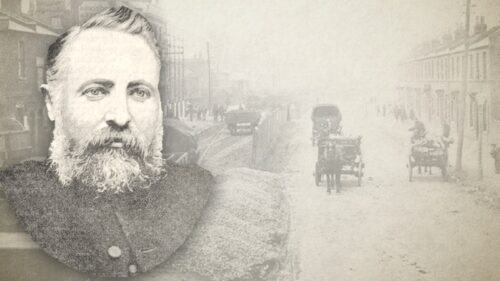
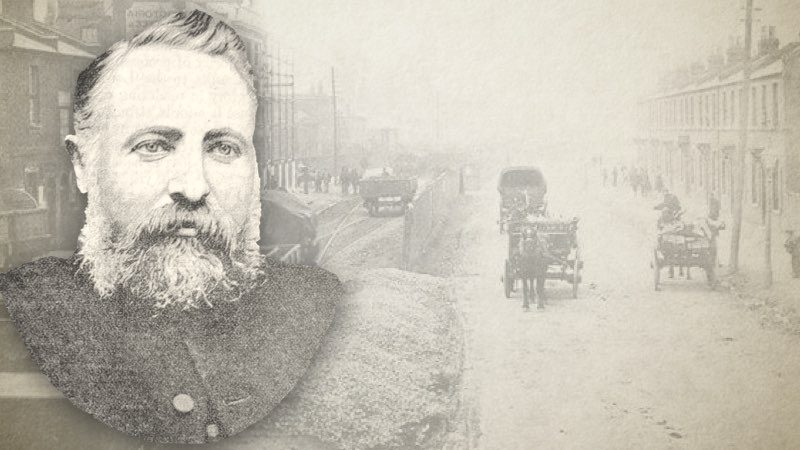
Edwin White (1846-?) was a Strict and Particular Baptist preacher. His first pastorate was with the church meeting at Orphington (1877-1879). After two years, the communion question cropped up, the majority of members deciding to throw the Table open. He forthwith resigned his office. His second pastorate was with the church meeting at Clare, Suffolk (1881-1887). After six years of blessed ministry, he resigned the office due to health reasons. His third pastorate was with the church meeting at Woolwich, Enon Chapel (1891-1919). In 1911 was elected president of the Metropolitan Association of Strict Baptist Churches.