
John Gill And The Free Offer Of The Gospel
The “Modern Question” Controversy
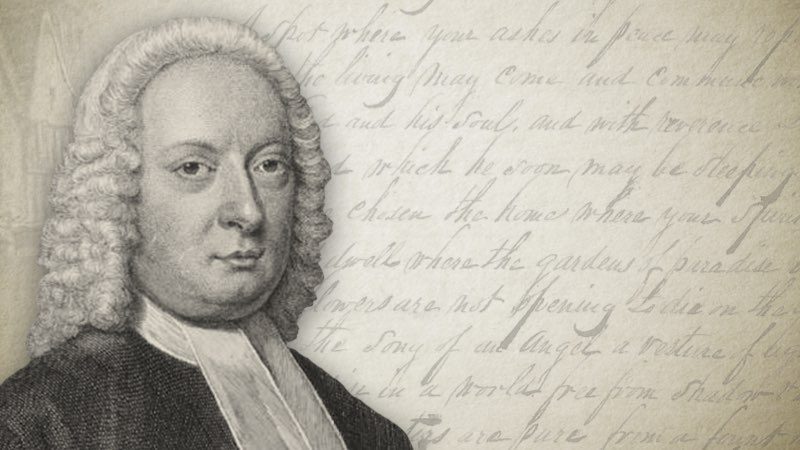
John Gill (1697-1771) was a Particular Baptist preacher and theologian. For fifty-one years he served as pastor for the Goat Yard Chapel (Carter Lane) meeting in London. He is best known for writing the first Baptist systematic theology and a complete set of commentaries on the Old and New Testament Scriptures. His teachings, which have become known as Hyper-Calvinism, were shared by the mainstream PB churches during the 18th century. It also became the only stream of PB churches during the 20th century. By the end of the 19th century, the Moderate-Calvinist PB churches amalgamated with the Arminian Baptists and drifted into theological liberalism. Henceforth, when the Reformed Baptist movement emerged during the 1950s, the only churches remaining were the Hyper-Calvinist chapels. It was from this group of churches the RBs siphoned chapels and transformed congregations into new Moderate-Calvinist causes. It is wrongly stated by many modern historians that these churches were originally Moderate-Calvinists which fell into Hyper-Calvinism, but with the rise of the RB movement, were restored to their former glory. The reader should be informed, the vast majority of the 450 PB chapels at that time had been founded upon the tenets of Hyper-Calvinism during the 18th and 19th centuries. They did not start out as Moderate-Calvinist causes which fell into Hyper-Calvinism. These PB chapels had been built and the congregations organized, by the evangelistic efforts of Hyper-Calvinist preachers. In fact, apart from Charles Spurgeon and a relatively small number of other Moderate-Calvinists, the greatest evangelists and those who ministered to the largest churches belonged to the Hyper-Calvinist section of the PBs. Men such as Gadsby, Stevens, Kershaw, Warburton preached to hundreds and sometimes thousands per week. James Wells, the pastor of Surrey Tabernacle and contemporary with Spurgeon, preached to a regular congregation of 2,000. These men were aligned with the Hyper-Calvinism of John Gill. Rather than killing their evangelistic spirit or causing them to hide the gospel from sinners, the tenets of Hyper-Calvinism set these men ablaze for the cause of God and truth.
These facts will come as a great surprise to many, especially when one of the distinguishing features between the Hyper and Moderate Calvinists was their antithetical view on the free offer of the gospel. There arose during the 18th century a controversy between the Calvinist churches, which became known as the “modern question”—whether it be the duty of all men, to whom the gospel is published, to repent and believe in Christ. Connected with this controversy was also the question—whether it be proper for preachers to offer the gospel to sinners as a proposal which is in their power to accept or reject. These issues were labeled Duty Faith and the Free Offer, and the conflict between the two sides would eventually divide the PB denomination. Those who affirmed these teachings would become known as Moderate Calvinists, whereas those who opposed them would be called High (or Hyper) Calvinists.
Although the PBs took a leading role in the controversy, the issues transcended denominational lines. For instance, Benjamin Keach (1640-1704), a PB pastor in London (and a predecessor of Gill), introduced a series of reforms to covenant theology which provided a framework around which the Hyper-Calvinists would reject Duty Faith and the Free Offer. He set forth these reforms in two sermons published in 1693, “The Everlasting Covenant, A Sweet Cordial For A Drooping Soul.” However, it was a Congregational preacher from Cambridge, Joseph Hussey (1660–1726), who developed an argument against the free offer of the gospel. This he published in the year 1707, “God’s Operation of Grace, but No Offers of His Grace”. Robert Hawker (1753-1827), an Anglican preacher, and William Huntington (1745-1813), an Independent preacher, would also subscribe to Keach’s covenantal framework and Hussey’s “no offers of grace”.
In the 1966/67 Free Grace Record, Peter Toon traced the origin of Hyper-Calvinism to Joseph Hussey, blaming him for denouncing the free offer of the gospel. He argued, “[Hussey] holds a strategic position as the chief architect of the Hyper-Calvinism which has seriously affected the history of many Strict and Particular Baptist churches as well as some Independent churches.” Toon’s analysis has been adopted by subsequent historians, one footnoting the other as sources of authority. However, the tenets of Hyper-Calvinism, which is a denial of Duty Faith and the Free Offer, are couched in a covenant theology unique to Hyper-Calvinism. Without its covenantal framework, there would not have been the widespread rejection of the tenets. From this point of view, Benjamin Keach must be credited as the chief architect of Hyper-Calvinism.
It was on the basis of Keach’s covenantalism that John Gill developed his views in opposition to Duty Faith and the Free Offer. However, unlike John Brine (1703-1765) and Lewis Wayman (?-1764), both of whom wrote books in opposition to the aforementioned doctrines, Gill did not enter the debate directly. This has led some to believe he did not take a position on the issue, thereby “exonerating” him of the charge of Hyper Calvinism. While I do not know the reason Gill refrained from writing a book on the subject, I do know he referred to the issues frequently (as the occasion arose) throughout his writings. It is my purpose in this document to set forth Gill’s views on the free offer of the gospel.
The free offer issue was not a huge problem during the days of Gill which is why the controversy did not properly break out until after Gill’s death. PBs for the most part, including those of the 17th century, embraced loose ideas of the offer, there being a flexibility in their preaching on the presentation of Christ and salvation. The important thing, however, rather than the offer issue, was the gospel that was set forth—the penal and vicarious death of Christ, literal and actual justification, the commercial view of the atonement, the commensurate view of the atonement, total depravity, limited atonement, particular redemption, effectual regeneration and Spirit empowered sanctification. These fundamentals of the faith secured unity among the churches, whatever measure preachers extended offers to sinners.
However, a PB preacher named Andrew Fuller (1754-1815) did not agree with these gospel teachings. He believed in the ability and agency of man, unaffected by the Fall of Adam. His fiercest complaint against his PB fathers and contemporaries, whom he called Hyper-Calvinists, was that they preached a gospel which required God to do the saving, without the cooperation of man. They only preached God’s sovereign grace; they didn’t preach man’s responsibility, duty and agency. It was for this reason he made Duty Faith and the Free Offer the cardinal points of his gospel. Everything must conform to the agency of man and his duty to believe and accept the offer. Since the orthodox teachings of the 1689 Confession did not support this view (see Article VI), he set about modifying the great doctrines of the faith. He had to find a way to accommodate the agency of man. To that end, total depravity was modified to partial depravity; the penal and vicarious death of Christ was modified to the symbolism of God’s justice and love; literal justification was modified to a figurative “as if”; the commercial view of the atonement was modified to the governmental view; the commensurate view of the atonement was modified to the universal view; the essential value of the atonement defined by the price paid by Christ was modified to an infinite value defined by the Person of Christ; particular redemption was modified to particular election; regeneration by the Spirit which produces a new nature was modified to a natural realization of the mind restoring the old nature. These are some of the innovations propounded by Fuller, and it was this gangrene poison which split the PB denomination in two at the turn of the 19th century. The split was caused, not so much by the Duty Faith and Free Offer issues, but the heresies Fuller introduced to “prove” Duty Faith and the Free Offer.
In my earlier writings on the subject, I used the labels Moderate-Calvinist and Fullerite interchangeably. However, as I have come to better understand the modifications Fuller made to orthodox Christianity, I see a clear distinction between the Moderate-Calvinism of the 17th century, which was largely one and the same with the Hyper-Calvinism of the 18th century, and the Modified-Calvinism of Fuller, which was similar to the Modified-Calvinism of Richard Baxter (1615-1691) a century before. And you see, the Moderate-Calvinists of the 17th century, though they may have imbibed loose views on the Duty Faith and Free Offer issue, were nevertheless orthodox in the faith, standing against the heresies of Baxter. Likewise, the Hyper-Calvinists of the 18th century, though they imbibed tighter views on the Duty Faith and Free Offer issue, were also orthodox in the faith, standing against the heresies of Fuller.
Those of our day who profess to be Calvinists, yet embrace the Duty Faith and Free Offer teachings, are a mix of Moderate and Modified Calvinists. Some are nearer to the orthodoxy of the 17th century confessional statements, whereas others have thrown in with the heresy of Fullerism. Most fall somewhere between. Either way, they are standing on the wrong side of history. And the modifiers of the Christian faith are promoting and defending the wrong side of “orthodoxy”. George Ella, in his “Law and Gospel in the Theology of Andrew Fuller”, traces the downgrade within the RB movement to the 1980s, and now identifies the newest set of teachings as going beyond Fuller himself—a type of Hyper-Fullerism. This, he argues, has gripped the Banner of Truth, Reformation Today, Founders Ministries and mainstream writers belonging to their circles.
Before one takes a position on the Free Offer issue, or passes judgment on those who reject it, obtaining a clear definition appears to be a fair and reasonable approach. “He that answereth a matter before he heareth it, it is folly and shame unto him.” (Prov 18:13) Let us reach for a definition.
Reaching For A Definition
What is meant by the free offer of the gospel? It sometimes goes by the name, the well meant offer of the gospel. In my experience, the vast majority of those who subscribe to sovereign grace do not know the meaning of the free offer, nor do they understand the nature of the controversy which broke out over the subject during the 18th century. There are a number of ways the term may be defined, all of which, except one, the Hyper-Calvinists are in full agreement.
1. The offer is that which Christ made to God in His substitutionary and redemptive death on the cross. It is in this sense the term appears most frequently in the Word of God. On this point, John Gill writes in his Body of Doctrinal Divinity:
“Christ has executed, and is executing, and will continue to execute, his priestly office; the parts of which are more principally these two, offering sacrifice, and making intercession; to which may be added, a third, blessing his people; for it was the work of the high priest, as to do the two former, so the latter.
1. First, Offering a sacrifice. The work of the priests was to offer sacrifice for sin; Christ was once offered up to bear the sins of many, and the punishment of them, and to make atonement for them; he has offered himself a sacrifice to God, of a sweet smelling savour (Heb. 5:3; 9:28; Eph. 5:2). It may be inquired,
(1) Who is the sacrificer? Christ is altar, sacrifice, and priest: as he had something to offer as man, he has offered it; and as it became him as a priest to do it, he has done it; it is his own act and deed, and is frequently ascribed unto him; “He offered up himself unto God”, &c. “He gave himself an offering and sacrifice” &c. (Heb. 9:14; Eph. 5:2).
(2) What it was he offered; or what was the sacrifice? Not slain beasts; their blood could not take away sin; it was not their blood he shed; but it was his own, with which he entered into the holy place; it was his flesh he gave for the life of the world, of his chosen ones; it was his body which was offered up once for all; and it was his soul that was made an offering for sin; and all as in union with his divine Person; and therefore said to be himself which was the sacrifice: strictly speaking, it was his human nature which was the sacrifice; the divine nature was the altar on which it was offered, which sanctified the gift or offering, and gave it a virtue and efficacy to atone for sin; it was through the “eternal Spirit” he offered up himself (Heb. 9:14).
(3) To whom was the sacrifice offered? It was offered to God; as it is often said to be (Eph. 5:2; Heb. 9:14), to God, against whom sin is committed; and therefore to him was the sacrifice for it offered; whose justice must be satisfied; without which, God will by no means clear the guilty: and therefore Christ was set forth and appointed to be the propitiation for sin, to declare the righteousness of God, to show forth his justice, the strictness of it, and give it satisfaction (Rom. 3:25,26), and being satisfied, the sacrifice of Christ became acceptable, and of a sweet smelling savour to God (Eph. 5:2).
(4) For whom was the sacrifice offered? Not for himself; he needed none, as did the priests under the law; he was cut off, but not for himself, being without sin: nor for angels; the elect angels needing no sacrifice, having not sinned; and evil angels were not spared, and so their nature was not taken by him, nor a sacrifice offered for them: but for elect men, called his church, his sheep, his children; for whom he laid down his life, and gave himself an offering to God. His sacrifice was a vicarious one; as were those under the law, which were typical of his; Christ our passover, was sacrificed for us, in our room and stead; Christ suffered, the just for the unjust, in the room and stead of them; he died for the ungodly, or they must have died; and became the ransom price for them.
(5) What the nature, excellency, and properties of this sacrifice of Christ? It is a full and sufficient sacrifice, “adequate” to the purposes for which it was offered: such were not the legal sacrifices; they could not make those perfect for whom they were offered; nor purge their consciences from sin; nor take it away from them: but Christ has, by his sacrifice, perform ever all those for whom it is offered (Heb. 10:1-4,14). It is an “unblemished” sacrifice, as all under the law were to be, which was typical of this; as the passover lamb, the lambs for the daily sacrifice; Christ the sacrifice is a Lamb without spot and blemish, free from original and actual sin; in him was no sin, and so fit to be a sin offering for the sins of others; and was offered up, “without spot”, to God. This sacrifice was free and “voluntary”; Christ gave himself an offering; he laid down his life “freely”; he showed no reluctance, but was “brought as a lamb to the slaughter”, &c. (Isa 53:7). It was but “one” offering, and but “once” offered up. The priests under the law stood daily offering the same sacrifices, because insufficient; but Christ having offered one sacrifice for sin, offered no more, that being sufficient and effectual to answer the designs of it; wherefore in the Lord’s Supper, which is only a commemoration of this sacrifice, there is no reiteration of it; it is not an offering up again the body and blood of Christ, as the papists in their mass pretend; that has been done once, and it is needed no more.
(6) What are the ends and uses of this sacrifice, and the blessings which come by it? Christ “is come an High Priest of good things to come” (Heb. 9:11), or there are many good things which come through Christ’s priesthood; particularly through his sacrifice is a full “expiation” of sin, and “atonement” for it; Christ has, by the sacrifice of himself, put away sin for ever; finished it, made an end of it, and reconciliation for it. And the “perfection” of his sanctified ones, that were set apart for himself in eternal election; those he has “perfected for ever”, by his one sacrifice (Heb. 10:14), they are perfectly redeemed, justified, pardoned, and saved by it: by giving himself for them a sacrifice, in their room and stead, he has obtained “eternal redemption” for them; through it he has redeemed them from all iniquity (Titus 2:14), “peace” is made for them by the blood of his cross; and through his sufferings and death they are reconciled unto God (Rom. 5:10), full “pardon” of sin is procured, which was not to be had without shedding of blood; and a full satisfaction is made for sin; which is made through the sacrifice of Christ; and so there is redemption through his blood, even the forgiveness of sins, free and full forgiveness of them (Eph 1:7). In a word “eternal salvation” is the fruit and effect of this sacrifice; Christ being “made perfect” through sufferings; and thereby made perfect satisfaction for sin, he is “become the author of eternal salvation” to his people; and which is owing to his being “called”, and officiating, as “an High Priest after the order of Melchizedek” (Heb. 5:9,10).”
The reader may think it entirely unnecessary to underscore this definition and provide such a lengthy explanation of it by Gill. However, one of the doctrines denied by Fuller is the penal and vicarious death of the Lord Jesus Christ. You see, while Fuller was busy arguing for an offer of the “gospel” to sinners, he denied that Christ offered Himself a vicarious and substitutionary sacrifice to God for sinners. It is therefore not improper to begin a definition of the offer by considering Christ’s offer of Himself to God on behalf of sinners. This, my dear friends, is the true nature of the free offer of the gospel.
2. The offer is that which believers present to God in worship and devotion. For instance, the Apostle Peter wrote in 1 Peter 2:5: ”Ye also, as lively stones, are built up a spiritual house, an holy priesthood, to offer up spiritual sacrifices, acceptable to God by Jesus Christ.” Again, the Apostle Paul wrote in Hebrews 13:15: ”By him therefore let us offer the sacrifice of praise to God continually, that is, the fruit of our lips giving thanks to his name.” On this text John Gill writes in his Exposition of the New Testament:
”By him therefore let us offer the sacrifice of praise…”
For temporal and spiritual mercies; particularly for sanctification, or expiation of sin, by the blood of Christ; and for heaven, the continuing city, that is to come: this sacrifice is not a proper, nor a propitiatory one, but spiritual and evangelical; it is enjoined by God, is well pleasing to him, and glorifies him; and is our reasonable service, that believe in Christ; for being made priests by him to God, and having faith in him, such are capable of offering it aright; to do which, they are under the greatest obligations: and it is to be offered up by Christ, who is the same yesterday, today, and for ever; and who has suffered without the gate, that he might sanctify the people by his blood; it is to be done in imitation of him, and by his assistance; and for him, and blessings in him; and on him, as the altar, which sanctifies the gift; and through him, as the high priest and Mediator; for, as there is no coming to God but by Christ, and all our mercies come to us through him, and our thanksgivings are only acceptable to God on his account, it must be right to offer them up by him: and that,
“to God continually…”
As the Creator and Preserver of us, in our beings; as the Father of mercies; as the Father of Christ; and as our covenant God and Father in him; since he is always bestowing mercies on us, of one kind or another; and, therefore, should be continually praised, even in times of adversity, affliction, and temptation; in the midst of reproach and persecution; even when unsettled in mind, body, and estate; since there is a continuing city to come; nor can a believer be in any state of life but he has something to be thankful for:
”that is, the fruit of our lips…”
The sacrifice of praise is so called, in allusion to the offering of the firstfruits under the law; and to distinguish it from legal sacrifices; and to show in what way and manner we are to praise God, namely, with our lips: in (Hosea 14:2) which is thought to be referred to here, it is, “the calves of our lips”; sacrifices of praise being instead of calves: and the apostle interprets it in great agreement with the Jewish writers; the Chaldee paraphrase explains it, “the words of their lips”: and so Jarchi, “the words of our lips”; and Kimchi, “the confession of our lips”: and it may be observed, that there is a great nearness in, “calves”, and “fruit”; though perhaps rather the phrase is borrowed from (Isaiah 57:19) where it is expressly had; the Septuagint indeed have it in (Hosea 14:2) & the apostle adds, for further explanation,
“giving thanks to his name.”
To the name of God; to the glory of his name; to the honour of his divine perfections; for mercies of every kind: the word signifies “a speaking together”; and may design not only the conjunction of the heart and tongue together in praise, but a social giving thanks to God by the saints, as a body together: the phrase, “the sacrifice of praise”, is used by the Septuagint in (2 Chronicles 29:31; 33:16). The apostle having shown that legal sacrifices were all superseded and abolished by the sacrifice of Christ, which is the design of this epistle, points out what sacrifice believers should offer up to God, under the Gospel dispensation; and the Jews themselves say, that “in future time (i.e. in the days of the Messiah) all sacrifices shall cease, but, “the sacrifice of praise” shall not cease.”
The reader may again question the need for such a definition, when it obviously has nothing to do with preaching the gospel. That is the point! While the Scriptures speak of an offer believers make in praise to God, they do not speak of an offer preachers make of the gospel to sinners.
3. The offer is that which preachers make to God after sinners are converted to Christ. They offer, or present, the new converts to God. For instance, the Apostle Paul wrote in Romans 15:16: “That I should be the minister of Jesus Christ to the Gentiles, ministering the gospel of God, that the offering up of the Gentiles might be acceptable, being sanctified by the Holy Ghost.” In his Exposition of the New Testament, John Gill wrote on this text:
“That I should be the minister of Jesus Christ…”
The office of apostleship is here amplified and enlarged on, and the ends shown for which that grace was given to him, that he should be a minister; not in holy things about the temple, as the priests and Levites were; or a teacher of the law, some were fond of; but a minister of Christ, one that was made so by him, was qualified and sent forth to minister in his name to men; and who was a preacher of him; Jesus Christ, and him crucified, was the grand subject of his ministrations; he adds,
“to the Gentiles…”
For to them, though not to the exclusion of the Jews, was he appointed a minister by Christ, and sent by him to them; among them he chiefly ministered, and was particularly and eminently useful to them; and this is another reason why the Romans ought to bear with a little boldness and freedom in writing to them, since he was the apostle of the Gentiles:
“ministering the gospel of God…”
Not the service of the temple, nor the traditions of the elders, nor the law of Moses, nor the morality of the Heathens; but the Gospel, of which God is the author, whose grace is the subject, and whose glory is the end; and is good news from him to the chief of sinners; to the preaching of which the apostle was separated by him:
“that the offering up of the Gentiles…”
Not the offering the Gentiles offered up, their prayers, praises, or good works, though these are acceptable to God through Christ; but the Gentiles themselves, by the offering up of whom is meant their conversion; which was the end of the apostle’s ministering the Gospel among them, and in which he was the happy instrument. The allusion is to the priests slaying and offering up sacrifices under the law. The apostle was a priest in a figurative and improper sense; the sacrifices he offered up were not slain beasts, but men, the Gentiles, cut to the heart by the sword of the Spirit, the ministry of the Gospel; whose inside being laid open to them, and they brought to a sense of their lost condition, and need of Christ, were, through the power of divine grace attending the word, made willing to offer, or give up themselves to the Lord, to be saved by him, and him only: this the apostle, as an instrument, was concerned in; and all his view was, that it
“might be acceptable…”
That is, to God, as nothing is more so to him than a broken and a contrite heart, or souls brought to a sense of themselves; and to believe in Christ, and submit to his righteousness; and then both ministers and converts are unto God, a sweet savour of Christ:
“being sanctified by the Holy Ghost.”
This is said in allusion to the washing of the sacrifices under the law; and intimates, that the Gentiles, though unclean by nature and practice, yet being sanctified by the Spirit of God, whose proper work it is to sanctify, become an acceptable, being an holy sacrifice to an holy God.”
Although we are moving closer to the idea of an “offer” in connection with gospel preaching, yet according to Romans 15:16, it still has nothing to do with the mode on how the gospel is to be preached. In fact, Paul uses the term in this text to express the opposite of a gospel offer. Rather than the preacher offering life and salvation to unregenerate sinners, Paul says he is to offer the new converts (regenerate sinners) in dedication to the Lord. As parents dedicate their children to the Lord in praise and thanksgiving, so the preacher dedicates babes in Christ to Lord for the same reason.
And so, we have here three definitions, all of which are drawn from the Word of God, and fully embraced by Hyper-Calvinists:
1. The offer is that which Christ made to God in His substitutionary and redemptive death on the cross.
2. The offer is that which believers present to God in worship and devotion.
3. The offer is that which preachers make to God after sinners are converted to Christ.
How else may we understand the free offer of the gospel?
4. The term “offer” has been used by older writers, such as those belonging to the 17th and 18th centuries, as a reference to the “presentation of truth”. In this sense, it conveys the same idea as that of preaching. The Greek term translated “preach” means “to herald (as a public crier), especially divine truth (the gospel)”. It has been translated “preach” 51 times, “publish” 5 times, “proclaim” 2 times, “preached” 2 times and “preacher” 1 time. Although it is never translated “offer”, yet an offer may refer to the idea of presenting something, or putting something on display.
For instance, the word “present” is used by the Apostle Paul in Romans 12:1: “I beseech you therefore, brethren, by the mercies of God, that ye present your bodies a living sacrifice, holy, acceptable unto God, which is your reasonable service.” The Greek term translated present means “to stand beside, to exhibit, commend, shew.” The believer is to present, show or put on display his body before the Lord. In this sense, the word offer may also be used. The believer is to offer his body a living sacrifice to the Lord. However, we do not mean by this that the believer is offering his body as something for the Lord to accept or reject. The believer is not proffering his body to the Lord. The word proffer means to hold out something for acceptance. The believer does not proffer, or hold out his body to the Lord for acceptance. Rather, he sets on display or presents his body as a living sacrifice, it already having been accepted by God in Christ. Since the believer has been bought with a price (the precious blood of Christ), he glorifies God in his body and soul, both of which belong to Him.
Again, the term is used in Luke 2:22: ”And when the days of her purification according to the law of Moses were accomplished, they brought him (Jesus) to Jerusalem, to present him to the Lord.” To offer Him to the Lord, not as a proffer for the Lord to accept or reject, but as a presentation to the Lord. And you see, that is how some of the old writers used this word offer in connection with preaching the gospel. They meant by it nothing other than preaching, proclaiming, presenting, showing forth the glories of Christ in the gospel. They understood an offer to be the presentation of the truth, the proclamation of the gospel, the heralding or holding forth the good news of glad tidings in Christ. They did not use the word as a proffer of life and salvation to unregenerate sinners; something for them to accept or reject. No, they used the word as a presentation of the gospel; something that would be a savor of life unto life. They viewed their gospel ministry no different than that of the Apostle Paul, who testified in 2 Corinthians 2:14-17: “Now thanks be unto God, which always causeth us to triumph in Christ, and maketh manifest the savour of his knowledge by us in every place. For we are unto God a sweet savour of Christ, in them that are saved, and in them that perish: to the one we are the savour of death unto death; and to the other the savour of life unto life. And who is sufficient for these things? For we are not as many, which corrupt the word of God: but as of sincerity, but as of God, in the sight of God speak we in Christ.”
In the printed sermon of George Whitefield, “A Faithful Minister’s Parting Blessing”, based on the text, Revelation 22:21, the great evangelist spoke of the necessity “to offer Jesus Christ universally to all”, but according to the footnote, the word offer means to “preach”. My dear friends, Hyper-Calvinists have no problem using the word “offer” in connection with preaching the gospel, if by it is meant nothing other than preaching a full and free gospel to sinners.
5. The term “offer” came to be used as a reference to the “proffer of salvation”. In addition to the presentation of the truth, conveyed by the idea of preaching, the gospel came to be seen as a proposal to the sinner on condition of one’s acceptance (faith) of the thing (gift of salvation) offered. It is in this sense the expression “free offer” was coined. And it is in this sense the Hyper-Calvinists reject the term and its connotations.
The word “proffer” means to hold something out to someone for acceptance. A take it or leave it proposition. “Here,” says the preacher. “This is God’s gift of salvation. It is free. You don’t have to earn it. You don’t have to buy it. All you have to do is reach out your hand and receive it. All you have to do is accept it. God is stretching out His hand with the offer of life and salvation, now you are invited to stretch out your hand in the reception of it. God is pleading with you to come to Him. You don’t have to work for it. All you have to do is believe on Christ. All you have to do is repent of your sins. This is a free gift from God. But unless you accept it; unless you believe on Christ; unless you repent of your sins; you cannot have it. Quick, time is running out! This may be your final opportunity to receive this gift. God may not offer it again to you. You may die tonight and then it will be too late. And be warned, sinner, now that God has offered you this gift, if you reject it, He will add to your condemnation tenfold, for there is no greater sin than a rejection of the Lord Jesus Christ as your Savior.”
Of course, the example I have given of a free offer, or proffer of salvation, resembles that of an Arminian more than a Moderate-Calvinist. Nevertheless, every proffer of salvation will have within it elements of what is described above. It is argued, both by the Arminian and Moderate-Calvinist, that only God is able to save the sinner. However, it is through the mechanism, the means, the channel, the mode of a free offer presentation, that the Holy Spirit draws sinners to Christ. Without a proffer of salvation, how will the Holy Spirit be able to woo and appeal to sinners to believe on Christ, and to repent of their sins and to accept God’s gift of salvation? While the Arminian takes the view that God’s election of the sinner is determined by the sinner’s acceptance of the gospel, the Moderate-Calvinist takes the view that God’s election of the sinner precedes the sinner’s acceptance of the gospel. Henceforth, while the proffer of salvation is essential to the theology of an Arminian, it is subservient to the theology of the Moderate-Calvinist. Nevertheless, the Moderate-Calvinist is convinced it is the fixed process through which God brings the elect to saving grace.
Evangelism, therefore, is defined by the Arminian and Moderate-Calvinist as a proffer of salvation to sinners. A proclamation of the gospel without the proffer of salvation is insufficient to constitute true evangelism. Without the proffer, God cannot saved sinners. It is for this reason the Arminians and Moderate-Calvinists join hand in hand condemning the Hyper-Calvinists. They are convinced a rejection of the Free Offer is a rejection of evangelism.
However, the observant reader will notice, when analyzing the nature of salvation proffers:
(1) The gospel is not free. The sinner is told he doesn’t have to work for and earn the gift of salvation. But then he is told he must believe on Christ, repent of sin and accept the offer, in order to receive the gift. Faith, repentance and acceptance which are blessings bestowed by the effectual power of the Spirit in regeneration, are turned into duties the sinner must perform before regeneration. The cart is put before the horse. And you see, this is the irony and deception of the free offer hoax. Because the offer is preceded by the word “free”, many people subconsciously assume it is a free gospel that is offered. The opposite is true. The free offer is not a duty free gospel.
(2) The gospel is not effectual. On the one hand God is pleading with and wishfully hoping for the sinner to accept the offer, but on the other the sinner overrules God’s pleadings. The wishful hope of God is all in vain. It is on this point the Moderate-Calvinists face their greatest dilemma and contradiction. They view the will of God to be divided against itself, pitting the Father against the Son and the Spirit. They say God has an eternal and secret will which desires the salvation of only some, but He has a temporal and revealed will which desires the salvation of all. According to His eternal and secret will, God has elected a certain number to salvation, but according to His temporal and revealed will, He has made provision through the atonement of Christ to save everyone, if only they will accept the free offer. Thus, they have a particular election by the Father in conflict with a universal atonement by the Son, leaving the Holy Spirit unsure which sinners to regenerate—those chosen by the Father in election, or those whose sins have been universally atoned for by Christ.
(3) The gospel is not precious. By proffering salvation indiscriminately to all, the majority of which do not belong to God’s elect people, the gospel is trampled under foot, dragged through the mud by the reprobate. Jesus’ warning to cast not our pearls before swine, lest they trample them under foot and turn again and rend us, seems to be ignored by these gospel peddlers.
(4) The gospel is not good news. A proffer of salvation is not good news for the sensible sinner. Where is the good news for a sinner who has been brought to know the sinfulness of his heart and his inability to believe and repent and accept? These are things he has been trying to do in his unregenerate state and it has been altogether impossible. He is looking for a Savior mighty to save, not a god standing at a distance pleading and begging him to accept salvation. But also, a proffer of salvation is not good news for the reprobate. He is told that if he rejects the free offer, God will add to his condemnation tenfold, for there is no greater sin than a rejection of salvation. Better it were the reprobate never heard the free offer! And strange it is, that the word gospel means “good news”, yet is turned into very bad news by the Arminians and Moderate-Calvinists.
(5) The gospel is not virtuous. When the appeals and pleadings to accept the proffers of salvation fail, preachers resort to frightening the sinner by threatening greater condemnation unless he bends the knee to Christ. How many unregenerate sinners have bent the knee to Christ under the pretense of such fear, patted on the back for coming to Jesus and joining their local church? This disgraceful conduct on the part of preachers may boost their ego and increase the size of their congregation, but it is dishonoring to the Lord, an abuse of the gospel and an exploitation of those they claim to love. Proffers of salvation is the machinery of mass producing false converts.
Now, the Arminians use the label “free offer” unapologetically, acknowledging faith is the cause of salvation. Moderate-Calvinists, however, have always used it apologetically, on the one hand denying faith is the cause of salvation, but on the other asserting faith must be exercised in order to experience salvation. Indeed, Moderate Calvinists view saving faith as a gift from God contingent upon the duty and/or agency of the sinner. However, knowing that God has not chosen all unto salvation who hear the gospel, the Moderate Calvinists will often use the expression, the well meant offer of the gospel, meaning that while God has only elected some, yet He has made provision for and desires the salvation of the non-elect too. Henceforth, they believe it is a sincere offer on the part of God (pleading with sinners), even though He will not save them in the end.
The reader will observe, while the free offer of the gospel is congruent with the teachings of Arminianism, it is incompatible with those of Calvinism. Yet the Moderate-Calvinists turn a blind eye to the contradictions, claiming they have discovered the biblical balance between the sovereignty of God (as taught by the Calvinists) and the responsibility and agency of man (as taught by the Arminians). I often hear it said by the Moderate-Calvinists in the Philippines, “Believe like a Calvinist; preach like an Arminian”. This sums up the Free Offer issue quite well! It is for this reason the Moderate-Calvinists invariably charge Hyper-Calvinists with the supposed error of magnifying the sovereignty of God at the expense of the responsibility of man. This is their go-to definition for Hyper-Calvinism. However, from the standpoint of the Hyper-Calvinists, this distinction is a non issue, for they do not seek to unite Calvinism with Arminianism, as if truth lies in both camps. The responsibility and agency of man fits within the framework of God’s sovereignty, leaving the “Hyper” Calvinist with no contradiction, theological tension or scriptural imbalance.
But what saith the Scripture? Surely, if the Arminians, Moderate-Calvinists and Hyper-Calvinists share the same conviction that all things must be judged by the Word of God, then what we discover in the pages of Holy Writ should settle this matter once for all. It may surprise the reader to learn, the term “offer” is never used in the Scriptures as a mode for presenting the gospel. Christ never offers Himself to sinners, nor do His preachers ever offer Him or His gospel to sinners. Rather, as seen above, Christ offers Himself to God as a substitute for sinners; regenerate sinners offer their praise and thanksgiving to God; preachers offer new converts to God. But not once do we find preachers proffering life and salvation to sinners.
However, it is often argued the terms “preach” and “offer” mean the same thing, or may be used interchangeably. Yes, I already touched on this point above. Many older writers used the term offer in the same sense as preaching—the presentation or proclamation of the gospel. And if one wishes to interchange these terms with this single meaning in mind, I see no problem. However, if the term offer is taken to mean a proffer of salvation, then this conveys an entirely different idea than that of preaching, and therefore to use the terms interchangeably is to pervert the text of Scripture. As an example of this, I will replace the word “preach” with that of “proffer salvation” in the following texts:
Matthew 4:17: ”From that time Jesus began to [PROFFER SALVATION], and to say, Repent: for the kingdom of heaven is at hand.”
Matthew 10:7: “And as ye go, [PROFFER SALVATION], saying, The kingdom of heaven is at hand.”
Matthew 10:27: “What I tell you in darkness, that speak ye in light: and what ye hear in the ear, that [PROFFER SALVATION] upon the housetops.”
Matthew 11:1: ”And it came to pass, when Jesus had made an end of commanding his twelve disciples, he departed thence to teach and to [PROFFER SALVATION] in their cities.”
Mark 1:4: “John did baptize in the wilderness, and [PROFFER SALVATION] for the remission of sins.”
Mark 3:14: ”And he ordained twelve, that they should be with him, and that he might send them forth to [PROFFER SALVATION],”
Mark 16:15: ”And he said unto them, Go ye into all the world, and [PROFFER SALVATION] to every creature.”
Luke 4:18,19: ”The Spirit of the Lord is upon me, because he hath anointed me to [PROFFER SALVATION] to the poor; he hath sent me to heal the brokenhearted, to [PROFFER SALVATION] to the captives, and recovering of sight to the blind, to set at liberty them that are bruised, to [PROFFER SALVATION].”
Luke 4:43: And he said unto them, I must [PROFFER SALVATION] to other cities also: for therefore am I sent.”
Acts 5:42: ”And daily in the temple, and in every house, they ceased not to teach and [PROFFER SALVATION].”
Acts 10:42: ”And he commanded us to [PROFFER SALVATION] unto the people, and to testify that it is he which was ordained of God to be the Judge of quick and dead.”
Acts 14:15: ”And saying, Sirs, why do ye these things? We also are men of like passions with you, and [PROFFER SALVATION] unto you that ye should turn from these vanities unto the living God, which made heaven, and earth, and the sea, and all things that are therein:”
Acts 16:6,10: ”Now when they had gone throughout Phrygia and the region of Galatia, and were forbidden of the Holy Ghost to [PROFFER SALVATION] in Asia…And after he had seen the vision, immediately we endeavoured to go into Macedonia, assuredly gathering that the Lord had called us for to [PROFFER SALVATION] unto them.”
Acts 17:3: ”Opening and alleging, that Christ must needs have suffered, and risen again from the dead; and that this Jesus, whom I [PROFFER SALVATION] unto you, is Christ.”
Romans 1:15: ”So, as much as in me is, I am ready to [PROFFER SALVATION] to you that are at Rome also.”
Romans 10:8-16: ”But what saith it? The word is nigh thee, even in thy mouth, and in thy heart: that is, the word of faith, which we [PROFFER SALVATION]…And how shall they [PROFFER SALVATION], except they be sent? as it is written, How beautiful are the feet of them that [PROFFER SALVATION], and bring glad tidings of good things!”
1 Corinthians 1:23: ”But we [PROFFER SALVATION], unto the Jews a stumblingblock, and unto the Greeks foolishness;”
2 Timothy 4:2: “[PROFFER SALVATION]; be instant in season, out of season; reprove, rebuke, exhort with all longsuffering and doctrine.”
The reader must determine whether the idea of proffering salvation is congruent with that of preaching the gospel. From the standpoint of Hyper-Calvinism: (1) To preach the gospel to sinners is called evangelism; to proffer salvation to sinners is called proselyting; (2) Evangelism requires the full gospel to be preached; proselyting offers an abridgment of the gospel; (3) Evangelism sets forth a duty free gospel, justification and regeneration being gifts of God; proselyting sets forth a duty gospel, imposing on the sinner the conditions of faith, repentance and acceptance.
The Moderate-Calvinists like to call themselves Evangelical-Calvinists, but behind the name is nothing other than Arminian-Calvinists. Whereas they denounce the Arminian altar calls, they retain the proffers of salvation that undergird the calls. Why reject the altar if the sacrifice of salvation proffers is retained?
Before turning to the teachings of Gill on the Free Offer, I wish to close my comments with two final thoughts:
First, there have been some sovereign grace preachers to replace the idea of an offer with that of a command. Henry Mahan, for instance, took the view that the gospel is to be preached, not as an offer to accept the gift of salvation, but as a command to believe and repent. By taking this position, Mahan not only skirts the Free Offer issue, but buckles down on the error of Duty Faith. Likewise, A. W. Pink rejected the notion of a free offer, but argued for the doctrine of Duty Faith. The reader should know, the Duty Faith and Free Offer issues are two sides of the same coin, one making it the duty of unregenerate sinners to exercise a faith they do not have and the other making it the duty of preachers to offer a gift it is not in their power to give. Exchanging the Free Offer for Duty Faith preaching only stiffens the problem.
Second, there have been some preachers to proffer salvation, but they did not make it a universal offer. That is, they believed redemption was provided only for the elect, and were therefore careful not to make indiscriminate overtures to all. Their proffers of salvation were qualified, addressing those who had ears to hear and eyes to see. The sermons of George Whitefield are an excellent example. This, of course, was quite different from that which was argued and practiced by Fuller. He taught that the atonement is universal and that man has it within his natural capacity to receive its blessings if only he would believe on Christ. Although both types of preachers made proffers of salvation, Fuller’s approach undercut orthodox Christianity, dismantling the faith espoused by the 1689 Confession.
The Views Of John Gill On The Free Offer Of The Gospel
I have extracted from the works of Gill a selection of passages which underscore his views on the “modern question”. Rather than arranging them under topical headings, I have chosen to place them in the order of publication. This will enable the reader to consider the development of Gill’s views as he matured in the faith.
He was born in 1697. Converted to Christ in 1709, at the age of 12. Baptized and became a member of his local church in 1716, at the age of 19. Appointed pastor of the Goat Yard Chapel, London in 1719, at the age of 22. Apart many other works published between the years 1724-1770, quotations will be given from the following books:
(1) The Cause Of God And Truth, published between 1735-38, when Gill was between ages of 38-41.
(2) A Vindication Of The Cause Of God And Truth Against Heywood’s Arminian Objections To The Cause Of God And Truth, published in 1740, when Gill was 43 years old.
(3) An Exposition Of The New Testament Scriptures, published between 1746-48, when Gill was 49-51 years old.
(4) Hymns Composed On Several Subjects, And On Divers Occasions: In Five Parts With A Table To Each Part, published in 1748, when Gill was 51 years old.
(5) The Doctrine Of Predestination, Stated And Set In The Scripture Light Against John Wesley’s ‘Predestination Calmly Considered’, published in 1752, when Gill was 55 years old.
(6) A Body Of Doctrinal Divinity, published in 1769, when Gill was 72 years old.
I. The Cause Of God And Truth, published between 1735-38, when Gill was between ages of 38-41.
1. Isaiah 55:1—“He, every one that thirsteth, come ye to the waters, and he that hath no money; come ye, buy, and eat, yea, come, buy wine and milk without money and without price.”
“1. These words are no call, invitation, or offer of grace to dead sinners, since they are spoken to such who were thirsty, that is, who, in a spiritual sense, were thirsting after pardon of sin, a justifying righteousness, and salvation by Christ; after a greater knowledge of him, communion with him, conformity to him, and enjoyment of him in his ordinances, which supposes them to be spiritually alive; for such who are dead in sin, thirst not after the grace of God, but the lusts of the flesh; they mind and savor the things of the flesh, and not the things of the Spirit; only new-born babes, or such who are born again, are quickened and made alive, desire Christ, his grace, and the sincere milk of the word, that their souls may grow thereby; besides, the persons called unto, are represented as having no money; which, though true of unconverted persons, who have nothing to pay off their debts, or purchase any thing for themselves; yet they fancy themselves to be rich, and increased in goods, and stand in need of nothing; whereas the persons here encouraged are such, who not only have no money, but know they have none; who are poor in spirit, and sensible of their spiritual poverty; which sense arises from the quickening influences of the Spirit of God upon their souls; nor are Isaiah 1:18, 19, Luke 13:3, John 3:16, and 7:24, any offers, grace, as they are with this represented to be.
2. They do not express any power or ability in unconverted persons to come to Christ, seeing they are not directed to such, as is before observed; besides, neither Christ, nor the grace of Christ, are designed by the waters, but the ordinances; the allusion being, as is thought by some, to maritime places, or sea-ports, where ships of merchandise unload their traffic, and people resort to buy things necessary for them. Now where should hungry and thirsty souls, and such that have no money, attend, but on the ordinances, the means of grace? where they may expect to meet with Christ, and of his fullness receive, even grace for grace. Nor,
3. Do they declare any self-sufficiency in creatures to procure any thing for themselves by their works; for the things to be bought, wine and milk suitable to thirsty persons, signify either the doctrines of the gospel, or the blessings of grace, both which are freely given. Buying here is to be taken not in a proper sense, for no valuable consideration can be given to God for his grace; but in an improper one, the manner in which these things were to be bought, being without price; and besides, the persons who are called upon to buy, are said to have no money. This explanation of the words in the several parts of them, will help us to understand the advice and invitation given in other places; such as Revelation 3:18, and 22:17.”
2. Romans 5:18—“Therefore, as by the offense of one judgment came upon all men to condemnation, even so by the righteousness of one, the free gift came upon all men to justification of life.”
“These words stand as a proof of general redemption; and the sense given of them is, that Christ died for the justification of all men; and that justification of life was procured by him for, and is offered unto, all men; it being apparent that the apostle is comparing the condemnation which is procured by the sin of Adam, with the free gift of justification procured by the second Adam, as to the extent of persons concerned in both; all men, in the first clause, being to be taken in the utmost latitude, the same word in the latter clause must be taken in the same manner, or the grace of the comparison is wholly lost. To all which I reply;
(1) These words say nothing at all about the death of Christ, or of his dying for any persons or any thing, but speak of his righteousness and the virtue of it, to justification of life; by which righteousness is meant his active obedience, as appears from the following verse: nor do the Scriptures anywhere say, that Christ died for our justification, but that he died for our sins, and rose again for our justification. It is true indeed that justification is procured by the death, as well as the obedience of Christ; as that we are justified by his blood as well as by his righteousness; but it cannot be said, with any propriety, that justification of life is offered to any; since justification is a forensic, a law term, and signifies a sentence pronounced, or declared, and not offered. A judge, when he either acquits or condemns, he does not offer the sentence of justification or condemnation, but pronounces either: so God, when he justifies, he does not offer justification to men, but pronounces them righteous, through the righteousness of his Son; and when Christ procured justification, it was not an offer of it, but the blessing itself. These words then are not to be understood either of Christ’s dying for justification for any, especially for every individual man; since all men, in this large sense, are not justified; many will be righteously condemned, and eternally punished; and consequently his death, respecting them, must be in vain, were this the case; nor of the procuring of justification, still less of the offer of it, but of the application of it to the persons here mentioned.
(2) It is apparent, that the apostle is here comparing the first and the second Adam together, as heads and representatives of their respective offspring, and the effects of sin, to the condemnation of those that sprang from the one, with the grace of God to the justification of such that belong to the other, and not the number of persons concerned in these things. His plain meaning is, that, as the first Adam conveyed sin, condemnation, and death, to all his posterity; so the second Adam communicates grace, righteousness, and life, to all his posterity; and herein the latter has the preference to the former, and in which lies the abundance of grace here spoken of; that the things communicated by the one are, in their own nature, to be preferred to the other; and particularly, that the righteousness, which Christ gives to his, not only justifies from the sin of the first Adam, and secures from all condemnation by it, but also from all other offenses whatever, and gives a right to eternal life, wherefore it is called the justification of life, which the first Adam never had. Were the comparison between the numbers of such who are condemned by the sin of the one, and of those who are justified by the righteousness of the other, the numbers being the same, the grace of the comparison would be wholly lost; for where would be the exuberance when there is perfect equality?
(3) Admitting that the apostle is comparing the Condemnation which, was procured by the sin of Adam with the free gift of justification procured by the second Adam, as to the extent of persons concerned in both; this extent cannot be thought to reach to more than such who respectively spring from them, and belong to them. No more could be condemned by the sin of Adam than those who naturally descended from him by ordinary generation. The angels that fell are not condemned for Adam’s sin, from whom they did not spring, but for their own personal iniquities. This sin reached not to the man Christ Jesus, nor was he condemned by it for himself, because he descended not from Adam by ordinary generation; so no more can be justified by the righteousness of Christ, nor does that reach to the justification of more than those who are Christ’s, that belong to him, and who are in time regenerated by his Spirit and grace, and appear to be his spiritual seed and offspring.
(4) All men, in the latter clause of this text, can never design every individual of mankind; for if the free gift came upon all men, in this large sense, to justification of life, every man would have a righteousness to be justified, be secure from wrath to come, have a right to eternal life; and at last be glorified and everlastingly saved; for such who are justified by the blood of Christ, shall be saved from wrath through him (Rom. 5:9; 8:30); and whom God justifies, them he also glorifies. Now it is certain, that all men, in the utmost latitude of this phrase, have not a justifying righteousness; there is a set of unrighteous men who shall not inherit the kingdom of God, are not, nor will they ever be justified; but the wrath of God abides on them, and will be their everlasting portion: could it be proved that the righteousness of Christ is imputed by the Father, and applied by the Spirit, to the justification of every man, and that every man will be saved, we shall readily come in to the doctrine of universal redemption by the death of Christ. But,
(5) The apostle is the best interpreter of his own words, and we may easily learn, from this epistle, who the all men are, to whom the free gift by Christ’s righteousness comes, to justification of life; they are the elect whom God justifies, through the righteousness of his Son, and secures from condemnation by his death (Rom.8:33, 34); they are all the seed to whom the promise of righteousness and life belongs, and is sure (Rom. 4:16); they are the all that believe, upon whom and unto whom the righteousness of Christ is manifested, revealed, and applied by the Spirit of God (Rom. 3:22); and they are such who receive abundance of grace and of the gift of righteousness (Rom. 5:17); and, in a word, the gift comes upon all those that are Christ’s, and belong to him to justification, even as judgment came upon all to condemnation, through the offense of Adam, that belong to him or descend from him. The text in 1 Corinthians 15:22, for as in Adam all die, so in Christ shall all be made alive, in which the same comparison is made between the two heads, Adam and Christ, and their different effects, and which is sometimes used, in favor of general redemption, is foreign to the purpose, since it speaks not of redemption by Christ, nor of spiritual and eternal life through him, but of the resurrection of the dead, as is evident from the whole context; and that not of every individual man, only of such as are Christ’s, and who sleep in him, of whom he is the first-fruits, verse 20, 23; who will be raised by virtue of union to him, and come forth unto the resurrection of life; which all will not, for some will awake to shame and everlasting contempt, yea, to the resurrection of damnation, which, by the way, is a proof that the word all does not always design every individual of mankind.”
3. 2 Corinthians 5:19—“To wit that God was in Christ, reconciling the world unto himself, not imputing their trespasses unto them.”
“This text is produced to confirm the truth of general redemption; and it is said to do it beyond exception; which, whether it does or no, will better appear, when,
(1) It is considered, that the word world cannot be understood of every man or woman that have been, are, or shall be in the world. For,
(1a) All and every one of these, are not reconciled to God. The text says, God was in Christ, reconciling the world unto himself; which must be understood of his doing it either intentionally, or actually; if intentionally only, that is, if he intended to reconcile the world to himself by Christ, and drew the scheme of reconciliation in him, can intentions be frustrated? Shall not his counsel stand? will he not do all his pleasure? shall a scheme so wisely laid by him in his Son, come to nothing; or at least, only in part be executed? Which must be the case, if it was his design to reconcile every individual of mankind to himself, since a large number of them are not reconciled: but if the words are to be understood of an actual reconciliation by Christ, which is certainly the sense of the preceding verse, all things are of God, who hath reconciled us to himself by Jesus Christ; then it is beyond dispute, that the word world cannot be taken in so large a sense as to include every man and woman in the world; since there are multitudes who die in their sins, in a state of enmity to God and Christ, whose peace is not made with God, nor they reconciled to his way of salvation by his Son. It is indeed said, that; “the import of these words is plainly this; he was offering through Christ a reconciliation to the world, and promising them who would believe in him, absolution from their past offenses.” To which I answer; Admitting the ministry of the word is here designed, that is not an offer of reconciliation to the world; but a proclamation or declaration of peace, made by the blood of Jesus, of reconciliation by the death of the Son of God: nor is this ministry of reconciliation sent to all men; millions of people were dead and gone before and since the word of reconciliation was committed to the apostles, who never so much as heard of this ministry; nor did it reach to all that were alive at that present time. Besides, the text does not speak of what God did by the ministry of his apostles, but of what he himself had been doing in his Son, and which was antecedent, and gave rise unto, and was the foundation of their ministry. There was a scheme of reconciliation drawn in God’s counsels before the world began, and an actual reconciliation by the death of Christ, which is published in the gospel by the ministers of it, and which is not published to all mankind; nor did the apostles entreat all men to whom they preached, to be reconciled to God; the exhortation in the following verse, be ye reconciled to God, is given not to all men, but to the believing Corinthians, for whom Christ was made sin, and they made the righteousness of God in him.
(1b) It cannot be said of every man and woman in the world, that God does not impute their trespasses to them; whereas this is said of the world here: Blessed indeed is the man to whom the Lord will not impute sin; but does this blessedness come upon all men? Some men’s sins are open beforehand, going before to judgment and some they follow after (1 Tim. 5:24). To say that God is here “promising to them who would believe in him, an absolution from past offenses,” is putting a wrong construction on the words; which are not a promise of what God would do, did men believe, but a declaration of what he had been doing: besides, if only an absolution from past offenses is promised, what must be done with after ones? And after all, they who would or do believe, are not every man and woman in the world.
2. There is good reason to conclude, that the whole world, is to be restrained to the elect of God; since these are the persons whose peace Christ is, who are reconciled to God by his death, whose sins are not imputed to them, and against whom no charge of any avail can be laid; and perhaps the people of God among the Gentiles, may be more especially designed; since,
(2a) They are called by the world, who are said to be reconciled (Rom. 11:12, 15), yea, the whole world, for whose sins Christ is the propitiation (1 John 2:2). Nor was any thing more common among the Jews than to call the Gentiles, the nations of the world. Dr. Hammond, by the world, in this place, understands the greater and worse part of it, the Gentiles.
(2b) This sense well agrees with the context. In verses 14, 15, the apostle asserts that Christ died for all, Gentiles as well as Jews, and adds, in verse 16, Wherefore henceforth know we no man after the flesh. Yea, though we have known Christ after the flesh, yet now henceforth know we him no more; that is, we make no difference in our ministry, nor in our esteem, value, and affections for men, with respect to their carnal descent, whether they be born of Jewish or Gentile parents: yea, though we have known Christ after the flesh; had a value for him, as a Jew, as one of our own country, entertained gross notions about him, and about a temporal deliverance from the Romans, and a temporal kingdom to be erected amongst us by him; yet now henceforth know we him no more; we have quitted our former carnal apprehensions of him, and only look upon him as a spiritual Savior of Jews and Gentiles; therefore, verse 17, if any man, Jew or Gentile, be in Christ, he is a new creature, or let him be a new creature; which is the main thing we regard; old things are passed away; the Old Testament economy is abolished; behold all things are become new, under the Gospel dispensation; hence now in Christ Jesus neither circumcision availeth any thing, nor uncircumcision, but a new creature; for this is the subject of our ministry, God was in Christ reconciling the world, Gentiles as well as Jews, unto himself.
(2c) That reconciliation was made for Gentiles as well as Jews, was not only a reason why the apostles, to whom the word of reconciliation was committed, carried it among the Gentiles, but was also a noble argument to engage the believing Gentiles at Corinth to regard the exhortation made unto them, verse 20, be ye reconciled to God, that is, to his providential dispensations towards them, to the order and ordinances of his house, to the form of discipline he had fixed in the church, and to all the laws of Christ, as King of saints, since he had been reconciling them to himself by his Son, the blessed effects of which they then enjoyed. This exhortation, was not made to unconverted sinners, much less to the non-elect; but to the church of Christ, professing faith in him, and who were reconciled to God’s way of salvation by him.”
4. 1 Timothy 2:4—“Who will have all men to be saved, and to come unto the knowledge of the truth.”
“These words are often used to oppose God’s decree of reprobation, and in favor of universal redemption; but with what success will be seen when it is observed,
(1) That the salvation which God here wills that all men should enjoy, is not a mere possibility of salvation for all, nor putting all men into a salvable state, nor an offer of salvation to all, nor a proposal of sufficient means of it to all in his word; but a real, certain, and actual salvation, which he has determined they shall have, has provided and occurred in the covenant of his grace, sent his Son into this world to effect, which is fully effected by him.
(2) That the will of God, that all men should be saved, is not a conditional will, or will that depends upon the will of man, or anything to be performed by him: for if this was the case, none might be saved; and if any should, salvation would be of him that willeth, and of him that runneth, and not of God that sheweth mercy, contrary to the express words of scripture (Rom. 9:16) but this will of God, respecting the salvation of men, is absolute and unconditional, and what infallibly secures and produces it: nor is it such a will as is distinguishable into antecedent and ill consequent: with the former of which it is said, God wills the salvation of all men, as they are his creatures, and the work of his hands; with the latter he wills or not wills it, according to their future conduct and behavior: but the will of God, concerning man’s salvation, is one entire, invariable, unalterable, and unchangeable will; He is in one mind; and who can turn him? And what his soul desireth even that he doth (Job 23:13). Nor is it merely his will of approbation or complacency, being only expressive of what is grateful and well pleasing to him; but it is his ordaining, purposing, and determining will, which is never frustrated, but is always fulfilled. I know it is observed by some, that it is not said that God will save all men, as implying what he would do; but that he would have all men to be saved, as signifying their duty to seek after salvation, and use all means for the obtaining of it, which, when effected, is well pleasing to him. But the other sense is to be abundantly preferred.
(3) That the all men whom God would have to be saved, are such whom he would also have to come to the knowledge of the truth; that is, not a mere nominal, but experimental knowledge of the Gospel of Jesus Christ, as the way, the truth, and the life, or of the true way of life and salvation by him; and all those whom God saves, they are brought by his Spirit and grace to an acquaintance with these things, which is an act of his sovereign will, and an instance of his distinguishing favor; for whilst he hides these things from the wise and prudent, he reveals them to babes: even so, Father, says Christ, for so it seemed good in thy sight (Matthew 11:25, 26). Hence,
(4) By all men whom God would have to be saved, we are not to understand every individual, of mankind, since it is not the will of God that all men, in this large sense, should be saved; for it is his will that some men should be damned, and that very justly, for their sins and transgressions; ungodly men, who were before of old ordained to this condemnation (Jude 1:4); and to whom it will be said, go, ye cursed, into everlasting fire. Moreover, if it was the will of God that every individual of mankind should be saved, then every one would be saved; for who hath resisted his will? or can do it? Does he not do according to His will in the armies of the heavens, and among the inhabitants of the earth? (Rom. 9:19; Dan. 4:35; Eph. 1:11). Nay, does he not work all things after the counsel of his own will? and it is certain that all men, in this large sense, are not saved, for some will go away into everlasting punishment, when the righteous shall go into eternal life (Matthew 25:46). Besides, the same persons God would have saved he would have come to the knowledge of the truth; but this is not his will with respect to every individual of mankind; were it his will, he would, no doubt, ,give to every man the means of it, which he has not done, nor does he; for many hundred years he suffered all nations to walk in their ways, and overlooked the times of their ignorance. He showed his word unto Jacob, his statutes and his judgments unto Israel; he hath not dealt so with any nation: and as for his judgments, they have not known them (Acts 14:16; 17:30; Ps.147:19, 20). From many to whom the Gospel does come, it is hid; some are given up to strong delusions to believe a lie, and few are savingly and experimentally acquainted with the truth as it is in Jesus.
(5) There are indeed many things urged in favor of this large sense of the phrase all men. As,
(5a) The exhortation of the apostle, in verse 1, that supplications, prayers, intercessions, and giving of thanks, be made for all men. But surely by all men, is not meant every in, individual man, that has been, is, or shall be, in the world; millions of men are dead and gone, for whom prayer is not to he made; many in hell, to whom it would be of no service; and many in heaven, who stand in no need of it; nor should we pray for such who have sinned the sin unto death (1 John 5:16). Besides giving of thanks, as well as prayers, were to be made for all men; but surely the apostle’s meaning is not that the saints should give thanks for wicked men, and persecutors, and particularly for a persecuting Nero; nor for heretics or false teachers, such as Hymeneus and Alexander, whom he had delivered to Satan; the phrase is therefore to be taken in a limited and restrained sense, for some only, as appears from verse 2, for kings and for all in authority; that is, for men of the highest, as well as of the lowest rank and quality.
(5b) This sense is contended for, from the reason given in verse 5, for there is one God, “who is the God of all, the common Father and Creator of all men.” Now, “it is said, thus he is the God of all men in particular; and so this argument must show, he would have all men in particular to be saved.” To which may be replied, that God is the God of all men, as the God of nature and providence, but not as the God of grace, or in a covenant way, for then it would he no distinguishing favor or happiness to any people, that the Lord is their God; he is indeed the one God and Father of all, who is above all, and through all, and in you all, meaning believers, to whom the apostle writes (Eph. 4:6; Rom. 10:12); the same Lord is rich unto all, but then it is to them that call upon him.
(5c) This is argued for from the one Mediator between God and man, the man Christ Jesus; but it should be observed, that he is not said to be the Mediator between God and all men, and much less every individual man; and since he is expressly called, the Mediator of the new covenant (Heb. 12:24), he only can be a Mediator for those who are in that covenant; and it is plain, that he has not performed the several branches of his meditorial office, the oblation of himself on the cross, and his intercession in heaven, for every man; and though the nature he assumed common to all men, was endued with the best of human affections, and subject to the common law of humanity; yet, since it was assumed with a peculiar view to the elect of God, the seed of Abraham, they share all the peculiar blessings and favors arising from the assumption of such a nature.
(5d) It is observed that Christ is said, in verse 6, to give himself a ransom for all, which is understood of all men in particular; but it should be observed also, that this ransom is ajnti>lutron uJper pa>ntwn, a vicarious ransom substituted in the room and stead of all, whereby a full price was paid for all, and a plenary satisfaction made for the sins of all, which cannot be true of every individual man, for then no man could be justly condemned and punished. The sense of these words is best understood by what Christ himself has said, The Son of Man came not to be ministered unto, but to minister, and give his life a ransom for many (Matthew 20:28). So the Hebrew word lk, all, to which this answers, signifies sometimes many, a multitude; and sometimes only a part of a multitude, as Kimchi has observed. Wherefore,
(5e) It is better by all men to understand some of all sorts, as Austin did long ago, and is the sense in which the word all is to be taken in many places; as in Genesis 7:14; Matthew 4:23, 24; Joel 2:28; and is the meaning of it in verse 1, and well agrees with the matter of fact; since Christ has redeemed some of all nations, some out of every kindred, tongue, and people; and God saves and calls some of every rank and quality, as kings and peasants: of every state and condition, as rich and poor, bond and free; of every sex, male and female; of every age, young and old; and all sorts of sinners, greater and less. It is indeed said, that, according to this limitation and sense of the words, God is willing some of all kindred and people should be saved; it may more truly and properly be said, that God would have all men to be damned, and that Christ died for none; since they for whom he died are none, according to this doctrine, comparatively to the greater number for whom he died not. To which I answer, it does not become us to say what might be more truly and properly said by God, or an inspired writer. However, this is certain, that as there is a whole world that lies in wickedness (1 John 5:19), so there is a world that shall be damned; which agrees with what the apostle Paul says in so many words, that the world shall be condemned, We are chastened of the Lord, that we should not be condemned or damned with the world (1 Cor. 11:32). Moreover, though they for whom Christ died are but few comparatively, yet they cannot be said, in a comparative sense, or in any sense at all, to be none; and indeed, when considered by themselves, are a number which no man can number. But,
(5f) I rather think that by all men are meant the Gentiles, who are sometimes called the world, the whole world, and every creature (Rom. 11:12, 15; 1 John 2:2; Mark 16:15); which is the sense, I apprehend, in which it is used in verse 1, where the apostle exhorts, that supplications, prayers, intercessions, and giving thanks, be made for all men; for kings, and for all in authority; which was contrary to a notion that obtained among the Jews, of whom there were many in the primitive churches, that they should not pray for heathens and heathen magistrates. The apostle enforces this exhortation from the advantage which would accrue to themselves; that we may lead a peaceable and quiet life, in all godliness and honesty; besides, says he, This is good and acceptable in the sight of God our Savior, who will have all men, Gentiles, as well as Jews, to be saved, and to come to the knowledge of the truth, and therefore has sent his ministers to preach the gospel among them; and the doctrine of the grace of God has appeared to these, all men, in order to bring them to it; for there is one God of Jews and Gentiles, who, by his gospel, has taken out of the latter a people for his name and glory; and there is one Mediator between God and man, the man Christ Jesus, who, not like Moses, who was the Mediator for the Jews only, but is for the Gentiles also; and is become our peace, that hath made both one, reconciled both in one body on the cross; preached peace to them that were afar off, and to them that were nigh; through whom, as the mediator, both have an access by one Spirit to the Father; who also gave himself a ransom for all (Eph. 2:14-18), to redeem the Gentiles as well as Jews; which was to be testified in due time to them, as it was by the apostle, who adds, Whereunto I am ordained a preacher and an apostle (I speak the truth in Christ, I lie not,) a teacher of the Gentiles in faith and verity; and then concludes, I will therefore that men pray everywhere, and not be confined to the temple for public prayer, another Jewish notion and practice, lifting up holy hands without wrath and doubting. Seeing then there are some Jewish notions pointed at in the context, and the whole is adapted to the state and case of the Gentiles, under the Gospel dispensation, there is a good deal of reason to conclude that they are designed here; whereby another principle of the Jews is confuted, which is, that the Gentiles should receive no benefit by the Messiah when he came; and is the true reason of most, if not of all, those universal expressions, relating to the death of Christ, we meet with in Scripture. From the whole, since these words cannot be understood of every individual man, they cannot be thought to militate against God’s righteous decree of reprobation, nor to maintain and support universal redemption.”
5. Titus 2:11, 12—“For the grace of God that bringeth salvation hath appeared to all men, teaching us, that denying all ungodliness and worldly lusts we should live soberly, righteously, and godly, in this present world.”
“This scripture also appears among the very many clear and express ones, in which the doctrine of universal redemption is thought to be contained. It is observed, “That the grace here mentioned, is the grace of God, even of that God who spared not his Son, but freely gave him up for us; that it is styled, saving grace: and that this grace hath appeared to all men;” all which is readily granted. The argument formed on these observations stands thus; “If the apostles did in their preaching tender it (salvation) to all without exception, they either tendered it to them, to whom, by God’s intention it did not belong, and so exceeded their commission, or else it belongs to all men; and since it could only belong to them by virtue of Christ’s passion, it follows that the benefit of his passion must belong to all,” What foundation there is in the text for such kind of reasonings, will be seen when it is considered,
(1) That, by the grace of God, we are not to understand the grace which lies in his own heart, or his free love, favor, and goodwill to any of the sons of men through Christ; which, though it is productive of salvation, and instructive in real piety, yet does not appear, nor has it been, nor is it made manifest to all men; neither is that grace designed by it, which lies in the hearts of believers, being implanted there by the Spirit of God; for though this also brings salvation, or has it strictly connected with it, and powerfully influences the lives and conversations of such as are partakers of it; yet it neither has appeared to, nor in all men; for all men have not faith, nor hope, nor love, nor any other graces of the Spirit! but, by the grace of God, is meant the grace which lies in the Gospel, or which is the Gospel of the grace of God, in which sense it is often used; as in Acts 20:24, 2 Corinthians 6:1, and Hebrews 12:15; and is indeed owned to be the sense of it here by the learned author I am concerned with. Now,
(2) This doctrine of the grace of God bringeth salvation: it brings the news of it to the ears of men, in the external ministration of it, and brings that itself to the hearts of men, under the powerful influences and application of the Spirit of God; and so may be rightly called saving grace, as being the power of God unto salvation to all them that believe; though it is not, nor was it designed to be so, to all to whom it is externally preached; nor does the text say that it brings salvation to all men; and if it did, or if it should be rendered, as it is by some, the grace of God that bringeth salvation to all men; to which agrees the: Syriac version, that quickeneth or saveth all; so the Arabic; this cannot be understood of every individual person, every man and woman; for the Gospel has not brought salvation to every one, in any sense; not in the external ministry of it, for there have been multitudes who have never so much as heard the outward sound of salvation by Jesus Christ, and fewer still who have had an application of it to their souls by the Spirit of God: to many to whom it has come, it has been a hidden gospel, and the savior of death unto death.
(3) It is indeed said, that this doctrine of the grace of God hath appeared to all men; but by all men cannot be meant every man and woman that has been in the world, for it would not be true that the grace of God has appeared to all in this sense. The whole Gentile world, for many hundred years, was in darkness, without the light of the Gospel; it neither shined upon them, nor in them: in the times of the apostles, when the doctrine of the Gospel appeared the most illustrious, and shone out most extensively, as well as most clearly, it reached not every individual person, nor has it in ages since, nor does it in ours, no, not in our own nation; nor in this great city, where the Gospel is most fully preached; for of preachers, they are the fewest who preach the doctrine of the grace of God; and so of hearers, they are the fewest who attend unto and embrace this doctrine; multitudes know nothing of it, are under neither the form nor power of it. Since then, matter of fact stands incontestably against this sense of the words, we must look out for another. By all men, therefore, may be meant all sorts of men, men of every rank and condition of life, high and low, rich and poor, bond and free, masters and servants; which sense of the phrase well agrees with the context, in which the apostle charges Titus to exhort servants to be obedient to their own masters, and to please them well in all things; not answering again, nor purloining, but showing all fidelity; that they may adorn the doctrine of God our Savior in all things (Titus 2:9, 10); and gives this as the reason of all, for the grace of God, that bringeth salvation, hath appeared to all men, servants as well as masters; teaching us who have believed, whether we be masters or servants, of whatsoever state or condition, to live a godly and religious life, whilst we are in this world: or by all men, we may, with Dr. Hammond, understand the Gentiles, before the times of the apostles. The Gospel was like a candle lighted up in one part of the world, in Judea only; but now it shone out like the sun in its meridian glory, and appeared to all men, Gentiles as well as Jews; it was no longer confined to the lost sheep of the house of Israel, but preached to every creature under heaven; but though it appeared to all, it was not applied to all, though it shined out upon them all, yet not into the hearts of them all; nor is this universal appearance of the Gospel, in the external ministration of it, any proof of universal redemption, nor was it so designed by the apostle; and it is easy to observe, that when he comes to speak of redemption, and the persons redeemed in verse 14, he makes use of a different form of expression; where he says, who gave himself for us, not for them, or for all; that he might redeem us, not them, or all men, from all iniquity; and purify unto himself a peculiar, distinct people, zealous of good works. The argument above cited, is founded on a manifest falsehood, that the apostles tendered the saving grace of God to all men, without exception whereas they tendered it to none, but preached the Gospel to all, without any distinction of persons who came to hear it. The Arminians frequently argue from an universal offer of the Gospel to an universal redemption; such whose ministrations run in he strain of offers and tenders, would do well to consider this, and deliver themselves from this argument, who only are pinched by it.
(4) The doctrine of the grace of God is represented as teaching us to deny ungodliness, and worldly lusts, and to live soberly, righteously, and godly, in this present world. Observe, the apostle does not say, teaching them, all men, to whom it appeared, which is the sad mistake of a learned writer; but teaching us, to whom it has come, not in word only, but in power; and so taught them not only doctrinally, but influentially, both negative and positive holiness; which lesson, all who learn will be undoubtedly saved, though not by learning this lesson, or doing these things, but by our Lord’s salutary passion; to which things they are obliged by the grace of God and sufferings of Christ; though all men are not obliged by them, of which many are ignorant, but by the law of nature; from whence this absurdity therefore does not follow, “that there are some yet, yea, the greatest part of Christians, who are not, on the account of this grace appearing to them, or of these sufferings, obliged to the performance of these duties.” Since all men are not Christians, and all that are true and real Christians Christ suffered for, and the grace of God appeals to with powerful influences, engaging them to the discharge of these things.”
6. John 6:37—“All that the Father giveth me shall come to me; and him that cometh to me I will in no wise cast out.”
“These words contain three of the most glorious truths of the Gospel, namely, the doctrines of particular election, efficacious grace in conversion, and the final perseverance of the saints.
1st. The doctrine of particular election. The all, pan, design not the apostles only, who were given to Christ as such; for these did not all, in a spiritual manner, come to him, and believe in him, one of them was a devil; much less every individual of mankind. These are in some sense given to Christ, to subserve some ends of his mediatorial kingdom, and are subject to his power and control; yet do not come to him, believe in him (2 Thess. 3:8), all men have not faith; but the whole body of the elect, who, when they were chosen by God the Father, were given, and put into the hands of Christ, and therefore are said to be chosen in him (Eph. 1:4): he was chosen as head, and they as members of him. God made a covenant with him, as the head of the election of grace; in which he gave his chosen people to him as his seed, his spouse, his sheep, his portion and inheritance, and to be saved by him with an everlasting salvation. This was done before time; otherwise how could these persons be blessed with all spiritual blessings, and have grace given to them in Christ, before the world began; if their persons had not also been given to Christ, and secured in him? And though Christ here expresses this act of his Father’s in the present tense, all that the Father didwsi, giveth me, perhaps to express the continuance and unchangeableness of it; yet he expresses it in verse 39, in the past tense, all that dedwle, he hath given me, and respects an act of God, antecedent to coming to Christ, and believing in him; which is the faith of God’s elect, the fruit and effect of electing love; for as many as were ordained unto eternal life believed (Acts 13:48). Now to this sense of the words the following things are objected.
(1) “That to be given of the Father, cannot signify to be absolutely chosen by God to eternal life; for then the Jews could not be reasonably accused for not coming to Christ, or not believing on him; much less could it be imputed to them as their great crime, that they would not come to him, or believe in him; since upon this supposition none could come but whom God had chosen.” I answer, There is a difference between coming to Christ, and believing on him as the Messiah, or giving a bare assent to him as such, and coming to him as a Savior, or believing in him for life and salvation. The Jews might be reasonably accused for not believing on him as the Messiah, whom the Father had sent; since they had such a demonstration of his being so from his character, miracles, and doctrines; though none but those among them, whom the Father had given to Christ, could believe in him to the saving of their souls. And even not coming to Christ, and believing in him, in this spiritual manner, when he is revealed in the external ministry of the word, as God’s way of salvation, is criminal and blameworthy, notwithstanding men’s want of both will and power; since this does not arise from any decree of God, but from the corruption of nature through sin: and this being blameworthy, what follows upon it, or is the effect of it, must be so too.
(2) “Hence it must follow (it is said) that Christ could not reasonably have invited them to come to him, or called them to believe in him, who were not given him of the Father; since he well knew they could never come.” I reply, that Christ, as a preacher of the Gospel, and a minister of the circumcision, might exhort the Jews in general to labor for, that is use the means of obtaining the meat which endures unto eternal life; he might inform them, that this is the work of God, which he himself works, as well as commands, that they believe in him whom he hath sent; he might say to them, My Father giveth you the true bread from heaven, since he, who is the Bread of life, was come down from heaven, and was among them; and these things he might say unto them, that they might be saved, without any prejudice to the doctrine of particular election, and with a special view to the good of those among them his Father had given to him. And after all, it will not be easily proved, that Christ ever invited any to come in a spiritual way to him, and believe in him savingly, but such as the Father had given him. The words in Matthew 9:28, are directed, not to unconverted sinners, much less reprobates, but to such who were under a work of the Spirit of God, laboring, and being heavy laden, with a sense of sin, and breathing and seeking after spiritual rest.
(3) It is further objected, that “were this so, the Jews must have just occasion to complain of Christ and of his doctrine, as being that which revealed to them their eternal and inevitable reprobation, and made it; not only necessary, but even equitable to reject him; because the blessings which he tendered belonged not to them in general, but only to some few, who by the Father should be given to him.” It is true, indeed, that the doctrine of Christ was oftentimes very expressive of God’s special and distinguishing grace, which raised loud complaints, and even indignation (See Luke 4:25-28), in the Jews against him, but without any just occasion or reason; since the grace of God is his own, and he may do with it as he pleases, and give it to whom he will. And as for their destruction, it was wholly owing to themselves; nor had they any just occasion, by Christ’s doctrine, to complain of any but themselves, who ought to have been received by them as the Messiah; by whom it was necessary and equitable he should be received, and not rejected, even by those who were not given of the Father to him. Though Christ did not offer or tender the blessings of grace to any, much less to them in general; but as a preacher of the Gospel, published the truths of it to all; and as the Mediator of the new covenant, dispensed the blessings of it to those who were (not should be)given him by the Father.
(4) It is observed, that “Christ here gives a reason why they believed not, namely, Ye have seen, and believed not; because ye are not given to me of my Father. Now it is reasonable to conceive this reason should agree with all the other reasons assigned of their infidelity; which yet are manifestly founded, not on anything wanting on the part of God, but in themselves.” But it should be observed, that Christ is not here giving a reason why some believed not, but rather why others did, and would believe, while some remained unbelievers in him, who saw his miracles; when others, even all those the Father had given to him, should come to him, and believe in him, and so never perish. But admitting that Christ here gives a reason of the infidelity of some; it is such an one in the sense of it contended for, that is agreeable to other reasons of infidelity elsewhere assigned; such as, Ye therefore hear not, because ye are not of God (John 8:47), do not belong to him, are none of his, neither chosen of him, nor born of him: and in another place, Ye believe not, because ye are not of my sheep (John 10:26), whom the Father has given me, and made my care and charge.
(5) It is said, that “the true import of this phrase, To be given of the Father,” is,
(5a) To be convinced by the miracles which God wrought by Christ, that he was the Messiah; which appears from the description Christ gives of the persons the Father had given him (John 17:8), and from a like expression in the book of Deuteronomy. On which I observe, that as the miracles Christ wrought were by the Spirit of God, so the conviction which came by them, was by the same hand. Hence such who denied Jesus to be the Messiah, against such conviction, sinned the sin against the Holy Ghost, which is unpardonable; whence it follows, that since conviction by miracles that Jesus was the Messiah, is not the act of the Father, but the work of the Spirit; therefore to be so convinced, is not the true import of this phrase. And admitting such conviction to be the act of God the Father; yet this is what is wrought internally in the consciences of men, and not an act towards them, or concerning them, as this of giving them to Christ is. Add to this, that some persons were convinced by miracles, that Jesus was the Messiah, who never came to him in a spiritual saving way, or believed in him to the saving of their souls, though they might give their assent to his being the Messiah; whereas these words declare, that all that the Father giveth to Christ shall come to him, and never be cast out, or perish. Nor does this sense of the phrase appear from the description of those who were given to Christ in John 17:8, which is spoken of Christ’s disciples; for though these saw his miracles, and believed on him, and knew that he came from God, and was sent by him, yet this was not all: Christ manifested his Father’s name, person and glory, mind and will, his love and grace, to these men which he gave him out of the world; which donation of them to him was made antecedent to their seeing of his miracles, and believing in him, to the manifestation of his Father’s name unto them. The passage referred to in Deuteronomy (Deut. 29:3, 4.) is not all to the purpose; since it appears from thence that miracles may be wrought, and yet not be taken notice of, or men may not be convinced by them: which was the case of the Israelites, to whom. the Lord did not give an heart to perceive, and eyes to see. For to read the words with an interrogation, is contrary to the ancient and modern versions; and still more impertinent is this passage alleged to prove this to be the import of the phrase under consideration.
(5b) It is also urged, that such “are said to be given of the Father to Christ, who are so convinced by his miracles of the truth of the promise or eternal life, as to expect to receive it by faith in him, and obedience to his doctrine; and were so affected with it, as to esteem it above all other things; and so were willing to apply themselves to those duties by which this life might be acquired, and to reject and quit those things which might obstruct them in the prosecution of it.” This sense of the phrase not only makes eternal life to be acquired by men’s duties, contrary to its being both a promise of grace, and a gift by it, but also makes this act of the Father’s to consist in a revelation of the promise of eternal life, and in a conviction of the truth of it by the miracles of Christ; when such a revelation and conviction of the truth of it by the miracles of Christ; when such a revelation and conviction are to be ascribed not to the Father of Christ, but to the Spirit of wisdom and revelation in the knowledge of Christ, whose proper business it is to convince of sin, of righteousness, and of judgment (Eph. 1:17; John 16:8); and so of the truth of the promise, and of their need of enjoyment of eternal life by Christ. And, supposing all this to be done by the Father, yet this regards something internal in the minds and consciences of men; and not an act concerning them, as is the giving of them to Christ; which is no other than interesting him in them, putting them into his hands, and him into the possession of them, making them his care and charge; which was done when they were chosen in him unto eternal life before the foundation of the world. To this I take leave to add the two following observations; though they do not properly fall under this head of discourse. That,
2ndly The doctrine of efficacious grace in conversion is strongly asserted in these words; for such who are given in eternal election, and in the everlasting covenant of grace to Christ, shall in time come unto him, that is, believe in him. Which is not to be ascribed to any power and will in them, but to the power and grace of God; for there is not in them naturally, any will, desire, or inclination, to come to Christ for life; they had rather go any where else, than to him for it; for no man can come to Christ except the Father draw him (John 6:44). It is not here said, that such who are given to Christ have a power to come to him, or may come if they will; but they shall come, efficacious grace will bring them to Christ as poor perishing sinners, to venture on him for life and salvation.
3rdly The doctrine of the saints’ final perseverance may be established on this text; for such who come to Christ in a spiritual manner, and are brought to believe in him truly and really, he not only receives them kindly, but keeps and preserves them, and will not east them out. The words are very strongly and emphatically expressed in the original, ou mh ekbalw exw, I will not, not, or never, never, we render it in nowise cast out without, or cast out of doors. Christ will never cast them out of his affections, nor out of his arms, nor out of that family that is named of him, nor out of or from his church, which is his body, and of which they are members, nor out of a state of justification and salvation; and therefore they shall never perish, but have everlasting life.”
7. Romans 5:10—“For if, when we were enemies, we were reconciled to God by the death of his Son, much more, being reconciled, we shall be saved by his life.”
“The argument from these words, in favor of particular, and against universal redemption, stands thus: such for whom Christ died are reconciled to God by his death; and such who are reconciled to God by his death shall be saved by his life. If therefore Christ died for all men, and all men are reconciled to God by his death, then all men shall be saved by his life. But all will not be saved by his life; therefore all men are not reconciled to God by his death, nor did he die for all men. In answer to which,
1st. It is observed, that “this argument supposes that Christ died to reconcile no man to God who shall not be saved.” It is very true, and we not only suppose but affirm it, and argue thus: Those for whom Christ died to reconcile them to God, are either reconciled to him or they are not; if they are not reconciled to him, then Christ with respect to them must die in vain; if they are reconciled to him, then according to this text they shall be saved. Whence it necessarily follows, that he died to reconcile none to God, who shall not be saved. But then it is said, it must follow,
(1) That no man can be condemned at the last day for neglecting that great salvation tendered to, or purchased for him; Christ having neither purchased for or offered to them any salvation, unless he offered to them that salvation which he never died to purchase for them.” It is certain, that for those who shall not be saved, salvation was not purchased, nor should it be offered to them, nor indeed to any. Such for whom salvation is purchased, are the church whom Christ has purchased with his own blood; and to these, this salvation is not offered, but applied. The Gospel is not an offer, but the power of God unto salvation, to these persons. And as for others, they will be condemned at the last day, for their sins and transgressions against the law of God. And such who have had the opportunity of hearing the Gospel, and have neglected, despised, and reproached it, their condemnation will be thereby aggravated. But,
(2) It is also said, that “it must follow from hence, that all who are not saved, never had any Savior or Redeemer, and so were never in a capacity to sin against a Savior; nor can their sins be aggravated by this consideration that they are committed against redeeming love. I reply, that savior and saved are relative terms, and mutually put for each other: a Savior supposes persons saved, and the saved supposes a Savior. Now Christ can be a Savior to no more than to them who are saved; and to such who are not saved, he is no Savior; and yet such may be capable of sinning against him as a Savior, though not as their Savior; they may deny him to be the Savior, despise, reproach, and neglect him as such, as Jews, Deists, and others, have done. And though their sins are not aggravated by this consideration, that they are committed against redeeming love, as having any share in it themselves, yet may be aggravated by their contempt of it, as the blessing of others. Moreover, Christ may be sinned against by these persons as a Savior, in a way of providence, though not in a way of grace; and their sins may be aggravated, as being committed against his providential goodness, if not against his redeeming love. Though strictly, and properly speaking, sin is not against Christ as a Savior, but against God as the Lawgiver; and not against redeeming love, but a law of righteousness.
2ndly It is allowed, that the conclusion of this argument, all that are reconciled to Christ (God I suppose is meant) shall be saved, may be true; but not that all, for whom Christ died, are reconciled to God.” But if all for whom Christ died are not reconciled to God, then one principal end of his death, which was to make reconciliation for sin, is not answered; and consequently his death must be so far in vain. And whereas it is observed, that “Christ died for them when sinners, unjust, ungodly, and unbelievers, who cannot be actually reconciled to God, as none can, until they believe and are justified; and that reconciliation by the death of Christ, is only by faith in it; and that God never sent his Son to purchase actual reconciliation for any but conditionally, if, and when they believed.” I reply, that though no man is reconciled to God’s way and method of salvation by Christ, or has peace in his soul, flowing from a sense of atonement and justification by the blood of Christ, until he believes; which is meant by the phrase, much more being reconciled; and regards not any performance of Christ’s, but the work of the Spirit of God upon the soul: yet this hinders not but that men, whilst sinners, ungodly, and unbelievers, may be reconciled to God by the death of Christ; that is to say, that their sins may be expiated, and fully atoned for; for faith is not the cause or condition of this reconciliation; faith does not make peace with God, or reconciliation for sin, but receives the atonement already made. Nor is it anywhere said, either that God sent his Son to procure reconciliation, or that Christ has obtained it on condition of man’s believing. The scheme of reconciliation was drawn by God without any respect to faith, and was completely obtained by Christ without any consideration of anything done, or to be done by us. The consequence of which is reconciliation of our souls to this way of peace, by the Spirit of God; and the sure and certain effect of this, is everlasting salvation to all those who are thus reconciled.”
8. On Reprobation.
“The decree of reprobation is thought greatly to affect the truth and sincerity of God in his declarations, calls, commiserations, promises, and offers of grace to men. And,
(1) It is asked, “Whether he represents God honorably, who believes that God, by his revealed will, hath declared, he would have all men to be saved; and yet by an antecedent secret will, would have the greatest part of them to perish?” I answer; that we do not believe, nor do the Scriptures teach us to believe, that God by his revealed will hath declared, that he would have all the individuals of mankind saved; for then all of them would be saved; whereas they are not, neither will they be all saved. The Scriptures, which are God revealed will, declare Judas to be the son of perdition; and antichrist the man of sin, goes by the same name; whom the Lord shall consume with the spirit of his mouth, and shall destroy by the brightness of his coming; yea, that there are some that should believe a lie, that they all might be damned; and that God is willing to show his wrath upon the vessels of wrath fitted to destruction (John 17:12; 2 Thess. 2:4, 11, 12; Rom. 9:22). Wherefore it is no contradiction to the revealed will of God, and so no ways opposes his truth; nor is it any dishonorable representation of him, to believe, that by his secret will he has determined that some should perish; and it should be observed, that we do not believe that God has determined that any one should perish but for sin; or that he has secretly willed that any should perish, whether they believe and repent or not: therefore his secret will does not in the least contradict his revealed one, that whosoever believeth shall not perish, but have everlasting life (John 3:16). I observe, that the emphasis is laid upon the greatest part of mankind being willed to perish by the secret will of God: how many, and who they are, God has willed should perish, we know not: but supposing there was but one man, whom God, by an antecedent, secret will, had determined should perish, would not this be thought to be a contradiction to his revealed will, and a dishonorable representation of God? Could the truth and sincerity of God be supported, notwithstanding this instance? If they could, why may it not be thought that he has, by his secret will determined that two, or two hundred, or two thousand, or many millions, yea, even the greatest part of men should perish in and for their sins, without any impeachment of his truth and sincerity.
(2) It is further asked, “whether he represents God honorable, who believes that he hath imposed a law on men, which he requires them to obey, on penalty of his eternal displeasure; though he knows they cannot do it without his irresistible grace, and yet is absolutely resolved to withhold his grace from them, and then to punish them eternally for what they could not do without it; and after all inquires, why will ye die? etc. or he that believes it more agreeable to the truth and sincerity of the divine nature, to deal plainly with his creatures, and mean what he says?” I reply; that it can be no dishonorable representation of God, to believe that he has imposed a law upon men, who are his creatures, and over whom he has a sovereign dominion, or that he requires them to obey it on penalty of his eternal displeasure, since it is holy, just, and good, and every way agreeable to his nature and perfections; and especially when it is considered, that when his law was imposed on man, as it was agreeable to his nature, make, and condition, so he was sufficiently furnished with abilities to obey and keep it; and though man has, by the fall, lost his power to obey, God has not lost his authority to require obedience, and which he does require; though he knows man cannot perform it without grace from him, which he is not obliged to give; and in all this he deals plainly with his creatures, and means what he says. But perhaps the insincerity is thought to lie here: that after God had absolutely resolved to withhold, and had withheld that grace, without which they could not yield obedience to his law, he inquires what was wanting on his part to enable them to do it. But no such inquiries are made by God; the passages referred to regard not the spiritual and eternal state of all mankind, only the civil and political state of the Jews; towards the welfare and prosperity of which civil state nothing had been wanting on the part of God.
(3) It is also asked, “does it become his (GOD’s) sincerity, to seem so earnest in his calls to them (men) to repent, and turn themselves from their transgressions, and live; when he himself hath passed that act of preterition on them, which renders it impossible for them to repent, or turn from the evil of their ways, and therefore impossible that they should live?” I answer, that whenever God calls men to repent, he not only seems to be, but he really is serious, and in good earnest; but then the calls referred to in Ezekiel (Ezek. 18:30-32), respect not internal conversion, and evangelical repentance, but a national repentance, and an external reformation of manners, as has been shown in the first part of this performance; of which reprobates are capable, and by which they may be preserved from temporal calamities, as the Ninevites were. And it will be difficult to prove, that God anywhere calls and invites all mankind, and particularly such who are not eventually saved, to spiritual and evangelical repentance; for, whom he thus calls, to them he gives repentance and remission of sin. Besides, it is not the act of preterition, but the corruption of nature, which makes this repentance impossible; and therefore, supposing the corruption of nature, and no act of preterition and reprobation, repentance and conversion would be impossible without the grace of God: hence the same charge of insincerity, and want of seriousness in the calls of God to repentance and conversion, would remain, supposing no act of preterition, where the grace of God is not given.
(4) The decree of reprobation is thought to be “inconsistent with the sincerity of God, in his ardent wishes, vehement desires, and passionate concern for the welfare of men; such as are expressed in Deuteronomy 5:29, 32:29; Psalm 81:13, 14; and Ezekiel 18:8, 30-32.” But, as has been made to appear in another part of this work, these things are only to be ascribed to God, after the manner of men, in a figurative, and improper sense: and, at most, only show what would be agreeable to him if done, but not what is his determining will should be done. Besides, they relate only to the people of Israel, and respect not their spiritual and eternal, not civil and temporal welfare. Whereas, if anything is done to purpose on this head, in order to disprove the decree of reprobation, it ought to be proved that God has ardently wished for, vehemently desired, and has shown a passionate concern for the spiritual and eternal welfare of every individual of human nature, even of those who are not eventually saved.
(5) It is argued, that “if God promises pardon and salvation for the non-elect, on a condition which his own act of preterition hath rendered impossible for them to perform, how can a God of truth and sincerity be said to promise seriously, and in good earnest?” I reply, that the promise of pardon is not made to any, no not to the elect, upon a condition to be performed by them; it is an absolute unconditional one, and runs thus; I will be merciful to their unrighteousness, and their sins and their iniquities will I remember no more (Heb. 8:12) and though this promise is made to faith, yet not as a condition of it, but as descriptive of the persons who enjoy it, and as the hand by which they receive it. And, it is so far from being made upon a condition to the non-elect, that it is not made to them at all, the promise of pardon being a new covenant one, reaches to no more than to those who are in that covenant, and they are only the elect of God, and much less upon a condition rendered impossible by the act of preterition; since not that, but the corruption of nature, renders faith, repentance, conversion, or whatever else of a spiritual kind that may be thought to be the condition, impossible without the powerful grace of God.
(6) It is intimated, that, “supposing an absolute decree of reprobation, the tenders of the gospel to reprobates must be false and hypocritical; and the offers of grace are not made in good earnest, and with sincerity.” But it should first be proved, that there are any offers of grace at all, made to any, whether elect, or non-elect. The gospel is not tendered to the elect, but is the power of God unto salvation to them. The grace of God is bestowed upon them, applied to them, and wrought in them, but not offered. And as for the non-elect, grace is neither offered to them, nor bestowed on them, and therefore there can be no falsehood or hypocrisy, dissimulation or guile, nothing ludicrous or delusory in the divine conduct towards them, or anything which disproves God’s act of preterition or reprobation.”
9. On Election And Reprobation.
“But it is objected, that “to say that election, or predestination, being an immanent, eternal act of God’s understanding, or rather of his will, can have no dependence on, or respect to, any act of man’s will, by way of motive, or condition, is to say things contrary to Scripture, and to common sense: for, did not God decree from all eternity, to pardon the penitent, justify him that believes in Jesus, save the obedient, glorify them that suffer for Christ, judge all men according to their works, offer to man a new covenant of grace, promising pardon and salvation to him, upon condition of his faith, repentance, and sincere obedience; and that he that believeth in his Son should have everlasting life: and must not those immanent eternal acts, have respect to the temporal acts of men?” I answer; that since election or predestination, is an immanent act of God it must be within himself, and therefore nothing without him can be the cause or condition of it, or motive to it: and seeing it is an eternal one, not any thing done in time, can have any influence upon it; and inasmuch as it is an act of his will rather than of his understanding, it cannot depend upon, or be moved by any act of man’s will, without making the will of God dependent on the will off the creature, and the first mover of it. It is true, indeed, that God did, from all eternity, decree to pardon the penitent, justify the believer, save the obedient, glorify such who suffer for Christ, judge men according to their works; and did, from all eternity, really make a covenant of grace with Christ, on the behalf of the elect; but did not decree to offer to man a new covenant of grace, nor make one promising pardon and salvation to them, upon condition of their faith, repentance, and sincere obedience, but upon condition of the perfect obedience and sufferings of Christ; said has also declared in the gospel, that he that believes in his Son, shall have eternal life: but then, as repentance is not the cause of pardon, nor faith of justification, nor obedience of salvation, nor sufferings for, and with Christ, of glorification; so when God, from all eternity, did decree to pardon, justify, save, and glorify, these persons, he had no respect to these things by way of motive or condition; he did not decree to pardon, justify, save, and glorify, upon a foresight of these things, as arising from the will of man: but having resolved to pardon, justify, save, and glorify these men, he determines to give them of his own will and pleasure, the grace by which they should become penitent believers, obedient and cheerful sufferers for, and with Christ. So that faith, repentance, obedience, and the like, cannot be considered as conditions of, or motives to the decrees of God, since they spring from the grace which God, in these decrees of his, has determined to bestow upon the persons he bears such a good will unto. If sin, as is suggested, is the inducement to God, from all eternity, to decree to east some men out of his favor, it must have been an inducement to cast all men out of his favor, since all have sinned, and are equally unworthy of it; and if those actions, wrought by the assistance of his grace in some, are inducements to him, to decree to reward them with eternal life, how comes it to pass, that such actions are not wrought by the assistance of his grace, in all men? It remains, that nothing can be the cause of these immanent and eternal decrees of God, but his own will and pleasure.”
10. On Redemption.
”It is said “Hence it must follow, that none of those, to whom God never intended salvation by Christ, or who shall not be actually saved by him, are bound to believe in him.” I reply: the consequence is very just; none are bound to believe in Christ but such to whom a revelation of him is made and according to the revelation is the faith they are obliged to. Such who have no relation of him, as the heathens, are not bound to believe in him in any sense; and indeed, how shall they believe in him, of whom they have not heard? and how shall they hear without a preacher? (Rom. 10:14). Such who have only an external revelation of him by the ministry of the word, are obliged to believe no mole than is included in that revelation, as that Jesus is the Son of God, the Messiah, who died and rose again, and is the Savior of sinners, etc., but not that he died for them, or that he is their Savior. It is true, the ministers of the Gospel, though they ought not to offer and tender salvation to any, for which they have no commission, yet they may preach the gospel of salvation to all men, and declare, that whosoever believes shall be saved: for this they are commissioned to do: Go ye into all the world, and preach the gospel to every creature: he that believeth and is baptized, shall be saved (Mark 16:15, 16). But then this preaching of the gospel to all indefinitely, no ways contradicts the particular redemption and special salvation of the elect only; it being designed, and blessed, for the effectual gathering of then to Christ; and does become the power of God to their salvation, and to theirs only.”
11. Of Efficacious Grace.
”It is also said, that “whereas the justice of God shines evidently from the doctrine which asserts that God doth only punish men for willful sins, which it was in their power to avoid; it never can be glorified by that doctrine which supposes, that he punisheth men with the extremest and most lasting torments, for not accepting those offers of grace tendered by the gospel, which it was not possible for them to comply with or embrace, without that farther grace which he purposed absolutely to deny them.” I reply, for my own part, I do not think that any man will be punished for not accepting offered grace, he could not comply with or embrace, for want of further grace, because I do not believe that grace was ever offered to them; but then they will be punished for their willful contempt and neglect of the gospel preached unto them; and for their manifold transgressions of the righteous law of God, made known unto them; and surely this doe. Trine can never be derogatory to the glory of God’s justice.”
12. Of Man’s Freedom Of Will.
”It is further urged, that “the doctrine of man’s disability, by the fall of Adam, to do what is spiritually good, is inconsistent with the new covenant of grace, established in the blood of Jesus, and tendered to all to whom the gospel is vouchsafed.” Some men, indeed, plead for offers of Christ, and tenders of the gospel; but the offer or tender of the new covenant, is what I never met with in other writers. If this covenant is tendered, upon the conditions of faith and repentance, to all to whom the gospel is vouchsafed, how can it be said to be established in the blood of Jesus? It must be very precarious and uncertain, until the conditions of it are fulfilled by those to whom it is tendered. The doctrine of man’s disability to do what is spiritually good, may seem inconsistent with the covenant of grace, to such who have no other notions of it, than that it is a conditional one; that faith, repentance, and obedience, are the conditions of it; and that these are in the power of man to perform; but not to those who believe, and think they have good reason to believe, that the covenant of grace is made with Christ, as the head and representative of the elect, and with them in him, and with them only; and that, with respect to them, it is entirely absolute and unconditional, to whom grace is promised in it, to enable them to believe, repent, and obey. The covenant of grace supposes the disability of man to do that which is spiritually good, and therefore provides for it; for God promises in this covenant to put his law in the inward parts, and write it in the hearts of his people: yea, to put his Spirit within them, and cause them to walk in his statutes; and says, they shall keep his judgments, and do them (Jer. 31:33; Ezek. 36:27).”
II. A Vindication Of The Cause Of God And Truth Against Heywood’s Arminian Objections To The Cause Of God And Truth, published in 1740, when Gill was 43 years old.
1. “This doctrine (of eternal election) is charged with injustice, and God is represented as “a most unrighteous Being; since, according to it, he threatens a severer damnation, if men accept not his offer, which he knows they cannot accept; has decreed to damn millions of men for being fallen in Adam; a decree, it is said, which none but a Devil could make; and a thousand times more unjust than the decree of Pharaoh to drown all the male children, because they were born of Israelitish parents, or were born males; and also has decreed to damn men for not believing in a Christ who never died for them, and for not being converted, when he has decreed not to convert them.” To all which I reply, that God’s act of election does no injustice either to the elect or non elect; not to the elect, to whom it secures both grace and glory; nor to the non-elect, or to the rest who are left out of it: for as God condemns no man but for sin, so he has decreed to condemn no man but for sin. And where is the unrighteousness of such a decree? It would have been no unrighteousness in God to have condemned all mankind for sin, and would have been none in him, if he had decreed to condemn them all for sin. If therefore it would have been no injustice in him to have decreed to condemn all mankind for sin, it can be none in him to decree to condemn some of them for sin, when he could have decreed to have condemned them all. Herein he views both his clemency and his justice; his clemency to some, his justice to others. As to the things particularly instanced in, I answer, that when this author points out any offers of help in a saving way God has made to all mankind, or to any to whom he has decreed no saving help, and then threatens them with a severer damnation for non-acceptance of them, I shall attend to the charge of unrighteousness. That all men sinned in Adam, and that by his offense judgment came upon all men to condemnation, the Scriptures declare; and therefore to say that God condemns men, or has decreed to condemn them for the offense of Adam, or for their sinning in him, and being fallen with him in his first transgression, cannot be disagreeable to them; though we do not say that any of the sons of Adam, who live to riper years, are condemned only for the sin of Adam, but for their numerous actual sins and transgressions. And as for infants dying in infancy, their case is a secret to us; yet inasmuch as they come into the world children of wrath, should they go out as such, would there be any unrighteousness in God? Again; as God will not condemn the heathens, who never heard of Christ, for not believing in him, but for their sins against the law and light of nature; nor such as have heard of him, for not believing that he died for them, nor for not being converted, but for their transgressions of God’s law; of which condemnation, their disbelief and contempt of Christ and his gospel will be an aggravation, of which they had the opportunity of being informed: so we do not say that God has decreed to condemn or damn men for the things mentioned by this writer.
The doctrine of God’s choosing some, and leaving others, is charged with insincerity, and with representing God as “the most deceitful and insincere Being; yea, as the greatest of all cheats, when he offers to sinners a salvation never purchased for them, and which he has absolutely decreed never to give them; and when he offers it upon conditions they cannot comply with, without irresistible grace, and he has decreed never to give them that grace; and when he threatens a heavier damnation if they do not believe and obey the gospel, which he knows they cannot do.” To which I answer, that salvation is not offered at all by God, upon any condition whatsoever, to any of the sons of men, no, not to the elect: they are chosen to it, Christ has procured it for them, the gospel publishes and reveals it, and the Spirit of God applies it to them; much less to the non-elect, or to all mankind; and consequently this doctrine, or God according to it, is not chargeable with delusion and insult. When this author goes about to prove any such offers, I shall attend to them; and if he can prove them, I own, I musl be obliged to think again.”
2. “This doctrine (election and reprobation) is farther charged with insincerity, or as representing God as an insincere and deceitful Being, since he offers to sinners a salvation never purchased for them, and on conditions not to be complied with. The answer to this is, that salvation is not offered at all by God, upon any condition whatsoever, to any of the sons of men, elect or non-elect, and therefore God, according to this doctrine, is not chargeable with insincerity and deceit. This occasions a terrible outcry’ of mystery of iniquity, an abominable tenet, horrid scheme, which has the image of the devil and the mark of the beast upon it, and other such like language, which breathe out the spirit, the very life and soul of modern charity, and is a true picture of it. This author owns, that hereby we are consistent, in preaching and writing, with ourselves and scheme, and so not chargeable with self-contradiction; and since it is of a piece with the reft of our tenets, and is likely to share the same fate with them, we need not be in much pain about the consequences of it. But this tenet, that there is no offer of salvation to men in the ministry of the gospel, is said to be inconsistent with all the dictates of reason, our ideas of God, and the whole system of the gospel: not surely with all the dictates of reason; for how irrational is it, for ministers to stand offering Christ, and salvation by him to man, when, on the one hand, they have neither power nor right to give, and, on the other hand, the persons they offer to, have neither power nor will to receive? What this author’s ideas of God are, I know not, but this I say, it is not consistent with our ideas of God, that he should send ministers to offer salvation to man, to whom he himself never intended to give it, which the ministers have not power to bestow, nor the men to receive: but, it seems, denying offers of salvation, is inconsistent with the whole system of the gospel; the Bible is hereby knocked down at once, and made to be the most delusive, and cheating book in the world; when the whole Bible is one standing offer of mercy to a guilty world. What! the whole Bible? The Bible may be distinguished into these two parts, historical and doctrinal; the historical part of the Bible is surely no offer of mercy to a guilty world; the account of the creation of the heavens and the earth, in the first verse of it, can hardly be thought to be so. The doctrinal part of it may be distinguished into law and gospel; the law, which is the killing letter, and the ministration of condemnation and death to a guilty world, can be no standing offer of mercy to it: if any part of the Bible is so, it must be the gospel; but the gospel is a declaration of salvation already wrought out by Christ, and not an offer of it on conditions to be performed by man. The ministers of the gospel are sent to preach the gospel to every creature; that is, not to offer, but to preach Christ, and salvation by him; to publish peace and pardon as things already obtained by him. The ministers are criers or heralds; their business is to proclaim aloud, to publish facts, to declare things that are done, and not to offer them to be done on conditions; as when a peace is concluded and finished, the herald’s business, and in which he is employed, is to proclaim the peace, and not to offer it, of this nature is the gospel, and the whole system of it; which preaches, not offers peace by Christ, who is Lord of all. As for the texts of Scripture produced by this writer, several have nothing in them respecting pardon, life and salvation, and much less contain an offer of either; as I have shown at large in my first part of The Cause of God and Truth; whither I refer the reader; such as Gen. 4:7. Deut. 5:29. Prov. 1:23. Ezek. 33:16. Acts 3:19. others are gracious invitations to the means of grace, and promises of pardon and grace to poor sensible sinners; as Isa. 55:1.7. Rev. 22:17. Acts 2:38. others, exhortations to duty with encouragements to it; as Ps. 23. Mal. 3:7. Matt. 6:5, 6, 15. and 7:21. 1 Tim. 4:8. 2 Cor. 7:i. Rev 22:14.
3. “On Free Grace And Free-will. This man’s notion of free grace is, that it is free and common to all men; upon which scheme he is asked, what grace is that in God to decree to save all men conditionally, to send his Son to redeem all mankind; and yet to whole nations, and that for many hundred years together, does not so much as afford the means of grace, of the knowledge of salvation, nor vouchsafes his Spirit to make application of it to them, but leaves them in their sin, and eternally damns them? To which he answers, “When we are upon the nature of the gospel and the universality of its offers, there is no need to evade the argument, by transferring the scene to the heathen world.” I am at a loss to know what argument is evaded by putting the question; for, if grace is free and common to all men, if God’s decree of salvation is universal, and reaches to all the individuals of mankind, and Christ has died for them all, then, surely, the heathen world has a concern in these things; and it must seem strange, if all this is true, that the knowledge of salvation, and the means of it, should not be afforded them, and they left in their sins to perish without law. Where is the grace of this scheme? What is now become of free, common, and universal grace? And an idle thing it is, to talk of the universality of the offers of the gospel, when the gospel is not preached to a tenth part of the world, nor any thing like it; when multitudes, millions, whole nations know nothing of it. What this man means by saying that this is equally a difficulty against God’s government of the world, I know not, since this argument does not concern God’s government of the world, but the administration of his grace to the sons of men.”
III. An Exposition Of The New Testament Scriptures, published between 1746-48, when Gill was 49-51 years old.
1. 1 Corinthians 14:8—“For if the trumpet give an uncertain sound, who shall prepare himself to the battle?”
“For if the trumpet give an uncertain sound…”
That is not plain and manifest, so as that it cannot be known on what account it is given: who shall prepare himself to the battle? the allusion is to the custom of many nations, Jews and others, who, when about to engage in war, made use of musical instruments, particularly the trumpet, to gather the soldiers together, prepare them for the battle, give them notice of it, and animate them to it; the sound of the trumpet was the alarm of war; (see Jeremiah 4:5,19,21; Job 39:25). And particularly the allusion may be to the two silver trumpets, ordered by God to Moses for the Jews, which were to be made of a whole piece, and to be used for the calling of the assembly, and for the journeying of the camps, and to blow an alarm with when they went to war against the enemy, (Numbers 10:1,2,9) and were a lively emblem of the Gospel, whose use is to gather souls to Christ, to direct saints in their journeying, and to prepare and animate them for battle, with their spiritual enemies; and of which use it is, when it gives a certain and even sound, as it does when clearly and rightly blown; and that is, the sound of love, grace, and mercy, to the sons of men, through a bleeding Saviour; salvation alone by a crucified Jesus, peace and pardon by his blood, justification by his righteousness, and atonement by his sacrifice; when it is blown aright, it blows a blast on all the goodliness of man, it magnifies the grace of God, exalts the person of Christ, debases the creature, shows its impurity, imperfection, and inability; and expresses the nature, use, and necessity of efficacious grace; and puts believers on doing good works for necessary uses, but not for life, righteousness, and salvation; and so its sound is equal, even, and certain: and when it is so, it is a means of gathering souls to Christ, the standard bearer and ensign of the people; and of engaging them to enlist themselves as volunteers in his service; and of animating them to fight under his banner the battles of the Lord of hosts: but if this trumpet gives an uncertain sound, as it does when grace and works are blended together in the business of salvation; and faith or works put in the room of, or joined with the righteousness of Christ in justification; when particular election and general redemption, or the salvability of all men, are put together; the covenant of grace represented as conditional, and preparations for grace, and offers of grace, and days of grace talked of, that may be past and lost; then
“who shall prepare himself to the battle?”
Persons must be thrown into, and left in the utmost uncertainty and confusion: when this is the case, they know not what side to take on, but halt between two opinions; they know not what that faith is they are to fight and earnestly contend for; they are not able to discern an enemy from a friend; they have no heart to fight and endure hardness, as good soldiers of Christ; nor can they promise themselves, or be assured of victory, which the certain sound of the Gospel gives them.”
2. 2 Corinthians 1:19,20—”For the Son of God, Jesus Christ, who was preached among you by us, even by me and Silvanus and Timotheus, was not yea and nay, but in him was yea. For all the promises of God in him are yea, and in him Amen, unto the glory of God by us.”
”For the Son of God, Jesus Christ…”
The apostle having asserted that the Gospel preached by them was not yea and nay, variable and different, or what was affirmed at one time was denied at another, proceeds to point out the subject of the Gospel ministry, the Son of God, Jesus Christ; that Christ is “the Son of God”: this article he began his ministry with, (Acts 9:20), and all the apostles affirmed the same thing; and which is of the greatest moment and importance, and ought to be abode by, insisted on, and frequently inculcated; as that he is the eternal Son of God, existed as such from everlasting, is of the same nature, and has the same perfections with his Father; and therefore is able to destroy the works of the devil, for which he was manifested in the flesh, and every way equal to the business of redemption, which he has finished; and having passed into the heavens under this character, is a powerful advocate with the Father; and which renders him a sure foundation for the church, and a proper object of faith: that the Son of God is Christ, anointed to bear and execute the office of a mediator in the several parts and branches of it; a prophet to teach his people, a priest to make atonement and intercession for them, and a King to govern and protect them: and that the Son, who is become the Lord’s Christ, is Jesus, a Saviour; and that salvation is alone by him, to which he was appointed from eternity, and was sent in the fulness of time to effect it; and by his obedience, sufferings, and death, is become the author of it, and is the only able, willing, and suitable Saviour for poor sinners. This is the principal subject and strain of the Gospel ministry; and which makes it good news, and glad tidings to lost perishing sinners. The agreement between the faithful ministers of the Gospel is here plainly hinted,
”who was preached among you by us, even by me and Silvanus and Timotheus…”
These ministers being mentioned by the apostle with himself, shows his humility in putting them on a level with himself; and his modesty and candour in not monopolizing the Gospel to himself, but allowing others to be preachers of it as well as he: and his design herein seems to be for the confirmation of the Gospel, and to show that he was not singular and alone, and could not be blamed by them, without blaming others; and chiefly to express the harmony and unanimity of Gospel preachers. The prophets of the Old Testament, and the apostles of the New, agreed in all the doctrines and truths of the Gospel; so did the apostles themselves; and so all faithful dispensers of the word have in all different times and places agreed, and still do agree; which serves greatly to corroborate the truth of the Gospel. The Gospel being faithfully preached by these persons, was not yea and nay; it had no contradiction in it; each part agreed together, was entirely harmonious, and consistent. Their doctrine was, that Christ is the Son of God, truly and properly God; that he took upon him the office of a Mediator, and executes it; that he is the only Saviour of sinners; that God has chosen a certain number of men in Christ before the foundation of the world, has made a covenant with them in Christ, and blessed them in him; that Christ has redeemed them by his blood; that these are regenerated by the Spirit and grace of Christ, are justified by his righteousness, and shall finally persevere, and be partakers of eternal life; which is all of a piece, and in it
“was not yea and nay, but in him was yea.”
Yea and nay doctrines are particular election, the possibility of the salvation of the non-elect, the salvability of all men, and universal redemption; justification by faith, and, as it were, by the works of the law; conversion, partly by grace, and partly by the will of man; preparatory works, offers, and days of grace; and final perseverance made a doubt of: but such is not the true ministry of Christ and his apostles, but in him was yea; the Gospel, as in Christ, and as it comes from him, and has been preached by his apostles, and faithful ministers, is all of a piece; its constant and invariable strain, and by which it may be known and distinguished, is, to display the free, rich, and sovereign grace of God, to magnify and exalt the person and offices of Christ, to debase the creature, and to engage persons to the performance of good works, on Gospel principles, and by Gospel motives, and for right ends. The apostle using those words, “yea and nay”, conforms to the language of the Jews, his countrymen, who to magnify their doctors and Rabbins, and to raise their credit, say such things of them; ““yea, yea”, are the words of the house or school of Shammai; “yea, yea”, are the words of the school of Hillell.” And in another place; “the receiving and giving, or the dealings of a disciple of a wise man, are in truth and faithfulness. He says, “concerning nay, nay, and concerning yea, yea”.” But what is here said better agrees with the principles and practices of the disciples and followers of Christ.
“For all the promises of God in him are yea…”
This is a reason or argument proving what is before said, that “in” Christ “was yea”, since “all the promises of God in him are yea”; and shows, that God has made many promises to his people: mention is here made of “promises”, and of “all” the promises; or, as the words may be rendered, “as many promises of God”. There are some which concern the temporal good of the saints; as that they shall not want any good thing; and though they shall be attended with afflictions, these shall work for their good, and they shall be supported under them. Others concern their spiritual good; some of which relate to God himself, that he will be their God, which includes his everlasting love, his gracious presence, and divine protection. Others relate to Christ as their surety and Saviour, by whom they are, and shall be justified and pardoned, in whom they are adopted, and by whom they shall be saved with an everlasting salvation: and others relate to the Spirit of God, as a spirit of illumination, faith, comfort, strength, and assistance, and to supplies of grace by him from Christ: and others concern everlasting life and happiness, and are all of them very ancient, which God, that cannot lie, promised before the world began; are exceeding great and precious, suited to the various cases of God’s people; are free and unconditional, immutable and irrevocable, and will all of them have their certain accomplishment.
“and in him…”
These promises are all “in” Christ; with and in whom could they be but in him, since he only existed when they were made, which was from everlasting? with and in whom should they be of right, but in him with whom the covenant, which contains these promises, were made, and who undertook the accomplishment of them? where could they be safe and secure but in him, in whose hands are the persons, grace, and glory of his people? not in Adam, nor in angels, nor in themselves, only in him.
“and in him Amen…”
Moreover, these promises are “in him yea”, and in him amen; they are like the Gospel which exhibits them, consistent, and all of a piece; like the covenant which contains them, and is ordered in all things, and sure; and like the author of them, whose faithfulness and lovingkindness to his in Christ shall never fail; and like Christ himself, in whom they are, who is “the amen, the true and faithful witness, the same today, yesterday, and for ever”; by whose blood, the covenant, and all the promises of it, are ratified and confirmed, and in whom, who is the truth of them, they are all fulfilled.
“unto the glory of God by us.”
And these are unto the glory of God by us; these serve to illustrate and advance the glory of God, when they are preached by us, and held forth by us in the Gospel, just as they are in Christ, free, absolute, and unconditional; and when they are received “by us” as believers in Christ; for the stronger we are in the faith of the promises, the more glory we give to God; faith by laying hold on, and embracing the promises, glorifies the veracity, faithfulness, power, and grace of God. The Syriac version puts the “Amen” into this last clause, and reads it thus, “therefore by him we give Amen to the glory of God”.”
3. 2 Corinthians 5:19,20—“To wit, that God was in Christ, reconciling the world unto himself, not imputing their trespasses unto them; and hath committed unto us the word of reconciliation. Now then we are ambassadors for Christ, as though God did beseech you by us: we pray you in Christ’s stead, be ye reconciled to God.”
“To wit, that God was in Christ, reconciling the world unto himself…”
This expresses and explains the subject matter of the ministration of the Gospel, especially that part of it which concerns our reconciliation with God; and declares the scheme, the author, the subjects, the way, and means, and consequence of it. The phrase, “in Christ”, may be either joined with the word “God”, as in our version, “God was in Christ reconciling”; that is, he was in Christ drawing the scheme, fixing the method of reconciliation; his thoughts were employed about it, which were thoughts of peace; he called a council of peace, and entered into a covenant of peace with Christ, who was appointed and agreed to, to be the peacemaker. Or with the word “reconciling”, thus, God “was reconciling in Christ”; that is, by Christ; and so it denotes, as before, actual reconciliation by Christ. God, in pursuance of his purposes, council, and covenant, sent his Son to make peace; and laid our sins, and the chastisement of our peace upon him; this is the punishment of sin, whereby satisfaction was made for it, and so peace with God: or with the word “world”, thus, “God was reconciling the world in Christ”; by whom are meant, not all the individuals of mankind, for these are not all in Christ, nor all reconciled to God, multitudes dying in enmity to him, nor all interested in the blessing of non-imputation of sin; whereas each of these is said of the world: but the elect of God, who are chosen in Christ, whose peace Christ is, whose sins are not imputed to them, and against whom no charge of any avail can be laid; and particularly the people of God among the Gentiles are here designed, who are frequently called “the world” in Scripture; being the world which God loved, for whose sins Christ is the propitiation, and of the reconciling of which mention is particularly made, (John 3:16; 1 John 2:2; Romans 11:12,15). And this sense well agrees with the context, which signifies, that no man is regarded for his natural descent; it is no matter whether he is a Jew or a Gentile, provided he is but a new creature: for Gospel reconciliation, and the ministry of it, concern one as well as another. Moreover, this reconciliation must be considered, either as intentional, or actual, or as a publication of it in the ministry of the word; and taken either way it cannot be thought to extend to every individual person in the world: if it is to be understood intentionally, that God intended the reconciliation of the world to himself by Christ, and drew the scheme of it in him, his intentions cannot be frustrated; his counsel shall stand, and he will do all his pleasure; a scheme so wisely laid by him in his Son, cannot come to nothing, or only in part be executed; and yet this must be the case, if it was his design to reconcile every individual of mankind to himself, since a large number of them are not reconciled to him: and if the words are to be understood of an actual reconciliation of the world unto God by Christ, which sense agrees with the preceding verse, then it is out of all question, that the word “world” cannot be taken in so large a sense as to take in every man and woman in the world; since it is certain that there are many who are not reconciled to God, who die in their sins, whose peace is not made with him, nor are they reconciled to the way of salvation by Christ: and should it be admitted that the ministry of reconciliation is here designed, which is not an offer of reconciliation to the world, but a proclamation or declaration of peace and reconciliation made by the death of Christ; this is not sent to all men; multitudes were dead before the word of reconciliation was committed to the apostles; and since, there have been great numbers who have never so much as heard of it; and even in the times of the apostles it did not reach to everyone then living: besides, the text does not speak of what God did by the ministry of his apostles, but of what he himself had been doing in his Son, and which was antecedent, and gave rise unto and was the foundation of their ministry. There was a scheme of reconciliation drawn in the counsels of God before the world began, and an actual reconciliation by the death of Christ, which is published in the Gospel, which these words contain the sum and substance of: and this reconciliation, as before, is said to be “unto himself”; to his offended justice, and for the glory of his perfections, and the reconciling of them together in the affair of salvation: not imputing their trespasses. This was what he resolved upon from all eternity, that inasmuch as Christ was become the surety and substitute of his people, he would not impute their sins to them, or look for satisfaction for them from them; but would reckon and place them to the account of their surety, and expect satisfaction from him; and accordingly he did, and accordingly he had it.
“not imputing their trespasses unto them…”
And this will, not to impute sin to his people, or not to punish for it, which existed in God from everlasting, is no other than a justification of them; for to whom the Lord does not impute sin, he imputes righteousness, and such are properly justified.
“and hath committed unto us the word of reconciliation.”
And hath committed unto us the word of reconciliation; or put it in us, as a rich and valuable treasure; for such the doctrine of peace and reconciliation, by the blood of Christ, is; a sacred deposition, committed to the trust of faithful men, to be dispensed and disposed of for the use and purpose for which it is given them.
“Now then we are ambassadors for Christ…”
Since God has made reconciliation by Christ, and the ministry of it is committed to us, we are ambassadors for him; we come with full powers from him, not to propose terms of peace, to treat with men about it, to offer it to them, but to publish and proclaim it as made by him: we represent him, and God who made it by him,
“as though God did beseech you by us…”
to regard this embassy and message of peace, which we bring from him; to consider from whence it takes its rise, what methods have been used to effect it, and how it is accomplished; which should oblige to say and sing with the angels, “glory to God in the highest, on earth peace, and good will towards men”; and to behave in peaceable manner to all men, and one another:
“we pray you in Christ’s stead…”
Representing him as if he was present before you:
“be ye reconciled to God.”
Be ye reconciled to God; you, who are new creatures, for whom Christ has died, and peace is made; you, the members of the church at Corinth, who upon a profession of faith have been taken into such a relation; be ye reconciled to all the dispensations of divine Providence towards you; let your wills bow, and be resigned to his, since he is the God of peace to you; and as you are reconciled by Christ as a priest, be reconciled to him as your King, and your God; to all his ordinances and appointments; to all the orders and laws of his house; conform in all things to his will and pleasure, which we, as his ambassadors, in his name and stead, have made known unto you. You ought to be all obedience to him, and never dispute anything he says or orders.”
4. 2 Corinthians 6:2—“(For he saith, I have heard thee in a time accepted, and in the day of salvation have I succoured thee: behold, now is the accepted time; behold, now is the day of salvation.)”
“(For he saith, I have heard thee in a time accepted…”
These words are a citation from (Isaiah 49:8) and are spoken by the Father to Christ, declaring he had heard him, as he always did. He heard him when he put up that prayer to him, recorded (John 17:1-26) for the glorification of himself, by strengthening him as man in his work, by raising him from the dead, setting him at his own right hand, and giving him the glory he had with him before the world was; for the good of his people, the preservation of those that were called, the conversion of them that are called, and the glorification of all the Father had given him: he heard him in the garden, and answered him; the will of God was done according to his desire, and his will was conformed to the will of his Father, and he was delivered from the fear of death; his ends in his prayer there were answered, which were to show the greatness of his sufferings, the impossibility of man’s salvation in any other way, and that there could be no alteration made in the methods of obtaining it. He heard him on the cross with respect to the deliverance of him from man, with regard to his being forsaken by God, and for the forgiveness of his enemies. Now this period of time in which he was heard on account of these several things, is called a time accepted; or, as in the Hebrew text, “a time of good will, or acceptance”; a season in which God expressed good will to the sons of men, by sending his own Son to work out salvation for them; this was good will to men, and not to angels, to such as were ungodly, enemies, sinners, and the worst of sinners: it was a time very grateful to him; it was “the accepted year of the Lord”; the sufferings, sacrifice, satisfaction, and righteousness of his Son were well pleasing to him; because his purposes, promises, and covenant transactions had their accomplishment, his perfections were glorified, and his people saved. And it was a time of acceptance, or an acceptable time to men, since it was the day of their salvation, and therefore must be exceedingly agreeable to all such who see their need of it, know the worth of it, and are sensible that there is no other way of salvation than by him.
“and in the day of salvation have I succoured thee…”
These words are still spoken to Christ, who whilst he was in human nature, working out the salvation of his people, by his obedience, sufferings, and death, was succoured, or helped by his Father. This help was promised to him as man, and he expected it, and exercised faith on God for it, and which was actually and punctually given him; and which is no instance of weakness in Christ, who is the mighty God, and was mighty to save; but an indication of the Father’s regard to the human nature of Christ, and of his concern for the salvation of men; and also shows what power and strength were necessary to accomplish it.
“behold, now is the accepted time; behold, now is the day of salvation.)”
These are the words of the apostle, applying the former to the present Gospel dispensation; which he introduces with prefixing a “behold” to each sentence, in order to raise both attention to, and admiration at what is delivered: now is the accepted time; not that the Gospel dispensation is a milder dispensation of things, in which God will accept of an imperfect sincere obedience to his law, in the room of a perfect one; or in which Christ is now offered to sinners, and it is left to them whether they will accept of him or not: but it is so called, because God and Christ now testify their good will to the sons of men, and are ready to accept of, and embrace poor sensible sinners coming to them; and because the Gospel publishes salvation by Christ, which, as it is worthy of their acceptation, cannot but be acceptable to them: now is the day of salvation: now is salvation preached, as being done, already obtained by Christ for sinners, the chief of sinners; it is now brought home to their souls by the ministration of the Gospel under the influence of the Spirit of God; now sinners are convinced of their need of it, and that it cannot be had elsewhere; now they are made to submit to Christ, to be saved by him, and him alone, are encouraged to believe in him, and are by him actually possessed of it. “Now” is, and not yesterday was, the day of salvation; and “now”, and that for ever, that is, as long as the Gospel dispensation continues; for it will be always now till all the elect of God are gathered in. This day of grace and salvation will never be over till that time comes; it is still “now is the day of salvation”: though men may have long withstood the ministration of the Gospel, and notwithstanding their manifold sins and transgressions. There is no withstanding the “now” of grace when it comes with the power of the Holy Ghost.”
5. 1 Timothy 2:4—”Who will have all men to be saved, and to come unto the knowledge of the truth.”
”Who will have all men to be saved…”
The salvation which God wills that all men should enjoy, is not a mere possibility of salvation, or a mere putting them into a salvable state; or an offer of salvation to them; or a proposal of sufficient means of it to all in his word; but a real, certain, and actual salvation, which he has determined they shall have; and is sure from his own appointment, from the provision of Christ as a Saviour for them, from the covenant of grace, in which everything is secured necessary for it, and from the mission of Christ to effect it, and from its being effected by him: wherefore the will of God, that all men should be saved, is not a conditional will, or what depends on the will of man, or on anything to be performed by him, for then none might be saved; and if any should, it would be of him that willeth, contrary to the express words of Scripture; but it is an absolute and unconditional will respecting their salvation, and which infallibly secures it: nor is it such a will as is distinguishable into antecedent and consequent; with the former of which it is said, God wills the salvation of all men, as they are his creatures, and the work of his hands; and with the latter he wills, or not wills it, according to their future conduct and behaviour; but the will of God concerning man’s salvation is entirely one, invariable, unalterable, and unchangeable: nor is it merely his will of approbation or complacency, which expresses only what would be grateful and well pleasing, should it be, and which is not always fulfilled; but it is his ordaining, purposing, and determining will, which is never resisted, so as to be frustrated, but is always accomplished: the will of God, the sovereign and unfrustrable will of God, has the governing sway and influence in the salvation of men; it rises from it, and is according to it; and all who are saved God wills they should be saved; nor are any saved, but whom he wills they should be saved: hence by all men, whom God would have saved, cannot be meant every individual of mankind, since it is not his will that all men, in this large sense, should be saved, unless there are two contrary wills in God; for there are some who were before ordained by him unto condemnation, and are vessels of wrath fitted for destruction; and it is his will concerning some, that they should believe a lie, that they all might be damned; nor is it fact that all are saved, as they would be, if it was his will they should; for who hath resisted his will? but there is a world of ungodly men that will be condemned, and who will go into everlasting punishment: rather therefore all sorts of men, agreeably to the use of the phrase in (1 Timothy 2:1) are here intended, kings and peasants, rich and poor, bond and free, male and female, young and old, greater and lesser sinners; and therefore all are to be prayed for, even all sorts of men, because God will have all men, or all sorts of men, saved; and particularly the Gentiles may be designed, who are sometimes called the world, the whole world, and every creature; whom God would have saved, as well as the Jews, and therefore Heathens, and Heathen magistrates, were to be prayed for as well as Jewish ones.
”and to come unto the knowledge of the truth.”
Moreover, the same persons God would have saved, he would have also come to the knowledge of the truth: of Christ, who is the truth, and to faith in him, and of all the truth of the Gospel, as it is in Jesus; not merely to a notional knowledge of it, which persons may arrive unto, and not be saved, but a spiritual and experimental knowledge of it; and all that are saved are brought to such a knowledge, which is owing to the sovereign will and good pleasure of God, who hides the knowledge of Gospel truths from the wise and prudent, and reveals them to babes: whence it appears, that it is not his will with respect to every individual of mankind; that they should thus come to the knowledge of the truth; for was it his will they should, he would, no doubt, give to every man the means of it, which he has not, nor does he; he suffered all nations to walk in their own ways, and overlooked their times of ignorance, and sent no message nor messenger to inform them of his will; he gave his word to Jacob, and his statutes unto Israel only; and the Gospel is now sent into one part of the world, and not another; and where it does come, it is hid to the most; many are given up to strong delusions to believe a lie, and few are savingly and experimentally acquainted with the truths of the Gospel; though all that are saved are brought to the knowledge of such truths as are necessary to salvation; for they are chosen to it through sanctification of the Spirit, and belief of the truth.”
IV. Hymns Composed On Several Subjects, And On Divers Occasions: In Five Parts With A Table To Each Part, published in 1748, when Gill was 51 years old.
Many of these hymns were composed by Richard Davis (1658-1714), minister of the gospel at Rothwell, Northamptonshire. He was a Hyper-Calvinist Independent gospel preacher under whose ministry Gill sat as a youth. Gill was asked to write a recommendation and preface to the book, wherein he refers to the free offer of the gospel.
“As I had the honor in my youth of knowing the worthy author of the following hymns, being born (at Kettering in Northamptonshire) and brought up within a very few miles of the place (Rowel, also Rothwell, the same county) where he statedly ministered, I was the rather inclined at request to write a preface to them. His memory has been always precious to me, partly on account of his great regard for my education, for which he was heartily concerned, and also for my spiritual and eternal welfare. I well remember, though very young, that having discovered some eager desire after some part of literature, he though fit to suggest to me what was more valuable, by repeating the following distich,
Si Christ bene scis, fatis est, si caetera nescis,
Si Christum nescis, nihil est, si caetera discis.
“If you knew Christ well, it is no matter, though you are ignorant of many other things; if you are ignorant of Christ, other knowledge will avail but little;” and chiefly on account of his very powerful and evangelical ministrations. He was a very lively, warm and zealous preacher of the gospel; his light in it was very uncommon, clear and distinct, which he communicated and diffused not only in the place and county in which he lived, but in several adjacent counties, being indefatigable in preacher the word in season and out of season; in which he was greatly succeeded to the conversion of many, and to the spreading of gospel-light in several parts, which in some measure still continues. He was a Boanerges, a son of thunder, when he delivered out the law in its proper place and manner; and a Barnabas, a son of consolation to distressed sinners, and drooping saints; his great usefulness raised him many enemies; never was any many more traduced, reproached and columnated; and never did any less deserve it, being eminent for humility, piety, and an unblemished life and conversation; though his principles were charged as licentiousness, and loaded with the odious name of Antinomianism.
The great sense he had of the everlasting and unchangeable love of God the Father in eternal election in the covenant of grace, and in the mission of His Son; the high esteem he had for the person and offices of Christ; his strict regard to the honor of the Holy Spirit, and to His operations of grace upon the heart; and his zeal for the glory of the three divine persons, and for the good of immortal souls, are easily discerned in the following hymns; which though they may be thought, by nice and critical judges, to be destitute of those poetical flights and beauties which adorn and recommend verse to men of polite taste; yet these supposed deficiencies are abundantly made up to those who have tasted that the Lord is gracious, by that spiritual devotion and affection, and by those gleams of gospel-light which appear throughout the whole.
And though I have, some years ago (in a discourse on singing Psalms, from 2 Cor. 14:15, published in 1734) declared my sentiments, that the psalms of David are most fit and proper to be sung in the churches of Christ; yet I never denied, nor do I deny, that hymns and spiritual songs composed by good men, though without the inspiration of God, may be made use of, and be useful, provided that they are agreeable to the sacred writings, and the analogy of faith; and especially such as are written in an evangelistic strain, as the following hymns are.
I have only one thing more to observe, that whereas the phrase of offering Christ and grace, is sometimes used in these hymns, which may be offensive to some persons; and which the worthy author was led to the use of, partly through custom, it not having been at the writing of them objected to, and partly through his affectionate concern and zeal for gaining upon souls, and encouraging them to come to Christ; I can affirm upon good and sufficient testimony, that Mr. Davis, before his death, changed his mind in this matter, and disused the phrase, as being improper, and as being too bold and free, for a minister of Christ to make use of; and though I have not thought fit to alter any words and phrases in the revise of these hymns, yet in the use of them in public service, those who think proper, may substitute another phrase in its room more eligible. I earnestly desire, that the divine Spirit would make the reading and singing of these hymns, of use to the magnifying of the free grace of God, to the exaltation of Christ, to the debasing of the creature, and to the comfort and refreshment of the Lord’s people, as they often have been; and for those ends and purposes, I do heartily recommend them to every lover of Christ and His gospel, who profess myself to be of that number, and esteem it my greatest honor, to be reckoned one of them.–John Gill”
V. The Doctrine Of Predestination, Stated And Set In The Scripture Light Against John Wesley’s ‘Predestination Calmly Considered’, published in 1752, when Gill was 55 years old.
“The gospel is indeed ordered to be preached to every creature to whom it is sent and comes; but as yet, it has never been brought to all the individuals of human nature; there have been multitudes in all ages that have not heard it. And that there are universal offers of grace and salvation made to all men I utterly deny; nay, I deny they are made to any; no, not to God’s elect; grace and salvation are provided for them in the everlasting covenant, procured for them by Christ, published and revealed in the gospel, and applied by the Spirit; much less are they made to others wherefore this doctrine is not chargeable with insincerity on that account. Let the patrons of universal offers defend themselves from this objection; I have nothing to do with it; till it is proved there are such universal offers, then Dr. Watts’s reasoning on that head, will require some attention; but not till then.”
VI. A Body Of Doctrinal Divinity, published in 1769, when Gill was 72 years old.
On Effectual Calling.
“Though effectual calling may be distinguished from regeneration, taken more strictly, for the first infusion and impartation of grace in the heart; yet it is closely connected with it, and the consideration of it naturally follows upon it. It is, with great propriety, said to be “effectual” calling, to distinguish it from another calling, which is not effectual; at least, which is not attended with any salutary effect to the persons called with it; of which more hereafter. Concerning effectual calling, the following things may be observed.
(1) What it is, and the nature of it. It is not of a civil kind, of which there are various sorts; as a call to an office in state; so Saul and David were chosen and called to take upon them the government of the people of Israel: likewise a call to do some particular service, which God has appointed men to do; so Bezaleel was called and qualified to devise and do some curious work for the tabernacle, and to teach and direct others in it: so the Medes and Persians were sanctified, or set apart by the Lord, and called by him to the destruction of Babylon; and Cyrus was raised up, and called from a far country, to let the captive Jews go free. Indeed, every ordinary occupation, employment, and business of life, men are brought up in, and exercise, is a calling, and a calling of God; hence the apostle says, “Let every man abide in the same calling wherein he is called” (1 Cor. 7:20, 24). But the calling now to be treated of is of a religious kind; and of which also there are various sorts; as a call to an ecclesiastical office, whether extraordinary or ordinary; so Aaron and his sons were called to officiate in the priesthood; for “no man taketh this honour to himself, but he that is called of God, as was Aaron” (Heb. 5:4), so the twelve disciples of Christ were called to apostleship; and Paul, “a servant of Christ”, is said to be “called to be an apostle” (Rom. 1:1), and ordinary ministers of the word, are set apart and called by the Lord, and by his churches, to the work of the ministry they are put into.
There is likewise an universal call of all men, to serve and worship the one true and living God; this call is made by the light of nature, displayed in the works of creation, which demonstrate the Being of God; and by the law of nature, written on the hearts of all men; and by the works of providence, and the bounties of it, which all have a share in, and in which God leaves not himself without a witness; and by all which men are called upon, and directed to seek after God, to worship him, and glorify him as God. And besides this, there is a more special and particular call of men, and not so general, and is either external or internal: the “external” call is by the ministry of the word; by the ministry of the prophets under the Old Testament; and of John the Baptist, the forerunner of Christ, and of Christ himself in human nature, and of his apostles under the New; and of all succeeding ministers in all ages. The “internal” call is by the Spirit and grace of God to the hearts and consciences of men; these two sometimes go together, but not always; some are externally called, and not internally called; and of those that are internally called, some are called by and through the ministry of the word, and some without it; though, for the most part, men are called by it; and because it is usually so, and this external call is a matter of moment and importance, it is necessary to be a little more large and explicit upon it. And,
First, This may be considered either as a call to saints, to such who have a work of grace already begun in them; and to such it is a call, not only to the means of grace, but to partake of the blessings of grace; to come as thirsty persons, eagerly desirous of spiritual things, “to the waters”, the ordinances, and drink at them; to “buy wine and milk”, spiritual blessings, signified hereby, without “money, and without price”, these being to be had freely: and these are also called as laboring under a sense of sin, and under a spirit of bondage, to “come” to Christ for “rest”, peace, pardon, life, and salvation (Isa. 55:1; Matthew 11:28), and these in and by the ministry of the word, are called, excited, and encouraged to the exercise of evangelical graces, wrought in them, and bestowed upon them; as repentance, faith, hope, love, and every other; such were the three thousand converts under Peter’s sermon, and the jailor, who were under a previous work of the Spirit of God, when they were called and encouraged to repent and believe in Christ, (Acts 2:37, 38; 16:29-31), and these are also called, and urged, and pressed, in and by the ministry of the word, to a constant attendance on ordinances, and not to forsake the assembly of the saints, and to a diligent performance of every religious duty, and to be ready to every good work in general: or this external call may be considered, as a call of sinners in a state of nature and unregeneracy; but then it is not a call to them to regenerate and convert themselves, of which there is no instance; and which is the pure work of the Spirit of God: nor to make their peace with God, which they cannot make by anything they can do; and which is only made by the blood of Christ: nor to get an interest in Christ, which is not got, but given: nor to the exercise of evangelical grace, which they have not, and therefore can never exercise: nor to any spiritual vital acts, which they are incapable of, being natural men, and dead in trespasses and sins. Nor is the gospel ministry an offer of Christ, and of his grace and salvation by him, which are not in the power of the ministers of it to give, nor of carnal men to receive; the gospel is not an offer, but a preaching of Christ crucified, a proclamation of the unsearchable riches of his grace, of peace, pardon, righteousness, and life, and salvation by him. Yet there is something in which the ministry of the word, and the call by it, have to do with unregenerate sinners: they may be, and should be called upon, to perform the natural duties of religion; to a natural faith, to give credit to divine revelation, to believe the external report of the gospel, which not to do, is the sin of the deists; to repent of sin committed, which even the light of nature dictates; and God, in his word, commands all men everywhere to repent: to pray to God for forgiveness, as Simon Magus was directed by the apostle: and to pray to God for daily mercies that are needed, is a natural and moral duty; as well as to give him praise, and return thanks for mercies received, which all men that have breath are under obligation to do. They may, and should be called upon to attend the outward means of grace, and to make use of them; to read the Holy Scriptures, which have been the means of the conversion of some; to hear the word, and wait on the ministry of it, which may be blessed unto them, for the effectual calling of them. And it is a part of the ministry of the word to lay before men their fallen, miserable, lost, and undone estate by nature; to open to them the nature of sin, its pollution and guilt, and the sad consequences of it; to inform them of their incapacity to make atonement for it; and of their impotence and inability to do what is spiritually good; and of the insufficiency of their own righteousness to justify them in the sight of God: and they are to be made acquainted, that salvation is alone by Christ, and not other ways; and the fullness, freeness, and suitableness of this salvation, are to be preached before them; and the whole to be left to the Spirit of God, to make application of it as he shall think fit.”
Conclusion:
John Gill was not a fanatic or heretic. His teachings were sound and orthodox. Yes, he introduced a series of refinements to various branches of theology, but these refinements in no way undermined or altered the fundamental teachings of the faith. Although he is given the label “Hyper-Calvinist”, one must not take from this a negative view of his teachings. The name represents, from a historic standpoint, the denial of Duty Faith and the Free Offer. However, as Gill has demonstrated by his many explanations on the subject, he remained a committed evangelist and advocated fiercely for the preaching of the gospel to all sinners.
Although the “Modern Question” was first raised almost three hundred years ago, it remains a relevant and vital question that should provoke every believer in Christ to ask, “Is it the legal duty of unregenerate sinners to savingly believe on Christ” and “Is it the duty of the preacher to proffer salvation to the lost”? In search for an answer, may I suggest you examine the framework of 18th century covenantalism? Therein you will find the reason John Gill took a stand against Duty Faith and the Free Offer, and you may well be led to the same conclusion.
John Gill (1697-1771) was a Strict and Particular Baptist preacher and theologian. He was appointed the Pastor of Goat Yard Chapel, Horsleydown, Southwark, serving this position for fifty-one years. He was the first Baptist to write an exhaustive systematic theology, setting forth High-Calvinistic views and a clear Baptist polity which became the backbone for the churches subscribing to them. John Hazelton wrote of him:
”[Augustus] Toplady held in high regard Dr. John Gill (1697-1771), and applied to him and to his controversial writings what was said of the first Duke of Marlborough—that he never besieged a town that he did not take, nor fought a battle that he did not win. Gill's book on the Canticles is a beautiful and experimental exposition of Solomon's Song; his "Cause of God and Truth" is most admirable and suggestive; and his "Body of Divinity" one of the best of its kind. His commentary upon the Old and New Testament is a wonderful monument of sanctified learning, though it has been so used as to rob many a ministry of living power. It is the fashion now to sneer at Gill, and this unworthy attitude is adopted mostly by those who have forsaken the truths he so powerfully defended, and who are destitute of a tithe of the massive scholarship of one of the noblest ministers of the Particular and Strict Baptist denomination. The late Dr. Doudney rendered inestimable service by his republication, in 1852, of Gill's Commentary, printed at Bonmahon, Waterford, Ireland, by Irish boys. Gill was born at Kettering, and passed away at his residence at Camberwell, his last words being: "O, my Father! my Father!" For fifty-one years, to the time of his death, he was pastor of the Baptist Church, Fair Street, Horselydown, and was buried in Bunhill Fields. His Hebrew learning was equal to that of any scholar of his day, and his Rabbinical knowledge has never been equalled outside Judaism. His "Dissertation Concerning the Eternal Sonship of Christ" is most valuable, and this foundation truth is shown by him to have been a part of the faith of all Trinitarians for about 1,700 years from the birth of our Lord. In His Divine nature our blessed Lord was the co-equal and co-eternal Son of God, and as such He became the Word of God. The Scriptures nowhere intimate that Christ is the Son of God by office, or that His Sonship is founded on His human nature. This is not a strife about words, but is for our life, our peace, our hope. Dr. Gill's pastoral labours were much blest; to the utmost fidelity he united real tenderness, and at the Lord's Supper he was always at his best.
"He set before their eyes their dying Lord—
How soft, how sweet, how solemn every word!
How were their hearts affected, and his own!
And how his sparkling eyes with glory shone!"
John Gill, (1) Commentary On First Thessalonians (Complete)
John Gill, (2) Commentary On Second Thessalonians (Complete)
John Gill, (3) Commentary On First Corinthians
John Gill, A Biography By George Ella
John Gill, A Lecture By George Ella
John Gill, Doctrinal And Practical Body Of Divinity
John Gill, Extracts
John Gill, Identifying The Biblical Covenants (Complete)
John Gill, The Cause Of God And Truth