
Spirituality, Unity, Concord
An Address Given At The Annual Meeting Of The Metropolitan Association Of Strict Baptist Churches,
Brethren,—I thank you for the honour you have once more conferred upon me in calling me to this position as your President. May this year of office prove one of great spiritual blessing and increase in all our Churches, is our earnest prayer. We wait with expectant hearts before our Father’s throne for the outpouriug of His Divine favour, and I feel sure we shall not wait in vain. The record of His past blessings given encourage us, our deep, pressing needs compel us to cry mightily unto Him for help now. The times in which we live are serious, our responsibilities are great, our position as Churches of Jesus Christ is solemn. We are endeavouring to maintain His truth inviolate as He delivered it to us, His ordinances Scripturally observed as He has commissioned us; but while we strenuously keep to the form of sound doctrine, we are anxious lest we lose the power of the same. Thus, feeling the importance of this as vital to our Christian life and spiritual vigour, permit me at the present time to address you from the sacred words of Holy Writ contained in the fourth chapter of Paul’s letter to the Church at Ephesus, and the third verse, “Endeavouring to keep the unity of the Spirit in the bond of peace,” laying special stress upon the three characteristic ideas in the text—viz., spirituality, unity, concord.
SPIRITUALITY.
1. We need a spiritual understanding of the Word of God. “Now we have received, not the spirit of the world, but the Spirit which is of God; that we might know the things that are freely given to us of God. Which things also we speak, not in the words which man’s wisdom teacheth, but which the Holy Ghost teacheth; comparing spiritual things with spiritual. But the natural man receiveth not the things of the Spirit of God: for they are foolishness unto him: neither can he know them, because they are spiritually discerned.” It is the absolute need of the Spirit’s teaching we contend for, and that the Bible can only be understood by spiritually-minded men. Its inner, precious, invaluable meaning is only revealed to those who are taught of God, those who bow with the deepest, profoundest reverence before God, with the intense, fervent supplication welling up from their hearts, “Open Thou mine eyes, that I may behold wondrous things out of Thy law.” To such will be made known visions of God; the deep things of God will be revealed; they will “grow in grace, and in the knowledge of our Lord and Saviour Jesus Christ.” Such will not be led into error of doctrine or practice; they will live so near to God, be guided by His counsel, that they will know the secrets of His will. “The eyes of your understanding being enlightened, that ye may know what is the hope of His calling, and what the riches of the glory of His inheritance in the saints.” Taught of the Spirit, the Word will be the truth to us, which will make us free. We shall not be assailed with doubts respecting its credibility and its Divine inspiration. “Madam,” said an infidel to a lady of culture, “I am surprised that you should believe in the Bible!” Her reply was, “Sir, I know its Author too well to doubt His Word.” This is what we desire—a closer, a more intimate acquaintance with the Spirit, then shall we better understand the Word which He has divinely inspired.
2. That we may have a spiritual conception of the nature of Christ’s Church. Men have not learned yet, not even in this twentieth century, the meaning of Christ’s words to Pilate: “My kingdom is not of this world; if My kingdom were of this world, then would My servants fight, that I should not be delivered to the Jews; but now is My kingdom not from hence.” Men have sought to ally His Church with the State, and make laws which are opposed to His spiritual government, for His Church’s guidance and control; but we will not, cannot, brook such interference with our spiritual liberties, we cannot wear the fetters of State in things which are spiritual, even though those fetters were golden. Having put the Word of God first as the guide of our understandings and of our hearts, we make it also the guide of our consciences, in all matters pertaining to the kingdom of our Lord Jesus Christ. A spiritual Church, composed of spiritual men and women, must have spiritual laws alone for its guidance. Statesmen and clerics may sneer at the Nonconformist conscience, but they have found in the past, both in England and Scotland, that it has proved a mighty factor to be reckoned with when it is aroused, and they will again if they trample upon the rights of conscience. “Where the Spirit of the Lord is, there is liberty.”
“Let Caesar’s due be ever paid
To Caeser and his throne;
But consciences and souls were made
To be the Lord’s alone.”
3. We need more spiritual experience in our enjoyments. We entered into rest when we were led by the Spirit to put our trust in Christ. Henceforth our legal bondage ceased; we became Christ’s free men, living in abiding fellowship with Him. Resting on His finished work, we have found peace through the blood of His Cross; joy unspeakable and full of glory then thrilled with ravishing delight our soul. These spiritual experiences are precious, they are a part of heaven possessed. We must cherish them, and pray that they may be increased in us. “Now the God of hope fill you with all joy and peace in believing, that ye may abound in hope, through the power of the Holy Ghost.” A meagre experience of these things means a weakness of faith and a great leanness of soul. Instead of “seeking the things which are above,” we cling to the earth, and are filled with its daily cares and burdens more than we should be. We lose sight of our Lord and His glory. We need that the Spirit should take and show unto us things to come. “He shall glorify me: for He shall receive of Mine, and shall shew it unto you.” After the day of Pentecost we hear nothing from the apostles of those ambitions to have the highest place in the kingdom. Those cloven tongues of fire which rested upon them consumed all their cravings for earthly places and worldly power. Their dignities, riches, and pleasures were now of a higher kind; their joy was now found in serving and suffering for their Lord. They now had a kingdom within them, ”For the kingdom of God is not meat and drink; but righteousness, and peace, and joy in the Holy Ghost.” Oh, for more of this spiritual-mindedness in our Churches! We should not then have to complain of so much deadness and dearth amongst us. “For to be carnally-minded is death; but to be spiritually-minded is life and peace.” The Spirit will sanctify to us our trials and temptations, so that what we suffer will be borne with fortitude, knowing that these things are for our good. “And not only so, but we glory in tribulations also: knowing that tribulation worketh patience; and patience experience, and experience hope; and hope maketh not ashamed; because the love of God is shed abroad in our hearts by the Holy Ghost which is given unto us.”
4. Spiritual appropriation of our privileges. We are the children of God. To this the Spirit bears witness in our hearts. Let as with humble confidence claim all that is ours as the sons of God. “The Spirit itself beareth witness with our spirit, that we are the children of God; and if children, then heirs; heirs of God, and joint-heirs with Christ.” Here is a large, fair inheritance spread before as; let us enter in and take possession. All the unsearchable riches of Christ are ours, all that belongs to our Lord by native right, all that His toil and passion has procured. We have access to them all even now. “Eye hath not seen, nor ear heard, neither have entered into the heart of man the things which God hath prepared for them that love Him; but God hath revealed them unto us by His Spirit: for the Spirit searcheth all things, yea, the deep things of God.” We have now the privilege of drawing near to our God through Christ by the Spirit and asking for whatsoever we need from our rich Father’s estate, and though He gives unto us largely even now, this is but an earnest of more to follow. “In whom, also, after that ye believed, ye were sealed with that Holy Spirit of promise, which is the earnest of our inheritance until the redemption of the purchased possession, unto the praise of His glory.” May the Holy Spirit give unto us an enlarged vision of the glorious things we possess in Christ, their value, their eternal and durable character, the sure tenure upon which we hold them, even by “a covenant which is ordered in all things and sure.”
5. Spiritual deportment in our conduct. The Spirit came upon Jesus in the form of a dove, leaching us that His characteristics are gentleness, meekness, tenderness. We are, as Strict Baptists, proud, and rightly so, of our great plainness of speech; but may that not sometimes degenerate into rudeness? And what we have called faithfulness in speaking has been rather insult. How often, I fear, our spirit manifested has done more harm than our words have done good. Sensitive souls have been deeply wounded and sometimes driven away from our chapels by the harsh treatment they have received. “The fruit of the Spirit is love, joy, peace, longsuffering, gentleness, goodness, faith, meekness, temperance: against such there is no law.” Grace reigning in the heart, the Spirit’s work upon the soul, has a refining influence upon the whole of our conduct. The gracious Spirit dwelling in us will make us gracious too. Pride and a haughty manner ill become the followers of a meek and lowly Saviour. When Paul would urge an important matter upon the Corinthian Church, he wrote, “Now I, Paul, myself beseech you by the meekness and gentleness of Christ.” How much real talent is lost often to the Church, because of the spirit of those who possess it. They have gifts for great usefulness, but the spirit that they are of mars it all. They will do nothing if they cannot have their own way; so ready to take offence if they conceive there is the least slight shown them; so irreconcilable if they have been offended. How such conduct must “grieve the Holy Spirit of God, whereby we are sealed unto the day of redemption.” When such an unholy spirit leads members to absent themselves: from prayer-meetings, how sad it is indeed, how it hinders the pastor and the Church in their holy enterprises and weakens the whole body.
6. Spiritual equipment for service. In every department of Christian work we need the anointing of the Holy Spirit; the disciples were to tarry at Jerusalem until endued with power from on high. Our Lord opened His commission at Nazareth with the ever memorable words, “The Spirit of the Lord is upon Me, because He hath anointed Me to preach the gospel of the poor; He hath sent Me to heal the broken-hearted, to preach deliverance to the captives, and recovering of sight to the blind, to set at liberty them that are bound, to preach the acceptable year of the Lord.” The felt need of the Spirit’s aid will make us very prayerful and dependent. It will keep us from trusting in our own abilities or efforts for success. “And my speech and my preaching was not with enticing words of man’s wisdom, but in demonstration of the Spirit and of power; that your faith should not stand in the wisdom of men, but in the power of God.” It is the Spirit who alone can open up to us the meaning of the Word, saturate us with its divine unction and power, prepare hearts to receive it; ’tis for us to prophesy, but the breath of Heaven must breathe upon the dead bones ere they can live, and that breath must breathe on us first, if we are to be useful in winning souls, and the same Spirit needed by the preacher is needed by the Sunday-school teacher, by the leader of the prayer-meeting, the conductor of the Bible-class, the sick visitor, the deacon, or in whatever service we may undertake in the cause of God. We shall soon find out our need of the Spirit’s aid if our work is to be successful, that it is “Not by might, nor by power, but by My Spirit, saith the Lord of hosts.”
Let us now turn our attention to another branch of our subject—
UNITY.
1. Unity of faith, for, if we are led by the Spirit, He will make our faith one; there will be degrees of faith, but the object will be one, even Jesus Christ our Lord, His Godhead, His covenant engagements, His finished mediatorial work. We shall each be “looking unto Jesus, the Author and Finisher of our faith, who for the joy set before Him endured the Cross, despising the shame, and is set down at the right hand of God.” The many divergences of faith which are current are not taught by the Word of God, nor are they the teaching of the Spirit, for He never leads us contrary to the Word, but always to it, and fixes our faith upon it. Here we have an immutable foundation to build upon; men’s theories constantly are changing, but the faith of God’s elect never: “This is the faith which was once delivered unto the saints.” It needs no modification or addition, we can live upon it, and die resting upon it; this gave the apostle that courage and tranquility of mind in view of a violent death, and from his prison he could write: ”For I am now ready to be offered, and the time of my departure is at hand: I have fought a good fight, I have finished my course, I have kept the faith.” He had kept the one faith amid all the storms of his rough passage heavenwards, and now the port was well in sight to him.
2. Unity of doctrine. There are diversity of gifts in the proclamation of the Gospel, every man in his own order; but let there be one uniform note in all our Churches of sovereign grace. We have long been known as the upholders of the truth as it is in Jesus; let us never lower the standard and depart from that simplicity of the Gospel which our fathers held so well and firmly. ”If any man teach otherwise, and consent not to wholesome words, even the words of our Lord Jesus Christ, and to the doctrine which is according to godliness, he is proud, knowing nothing, but doting about questions and strifes of words, whereof cometh envy, strife, railings, and evil surmisings.” We have no wish to see this in our Churches, but that the Gospel of grace may flow in its pure doctrines from every pulpit and from every preacher’s lips: “In all things shewing thyself a pattern of good works; in doctrine shewing uncorruptness, gravity, sincerity, sound speech, that cannot be condemned; that he that is of the contrary part may be ashamed, having no evil thing to say of you.” Let the same truths which are taught from the pulpit be heard from the desk by the superintendent, and in each class of the Sunday-school. With the pastor and the teachers there should be perfect harmony on all points of doctrine; the young are quick to detect any discrepancy, and, when they hear contrary statements made, they lose confidence in their teachers or the pastor, and sometimes in both, and go off elsewhere where their minds are not so embarrassed with conflicting statements. Ours is a very solemn, responsible position. May we each be kept consistent and close to the Word of God. “Be not carried about with divers and strange doctrines.” May it be written by the historian of our Churches in after days, “And they continued steadfastly in the apostles’ doctrine and fellowship.”
3. Unity of ritual. In matters which are non-essential, each Church is at liberty to follow their own plans. Whether the service shall commence with prayer or praise, whether each verse of the hymn shall be read or the hymn sang through, whether a collection shall be taken every Lord’s-days or once a month,—all this is left to our own discretion. We have one standing rule, “Let all things be done decently and in order.” But when we come to the administration of the ordinances left by our Lord to be observed until He comes again, here we have an absolute rule laid down for our guidance, from which we dare not deviate. He has left two rites to be observed by all His people: one stands at the Church door, the other within, and no one has a right to pass by the initial ordinance, without obeying it, to get to the other; he who does so, or teaches men to do so, is disobedient to Christ’s command, and disloyal to His authority; such are breaking the unity of the Church of Christ in its visible form, which should only be composed of regenerate, baptized, obedient believers in the Lord Jesus Christ. Let me urge our young people to study well this matter of Church ritual, and they will then be firmly grounded in the unity of the Church as an obedient body of believers; and let me say to those who differ from us, it is not bigotry on our part, or a love of exclusiveness or self-righteousness, but we dare not be disloyal to the teaching of our Lord on this important question, nor dare we connive at those who set His laws aside and reverse His divine order.
4. Unity of effort. The combination of Churches is in order to strengthen one another in the work of the Lord. The Church of God is an army fighting against evil, and we must move in compact unison against the foe. There must be no divisions in the camp; we are witnesses for God; our testimony is to be made known. Let us help each Church in our Association in their faithful witness bearing for Christ and His truth. The idol worshippers in the days of the prophet “helped every one his neighbour; and every one said to his brother, Be of good courage.” And shall not we help every one his neighbour, and strengthen one another’s hands in the work of the Lord? We are marching forward to spread the kingdom of our divine Lord, to gather into it His blood-bought subjects. We say to every Church, “Fear not, little flock; for it is your Father’s good pleasure to give you the kingdom.” This unity will greatly help and encourage us in our work, and it will have an impression upon a gainsaying world. For this our Lord prayed, “That they all may be one; as Thou, Father, art in Me, and I in Thee:…that they also may be one in us: that the world may believe that Thou hast sent Me.” Brethren, if we go forward, uniting hearts and hands in every holy enterprise, the wondering world around us will enquire, ”Who is she that looketh forth as the morning, fair as the moon, clear as the sun, and terrible as an army with banners?”
5. Unity of sympathy. Churches, like families, have their seasons of sorrow and trial. Members are removed in the providence of God, and the once prosperous Church is greatly weakened; a useful and beloved pastor dies, or he leaves for another sphere of labour when his services are most needed; an honoured deacon is stricken down by the hand of death, he is sorely missed; the once populous neighbourhood has altogether changed; the house of God which at one time was the scene of many holy activities and attended with numerous worshippers is now very low in numbers and finance. It is in such circumstances we need to show our practical loving sympathy as an Association with one another. Here a Church is trying to build up a stronger cause and rear a more commodious house of prayer; they are few in number and are striving against a host of difficulties, then is the time for our united help and thus “Bear ye one another’s burdens, and so fulfil the law of Christ.” We should be as united as the human body, “And whether one member suffer, all the members suffer with it; or one member be honoured, all the members rejoice with it. Now ye are the body of Christ, and members in particular.” This tender sympathy for one cheers and encourages much in seasons of trial; the Bible takes note of the sickness of a minister, and his tender love for his flock and they for him. “For he longed after you all, and was full of heaviness, because that ye had heard that he had been sick;” thus wrote the apostle concerning Epaphroditus.
“We share our mutual woes,
Our mutual burdens bear;
And often for each other flows
The sympathising tear.”
Let me come to a conclusion with a word on
CONCORD.
l. Let us ever seek to maintain our peace with God. When He saved us He brought us within the sacred circle of the Cross of His dear Son, “But now in Christ Jesus ye who sometimes were far off are made nigh by the blood of Christ, for he is our peace.” Hushed were the law’s loud thunders; calmed was our troubled heart then, our guilty conscience had now been appeased, faith apprehended an interest in the atoning blood: “Therefore being justified by faith, we have peace with God through our Lord Jesus Christ.” May nothing rob us of that peace, or come between us and our God. Trusting fully in Him nothing shall our peace destroy, “Thou wilt keep him in perfect peace whose mind is stayed on Thee, because he trusteth in Thee.” He will keep His saints within that sacred circle where He Himself dwelleth, even in His own pavilion, far above the raging storms of this world, the riots of men, where Satan’s hate shall do us no real harm; keeping close to our God, we have nothing to fear. “Be careful for nothing; but in everything by prayer and supplication, with thanksgiving, let your requests be made known unto God. And the peace of God, which passeth all understanding, shall keep your hearts and minds through Christ Jesus.”
2. Let us endeavour to have concord in our Churches. When one of our Churches reported a few years ago, “They had no pastor, no additions to the Church; but they were at peace,” one good brother remarked that they laid special emphasis upon being at peace, as though that were an unusual thing in our Churches. I hope that is not the case. There is a peace of inactivity—we do not wish to indulge in that; we desire that peace which is accompanied with prosperity: “Pray for the peace of Jerusalem; they shall prosper that love thee: peace be within thy walls, and prosperity within thy palaces.” There are times, doubtless, in every Church when judgments will differ on some points. Our Churches are composed of men of strong individuality, who are accustomed to think for themselves; but if strained relationships should arise, let us be ready to give way on minor points other than break the peace of the Church. Satan is ever ready to sow discord among brethren; it furthers his interests and hinders the kingdom of Christ. Mr. Philip Dickerson said, “God had well fenced His Church all round, but the devil was always trying to get in,” and he added, “Do not any of you pull down the palings to let Satan in.” Solomon’s advice is weighty and wise: “The beginning of strife is as when one letteth out water, therefore leave off contention before it be meddled with.” It is said of the late Mrs. Hazelton, “She was a most excellent woman to put her foot on sparks.” It is easier to quench a spark than it is to stop a conflagration; it is much easier if we act wisely to keep peace in the Church than it is to bring it back when it has been driven out. “Follow peace with all men, and holiness, without which no man shall see the Lord.” A lady of slight educational advantages once travelled with a family on the Continent. When she returned, she was describing the countries through which they passed, and the manners and customs of the people, when someone asked her, “But how did you manage with the various languages?” “Oh,” she said, “we managed very well; we had an interpreter with us all the way.” Brethren, we can dispense with the services of an interrupter in our Churches; we know the language of Canaan, and we wish only to speak that on our way to heaven.
Let me urge you, in conclusion, to endeavour to keep this threefold cord unbroken—peace with God, peace in the separate Churches, and peace with all the Churches of our Association. To endeavour is to be in earnest, give diligence, to be forward, in haste to keep this bond of peace, that not a link of this holy brotherhood may be broken. Here is a “Christian Endeavour Society” we can highly recommend to all the Churches. It is not a novel one, it has been in existence nearly two thousand years; it is of heavenly origin, the Prince of Peace is its Author, the Holy Ghost is its Agent: God, our Father, has bestowed it upon His Church as His benediction. May we all possess it richly and abound therein. “Now the God of peace, that brought again from the dead our Lord Jesus, that great Shepherd of the sheep, through the blood of the everlasting covenant, make you perfect in every good work to do His will, working in you that which is well-pleasing in His sight, through Jesus Christ, to whom be glory for ever and ever. Amen.”

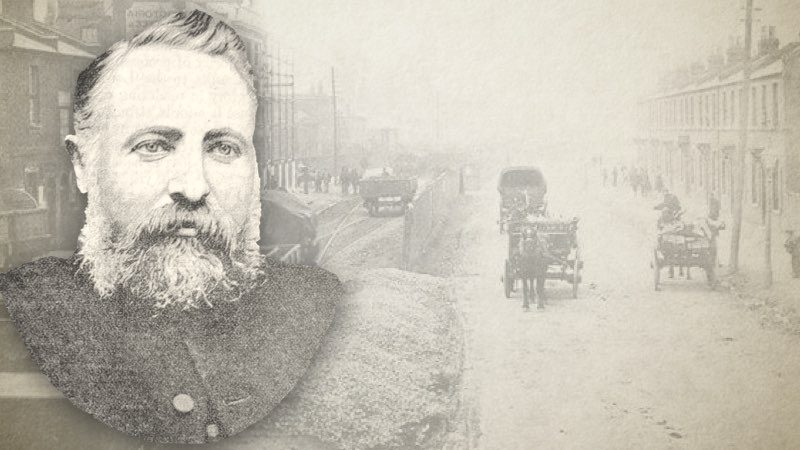
Edwin White (1846-?) was a Strict and Particular Baptist preacher. His first pastorate was with the church meeting at Orphington (1877-1879). After two years, the communion question cropped up, the majority of members deciding to throw the Table open. He forthwith resigned his office. His second pastorate was with the church meeting at Clare, Suffolk (1881-1887). After six years of blessed ministry, he resigned the office due to health reasons. His third pastorate was with the church meeting at Woolwich, Enon Chapel (1891-1919). In 1911 was elected president of the Metropolitan Association of Strict Baptist Churches.