Our Churches: Their Life And Consecration
[The Churches to which Mr. White refers were Strict and Particular Baptists belonging to the Metropolitan Association of Strict Baptist Churches (within the London area). This Association was founded upon the principles of a restricted communion table and the tenets of Hyper-Calvinism. However, the Association abandoned its founding documents during the 1960’s, eventually changing the name to the Association of Grace Baptist Churches. Today, many of the “Grace” churches practice an open table and all stand opposed to the tenets of Hyper-Calvinism. Yet they claim to represent the historic witness of the chapels upholding their founding principles. One must bear in mind, when reading the sermons and articles of those who belonged to the above Churches and Association pre-1960s, that Strict Communion and Hyper-Calvinism were the foundation principles of both.—Jared Smith]
Delivered in 1894 by Mr. Edwin White, Enon, Woolwich
There is something unique about our Churches, for they are the most ancient and the most scriptural. We claim the true apostolic succession. We can give well-grounded reasons for our existence, for our customs and practices. They are not based upon human tradition nor do we follow the laws of expediency. We can show divine authority for the doctrines we hold and the ordinances we observe. Our Churches exist because God has founded them, and they continue because He dwells in them. They are not upheld by human means, nor do they lean on an arm of flesh. They are not a political organisation made by act of Parliament, and which can be dissolved by the same authority. The members of our Churches are loyal citizens of the State; but they are more, they are citizens of the Kingdom of Heaven. They bow with deference and loyalty to the laws of the nation in things pertaining to this life, but in regard to the higher life, in things spiritual, we call no man “master.” One is our Master, even Christ. We are proud to belong to Churches which can lay claim to such a prerogative as this. We have a noble pedigree; we follow in the van of the faithful and true of every age; those who have taken the Word of God for their guide, Christ as their sole Leader and Head. We will, by the help of God, continue to tread in their footsteps, seeking no easier path, more pleasing to the flesh. That our Churches have opposition to contend with we are well aware. The position we occupy lays us open to the charge of narrowness and bigotry by those who shape their religion by the passing hour and changing creeds of men. For all this we are prepared, but we do well to strengthen our hands and stimulate our hearts in the lofty aim we have before us by seeking a deeper spiritual life, a fuller consecration to God in all our united Churches.
I.—Our life is heavenly derived; each member of our Churches is or should be, born of God. We admit none knowingly but such as are of heavenly birth. This life brings us into vital union with Christ, our living Head, and all His living family. Consequently, as we are born of one Spirit, there is one life running through all the Churches. Thus, we are not isolated, units dwelling alone, but we are banded together in Church fellowship, having one faith, one Lord, one baptism. This spiritual life is the uniting link which binds our hearts in one. It calls forth our mutual love, help, and sympathy with one another. We trace our spiritual life to one source—the Grace of God. It flows out in one consecrated purpose by all who possess it—the glory of God. As this spiritual life is similar in its origin, it is also in its nature, experience, and effects. In its nature it is holy as its Parent, the God from whom it is derived: in its experience it is heaven-aspiring, the source from whence it comes: in its effects, they are outwardly manifested in a godly walk and conversation before all men. This is heaven-born life lifts us above the world. Though in the world, we are not of the world. Ever since that life took possession of our soul in has wrought a distinct change in our lives, our motives, our aims, and our prospects. We then sided, but it was to live; yet not in ourselves, nor to ourselves, but unto Him who hath loved us and given Himself for us. Through life may we ever seek to live worthy of Him who hath so highly distinguished us as to make us partakers of it.
II.—This life is constantly dependent on its Source. This life, as we have seen, like the river of water of life, it flows from the throne of God and the Lamb, but its streams must be constantly fed. This life has not its forces self-contained. It is not independent of its Author for one moment. Our life in our own hearts, or in our Churches, is not sustained by our own efforts. We do well to remember this. It will keep us humble and prayerful. If the lamp of our life is to shine brightly it must be fed by the oil of grace, which God the Holy Ghost alone can supply. As every ray of light proceeds from the great orb of day, and when he departs darkness at once intervenes; so it is with us, ’tis midnight if our God doth not shine upon our Churches. Life may still exist, but it cannot be vigorous. If our Churches are to shine as the moon, and be terrible as an army with banners, it must be because we lean on our Beloved; fed by truth, sustained by Almighty power, we shall have life, and have it more abundantly. We must dwell near the Fount if our life is to have a perennial flow; communion with God must be sought. We must fill our urn where those pure waters rise; seasons of retirement we must have when we stand face to face with God. Then will our countenance shine with the reflection of His glory. We shall not need to proclaim we are the Church of the living God. Men will take knowledge of us that we have been with Jesus. Our Churches then will be as trees of Lebanon, full of sap, deeply-rooted, with wide-spreading branches inviting the weary to find shelter and rest, and shedding forth a sweet perfume, an odour. well-pleasing to our God.
III.—This life is invigorated by means. While our spiritual life draws its nourishment from the one Source, God hath appointed certain channels through which the sustenance for our life shall flow, and those who neglect these means will be poorer for so doing. One of the means to invigorate our spiritual life is to feed upon the Word of life. Men are strong by what they live upon. We do not wonder that many are weak when they live on nothing but froth, excitement, and the shallow literature of the present day. God’s ancient thoughts are far better than the modern thoughts of men. “I have written unto you, fathers, because ye have known Him that is from the beginning. I have written unto you, young men, because ye are strong and the Word of God abideth in you, and ye have overcome the wicked. one.” Another means of invigorating our spiritual life is, constantly assembling with God’s people when they gather for worship. One stick on the hearth may possibly burn, but it is more likely to go out; but add a number and you get a blaze which will warm the whole house: so by our united gatherings we shall warm and invigorate one another. They are not the most warm-hearted members of our Churches who have a slight cold on prayer-meeting nights which keeps them in, and a touch of rheumatism which prevents them coming out when it looks like rain on Sunday morning. The pastor’s heart is encouraged, and he preaches more lively when David’s seat is not empty. The singing is more hearty when there are more voices to join in it. The prayer is more fervent when there are more “Amens” to accompany it. The Word is more enjoyed when we know there are many around us who are feeding upon it too. “Not forsaking the assembling of ourselves together as the manner of some is, but exhorting one another, and so much the more as ye see the day approaching.” This is apostolic advice to the apostolic Churches. Another means is seeking the good of others: life is strengthen by exercise. He who rubbed the frozen man back to life saved his own life by the vigorous exercise. He who has found the Messiah the Savior of his soul, will do well to find his brother, and seek to bring him to Christ. Also we shall forget our earthly waterpots and run into the city to tell of Him, if we have drunk of the water of life. Telling out the story of His love and distinguishing grace to us will make our own hearts to glow with more love to Him.
IV.—This life is invincible in power. It cannot be suppressed. It cannot be extinguished in the human soul; it will live under pressure and load. Many waters cannot quench it, nor can the fires of persecution destroy it. It is destined to live on forever. If this be true of each in the living family of God, how invincible the collective life of the Church of God. Let us not be discouraged by the forces arrayed against us. The Prince of Life is on our side, and all His followers are heirs of immortal glory. The Church of God cannot die out, nor will our Churches become extinct, as some predict. The wish, doubtless, is father to the thought. What a might power our Churches would be if every member were charged to the full with this divine life, and standing together as a compact body against evil and erroneous teaching, bearing testimony to the truth with unwavering voice. Marching forward in united phalanx in holy service our Churches would all revive: Pentecost would return again; our Master’s kingdom would spread, and hell would rage in vain. Let us seek this life in all our Churches; it must come from the Holy Ghost. With in our Churches are might: without it, they are as Samson when his locks were shorn.
2nd, It is time to turn our attention to the consecration of the members of our Churches. Possessing this divine life, it will distinguish them.
I.—In their separation from the world, set apart. This is the primary meaning of consecration, and let the distinction be as clear and marked as possible. There should be no difficulty in finding the line of demarcation between the Church and the world; but alas! There is often. Our Lord spake of a narrow and broad road, quite distinct one from the other, having a different starting-point, different travelers, and quite a different destination. But now men seek to mingle both together, and would have us believe that both will come out right in the end. We have not so learned Christ, nor His teaching. That grace which set us apart in eternity as the chosen of God has set us apart in a holy calling. The voice of divine authority speaks to every member of our Churches, “Be ye not unequally yoked together with unbelievers; for what fellowship hath righteousness with unrighteousness, and what communion hath light with darkness?” Our spiritual enjoyment and usefulness as Churches depend upon this separation. God will not dwell with an unholy Church. An Achan in the camp brought defeat on the whole host of Israel, and worldly members in our Churches are a great hindrance in the holy war we are waging. This brings the taunts of the world upon us; and inroad is made for Satan, and thereby we are made weak. The Lord’s blessing is withheld from such a Church where conformity to the world is found. To resort to unscriptural means to carry on God’s work is repeating the old folly of Israel in forsaking God, the fountain of living waters, to hew out to ourselves cisterns which will hold no water.
II.—Devoted to God is the meaning of consecration. Thus the first born of Israel were consecrated to God. The Church of God is the Church of the First born; and as the firstborn in the family was the priest, so all God’s people are priests unto Him. They have been washed in the fountain opened for sin and uncleanness; clad in the priestly garments of Christ’s righteousness; anointed with the Holy Ghost, they are each devoted to God’s service. They present their bodies a living sacrifice, holy, acceptable unto God, which is their reasonable service. They offer up the sacrifice of praise and prayer continually. This is the high-dignity of this Church of God to be thus employed. This is heavenly service, to stand in His presence, doing His will, hearkening unto the voice of His Word. He permits us to begin it here. This is the purpose for which God hath so highly distinguished us and formed us by His grace, that we should shew forth His praise. May we be clean who bear the vessels of the Lord, and our garments be kept unspotted from the world. This devotion to God is not an irksome task to those who have been redeemed by precious blood; love prompts it; gratitude fires the soul with holy ardour. The remembrance of what we were, and now what grace has made us, causes the glowing heart to say:—
“Had I ten thousand thousand tongues,
Not one should silent be.”
They all should speak His praise. This devotion to God is abiding. We have opened our mouth to the Lord, and we cannot go back. The vows of the Lord are upon us. Even as our divine Head we are priests for ever. At all times and in every place our reply us, to those who enquirer concerning us, “Wist ye not I must be about my Father’s business?”
III.—This consecration is individual. The Church of God was chosen and redeemed together, but its members are called one by one to know the Lord, to trust in Him, and to serve Him. They each have the same blessings, the same privileges, and each have the same responsibilities. This consecration does not rest on a few leaders in our Churches, and the rest have nothing to do with the Church’s work. In Job’s day we read, “The oxen were plowing, and the asses feeding beside them.” I am afraid well as a pastoral scene, but the pastors of our Churches are not enamored with the picture, though they may be fond of the country and sometimes preach flowery sermons. There are differing gifts, we grant, in the members of our Churches adapting some for service with others are not fitted for; but as each stone has its niche in the temple, and as each member has its place in the body, so in the Church of God all have their niche to fill, and each member has a special department of service which none but themselves can carry out so well. Let each pray and seek to be guided into their suitable sphere of labour, and, when it is found, say with willing, unreserved consecration, “Here am I, Lord, send me.” Thus, if not pastors, deacons, or teachers, they will be found helps. “Salute Urbane, our helper in Christ; salute Tryphena and Tryphosa, who labor in the Lord. Salute the beloved Persis, which labored much in the Lord.” (Rom 16:9, 12) These were the injunctions sent by the apostle to Rome; and our injunction is, to all the members of our Churches, “Go thou and do likewise.” This is important, as it will add to the Church’s strength. And each member will take a greater interest in the Church’s welfare when they each take their rightful burden of responsibility.
Lastly, this consecration must be complete. Every faculty of the mind, every emotion of the heart, must be employed. The holy oil poured on Aaron’s head ran down to the skirts of his garments; every part of his body received its share of the sacred unguent. He was typical of our great High Priest, the Head of the Church. The sacred anointing which He received has descended to all the members of His mystic body. Also this anointing should be upon every part of them. There is not a portion which does not belong to God. “For ye are bought with a price; therefore glorify God in your body and in your spirit, which are God’s.” This anointing rests upon the head of some of the members of our Churches. They hold the truth very clearly, their creed is as bright as the stars on a frosty night, and nearly as cold. Others, their hearts are more affects; they are very emotional, easily carried away with excitement, but their judgment wants maturing to be of good service in our Churches. Others, the anointing has reached to their pockets, a part not often touched with some; but these give readily to God’s cause. Their contribution is always freely given to any good object for the furtherance of the Redeemer’s kingdom, or helping the poorer members; and yet their request continually is, “Please not not ask me to do anything; I do not wish to be put forward; others are more fitted that I.” Now this modesty is very commendable to a certain extent. It is well to see our members liberal, and our Churches are not behindhand in this loving service, but let us not forget our persons as well as our property belong unto the Lord. Others, their consecration does not reach far enough. They know the truth and love it; their hearts often melt under the preaching of redeeming love, but it never makes their willing feet in swift obedience move. The feet of Jesus were nailed to the cross fro them, but their feet do not run in the way of His commandments, though He has enlarged their hearts. This ought not to be. I am persuaded better things concerning all the members of our Churches, though we thus speak. May we each this day consecrate ourselves unto the Lord, and may our Churches go from strength to strength, pure in doctrine, holding forth the Word of life, and when we depart may we hand down the torch of truth undimmed to our successors, and then receive our Lord’s “Well done; enter thou into the joy of Thy Lord.”
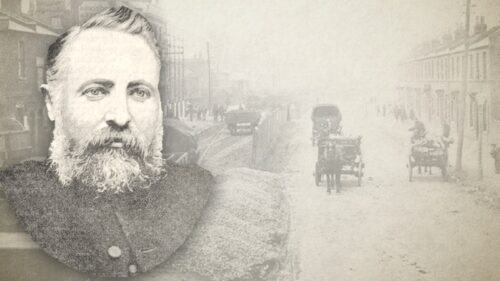
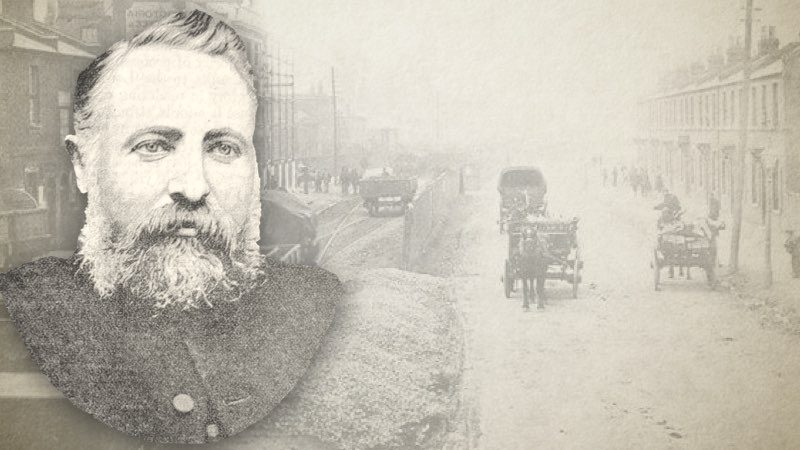
Edwin White (1846-?) was a Strict and Particular Baptist preacher. His first pastorate was with the church meeting at Orphington (1877-1879). After two years, the communion question cropped up, the majority of members deciding to throw the Table open. He forthwith resigned his office. His second pastorate was with the church meeting at Clare, Suffolk (1881-1887). After six years of blessed ministry, he resigned the office due to health reasons. His third pastorate was with the church meeting at Woolwich, Enon Chapel (1891-1919). In 1911 was elected president of the Metropolitan Association of Strict Baptist Churches.