The Christian’s Life
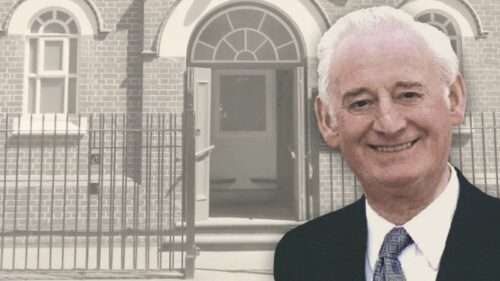
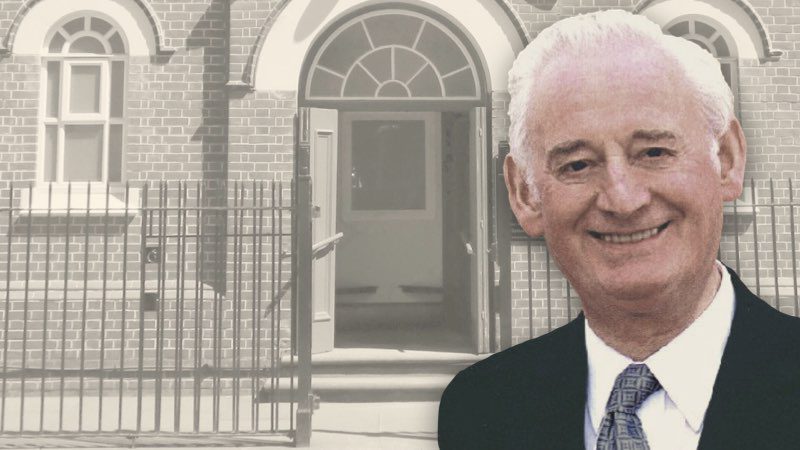
[Posted by permission. Bethel Strict Baptist Chapel.]
Sermon preached at Bethel Chapel, Luton, by Mr. B. A. Ramsbottom, on Lord’s day morning, 4th October, 2020
“The life which I now live in the flesh I live by the faith of the Son of God”—Galatians 2:20
This very simply, clearly tells us what the Christian life is. What an unspeakable mercy if this word is true of you and me here this morning: the life which we live! We have a life to live, a life which we live by the faith of the Son of God.
So the subject really is, what is the Christian life, and how is it to be lived? So much of the Word of God is devoted to this subject. There used to be an old saying, very simple but very true: “The Christian’s life is a life lived.” So often in our thoughts and so often even in our preaching, we are on the beginning of a work of grace, and the vital thing: the need to be made ready in the sight of God, the only way, through the Saviour’s righteousness and blood, and that made known to us by the Holy Spirit. Now we rightly emphasise that in our preaching, and we rightly emphasise that in our thinking. And then the other thing: we often speak of the end. Once again, we are reminded of it here this morning [an elderly church member having passed away the previous day], the end of the Christian life, eternity, the need to be prepared. How often it comes in our hymns, our private prayers, our prayer meeting prayers, our preaching:
“Prepare me, gracious God,
To stand before Thy face.”
But there is that life in between, that life which has to be lived in the sight of God, in the sight of His people, in the sight of our friends and family, in the sight of the world.
I never find this an easy subject to speak on. You see, a preacher does not want to be like those signposts that we have in our streets. You children all know what a signpost is. You have one at the roundabout at the bottom. It points out the way to Bedford, the way to Harpenden, but the poor signpost does not take one single step in the direction either way. May the Lord ever deliver us from being signposts, being able so clearly to show the way and being able to point out the way, but not taking a step in that direction; or even if we are able to walk in the right direction, walking with slow, lagging steps, following afar off.
But here we have the standard. It is Paul’s testimony. This is where he was brought. The Lord cut him down on the way to Damascus. He changed his life completely. Paul’s life was never the same again. He tells us what his life was. It was a life lived “by the faith of the Son of God.” The Son of God was everything to him when the Lord revealed Himself to him on the road to Damascus. But he lived that life as he had begun, and that is an important word to each of us this morning. This was the word actually that was given to me at my baptism many years ago: “As ye have therefore” – at first – “received Christ Jesus the Lord, so walk ye in Him.” As you first received Christ. It was not the end. In some ways it was the beginning, and in some ways it is still the standard. “As ye have therefore received Christ Jesus the Lord, so walk ye in Him.” How did you first receive Christ? “By the faith of the Son of God.” “So walk ye in Him.” How did you first receive Christ? In absolute nothingness and humility. You were nothing; Christ was everything. “So walk ye in Him.” How did you first receive Christ? In love. “So walk ye in Him.” Sadly, we do not always walk in the spirit in which we first received the Saviour, the zeal we had then and the love we felt to the Lord and His people. But it still stands: “As ye have therefore received Christ Jesus the Lord, so walk ye in Him” – no lesser standard, no lowering of the standard.
And just another thing before I leave that point. When you and I in love were first led by the Spirit to receive the truth into our hearts, we were not hovering about whether this was right or that was right. We had the truth embedded in our heart, the glorious doctrines of free and sovereign grace in which Christ is everything and the sinner nothing. We are called to keep close to that standard. “Buy the truth” – in these solemn days when so many are gladly selling it. “Buy the truth, and sell it not.”
“The life which I now live in the flesh.” We are still in the flesh. We have not lost the flesh. We still have that sinful nature. There will still be the conflict. We are not yet perfect. But, “the life which I now live in the flesh I live by the faith of the Son of God.”
Being exercised how to bring this vital subject before you, it seems something like this. First of all, the many exhortations there are to the Lord’s people to walk worthy of their high calling. Secondly, the various helps the Word of God gives in the way that the Lord’s people are to walk out their life. And then thirdly and especially, how it is the Lord Himself, and only the Lord Himself by His Spirit, who can ever really enable an unworthy sinner to “live by the faith of the Son of God.” May the Lord sanctify these things to us.
You all must have noticed in reading the Word of God what a large proportion of it, especially in the epistles, is taken up with this point of Christian behaviour – how the Lord’s people are to live, how they are to walk out their life, how they are to walk out their profession. Those chapters I read this morning (Galatians 5; 6. 1-10) were full of such exhortations. But you find this in all the epistles: at the beginning, the doctrine; and then the gracious experience, the knowledge of the doctrine; and then the rest of it, this walking out the truth in the love of it.
“I … beseech you,” says the apostle, “that ye walk worthy of the vocation wherewith ye are called.” That is the standard for your life and mine: to walk worthy. We can never be worthy – to our last day we shall be unworthy sinners – but the Lord has called us to walk worthy, walk worthy of the Lord. He says, “Let your conversation” – and that does not just mean our talking; it means all our Christian behaviour. “Let your conversation be as it becometh the gospel of Christ.” We all know what the gospel of Christ is, and that word in simple language means do not let there be any contradiction between the gospel we preach, we believe, and the way you act. Do not let what you do be a contradiction of the gospel that you profess.
“Let your conversation be as it becometh the gospel of Christ.” But though we so often emphasise that conversation does not just mean talking, do not let us go to the other extreme. There is so much about our speech. Like one of our aged friends used to say: we need the Lord to set a watch over the door of our lips. How much harm can be done by hasty words, unkind words, unnecessary words. And the sad thing is, they cannot be withdrawn, and often they cause much hurt and much harm. In these loving exhortations of the gospel, the emphasis seems to be that we should walk in love – the love of Christ – to the Lord Jesus, but love to all His people.
And there is so much about “endeavouring to keep the unity of the Spirit in the bond of peace.” As there is so much about love – love to Christ, walking in love – there is so much about this walking in the unity of the Spirit. And that word endeavouring is a strong word. “Endeavouring to keep the unity of the Spirit in the bond of peace.” We cannot create the unity of the Spirit. With the Lord’s people it was created in everlasting in the covenant of grace, and made known to faith in time. But if we cannot create it, we can mar it, and we can spoil it. “Seek peace, and pursue it,” says the Lord.
“Thus may we abide in union
With each other and the Lord;
And possess, in sweet communion,
Joys which earth cannot afford.”
“The life which I now live in the flesh I live by the faith of the Son of God.” Now let me be exceedingly clear this morning. All these exhortations that we have in the Word of God, in the epistles, none of them are made on legal ground. They are made on gospel ground. They are made in love. A legal exhortation is that you might win God’s favour, or try to win God’s favour. The exhortations of the gospel are not harsh; they are not legal; they are made in love. They are all what they are called: they are gospel exhortations. You have the gospel, what the Lord has done for His children, in love, in mercy, in salvation. “Be ye therefore followers of God” – therefore – not because the law commands it, but because of what Christ has done in love. “Be ye therefore,” for that reason, therefore. “Be ye therefore followers of God, as dear children; and walk in love, as Christ also hath loved us, and hath given Himself for us” – that seeking to be conformed to the image of Christ.
Now of course, when we read and hear these things, we feel how short we come, but we do not want the standard to be lowered. “The life which I now live in the flesh I live by the faith of the Son of God.” And so we have so many little words coming in. Did you notice as we read through this morning, this is how we are going to walk: love, peace, gentleness, meekness, our flesh crucified with the affections? “If a man be overtaken in a fault, ye which are spiritual, restore such an one” – how? “In the spirit of meekness; considering thyself, lest thou also be tempted. Bear ye one another’s burdens, and so fulfil the law of Christ.” And in all the later chapters of the epistles, you have these same things being set before us.
You say, Do they only come in the New Testament? They come a lot in the Old, but there in the Old Testament it is generally spoken of as the fear of the Lord. That will give you this real religion. That will give you this life to be lived in the faith of the Son of God. “The fear of the Lord.” It is to depart from evil. It will separate you from the world, from Christ- dishonouring things. It is a fountain of life, to depart from the snares of death. It is the beginning of wisdom. It teaches you how to walk wisely, tenderly before the Lord. The old preachers so often used to say,
“An unctuous light to all that’s right,
A bar to all that’s wrong.”
Which means, for you young ones, there is something you would love to do, but you know it is wrong, and the fear of the Lord will not let you do it. And there are other things you would rather not do, but the fear of the Lord impels you to do them. It will give you this daily life “by the faith of the Son of God.” It will give you this personal life “by the faith of the Son of God.”
“The life which I now live in the flesh I live by the faith of the Son of God.” You remember what I spoke to you about last Lord’s day evening, the last verse in the Bible: “The grace of our Lord Jesus Christ be with you all.” But it is even this epistle that ends, “The grace of our Lord Jesus Christ be with your spirit.” Now our spirit is not always right. Our spirit is not always the faith of the Son of God. Often our spirit is our own spirit, or a wrong spirit, or a faithless spirit. O but may we know more of that: “The grace of our Lord Jesus Christ be with your spirit.”
Of course, so we might go on all morning, if we had the ability and if we were given grace. The Word of God is full of it: the Christian life, how it has to be lived, no lowering of the standard, but especially those two points: humility, love – ourselves nothing, the Saviour everything.
Now the Word of God does not just give all these exhortations and then leave it. There is very, very loving, gracious counsel given how we should walk. The vital thing, summing up all the instructions and encouragements the New Testament gives is this: complete dependence on Christ. It is when we forget to depend on Him, to look on Him, to seek His help, when we are satisfied with self, when we depend on self, that is when we go astray. But it is that complete dependence – not just dependence – complete dependence on Christ. “Who is this that cometh up from the wilderness, leaning upon her Beloved?” It is a sinner seeking to live her life by the faith of the Son of God. How she is seeking to walk that out: leaning on her Beloved. She cannot lean too often, too hard. She will never lean in vain. The Lord will not let her down.
Dependence on Christ. That dependence is made known as we are brought to live a life of prayer. You cannot live a life of faith unless you live a life of prayer. It is this: “Be careful for nothing; but in every thing by prayer and supplication with thanksgiving let your requests be made known unto God” – your requests made known, with thanksgiving. “And the peace of God, which passeth all understanding, shall keep your hearts and minds through Christ Jesus.” But there is the dependence and there is the prayer. There is the prayer and there is the dependence.
The old, godly divines used to speak very much on seeking to keep close to the Saviour, because we do backslide in heart. There is so much carnality and formality and carelessness and easiness, and those things are not altogether honouring to the Lord. We need the Lord’s forgiveness daily. We need to be given repentance. We do need to be delivered from these things. The old divines used to say, seeking to keep Christ in view, looking unto Jesus, seeking to be near Him.
Let me give you just a little illustration from the Old Testament: Isaac. We do not read too much about him. There were not all the amazing things as with Abraham and Jacob, or later with Moses. But we are told, “God blessed … Isaac.” That is the one thing that matters. “God blessed … Isaac; and Isaac dwelt by the well Lahai-roi.” That second part does not come in by accident. Whenever you read of Isaac, he is always living by a well. If he moves his tent, the first thing he does is to seek a well, or to dig a well. Spiritually that is where the life of faith prospers: ever living near a well.
“O Christ, He is the fountain,
The deep, sweet well of love.”
If only we could live with Him and partake of the well. What is it? “Of His fulness have all we received, and grace for grace.” “Therefore with joy shall ye draw water out of the wells of salvation.” So when we fail and falter and come short, it is not because the Word of God comes short. It is very simple. It very lovingly tells us, it very lovingly and graciously encourages us.
But then we come to this: what does the Lord say, what does the Lord do about our Christian pilgrimage? There are exhortations; there are encouragements. What shall we say of these other things – the promises? Well, the Lord keeps His people. That is a wonderful truth. I remember in my early days that was a lovely word: “Preserved in Jesus.” Because it is often said that we cannot keep ourselves. “Who are kept by the power of God through faith unto salvation ready to be revealed in the last time.” As the Lord keeps His people, He blesses them with His presence; and as He blesses them with His presence, His loving, watchful eye is ever upon them; and as His loving, watchful eye is ever upon them, He knows when they are in need, and He supplies every need in their life as they seek to walk worthy.
“The life which I now live in the flesh I live by the faith of the Son of God.” “But my God shall supply all your need according to His riches in glory by Christ Jesus.” “Who is sufficient for these things?” Paul says, “Our sufficiency is of God” – the strength you need, and the help you need, and the upholding you need, everything you need. “The life which I now live in the flesh” – still in the body of sin and flesh, still tempted, assailed by sin, Satan and the world, and yet the faith of the Son of God, the faith He gives, the faith that looks to Him.
“The life which I now live in the flesh I live by the faith of the Son of God.” So beloved friends, there is a standard set before us, and then there are encouragements how to walk it out, and then there are the promises of the Lord’s help. But when we come to the end of it all, when we have done all, we have to say, “We are unprofitable servants.” We think of this standard, and we see it and agree with it, but it condemns us, and don’t we feel to come short, and don’t we feel ashamed! That is where grace comes in – “Sovereign grace o’er sin abounding,” grace through forgiveness, grace through the blood of Jesus in blotting out sin.
But in closing, beloved friends, for many years I have thought this: why at times the Lord allows us to be so ashamed of how far short we come in our Christian walk. It is for one reason. It is that we might be kept from thinking, “I am sure of getting to heaven. I seem to be in a good spirit. I seem to be helped. I seem to have joy and peace all the time. So I am sure to be right.” The Lord permits us to realise our faults and failings, how short we come, that our only hope of salvation, our only hope of heaven, might be in our dear Lord Jesus and in His righteousness and precious, sin-atoning blood.
“The life which I now live in the flesh I live by the faith of the Son of God.”
As the image in the glass
Answers the beholder’s face,
Thus unto my heart appear;
Print Thy own resemblance there.
While I am a pilgrim here,
Let Thy love my spirit cheer;
As my Guide, my Guard, my
Friend, Lead me to my journey’s end.
Show me what I have to do;
Every hour my strength renew;
Let me live a life of faith;
Let me die Thy people’s death.
J. Newton
Benjamin Ramsbottom (1929-2023) was a Strict and Particular Baptist preacher. In 1967, he was appointed pastor of the church meeting at Bethel Strict Baptist Church, Luton, Bedfordshire, a position he held for fifty-five years.