
The Unfailing God
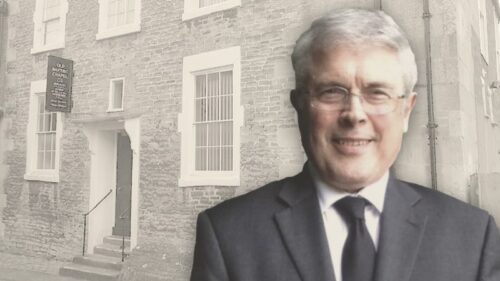
[Posted by permission. Chippenham Old Baptist Chapel.]
Sermon preached at Old Baptist Chapel, Chippenham by Mr. G. D. Buss on Lord’s Day Morning, 19th July, 2020
“He will not fail thee.”—Deuteronomy 31:8
These words dropped with some sweet power into my soul a few days ago and have remained a source of meditation which we will bring before you for a few moments this morning.
God’s servant, Moses, was at the end of his long pilgrimage. Forty years he had spent in the court of Pharaoh, and all the luxury and education that he had received there was a notable part of his life. But, when he came to years, we are told that he “refused to be called the son of Pharaoh’s daughter,” even though godly scholars tell us he could have been the next Pharaoh. Moses refused all that, and rather chose to join himself to his dear brethren in the flesh, who at that time were under the lash and under the yoke. They were slaves. Moses was “not ashamed to call them brethren.”
And this was a very great stoop in Moses’ life, compared with what he had been the forty years before. And dear friend, that is a mark of grace. It looks beyond what is seen and coveted by the natural eye, and by faith discerns things as God would have them. This was the same reason that Ruth left Moab and joined herself to Naomi at Naomi’s worst time: a widow having lost two sons. A lower spot you could not have found a woman in, but that is when Ruth joined herself to her. Ruth had the same spirit as Moses had. We may say also concerning the dying thief in an even more blessed sense. Our Lord Jesus Christ, hanging between two thieves, nailed there, a crown of thorns upon His holy head, railed on by priests and scorned at by Roman soldiers was indeed an abject place to be. Yet the dying thief, by grace, put himself, as it were, in the company of the dear Saviour and said: “Lord, remember me when Thou comest into Thy kingdom.” Real religion is not just for fair weather, dear friends. Yes, blessed be God, there is a wonderful prospect for a believer. “In My Father’s house are many mansions: if it were not so, I would have told you.” But, while we are here below, for the most part, the Church is in a low state. It is often in tribulation and in many trials. But, for all that, a true believer still says:
“With them numbered may I be
Now, and through eternity.”
Well, Moses then leaves the luxury of Egypt. For forty years he is a shepherd. And that was a tremendous contrast. But I think, dear friends, he learned lessons in the wilderness that he could not learn in Pharaoh’s court. He learned lessons in that lonely place that could not be learned anywhere else. And sometimes God puts His people in a wilderness place for that very reason: to learn lessons that cannot be learned anywhere else. God makes no mistake in the way He leads His people. Moses learned lessons in the wilderness that were a great help to him later in his life. Then came that divine commission at the burning bush, and the blessed promise that went with it: “Certainly I will be with thee.” For forty years this dear man led God’s dear ancient people from Egypt, through the Red Sea, through the changing scenes of the wilderness journey, in sorrow and in joy, in low states and in high states. He clung to God’s people and they to him, although there were a mixed multitude that caused him much trouble. And friend, it is the mixed multitude in your heart and mine that causes the most trouble in your soul. What you are by nature as a fallen sinner – that is the mixed multitude. It is continually militating against the work of grace that we trust God has put in many hearts here.
But Moses now comes to the end of his journey. His work is done. He cannot do Joshua’s work. Joshua’s work was to lead the children of Israel through the Jordan and into the Promised Land. Moses could not do that work; that was not an appointed work for him. The mantle had to pass to Joshua from Moses. And, as it was with Elijah when he departed this scene and the mantle fell upon Elisha, so it was here. And the great point is, just as Elisha proved it, the God of Elijah still lived, although Elijah was gone. Although Moses was soon to go to his eternal rest, Moses’ God would continue. The Lord said in the chapter we read: “As I was with Moses, so I will be with thee.” An unchanging God; an unchangeable God.
“In all the changing scenes of life” And so it is. But now Moses is God’s prophet at this point. He gives a word in season to his son in the faith, Joshua. The words before us are words of gracious promise and encouragement. We have Moses as a lawgiver, and we have Moses as a king, in one sense. But here we have him as God’s mouthpiece: a prophet. He was a true prophet who was used of God to give to Joshua this word in season, particularly the words I have read before you this morning: “He will not fail thee.” Moses had proved that God would not fail. He had proved that each time when many did not support him but turned away from him. Even Aaron and Miriam at one time were dismissive of him and envied his position. And God dealt with them for it. It was a lonely path. But:
“Our earthly friends may fail us
And change with changing years,
This Friend is always worthy
Of that dear Name He bears.”
So, Moses could say as a prophet to Joshua: ‘This is God’s word for you, Joshua – I have experienced the truth of it – “He will not fail thee.”’ It is very noticeable to record, as we read in the Book of Joshua, how the Lord said: “I will not fail thee.” There the Lord came personally to Joshua and said, “I will not fail thee.” He was graciously confirming what Moses had been saying in this chapter we have before us this morning. Friends, confirmations of the Word of God are very precious. They are seals. It was a sealing time for Joshua when the Lord came to him as we read in Joshua chapter 1 and said exactly the same words but with the “I” rather than the “He.” “I will not fail thee.” It came so personally and so near to Joshua. You have it in Psalm 23. It begins with a slight distance, as it were. “The Lord is my Shepherd; I shall not want. He maketh me to lie down…” Then you come to this verse: “Yea, though I walk through the valley of the shadow of death, I will fear no evil: for Thou art with me.” That is much nearer, isn’t it? Now the Lord is speaking. He is speaking with His sheep and the sheep are speaking with the Shepherd. They are in the same company; they have His presence.
“When most we need His helping hand,
This Friend is always near.”
The Lord knew that Joshua needed such an encouragement, such strengthening and such sealing. When the Lord gives that to us, He knows we need it, otherwise He would not give it. “He will not fail thee,” says our text; “I will not fail thee,” says the Lord in a personal word to Joshua.
Then there is another reason why Moses could speak with such blessed confidence: he had proved Him. Moses, under God’s divine inspiration recorded much – not all – but much of the pathway that he had walked. There were many places of which he could remind Joshua. Joshua had been a witness of many things. Joshua had been there the night of the Passover. Joshua had passed through the Red Sea. Moses would have reminded him of those times. Moses would have reminded him of Marah and how the Lord made the bitter waters sweet, and of Rephidim, where the rock opened, and the waters gushed out. He had been a witness to the manna falling every day. ‘Joshua, I have seen these things. I have experienced them, and I have proved that God was as good as His word that He gave me at the burning bush.’ “Certainly” – whatever troubles may come; whatever need may arise – “I will be with thee.”
Again. Moses could speak in this sense: Moses knew God was a covenant God. When God makes a covenant, dear friends, He always keeps His end of it. Sadly, you and I by nature are covenant breakers. In the covenant of works we come solemnly short. That is why the covenant of works could never save us. We cannot do what the covenant of works demands of us, because of our fallen state. There is nothing wrong with the covenant, it is what is wrong with you and with me in our fallen state! It is an inexcusable state. You should not say: ‘Well, I was born like it and therefore I cannot help it.’ Yes, you were born like it. Your nature is sin. But it is sin in God’s sight and thus, dear friends, it is abhorrent to Him. And unless you know a covenant other than the covenant of works, the covenant of works will condemn you in that last day because of the debt you owe that you have not paid.
But, blessed be God, there is another covenant: the covenant of grace. And Moses knew something about that. He knew that God had promised to send His only begotten, dearly beloved Son in due time into this world. Moses was one who watched for Him, prayed for Him and waited for Him. He believed He would come, and He did come. He was a covenant God. And Moses knew that God would preserve the people that Joshua now had to lead for that very reason, that eventually, in the fulness of God’s time, He would send “forth His Son, made of a woman, made under the law, to redeem them that were under the law.” Friends, God is a covenant God. The Father, the Son and the Holy Ghost, in glorious unity together have united to work that great work of salvation. And this is the best covenant to be found in. It is the only covenant that will save a sinner: the covenant of grace. It is for sinners. Bless God for that! It is a work wrought by God “to save them to the uttermost that come unto God by Him.” The dear Spirit brings to God through a precious Christ the work of salvation, performing that work that we read of in Philippians: “He which hath begun a good work in you will perform it until the day of Jesus Christ.” Moses believed these things. He was a patriarch. He lived long before our Lord came. But, like Abraham, He rejoiced to see Christ’s day. “He saw it and was glad.” Bless God for it! So, Moses could say these things as a prophet, he could say it by experience, and he could say it because of the covenant: “He will not fail thee.”
But we have one further reason; perhaps the most blessed of all reasons: ‘Joshua, you are one loved of God.’ Friends, perhaps that is the best reason of all why the Lord will not fail His dear people. You have it in John 13. “Having loved His own which were in the world, He loved them unto the end.” To be loved by God and to be loved of God is the greatest gift you and I could ever have. Yes, we have our natural affections for those who God has given us to love, and that is a great mercy. But, when all is said and done, the grave will swallow up all those relationships. They will not last beyond your dying breath. “Henceforth know we no man after the flesh” in that sense, once we have passed this time state. I remember reading the biography of the late Jesse Delves. He was a godly man. He was the pastor at Clapham many years ago. He had a very godly father. But, his father died, and Jesse felt it was very well concerning him. A few days after his father died, he had a vivid dream. He saw his father walking down the street and passing the gate. In his dream, Jesse ran out to speak to him. But his father just passed on. He said that he did not even recognize him. And Jesse woke up with those words: “Henceforth know we no man after the flesh.” He realised that the natural relationship he had with his father as a son had gone. But, dear friends, the relationship in Christ will never go. That is an everlasting bond. Those bound in that bundle of life have a union which can never, never, ever break.
“Rest, doubting saint, assured of this,
For God has pledged His holiness.”
That is the one bond that will last through the valley of the shadow of death. It is the one bond that will hold the child of God fast till he sees a precious Christ face to face. Then, it should be your exercise this Sabbath morning to be asking that question that William Gadsby asked:
“Have I union To the Church’s living Head?”
That is the only union that will take you safe to heaven. Remember that. Let us come back to our text. “He will not fail thee” – for love’s sake.
“Whom once He loves He never leaves,
But loves him to the end.”
“Yea, I have loved thee with an everlasting love,” He said to Jeremiah, “therefore with lovingkindness have I drawn thee.” “He will not fail thee”
Now look at it, dear friends, in another light. Speaking of myself, what failures we are! The more we go on and look back at our lives – some of the things we have said and have not said; things we did and did not do; some of the mistakes we have made – what sin-blotted lives ours are, aren’t they? What failure is stamped upon them! We must be honest. Yet here is One who never fails. No imperfection, nothing short here. “He will not fail thee.” It is very encouraging to me when feeling to be such a failure (I do as a pastor and in so many other ways), to go to One who never fails. There may be one here this morning who feels they have failed so much. You look back over your life and there are so many things you now realise (at the time you did not realise) but now you do realise that you were not in God’s fear. Now you look back, and perhaps the devil is saying that you cannot possibly be saved with all that history behind you. Well, the devil is a liar. There is a faultless obedience for you to cling to. There is a perfect righteousness for you to hasten to. There is One who has lived a faultless, unfailing life here below – a precious Christ. He is the place, for those who feel such failures, to hasten toward. What a failure Peter must have felt when he denied his Lord with oaths and curses! You think about it. The very one who said: “Though all men shall be offended because of Thee, yet will I never be offended.” And he meant it. Yet my dear friends, he denied Him. He swore, he cursed and he lost his temper. We read: “the Lord turned, and looked upon Peter.” And when Peter thought on these things, “he went out, and wept bitterly.” His profession lay in ruins around him. Ruins! All his vows had gone. His resolutions had vanished. He was a poor, naked, exposed, guilty man. But friends, he had one thing to look to. The Lord Jesus Christ said: “I have prayed for thee, that thy faith fail not.” ‘Although you are such a failure in yourself, Peter, yet there is one place for you to flee: to Me; My prayers.” And that is where he did flee. And that is where you and I should be fleeing this Sabbath morning with all our failings, faults and all that clings to us.
“Flee to Him, your only Saviour;
In His mighty name confide;
That is a word for failing sinners, isn’t it? Failures! And if God the Holy Ghost works in your heart, dear friend, He will make you realise that side of your life. He will expose all those things that you doubt in God’s sight to be impure and wrong. Then He will lead you to the precious fountain, opened. What for? Sin, uncleanness, follies, faults, failures and shortcomings. The precious blood of Christ “cleanseth from all sin.” Not some, not most, not nearly all – “all sin.” Blessed word!
And that brings me to another word you will find in Isaiah 42. “He shall not fail nor be discouraged.” Who? Christ. Let us meditate for a few moments on that blessed thought. Friends, He never failed, did He? Think of it. In the covenant of grace, it was given to Him by the Father to redeem the whole election of grace. All the sheep and lambs of His fold were put in His care. When something is put in your care, you are entrusted with it. The one who has put it in your care has some confidence that you will do as you have been asked. Often, we come so short, do we not? But when God the Father put the whole election of grace in the hand of His dear Son to redeem, He had every confidence that He would do it. “He shall not fail nor be discouraged.” So, when He came into this sin-cursed earth the first thing we have to learn is that He did not fail in the keeping of the law. You and I fail every day. What is the law? “Thou shalt love the Lord thy God with all thy heart, and with all thy soul, and with all thy strength, and with all thy mind; and thy neighbour as thyself.” There is no room for any love but the love of God, and no room for any other consideration but your neighbour as yourself. Yet, dear friends, how do we live? How has your week been this last week? Have you lived like that? How much selfish living there is! What self-serving there is! How we pander to what our flesh wants! We are continually coming short. But the Lord Jesus Christ loved the Lord His God in His holy humanity with all His heart – not part of it, not most of it – with all His heart and all His mind. All His thoughts were towards His Father with all His soul. He did not fail in working out a complete, perfect righteousness for His dear people. How thankful you and I should be for that! Perhaps there is one here this morning who has striven so hard to obey the law. You know it is right. You do not want it to be any less holy than it is. But you are continually failing. You are one of the failures I have been speaking about. ‘What am I to do? Where am I to turn?’
“This is the way I long have sought,
And mourned because I found it not;
My grief, my burden long has been,
Because I could not cease from sin.
The more I strove against its power,
I sinned and stumbled but the more;
Till late I heard my Saviour say,
“Come hither, soul, I AM THE WAY.”
Dear friend, He is “the way, the truth, and the life.” Blessed be His holy name; He has wrought out the obedience for just such as you. He did not do it for the righteous; they do not feel to need it. But the sinner convinced by the Holy Ghost knows he needs it. He cannot do without it, so he has to flee to this precious obedience of Christ; his only hope: the righteousness of another. As God said to His servant John Bunyan: ‘Thy righteousness is in heaven.’ He tried hard to work it out himself, but then he saw it was in a precious Christ; wrought for him. The Lord Jesus Christ did not fail in that.
Secondly, He did not fail in resisting sin. Now, the Lord Jesus Christ had no sinful nature like you and I have. He was incorruptible and undefiled in that respect. But all the sins that you and I so readily fall into were hurled at him by the prince of lies, Satan himself, to try and entice Him, to tempt Him, to encourage Him and to draw Him into sin. His life was a continual battle against the arrows of the evil one. But He did not fail. The prince of this world found nothing in Him. He finds plenty in you and me, doesn’t he? But Satan found nothing in the Lord Jesus Christ. Nothing! And there is our salvation. He has overcome Satan. He has overcome sin. He has overcome temptation. He, the “holy, harmless, undefiled” One was never once sullied by it, never once undefiled by it and never once overcome by it. Here is a blessing for you who feel so often overcome this Sabbath morning.
He sees me often overcome,
And pities my distress;
And bids affliction drive me home,
To anchor on His grace.
That one to whom I am preaching this morning – who it maybe I do not know, but the Lord knows – your failures and faults are all hanging around your neck like a great millstone. Look to this precious Christ who has not failed. “He will not fail thee.” “He shall not fail nor be discouraged.” He has “set judgment in the earth.” He has wrought that obedience. He has overcome sin, Satan and the world. All that oppose His Church have been overcome. He did not fail. And that is the source of your overcoming, child of God: His victory. “We are more than conquerors through Him that loved us.” You are trying to be a conqueror without Him, aren’t you? You cannot do it, friend. You cannot do it. You need His strength. You need His grace. You need Him to be with you.
Again. Blessed be His holy name; He did not fail when the sins of His Church were laid on His holy shoulders to bear away. True – and I say this most reverently – the weight of those sins staggered Him. The accumulation of it! The cost of it! That mysterious conflict in the Garden of Gethsemane has depths in it that you and I cannot begin to measure. But, blessed be God, He did not fail. “The cup which My Father hath given Me, shall I not drink it?” And the cup He puts into your hand to drink for His sake, He will make even that cup a blessing to you when it is sanctified to you. He drank His cup; He drained it and left a cup of blessing for His people in its place.
“For though our cup seems filled with gall,
There’s something secret sweetens all.”
The point I want to make is that He did not fail. He took that immense load; that intolerable burden from the Garden to the Judgment Hall, and He remained completely silent until they challenged His Godhead. When they challenged His Godhead, His lovely mouth was opened to defend it, as was right. But, when it came to the point of if He was guilty, He was not guilty in God’s sight nor in the sight of those who lovingly believed in Him. The world counted Him guilty. Yet, on behalf of the Church, in that federal state bearing their guilt, He stood as the guilty One. “For He hath made Him to be sin for us, who knew no sin; that we might be made the righteousness of God in Him.” Note what it did not say: He was not made a sinner. He never was a sinner, otherwise the offering He made would not have been a holy offering. It would not have succeeded in the work it was engaged in. It must be a holy offering. It must be holy sighs, tears and groans that fell from His holy Person to make the offering needed for the sins of His people. He was made sin; a sin offering: “that we might be made the righteousness of God in Him.” And my dear friends, He did not fail. When He cried: “It is finished,” the veil of the temple was rent in twain from the top to the bottom. That tells us He did not fail. The work was done. The way into the holiest of all was made. And now, blessed be God’s holy name, He sits as a Prince and a Saviour at the right hand of His heavenly Father. He has not failed; He does not fail.
He did not fail to overcome death. He lay in the tomb for three days and three nights. But on that glorious resurrection morn, the stone could not keep Him, the watch could not keep Him and death itself could not keep Him. The Father raised Him; He raised Himself; the Holy Ghost raised Him. It was a Triune work. He comes forth from the tomb.
“Vain the stone, the watch, the seal;
Christ has burst the gates of hell.”
He comes forth. He did not fail.
And now, dear friends, at the right hand of His heavenly Father He does not fail. “He ever liveth to make intercession for” all “that come unto God by Him” – blessed be His holy name. In a court of law, the advocate can sometimes fail. He might lose his case for some reason or another; the jury might take a different view to what the defendant’s lawyer is saying and the case is lost. Friends, our Lord Jesus Christ has never yet lost a case, and nor will He. If you have a case this morning, the best place to take it is to a precious Christ. “We have an Advocate with the Father, Jesus Christ the righteous.” Whether it be in providence or in grace – whatever aspect of your life it may be – He has never yet or ever will lose a case.
“Give Him, my soul, thy cause to plead,
Nor doubt the Father’s grace.”
At this very moment, dear friends, He is prevailing. The old preachers used to call it an ‘all-prevailing name’ – the name of Jesus. And so, it is; a most blessedly all-prevailing name. “He shall not fail nor be discouraged,” because He has not failed, He does not fail, and He cannot fail.
And now He says to His dear people here through Moses: “He will not fail thee.” Five short words, and every word has a lesson for us this morning. “He.” In other words, friend, He has your life in His hand. He has your tomorrows in His hand. He has your future in His hand. “He will not fail thee.” Whatever may be held in the future for you (and none of us know what a day or even an hour may bring forth), one thing is certain, this great God holds in His hand His dear people and all their times. We read: “The Father loveth the Son, and hath given all things into His hand.” And that, believer, is where your times are this morning. They are not in your hands; they are in His hands. You say: ‘But I think the devil has been pretty busy.’ The devil is very active in the day we are living in, there is no doubt about that. But even there the Lord is in control. The devil can only go as far as the Lord permits. There is a rein on Him which the Lord will and does exercise. “Hitherto shalt thou come, but no further: and here shall thy proud waves be stayed.” “He will not fail thee.” God the Father; the Father of His children. “Your Father knoweth what things ye have need of, before ye ask him.” “Your Father knoweth that ye have need of these things.” “For He knoweth our frame; He remembereth that we are dust.” And that is all we are: but dust. “He knoweth.”
Again. The dear Son – “He will not fail thee.” “He shall see of the travail of his soul and shall be satisfied.” I have often thought of this point as well: when the soul leaves this time state, launches into an unknown eternity and leaves this poor, frail body behind to go to corruption, He will not fail in keeping that soul.
“Safe in the arms of Jesus,
Safe on His gentle breast.”
Safe when you stand before the judgment seat. There will your Advocate stand with His obedience on your behalf; His precious blood to answer for your guilt. Oh, child of God, what safety there is here! Blessed safety! “Your life is hid with Christ in God.” “Safety is of the Lord.” Some of us are getting older, and we often think about these things. We must depart this earthly state.
And so He does.
“Apace the solemn hour draws nigh,
When I must bow my head and die;
But O what joy this witness gives,
Jesus, my Sanctuary, lives!”
“He will not fail thee.” And nor will the Holy Spirit, either. We must never forget that. “He which hath begun a good work in you will perform it until the day of Jesus Christ.” “He will not fail thee.” He has never failed yet to bring to Christ one for whom Christ died. He has never failed yet to bring a convinced sinner to the foot of the cross in due season, there to find hope in a precious Christ. “He will not fail thee.” And, as Joshua looked on, he needed all these three glorious Persons. He needed a heavenly Father to watch over him. He needed a Redeemer in blessed anticipation because he was a sinner needing mercy. He needed the Holy Spirit to guide him. “He will not fail thee.”
Then it says: “He will not fail thee.” That takes in your future. There may be one here this morning and perhaps your future seems so uncertain. There are so many ‘ifs,’ ‘buts,’ ‘how’s,’ ‘whys’ and ‘wherefores’ about it. Friends, here is divine certainty. And this negative certainty is as strong as the positive one. “He will not forsake thee.”
“Forget thee I will not, I cannot, thy name Engraved on My heart does for ever remain. The palms of My hands while I look on I see The wounds I received when suffering for thee.
“He will not fail thee.” It takes in all your future. There is an unconditional stamp upon it. Whatever may be in your tomorrows – whatever affliction, whatever disappointments, whatever bereavements, whatever troubles or trials may arise – “He will not fail thee.” And whatever joys may come – “He will not fail thee.” Remember, you will need God in your joys as well as your sorrows; unsanctified joy is no blessing and unsanctified happiness is a curse.
So called happiness without Christ is not true happiness. But there is nothing more sacred than a happiness that has Christ in it. “Happiness, thou lovely name, Where’s thy seat, O tell me, where? Learning, pleasure, wealth, and fame, All cry out, “It is not here. “Object of my first desire, Jesus, crucified for me; All to happiness aspire, Only to be found in Thee.”
Where are you seeking your happiness this Sabbath morning? Is it in this word: “He will not fail thee.”? Friends, if you have this word, you have everything. All that you need is there. “He will not fail thee.” You say: ‘But I have failed Him!’ Well, there is no doubt about that, is there? But still He says: “He will not fail thee.”
That little word: ‘fail.’ When someone does fail us or we fail them, there is disappointment, there is hurt, there is discouragement and there is sometimes resentment – all sorts of things creep in when we fail, or others fail us. We are poor sinners, aren’t we? How bearing and forbearing we need to be! But, friends, He fails not. “He hath done all things well.” “All things.” Not just some things: “all things.”
“He will not fail thee.”
“He was too wise to err, and O,
Too good to be unkind.”
When Elijah was at the brook Cherith and that brook began to dry up, unbelief, and perhaps even Satan himself would have said: ‘Look, Elijah, things are failing. Things are going to go from bad to worse now. You are going to starve at Cherith!’ Of course, we know Elijah did not starve. And although the brook seemed to dry up (and it did), Zarephath was waiting for him. The God of Zarephath is just the same God as the God of Cherith. And the God of your tomorrows is the same as the God of today. Do remember that. “He will not fail thee.” You have it in 1 Kings 17: “The barrel of meal shall not waste, neither shall the cruse of oil fail, until the day that the Lord sendeth rain upon the earth.” “He will not fail thee.”
And then it says: ‘thee’ – personal; particular. Your path is particular to you. In 1 Peter 2 we have that expression describing God’s people. They are called “a peculiar people.” One of the original meanings of it is a ‘particular people.’ This tells us that God’s people have a peculiar path for them to walk. God knows the peculiar, particular needs you have in that path. And the Lord knew all that lay before Joshua. He knew the difficulties that would arise. He knew the opposition he would have. He knew the trials he would have to face. He knew it all. And He says: ‘Joshua, I know the way you are taking.’ Just as dear Job found comfort: “But He knoweth the way that I take: when He hath tried me, I shall come forth as gold.” “I shall” – not might – “I shall.” “But He is in one mind, and who can turn Him? and what His soul desireth, even that He doeth. For He performeth the thing that is appointed for me: and many such things are with Him.” Yes, “He will not fail thee.”
When Joshua got to the end of his life, just like Moses he looked back, and he could say: “Not one thing hath failed.” The Lord Jesus Christ once asked His disciples: “Lacked ye any thing?” And they said, “Nothing.” Now, child of God, be honest. Despite all your failures and follies (they are many), have you lacked anything that you have truly needed? Has God disappointed you? When Pliable set out with Christian from the City of Destruction, Pliable made quick progress. He has not got a burden on his back. He berated poor Christian for going so slowly. But, when they came to the Slough of Despond and both fell into it by an unwary step, Pliable got out the same side as he went in. Pliable said: ‘If this is your religion, Christian, you keep it. I do not want it.’ But the burden on Christian’s back was so great, and his soul exercise so acute he dare not go back! He could not go back! And Christian got out the right side of the Slough of Despond. Now, you get out the right side of your Slough of Despond, poor tried, troubled one this Sabbath morning. There is another side to it. He will bring you out on the right side of it. He will, because “He will not fail thee.”
“And when we are wounded by sin,
And scarcely a prayer can repeat,
The mercy that heals us again,
Is mercy transportingly sweet.”
“He will not fail thee.” With what emphasis does dear Moses say it! I think with holy joy in his heart he could say: ‘Listen, Joshua. You know what I have been through. You know my trials. You have been a companion in my tribulation. Now, the God who has helped me will help you. He is the same yesterday. He is the same today. He is the same forever.’ “And the Lord, He it is that doth go before thee; He will be with thee, He will not fail thee, neither forsake thee: fear not, neither be dismayed.”
Now, when Moses died, that, of course, was a great loss to Joshua. He was his father in the faith. They had walked so closely together, and now he was going to be taken from him. David said: “When my father and my mother forsake me, then the Lord will take me up.” Sometimes the Lord is pleased to remove props; this one and that one. It is not, dear friend, that He is going to forsake us. It is the very reverse. It is that we may prove Him to be the One who says: “I will never leave thee, nor forsake thee.” The very first person I baptised (many years ago now; in 1978 I believe it was), was a godly man. He was a very fearful, trembling man. Some years later, his wife suddenly died, and I went to preach at Blackheath. He said, ‘The Lord has taken from me the strongest prop I thought I had. I greatly miss her. But He has given me a better one: Himself.’ And three weeks later, he died. I thought it was a wonderful way for the dear man to come to his end. All earthly props were removed. “For the mountains shall depart, and the hills be removed; but My kindness shall not depart from thee, neither shall the covenant of My peace be removed, saith the Lord that hath mercy on thee.” Friends, this is the prop to lean on. This is the arm to lean on. “He will not fail thee.” “And the Lord, He it is that doth go before thee; He will be with thee, He will not fail thee, neither forsake thee: fear not, neither be dismayed.”
And the last point this morning is this. We get so burdened over if the Lord will fail us, don’t we? But really the question should be: will we fail Him? That should be your exercise every day. ‘O Lord, help me to walk worthy of Thee. Help me not to bring disgrace on Thy holy name. Let me not cause Thy precious name to be blasphemed by my unholy walk, conversation or companionship. Let not the name of Christ be demeaned through a walk that is not honouring to Thee. Lord, let me not fail Thee.’ But how can that be? We are such continual failures, as I have told you. “My grace is sufficient for thee: for My strength is made perfect in weakness.”
May God add His blessing.
Amen.

Gerald Buss is a Strict and Particular Baptist preacher. In 1980, he was appointed pastor of the Old Baptist Chapel meeting at Chippenham, Wiltshire.