The Word Of God, Work Of Christ, And Witness Of The Spirit
“What confidence is this wherein thou trustest?”—Isaiah 36:4
We may learn from an enemy. Certainly Rabshakeh and his master were enemies to Judah; thus he asks this taunting question. We would urge it in a different spirit, and on more important matters. Because there are many false confidences in which men trust. Did not the Saviour speak of those who built their house on a foundation of sand? And in time of storm the whole fabric came to the ground. There are those who blindly trust their fellow-creatures, carried away with their specious arguments and false reasonings. It is disastrous to trust false men with earthly property, as many have proved to their cost; but it is far more serious to trust such in the eternal matters of the soul. Yet, alas! many do, accepting such as their spiritual guides, receiving unquestioningly what they teach. Such confidence is foolish in the extreme. We would point out a more excellent way.
There are three things which are a solid ground of confidence to the soul.
1st. The Word of God. Without knowledge there cannot be true faith, and faith must have a revelation to build upon. Such we have in the inspired Word of God. Its doctrines are sure and may be trusted; they hear the stamp of infallibility. They are not cunningly devised fables. All its promises have been proved as true by saints before the throne of God, and many believers now on earth unite their testimony that His Word is true from the beginning. On its truths they rely in life; on His Word they pillow their bed in a dying hour. It guides surely in hours of perplexity, it strengthens in times of trial, it cheers in hours of sadness, it inspires with hope in seasons of depression, nerves the arm to conflict, and assures of victory; it feeds the soul, it satisfies the longing heart; it brings another world to light, describes its glories, the character of its inhabitants, and assures them that they will certainly obtain its joys, that their confidence shall not prove vain at last.
2nd. The work of Christ. That redemptive work which He engaged as a surety to perform, for which He became incarnate, and in His holy nature obeyed and suffered the full demands of the rigorous law of God. Without seeing this fulfilled perfectly, no spiritually enlightened conscience will be satisfied,. no system of religion will suffice to lay the foundation of a sure confidence which ignores the imputed righteousness of Christ as the ground of a sinner’s justification, and His substitutionary sacrifice as an atonement for sin. No peace can he enjoyed, or reconciliation made with God, but by the blood of the Cross. If there is other peace, it is a false one, and that soul is deceived who is building upon any other method of salvation or acceptance with God but through the efficacy alone of the Saviour’s work. There is no forgiveness, justification, or redemption but on this ground. And this is sure. Not one grace-taught soul, led to feel their sin, who, putting their trust in Christ’s work, can ever perish; though their faith be feeble and small, their hope they rest upon a sure foundation, which cannot nor will not give way.
3rd. The witness of the Spirit. Every soul taught from above will long for a true experimental religion; they are ever anxious that they may not be deceived. Therefore they are desirous that those secret evidences—the operations of the Holy Spirit upon the heart—may he felt within. They dare not profess more than they feel. But do not these anxieties prove a work of the Holy Spirit in the soul? Sin is seen in its true light, as bringing condemnation and alienation from God. It is loathed for its defilement; salvation is desired from its power, as well as its punishment. Christ is highly esteemed, His Person and work are prized, an interest in Him is longed for, love to Him is felt in the soul, an assurance of pardon is enjoyed, peace fills the soul, a good hope through grace is cherished of eternal glory, adoption is realised. The Spirit seals such as heirs of heaven.
\
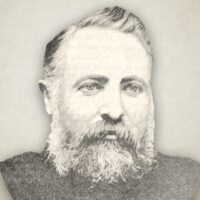
Edwin White (1846-?) was a Strict and Particular Baptist preacher. His first pastorate was with the church meeting at Orphington (1877-1879). After two years, the communion question cropped up, the majority of members deciding to throw the Table open. He forthwith resigned his office. His second pastorate was with the church meeting at Clare, Suffolk (1881-1887). After six years of blessed ministry, he resigned the office due to health reasons. His third pastorate was with the church meeting at Woolwich, Enon Chapel (1891-1919). In 1911 was elected president of the Metropolitan Association of Strict Baptist Churches.