The Need Of An Evangelistic Spirit In Our Churches
Preface
The following address was given by Edwin White at the Annual Meeting of the Metropolitan Association of Strict Baptist Churches (MASBC) in March 1903. Herein Mr. White underscores the biblical mandate to preach the gospel to all sinners, especially in the hearing of the unconverted. Mr. White was a Hyper-Calvinist, and so were the churches he was addressing. They rejected the notion that saving faith is a spiritual and/or legal duty of the unregenerate and denounced the practice of free offers of the gospel. Yet they preached the necessity of saving faith in salvation as a gift from God through Christ and maintained the gospel must be preached to all sinners. Of course, it is from these tenets (a denial of duty faith and the free offer) Hyper-Calvinists are misrepresented as those who do not preach the gospel to the lost, or those who do not believe saving faith is necessary unto salvation. Although these charges are unfounded, yet they are widely believed, not only distorting the tenets of Hyper-Calvinism, but slandering the testimony of thousands of Christians and hundreds of churches which nurtured high views of sovereign grace. If the reader ask, “Does not Mr. White’s challenge to the Hyper-Calvinist churches prove the teachings lead to a decline in evangelistic zeal and gospel preaching?” I answer, one may find preachers giving the same challenge to Arminian Associations of churches as well as Moderate-Calvinist Associations of churches. A lack of zeal to preach the gospel and to nurture a sincere love for the lost is a fault of all Christians belonging to all churches and denominations. Two things are certain: First, the churches addressed by Mr. White were founded upon the tenets of Hyper-Calvinism, which means the gospel was being preached among the Hyper-Calvinists during the 18th and 19th centuries. Second, the other denomination of Particular Baptists, the Moderate-Calvinists, represented by the teachings of Andrew Fuller, were in such deep decline by the turn of the 20th century, that there were only a handful remaining by the 1950s, all others having devolved into free will Arminianism and theological liberalism. Whereas there remained 450 Hyper-Calvinist churches that did not bow the knee to either. If, therefore, the tenets of Hyper-Calvinism are so wrong, and those of Moderate-Calvinism are so right, then why did 98% of the Moderate-Calvinist Particular Baptist churches apostatize during the first half of the 20th century? My dear friends, I invite you to reexamine the tenets of Hyper-Calvinism and to reassess the facts of history, both of which will vindicate Mr. White and the churches he represented.
Jared Smith
By Mr. Edwin White
Our evangel is good news, therefore should be published abroad; it is sound Gospel truth, therefore we may proclaim it fearlessly. Moreover that which has brought joy to our own hearts we are anxious should be known and received by others. When we have lost this desire as Churches, we have lost sight of one important part of our high and holy mission on earth. We are here as witnesses to the truth of God, not only by a godly walk and conversation among men, but that we should lift up our voice like a trumpet and proclaim aloud the great truths which have been committed to our trust to make known to our fellow-men by our God.
1st. In order to carry out our Lord’s command. Not one of His commands are revoked, or become obsolete by the lapse of time, and this stands still unrepealed by Him: “Go ye into all the world, and preach the Gospel to every creature; he that believeth and is baptized shall be saved, but he that believeth not shall be damned.” Those to whom these words were first spoken have long since passed into the glorious presence of the Lord, but the commission given to them is binding upon us, who have the honour to follow so closely in their footsteps, and are the only Churches who can lay claim to the true “apostolic succession” in doctrine and in practice. Their work has been entrusted to us; their mantle has fallen upon us. Shall we prove negligent in the solemn, yet delightful, work assigned us? Our Captain claims our fidelity to push forward the interests of His kingdom. We are united together for that purpose: the Gospel is given us, the Spirit has anointed us, the burden of the Lord is upon us; we must make His Word known to the sons of men. The day is coming when we shall be called to give an account of our stewardship; may we be found faithful unto the end, “holding forth the word of life,” witnessing both to small and great the mandates of our King, without fear or hesitancy telling men of the salvation He has wrought out, and Calling upon them in His Name to listen to the message as coming from the King of kings and Lord of lords.
2nd. The growing population all around us call for it. The more there are to hear the Word, the more strenuous our efforts· should be to reach them with the message of God’s redeeming mercy. Physicians are planted thickly in densely-populated districts, for there they know that disease will be rife; and do they not need, yea; sorely need, the great Physician for their souls, with His healing power? Who can point them to Him so well as those who know by heartfelt experience the saving efficacy of His remedies, which He applies? for it is our boast that we do not knowingly receive into our Churches any but those who are qualified to know the spiritual needs of men, because they have so deeply felt their own; and knowing this, they look with eyes of compassion, as Jesus did, upon the multitude; also knowing their destitute condition, living as many of them do, godless, careless, Christless lives, with no hope beyond the present transitory life. Our hearts are moved with pity for such, or should be; and then knowing the dread hereafter when the veil of eternity is lifted, the teeming multitudes have passed on, led by the hand of death, where will they be found? Shall we have been faithful to testify among them the great and glorious truths of salvation, so that we can meet them in another world clear of their blood, as having borne a faithful testimony in our day and generation, to all as far as we were able, of God’s message of redeeming love and mercy to sinful men?
3rd. To utilise the services of all our members. Are there not young men with ardent souls, burning with zeal, who could be thus employed under the wise direction of their pastor? If not, they will seek a more congenial sphere, where their talents may find scope. Our sisters could employ their loving ministries in disseminating sound Gospel literature, while those who feel they are not qualified for either of these branches of holy service could hold up the hands of those thus engaged by earnest prayer. We fain would see each Church full of life and vigour, with every member united in some gracious enterprise to make known the name and fame of our glorious Immanuel. The Church of God is not intended to be a hospital for invalids, but a hive of industry; it is to be a banqueting house where our souls may be fed, but it also is to be an armoury where our weapons may be furnished for warfare against evil, and we may be made strong to fight the battles of the Lord against every form of error and iniquity; and what can meet this better than fearlessely publishing everywhere the great truth of our holy faith? It needs every heart, hand, and voice at the present time; there must be no loiterers in the vineyard, no laggards in the race, no cowards turning back in the day of battle. By the love we bear our Lord, by the deep need of immortal souls, by our solemn consecration to God, we call upon every member for a fresh renewal of their vows of service to our covenant God this day in our loving Master’s Name.
“Are we the soldiers of the cross?
The followers of the Lamb?
And shall we fear to own His cause,
Or blush to speak His Name?”
4th. The value of the truths we disseminate. Have we not found them precious to our own souls? They found us poor, they have made us rich; they found us despairing, they filled our hearts with comfort and joy; they found us dark and ignorant, they have made us wise unto salvation; they found us with the dread future before us gloomy and foreboding, now our hopes are bright and blooming with immortality and everlasting bliss. All this has been done in our heart’s experience and our lives by the precious truths of the everlasting Gospel of God’s grace. And shall we forbear to tell to others where this treasure may be found? Shall we on whom the light of God and glory has shone leave others to sit in darkness and the shadows of death? Let those who have drank of the life-giving stream, which has quenched their souls’ thirst, tell where this pure river flows, invite thirsty souls to stoop down and drink and live. These truths, based upon the everlasting love of God, the perfected work of Christ, have given us solid assurance of an heavenly inheritance; we speak with no hesitancy of our title to these eternal possessions—this is as stable as God’s throne itself, and in this age of doubt shall we withhold from men the everlasting certainties of the Gospel? Here is a sure foundation to build upon, here is a mine of priceless treasure, here is a granary full of provision for needy souls, satisfying, rich and rare. We have found it to be so, brethren; we have tasted it, we know its worth; we know the Princely Giver of these blessings, His matchless love, His gracious beneficence. We will not hide from men what a Saviour He is; He has sent us forth in this dark world to bear the lamp of truth which guides to Him, ”holding forth the word of life.” This is our mission here below, until He shall call us home.
“Can we, whose souls are lighted
With wisdom from on high,
Can we to men benighted,
The lamp of life deny?”
5th.—The need of our principles to be known. We have no need of right to apologize for our existence as “Strict Baptist Churches.” Long before any other denomination was known, we were in the field of conflict and service. Shall it be because our young people are ashamed of those principles which have been espoused by some of the noblest spirits of every age that they leave us? Are our principles based upon the Scriptures? Then let us make them known fearlessly; let no one around our chapels be in ignorance of what we believe. The truths we hold (or which rather hold us) will bear the light of day; let us herald them forth at every street corner. I wish it were possible for all our Churches to follow the primitive order and baptize in the open river—it gives a grand opportunity to preach the Gospel of God’s sovereign grace to some who would not come to hear it at any other time; then we can explain the meaning of that ordinance, and why we thus observe it, which so graphically sets forth the substitutionary work of our Lord and the vital union of the believer to Him. I am afraid many who live near our chapels do not know where they are, much less do they know anything about what we teach in them. This we should seek to remedy by carrying the Gospel outside. I am glad that many of our Churches do so. Let the same truths be preached outside as inside our chapels—man’s lost condition, Christ the only Saviour, the need of a divine change in men, that salvation does save men from sin, and that it is not of works, but all of grace. Let us go and preach everywhere the need of repentance toward God and faith in our Lord Jesus Christ.
6th. The reviving of our Churches in themselves. Many of them are in a low state, we must sorrowfully admit; and we fear it is in some cases for the lack of some holy enterprise before them. Work is necessary for the health of the body, and so it is likewise for the health of the soul. We may be fed to repletion on sound doctrine until we feel no desire for any exertion—only to go to sleep. A limb which is not used becomes in time paralyzed, and is an encumbrance rather than an help to the body. The very grave charge brought by our Lord against the Church of Sardis was, “I know thy works, that thou hast a name that thou livest, and art dead.” From such a solemn condemnation may all our Churches be delivered. There is nothing stationary here below; if we do not progress, we must inevitably retrograde. There is much to oppose; we need all our members to be fully engaged in this holy war; the trumpet this day sounds a call to arms; let every soldier of the Lord buckle on his armour afresh, renew their vows of consecration and allegiance to Him, stand ready to do His service in all the panoply of God complete. May He revive all our hearts with courage to do His will, and fill our souls with burning love to His cause and interest. “May the Holy Spirit come upon each of us again with cloven tongues as of fire,” baptize us afresh with His mighty energy and zeal, fill every Church with His great and gracious influence, and cause all Christ’s ministers to speak with holy boldness the heavenly Word of God. May great grace rest upon all our members, till not a barren spot shall be found among all our Churches; but love, union, peace and prosperity abound on every hand.
“Revive Thy work, O Lord,
Thy mighty arm make bare;
Speak with the voice that wakes the dead,
And make Thy people hear.”
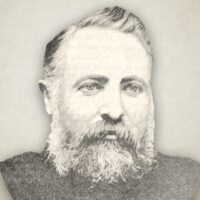
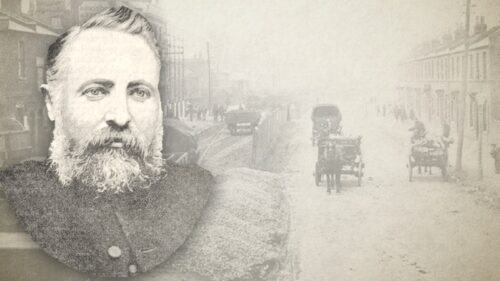
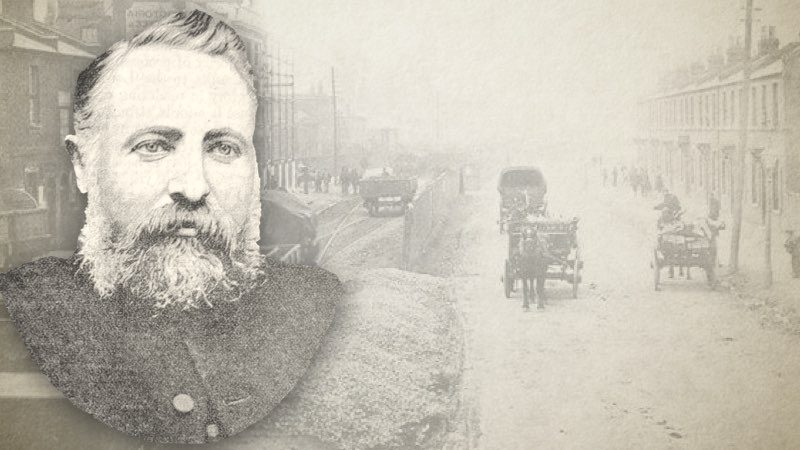
Edwin White (1846-?) was a Strict and Particular Baptist preacher. His first pastorate was with the church meeting at Orphington (1877-1879). After two years, the communion question cropped up, the majority of members deciding to throw the Table open. He forthwith resigned his office. His second pastorate was with the church meeting at Clare, Suffolk (1881-1887). After six years of blessed ministry, he resigned the office due to health reasons. His third pastorate was with the church meeting at Woolwich, Enon Chapel (1891-1919). In 1911 was elected president of the Metropolitan Association of Strict Baptist Churches.