-
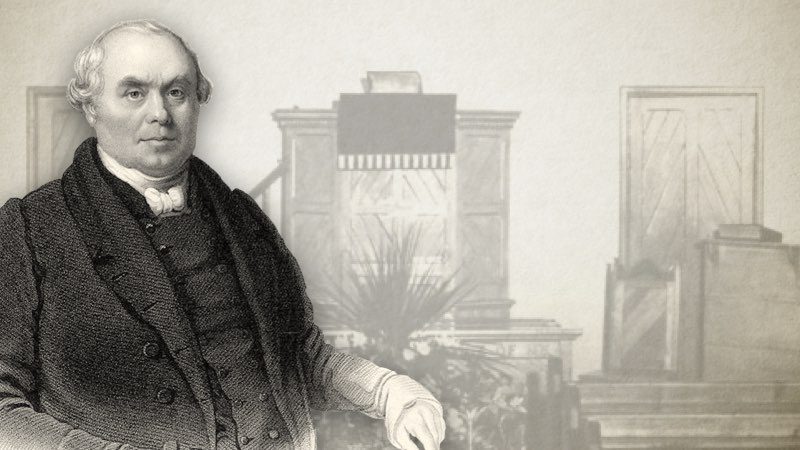
Gadsby’s Convictional Statement Of Faith
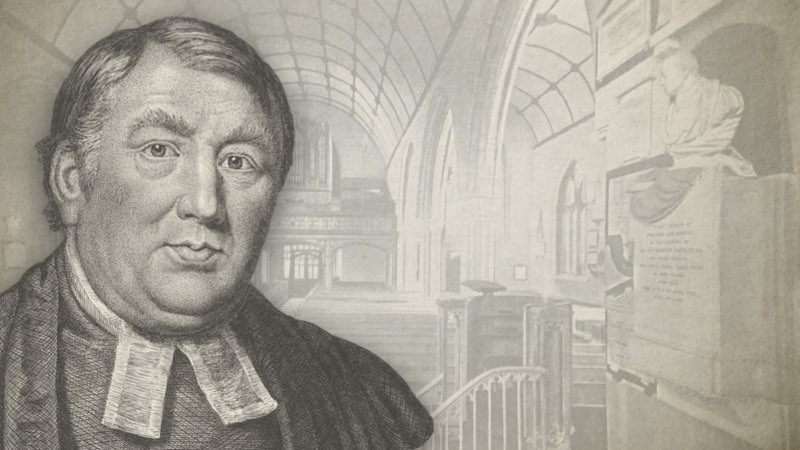
William Gadsby (1773-1844) was a Strict and Particular Baptist preacher, who for thirty-eight years served as pastor for the church meeting at Black Lane, Manchester. His son John (1808-1893) was an author and printer, who in 1835 started a new religious magazine entitled, “The Gospel Standard, Or, Feeble Christian’s Support.” He immediately gained the help of his father, together serving as its first Editors. The first Issue of the magazine was printed in August 1835, beginning with an “Address” to the “Christian Reader”, the content of which sets forth the articles of faith drawn up and embraced by the Editors (most likely the convictional statement of William Gadsby):
-
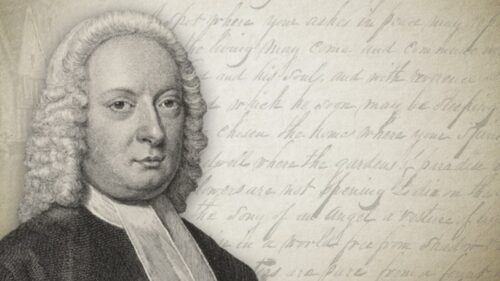
37 An Examination Of Gill’s Goat Yard Declaration Of Faith (1729)
I would like to welcome you back to another study in Bible Doctrine. In our previous study, I laid out for you a historic backdrop to Gill’s Goat Yard Declaration. For this study, I would like to look at the document itself. However, it seems appropriate, given the fact that the Declaration was designed for a single congregation, that we first take a look at that congregation, to gain a bird’s eye view of its history and doctrinal positions. The Goat Yard Declaration was named after the church for which it was drawn up. It was known as the church meeting at Goat’s Yard Passage, on Fair Street, in Horsley-Down, Southwark, and they met in the Goat’s Yard Chapel. The origin of the church may…
-
Testimony Of Robert Hawker, To The True, Proper, And Eternal Sonship Of Jesus Christ
That Dr. Hawker should be claimed as denying the true, proper, and eternal Sonship of our blessed Lord must surprise all who are at all acquainted with his works; for, if there be one author more than another who is sound and clear on that vital point, it is the good old Doctor. The doctrine of the Trinity, it is well known, was one of the chief features of the Doctor's preaching; and in this Trinity, he always speaks of the Three persons as being God the Father, God the Son, and God the Holy Ghost, which in itself is a sufficient declaration of Jesus being the Son of God as God the Son, distinct from and independent of his complex Person as God-man. Take…
-
William Gadsby’s Sentiments On The Eternal Sonship
My dear Friend,—It is not a little which surprises me now-a-days; but I certainly was surprised to hear from you, on my return from Egypt, that persons were going about circulating the report that my late dear father did not believe in the Eternal Sonship of the Second Person in the Trinity; and, had I not known something of the pride and doggedness of the parties making the remark, that surprise would have been greatly increased upon hearing, as I did a few days ago, that at an assembly of "divines" at Hitchin it was asserted that "Mr. Gadsby had more sense than to believe such nonsense." Now, there was no doctrine in the whole Bible about which my father was more tenacious than that…
-
36 A Historical Backdrop To Gill’s Goat Yard Declaration Of Faith (1729)
I would like to welcome you back to another study in Bible Doctrine. In our previous study, I introduced you to the ministry and writings of an 18th century Baptist theologian named John Gill. Aside from his pastoral duties in London, he was a prolific writer, the author of more than twenty-five works, many of which were large and exhaustive volumes. Of these works, there are four which I recommended you should have and of which you should make frequent use: 1. “The Cause of God and Truth” (1735-38) 2. “An Exposition of the Old and New Testaments” (1746-48; 1763-66) 3. “Goat Yard Declaration of Faith” (1729) 4. “A Body of Doctrinal and Practical Divinity” (1769-70) Having already given an overview and samples of the…
-
35 Bible Doctrine – The Significance Of JOHN GILL And His Writings
I would like to welcome you back to another study in Bible Doctrine. In our previous six studies, I have given a historic and theological overview of 17th and 18th century Hyper-Calvinism. I began with a definition—Hyper-Calvinism is any teaching which goes beyond that of Calvin himself. Accordingly, Hyper-Calvinism emerged in two waves. The first began with the publication of Calvin’s Institutes in 1536, culminating in the 1689 Second London Baptist Confession of Faith. This may be regarded as 17th century Hyper-Calvinism. The second began with the publication of two sermons preached by Benjamin Keach in the year 1692, culminating in John Gill’s Body of Divinity in the year 1770. This may be regarded as 18th century Hyper-Calvinism. Both groups were driven by a covenant…