-
The Child of Liberty in Legal Bondage: Miserable Success (11/11)
11th head, Which is the miserable success that attends this legal labour. All his striving against sin in his own strength is like Peter's resolution, only betrays him into sin, and into the sieve of Satan; for without Christ he can do nothing. And every time he sins there is something fresh for the wrath of the law to work on, and fresh matter for conscience to accuse of; both which awaken his fears, and summon all his terrors about him. "If I sin, then thou markest me, and wilt not acquit me from mine iniquity. Thou renewest thy witnesses against me, and increasest thine indignation upon me: changes and war are against me," Job, x. 14, 17. Hardness of heart always attends this labour…
-
Chapter 7: The Baptists
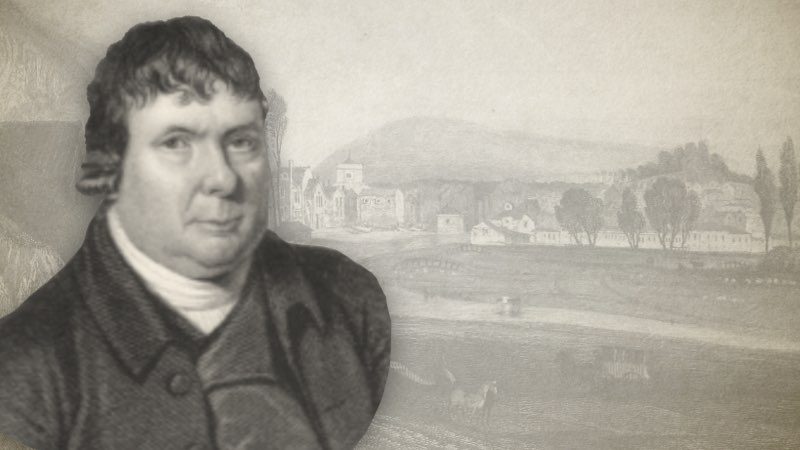
"For by one Spirit are we all baptized into one body.''—1 Corinthians 12:13 In sketching some of God's witnesses among the Baptists in the nineteenth century, Samuel Eyles Pierce (1746-1829) should be first mentioned, because in his earlier years he sat under the ministry of Toplady, Romaine, and Hawker, with the latter of whom he was on terms of close friendship till the end of the life of the Vicar of Charles. Romaine's ministry was especially useful to him. He writes: "In a subsequent sermon, Mr. Romaine said, 'Believers, you that are believers, God looks upon you as He doth on Christ; and loves you with the love He doth Him.' 'I looked up,' says Mr. Pierce, 'with amazement! Oh, thought I, if I can…
-
High-Calvinism: Fleshing It Out
First, at no time is a sinner duty-bound under both covenants simultaneously. Second, so long as the sinner remains unregenerate, he/she is held accountable under the terms and promises of the Covenant of Works (not the Covenant of Grace). Third, once the sinner has been born again, he/she is delivered/released from the Covenant of Works, being brought experientially under the terms and promises of the Covenant of Grace. Fourth, the non-elect have absolutely no part in the Covenant of Grace—it is not their duty to believe savingly on Christ, nor is it the duty of the preacher to offer Christ to them. Christ does not represent them, neither has He made provision for them through His Mediatorial work. Fifth, the regenerated sinner has absolutely no…
-
Hyper-Calvinists: A Caricature
Wade Burleson wrote an article entitled, “The Problem of Calling People Hyper-Calvinists”.[1] Having attended the John 3:16 Conference in 2008, he described how Dr. David Allen, Professor of Preaching at Southwestern Theological Seminary, circulated a handout that listed a dozen names identified as “Hyper-Calvinists”. Following Dr. Allen in the pulpit, was Dr. Steve Lempke of New Orleans, who made the observation, “I am not sure that there is such a thing as a living hyper-calvinist. I find that those who call others hyper-calvinists have simply run into people more calvinistic than they are.” Yet, there is a listing for “Hyper-Calvinism” in the New Dictionary of Theology.[2] The definition is framed by Dr. Curt Daniel, who earned a doctorate studying “hyper” Calvinism: “It is that school…
-
A Classic Misrepresentation of High-Calvinism
Here is a classic misrepresentation of High-Calvinism, and the misleading assertion that Fuller was the hero who rescued the Particular Baptists from ‘Hyperism’: “Fuller’s pastorate at Soham, which lasted until 1782 when he moved to pastor the Baptist church in Kettering, Northamptonshire, was a decisive period for the shaping of his theological outlook. It was during his time there that he decisively rejected High Calvinism (i.e., an emphasis on the sovereignty of God in salvation to an extent which denied the free offer of the gospel and seriously hampered effective evangelism. Fuller said that his predecessor ‘had little or nothing to say to the unconverted.’).”[1] First, denying the free-offer is not an extreme emphasis on the sovereignty of God in salvation, it is a consistent…
-
Sermon Notes on Romans 9
Having not been able to complete the scheduled Bible study for the mid-week service, I threw together some notes on the ninth chapter of Romans. It is not often I go ‘old school’ by scribbling on the nearest blank piece of paper. After teaching the study, I proceeded to broaden my notes for future reference. As the notes set forth a statement on High-Calvinism, I’ve chosen to include them with the online resources of the AHB. There are two sets of notes—the handwritten scribble is what I used in the pulpit (I haven’t bothered typing them out); the typed notes are what I jotted down after teaching the study. The key to unravelling the teaching on election (in particular, the Father’s work in the Covenant…