
The Cry Of A Soul In Anguish
“O Lord, I am oppressed; undertake for me.”—Isaiah 38:14
Never shall I forget one occasion, nearly forty years ago, when these words burst from my heart in the pulpit of the little chapel at Orpington. I had been trying all the week, amid the claims of business, to get a message from the Lord. Saturday evening came, but no word was given. The Bible yielded no light; prayer brought no relief; and on retiring to rest no rest came. In the morning I went to the chapel miserable, dark, depressed. I read, I prayed; then came the hymn before the sermon, and while the people were singing I was sighing from the depths of my soul, “O Lord, I am oppressed; undertake for me.” The hymn ceased; I rose and told the people my distress. I had no sermon for them. No text could I get to speak. All I could do was to cry, ‘’O Lord, I am oppressed; undertake for me.” I referred to some of the places into which God’s people were brought when that prayer was wrung from their souls, when lo, I looked at the clock, and found it was time to close the service, these remarks having occupied forty-five minutes. When I came down from the pulpit the dear, aged deacon, with tears in his eyes, grasped me by the hand and said, “My dear brother, if this is coming without a text and a sermon, may the Lord always send you like this.” This is written in the hope that it may encourage any dear young preacher who may have a like experience.
There are times in the experience of the children of God when “gloomy doubts prevail.” There is no sweet evidence of God’s divine favour; no enjoyment of a felt vital union to the Lord Jesus Christ; no sealing of the Holy Spirit upon the heart of adopting love; no joy, no bright hope, no calm peace. The past seems a delusion. All is dark and drear within, and the soul cries “O Lord, I am oppressed; undertake for me.”
This is specially trying to the young Christian. He feels his joy will never return, and the valley is all the more dark because he has stood on the mountain-top and had a glorious prospect spread before him so recently; but now it has all vanished like the “mirage of the desert’’—gone, he thinks, for ever. Blessed be God, it is not so. He will appear again, and their sorrow shall be turned into joy at His coming.
There are seasons when the Word of God does not yield light or comfort. “The promise meets the eye, but does not meet the case.” The Book seems sealed; its pages are turned over in vain, and one asks, Where is the enlightenment and enlargement I once enjoyed in the perusal of these sacred pages? “Where is the soul-reviving view of Jesus and His love?” He shone from every page once. Type and psalm and prophecy all spoke of Him; every doctrine, promise, and precept opened up some fresh entrancing vision of Him, but now the eyes are holden. We cannot see Him. Oh, the grief of these dry Bible-readings to the soul, when the Word seems, like the hills of Gilboah, to yield no dew. We cannot live without the Word, and when that yields no spiritual food we cry, “O Lord, I am oppressed; undertake for me.”
There are times when fierce temptations assault the soul in every part—when Satan seems to discharge his fiery darts with all malignancy, and one appears to be left a target to the foe. Then he insinuates his foul doubts, “God has forsaken you quite. He has left you. I have you at my mercy; you may as well give up the unequal strife. I will have you on my side yet.” But the soul cries, “O Lord, I am oppressed; undertake for me,” and the Lord comes to the deliverance of His distressed, tempted child. Satan is driven back for the time, and has to retire discomfited. Triumphant faith has overcome the wicked one.
There are times, also, when prayer seems to be unanswered, and this is very distressing—when there is no response from the mercy-seat-when God does not speak. True prayer is, communion with God, wherein we speak and He answers; when we can hold fellowship with God as friend with friend. These are favoured times. They strengthen faith and feed the soul. But when the heavens are as brass, and it seems as though He shutteth out our prayer, the soul in anguish cries, ‘’O Lord, I am oppressed; undertake for me.”
There are seasons of sore trial which compel this cry. At the time referred to we were experiencing sorrow. Two dear, dear children were snatched by death in four months; another was born a week before the second child died; the house was truly a house of mourning. I was overwhelmed with worry and work in the position I then held, and this, coupled with the illness of my dear wife, it seemed as though the hand of God had gone out against us, and that cry oft went from my burdened heart. I believe such trials are permitted that the servant of God may be fitted to speak to others for their comfort. They can do so from experience of the path they have trodden—the deliverances God has wrought for them when they have been oppressed and distressed.
I have written this short chapter of my experiences to prove God’s faithfulness—“that He hath delivered, He doth deliver, and will deliver us.”

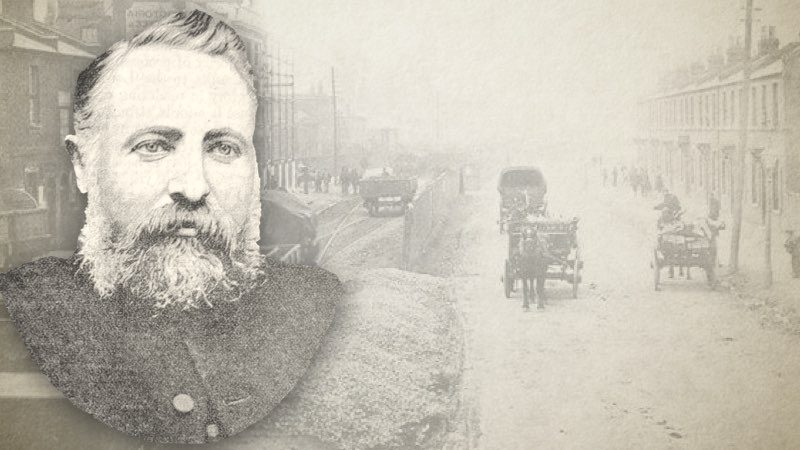
Edwin White (1846-?) was a Strict and Particular Baptist preacher. His first pastorate was with the church meeting at Orphington (1877-1879). After two years, the communion question cropped up, the majority of members deciding to throw the Table open. He forthwith resigned his office. His second pastorate was with the church meeting at Clare, Suffolk (1881-1887). After six years of blessed ministry, he resigned the office due to health reasons. His third pastorate was with the church meeting at Woolwich, Enon Chapel (1891-1919). In 1911 was elected president of the Metropolitan Association of Strict Baptist Churches.