Love To God’s House
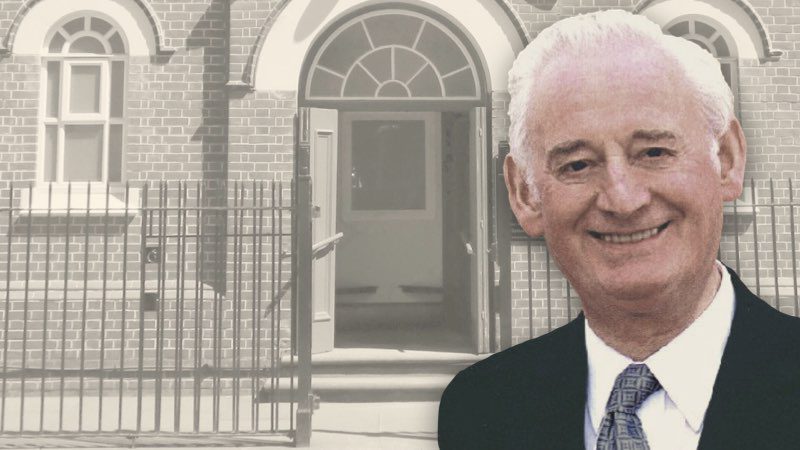
[Posted by permission. Bethel Strict Baptist Chapel.]
Sermon preached at Bethel Chapel, Luton, by Mr. B. A. Ramsbottom, on Lord’s day evening, 27th December, 2020
“Lord, I have loved the habitation of Thy house, and the place where Thine honour dwelleth”—Psalm 26:8
This is a suitable word for the last Lord’s day of the old year. It is a word that speaks of looking back, a word that speaks of remembering; also a word which can make an important statement, and then there is the thought: Can you and I make this same statement? “Lord, I have loved the habitation of Thy house.” O the wonderful privilege of meeting through another year, to hear the glorious gospel of the grace of God! What has it meant to us? O can we say it: “Lord” – whatever other people have found – “Lord, I have loved the habitation of Thy house, and the place where Thine honour dwelleth”?
There has been another word resting on my spirit concerning this evening and looking back over the year: “Let that therefore abide in you, which ye have heard from the beginning.” Now how many sermons, how many prayer meeting addresses, how many Scripture readings, have been listened to throughout this year? How many have really touched our hearts? How many have really remained in our hearts? And then sometimes we sadly have to think, how many can we really remember? “Let that therefore abide in you, which ye have heard from the beginning” – from the beginning of the year. It is a good thing if they abide in our memories. O seek grace that they may abide in your hearts. It is only the Lord can open our hearts as He did with Lydia. “Whose heart the Lord opened, that she attended unto the things which were spoken.” They were not forgotten. They had an immediate affect. “Let that therefore.” O to pray for it, for the gracious effect of the Word, that our hearts might be prepared by the Spirit. “Let that therefore abide in you, which ye have heard from the beginning.” And how many of you know what follows? “If that which ye have heard from the beginning shall remain in you, ye also shall continue in the Son, and in the Father.” What a promise made to profitable gospel hearers!
“Lord, I have loved the habitation of Thy house.” Now these were the words spoken by David, and he did love God’s house, didn’t he! He had many concerns. He became a mighty king in Israel. He had so much to take his time. In his early days he was hiding in the dens and caves of the earth. He was fleeing from Saul. And yet he continually expressed his love for the house of God, and his grief, when he was forbidden from meeting in God’s house.
I wonder if any of you have ever had a little experience when you could not hear true preaching. Now I had in my early university days, and it was just at the time when I was first concerned and seeking the Lord. It was a terrible thing, those barren Sundays. If it had one good effect looking back, you were made weary of all this Arminianism which told you what you had to do and not to do. But how like David you thirsted for the water of life.
I looked up that there are so many Scriptures in which is expressed a longing for the house of God, and the blessedness of the house of God, but strangely I found that in most cases it does not say whom they were written by. There is one specially that is written by David. He said, “One thing have I desired of the Lord.” There were so many things in his life, from the time he was fighting lions and killing giants. He always seemed to be occupied. “One thing have I desired of the Lord, that will I seek after; that I may dwell in the house of the Lord all the days of my life.” What was it? “That I may dwell in the house of the Lord all the days of my life.” You say, “Why, David?” He said, “To behold the beauty of the Lord.” Of course, that was only in the tabernacle at Jerusalem. All the beauty of the Lord was what he could see in those types and shadows. I mean a high priest, atonement made, blood shed. He could only see the beauty of the Lord dimly. O but may we even tonight by faith behold the beauty of the Lord in the fulfilment of all the types and shadows that David knew, the beauty of the Lord as He came into this world of sin and sorrow, that He might save sinners by His death and resurrection.
“That I may dwell in the house of the Lord all the days of my life, to behold the beauty of the Lord, and to inquire in His temple.” He had not got beyond praying. He wanted to be a praying sinner all the days of his life, and he proved that his God was merciful and answered his prayers. In so many ways, David is an example to us. Now this is David’s own personal testimony. Many people make testimonies, but the striking thing about this: he made this testimony to his God. It is one thing to say something to a fellow believer, what we feel, or what we know or what we have experienced, but David could look upwards to God and say, “Lord, I have loved the habitation of Thy house, and the place where Thine honour dwelleth.” It is a wonderful thing if we can testify of anything graciously, but it is a more wonderful thing if we can make that testimony to Almighty God Himself, who knows and who searches the hearts.
“Lord, I have loved the habitation of Thy house, and the place where Thine honour dwelleth.” I believe this will be the confession of every sinner saved by grace, however much they know or however little they know, to confess that love for the house of God. So I felt inclined to read to you this evening out of the Book of Genesis (chapter 28), how Jacob was led to Bethel. It was not a church; it was not a chapel. It was the Lord’s presence. That made it the house of God. But then, that seemed so nice when years later he went back to Bethel, about twenty years later, and he did not just call it the house of God, not just Bethel. He called it El-bethel – the God of the house of God. That is why we love it, isn’t it! It is often quoted, but it is a true word:
“But ah! what is the house to me,
Unless the Master I can see?”
It is the God of Bethel, it is the God of the house of God that we long to know. In one of our hymns it speaks of how God’s ancient people had to travel so far, many of them. They could only go three times a year. But,
“Where’er Thy saints assemble now,
There is a house for God.”
Now of course there is a building. The building at Bethel is called the house of God, but the meaning is the people who are inside the building. I was thinking, if we ever came to Bethel one Lord’s day morning and there had been a hurricane which had blown the chapel down, and yet it was a lovely summer day and we could still worship here, it would still be as much the house of God as before the building was blown down.
“Lord, I have loved the habitation of Thy house” – the place where the Lord Himself dwells, the place where our Lord and Saviour Jesus Christ said, “Where two or three are gathered together in My name, there am I” – not even will be – “there am I in the midst.” It is because the Lord is there that we love the house of God, and it is because His Word is there that we love the house of God, and it is because the glorious gospel of His grace is there that we love the house of God, especially if that glorious gospel touches our hearts and reaches our case. And we love the house of God because there is where our best friends, our kindred dwell – the fellowship of believers, the dwelling together in the sanctuary. It has been a sad time this year when public worship has been interfered with for the first time for many years, and yet we have had the wonderful privilege of our meetings being carried out over the relay, and in the spirit of it we meet together in the house of God. But that will be a lovely day, whenever it comes, when we can look round our chapel and see all these seats, all these pews, filled once more.
When I first came to Bethel, we had a congregation, perhaps about half, perhaps even less, than we have now. I always remember the first week or two I was at Bethel, and we were purchasing a new safe, and I met my three old deacons to decide where it was going to be placed. Two of them said the obvious place is, we have plenty of room in chapel, we will get rid of one of the seats down there and put the safe there. Mr. Watts said, “The time will come when that seat is used; the time will come when this chapel is full.”
“Lord, I have loved the habitation of Thy house,” the place where our Lord and Saviour dwells, where His presences is felt, where He makes the place of His feet glorious. One of our hymnwriters says,
“There I have been, and there would go;
’Tis like a little heaven below!”
Are there those times when you find it like a little heaven below? You feel the Lord is here, or your heart is touched with His love, and then you can feelingly say, and you can say it to Almighty God, “Lord, I have loved the habitation of Thy house, and the place where Thine honour dwelleth.” There have been times in my life when I have come to this: if I could not say anything else in Scripture, I have felt I could lay hold on this: whatever people think or say or do, “Lord, I have loved the habitation of Thy house, and the place where Thine honour dwelleth.”
I will tell you a little experience of this I had many years ago when I was a teacher down in Wisbech. There was a man fairly well known in the district. He was notorious for his views of divine truth – the people he could not receive, the ministers he could not receive. But he invited me to go for tea one Saturday. He lived in the town of March. I had a nice evening with him and his wife, but he wanted to have a close talk with me. He wanted to ask me a lot of questions. One came, and then another, and they kept on. I was only young. I was not a church member. Then I found he had his notes on a piece of paper and he kept bringing them out. They were deep, searching questions. I had a nice time with the old man, but I went out and went home, and that night I felt destitute of everything. He just knocked the whole of my religion out of me. It was a terrible feeling. I felt really sad. Sunday morning came. I still felt pretty terrible. I was sitting in the little chapel at Wisbech which I attended, and I was feeling the blessedness of being permitted to be found in the house of God, and suddenly that word flew into my heart:
“Could I joy His saints to meet,
Choose the ways I once abhorred,
Find at times the promise sweet,
If I did not love the Lord?”
It brought me right out. It was a deliverance. I have never forgotten that occasion, though it was many, many years ago now.
Well, we are established here. It is nice if there are some things we are established on, even if they are small things, if we can say this: “Lord, I have loved the habitation of Thy house, and the place where Thine honour dwelleth.”
Now I feel that this is a very important point spiritually in the beginning of a work of grace in a sinner’s heart – that change, that gracious change that takes place. “If any man be in Christ, he is a new creature” – a new creation – “old things are passed away; behold, all things are become new.” And one thing which becomes new is a new attitude to the house of God. Perhaps we always came to chapel. Perhaps we did not like it; perhaps we did not mind going. But when the Lord began to work in our hearts, there was a change here. We began to enter feelingly into this sacred word: “I have loved the habitation of Thy house.” Where real religion is, there will always be love – love to the Lord’s day, love to His people, love to His house. I do like that word:
“Love is the golden chain that binds
The happy souls above;
And he’s an heir of heaven that finds
His bosom glow with love.”
In our early days, our bosoms did begin to glow with love – love to the house of God, and love to the ministers, and love to the Lord’s people – and secretly there were seeds of love to the dear Saviour Himself there. But if you can look back and see that time, trace that time when there came a change in your attitude to the house of God, when you looked forward to Sunday coming, when you were glad to go out to the prayer meeting, when you woke up on the Sunday morning, and you wondered what day it was. Sunday! It used to make you a bit miserable at one time. You thought, “I can’t go and play football or cricket today; I can’t meet with my friends from school.” But then when you woke up there was that feeling of pleasure. It is Sunday. It is the Lord’s day. We meet to worship His holy name. It is the place where I want to be found.
Now can any of you trace that little change this evening that has come in your life? I know what some of you well-exercised ones are going to tell me: you cannot build your hope of heaven on just feeling that you like chapel, and you did not used to like chapel. Listen to me for a moment. That great, devout, scholarly theologian, “Rabbi” Duncan, as he was known, quoted by J.K. Popham: “A perhaps of salvation: let no man rely on it, but never let any man despise it.” And there is a wealth of gospel truth there. Do not despise the slightest encouragement, but do not build your hope entirely on it, until you are brought to rest on Christ alone, as a sinner feeling your need.
“My hope is built on nothing less
Than Jesus’ blood and righteousness.”
But never forget that drawing to the house of God when you first began to love the gospel. Never despise these things. But when the Lord is at work, He will lead you on, lead you to that blessed place, “to Jesus as your hiding place.” That will not make you love the house of God less; you will love the house of God more.
“Lord, I have loved the habitation of Thy house, and the place where Thine honour dwelleth.” And never forget that: this is the place where the Lord’s honour dwells. When you come through the doors on the Lord’s day morning, it is not just coming to chapel; it is coming to the place, it is the habitation of the Lord, it is where He dwells with His people, and it is the place where His honour dwelleth. Always remember that. “God is greatly to be feared in the assembly of the saints, and to be had in reverence of all them that are about Him.” We must be careful that in our worship we do not dishonour the Lord, in our decisions we do not dishonour the Lord, in our behaviour we do not dishonour the Lord. O may it be our desire when we come, when we meet for worship, feeling it is such a privilege, such an honour, but thinking of this great God whom we worship, and the honour and glory of His name. Above all, it is important in this pulpit: may nothing ever enter which dishonours our Lord and Saviour Jesus Christ; when we leave chapel, through the week, in our own homes, with our families, in our circumstances, in our decisions, in our choices, the praise, the honour, the glory of His name.
“Lord, I have loved the habitation of Thy house, and the place where Thine honour dwelleth.” When I first came to Bethel, I found a congregation who were deeply marked by their love to the house of God. I can go round them now. They are landed safely in heaven. I can even think of those places where they used to sit with their necks on the stretch. They did not live for anything else but the house of God, and listening to His gospel, and walking it out honourably before the Lord in their souls’ experience, and there were three eminently-godly deacons, and they set the example. They honoured the Lord and the Lord honoured them.
We think of Ebenezer Chapel – the sorrow that during this year, that once-honoured, favoured chapel is now closed. When you think of how there was a congregation of five hundred there, almost in living memory. When I first came as pastor to Bethel, there was not a great difference between the size of the two congregations. We had a few more, they had a few less. But the mystery of the Lord’s dealings, and there are people in our own congregation who well remember, not the five hundred there, but above two hundred there. And now one more chapel gone, and our little, once-despised Bethel still continuing. But you know, if the Lord were to leave us, if we were to grieve the Lord, if He were to withdraw His presence, then we would be Ichabod – the glory of the Lord is departed.
So may it be:
“My soul shall pray for Zion still” – not just here, but throughout all the churches of truth –
“My soul shall pray for Zion still,
While life or breath remains;
There my best friends, my kindred dwell;
There God my Saviour reigns.”
May it ever be, “I was glad when they said unto me, Let us go into the house of the Lord.” “Peace be within thy walls, and prosperity within thy palaces.” It must be all of God’s grace from first to last.
“Lord, I have loved the habitation of Thy house, and the place where Thine honour dwelleth.” And one last word. Mr. Frank Gosden, of blessed memory, preaching from this text, he did not just end it where I ended it. Well, you say, it was the end of the verse. But it is what followed on. He read it like this: “Lord, I have loved the habitation of Thy house, and the place where Thine honour dwelleth. Gather not my soul with sinners.” Forbidden be the thought. May we ever be delivered from it. “Lord, I have loved the habitation of Thy house, and the place where Thine honour dwelleth. Gather not my soul with sinners.”
Jesus, how heavenly is the place,
Where Thy dear people wait for Thee!
Where the rich fountain of Thy grace
Stands ever open, full, and free.
Hungry, and poor, and lame, and blind,
Hither the blood-bought children fly;
In Thy deep wounds a balsam find,
And live while they behold Thee die.
Here they forget their doubts and fears,
While Thy sharp sorrows meet their eyes;
And bless the hand that dries their tears,
And each returning want supplies.
O the vast mysteries of Thy love!
How high, how deep, how wide it rolls!
Its fountain springs in heaven above,
Its streams revive our drooping souls.

Benjamin Ramsbottom (1929-2023) was a Strict and Particular Baptist preacher. In 1967, he was appointed pastor of the church meeting at Bethel Strict Baptist Church, Luton, Bedfordshire, a position he held for fifty-five years.