John Gill
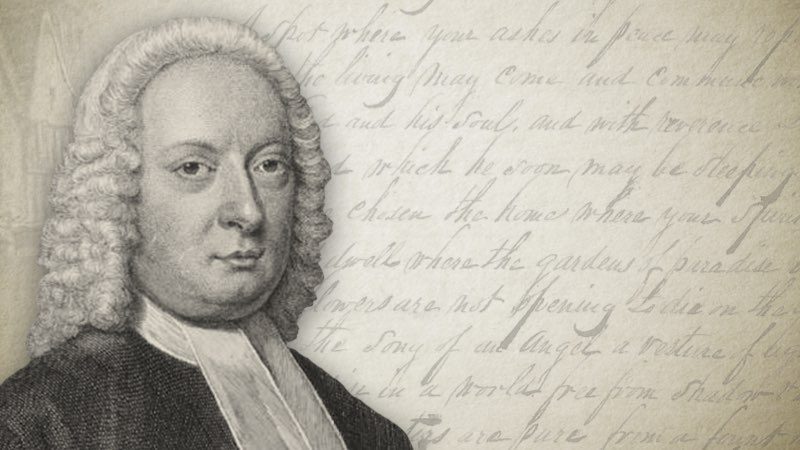
John Gill (1697-1771) was a Strict and Particular Baptist preacher and theologian. He was appointed the Pastor of Goat Yard Chapel, Horsleydown, Southwark, serving this position for fifty-one years. He was the first Baptist to write an exhaustive systematic theology, setting forth High-Calvinistic views and a clear Baptist polity which became the backbone for the churches subscribing to them.
John Gill, (1) Commentary On First Thessalonians (Complete)
John Gill, (2) Commentary On Second Thessalonians (Complete)
John Gill, (3) Commentary On First Corinthians
John Gill, A Biography By George Ella
John Gill, A Lecture By George Ella
John Gill, Doctrinal And Practical Body Of Divinity
John Gill, Extracts
John Gill, Identifying The Biblical Covenants (Complete)
John Gill, The Cause Of God And Truth
-
1 Corinthians: Introduction
This was not the first epistle that was written by the apostle to the Corinthians, for we read in this of his having written an epistle to them before, (1 Corinthians 5:9), but this is the first epistle of his unto them, that is now extant; and has been received by the churches, as of divine authority, being written by the inspiration of God, of which there has been no doubt in any age. The apostle himself was nearly two years at Corinth; where he preached with great success; and was the instrument of converting many persons, who by him were formed into a church state, consisting both of Jews and Gentiles, as is clear from many passages in this epistle, and whom be left…
-
2 Thessalonians: Chapter 3, Verse 18
“The grace of our Lord Jesus Christ be with you all. Amen.]” This was the sign or token; (see Gill on “Romans 16:20”) The subscription to this epistle is, “The Second Epistle to the Thessalonians was written from Athens”; though it seems rather to be written from Corinth. In the Syriac version it is said, “the Second Epistle to the Thessalonians, which is written from Laodicea of Pisidia, and sent by the hands of Tychicus.”
-
2 Thessalonians: Chapter 3, Verse 17
“The salutation of Paul with mine own hand, &c.” In writing his epistles, the body and substance of them he used an amanuensis, but the salutation he wrote with his own hand: “which is the token in every epistle;” By which they might be known to be true and genuine, and be distinguished from counterfeit ones: and the rather he mentions this, that they might be troubled neither by word, nor by spirit, nor by epistle, as from them, as they had been, (2 Thessalonians 2:2) for it seems that this wicked practice of counterfeiting the epistles of the apostles, or carrying about spurious ones, under their name, began so early; to prevent which, the apostle took this method, “so I write,” As follows:
-
2 Thessalonians: Chapter 3, Verse 16
“Now the Lord of peace himself, &c.” The Prince of peace, who is peaceable himself, and the author of peace in all his churches, and who requires peace, calls for it, and encourages it: “give you peace always by all means;” Both a conscience peace, through the blood, righteousness, and sacrifice of Christ, and faith in them, which passes all understanding, and which, when he gives, none can take away; and a church peace, being freed from all such disorderly persons and their abettors, the disturbers of it: and indeed, the way to have true peace and prosperity in churches is to keep up the discipline of God's house. The apostle prays for it in faith, upon an observance of the rules he had given;…
-
2 Thessalonians: Chapter 3, Verse 15
“Yet count him not as an enemy, &c.” As an enemy of Christ, and the Christian religion, as the Jews and Pagans were; or as an enemy of all righteousness, as Elymas the sorcerer was; as one that has an implacable hatred to good men, and a persecutor of them, and has an utter aversion to them and their principles; nor deal with him in an hostile, fierce, furious, and passionate manner, as if you were seeking his destruction, and not his restoration. This seems to be levelled against the Jews, who allowed of hatred to incorrigible persons: they say, “an hater that is spoken of in the law, is not of the nations of the world, but of Israel; but how shall an Israelite…
-
2 Thessalonians: Chapter 3, Verse 14
“And if any man obey not our word, &c.” Of command, to work quietly, and eat his own bread, now signified “by this epistle”, particularly in (2 Thessalonians 3:12), “note that man;” Some read this clause in connection with the preceding phrase, “by this epistle”, or by an epistle; and so the Ethiopic version, “show”, or “signify him by an epistle”; that is, give us notice of it by an epistle, that we may take him under our cognizance, and severely chastise him, according to the power and authority given us by Christ; but that phrase rather belongs to the preceding words: and the clause here respects the notice the church should take of such a person; not in a private way, or merely by…