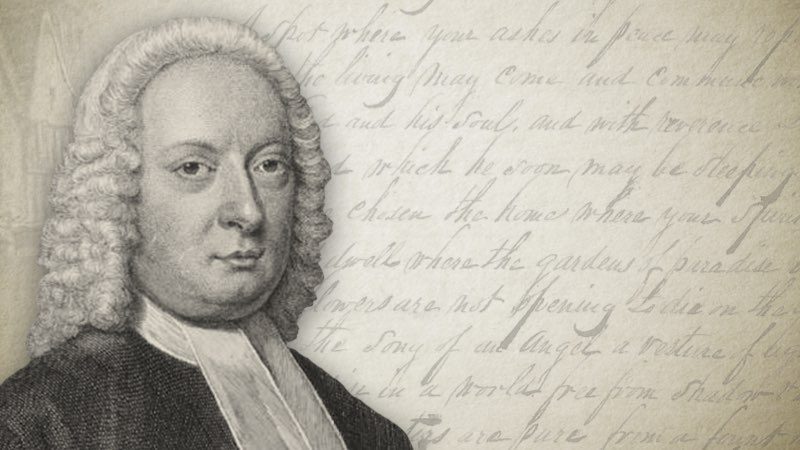
John Gill
John Gill (1697-1771) was a Strict and Particular Baptist preacher and theologian. He was appointed the Pastor of Goat Yard Chapel, Horsleydown, Southwark, serving this position for fifty-one years. He was the first Baptist to write an exhaustive systematic theology, setting forth High-Calvinistic views and a clear Baptist polity which became the backbone for the churches subscribing to them.
John Gill, (1) Commentary On First Thessalonians (Complete)
John Gill, (2) Commentary On Second Thessalonians (Complete)
John Gill, (3) Commentary On First Corinthians
John Gill, A Biography By George Ella
John Gill, A Lecture By George Ella
John Gill, Doctrinal And Practical Body Of Divinity
John Gill, Extracts
John Gill, Identifying The Biblical Covenants (Complete)
John Gill, The Cause Of God And Truth
-
2 Thessalonians: Chapter 1, Verse 8
“In flaming fire, &c.” Which may either refer to Christ, who will be revealed from heaven in such a manner; and whose coming will be as the lightning, not only sudden, but glorious, illustrious, and visible; he will be seen and easily discerned; there will be such a light and flaming fire about him, which, as it will serve to make him visible, will greatly add to the majesty of his appearance, and strike terror to his enemies, and burn them up round about; (see Daniel 7:7,9,10; Psalm 97:3,4) or else it may refer to the angels, who shall descend in fiery forms, which is agreeably to their nature, (Psalm 104:4) and so they appeared in the forms of horses of fire, and chariots of…
-
2 Thessalonians: Chapter 1, Verse 7
“And to you who are troubled, rest with us, &c.” This is another branch of the justice of God, in rendering to them who are afflicted and persecuted for righteousness sake, “rest”; a relaxation or rest from persecutions, for a while at least; as the churches of Judea, Galilee, and Samaria had, from that persecution raised at the death of Stephen, (Acts 9:31) and as the Christians had at the destruction of Jerusalem; which though it was a day of vengeance to the unbelieving Jews, were times of refreshing to the saints, who were now delivered from their persecutors: or rather this designs a rest which remains for the saints after death in the grave, and at the coming of the Lord, and to all…
-
2 Thessalonians: Chapter 1, Verse 6
“Seeing it is a righteous thing with God, &c.” That which is righteous in itself, is righteous in the sight of God, but it is not always so with men; men may think it a righteous thing that they should be rewarded for persecuting the followers of Christ, supposing they hereby do God good service; but on the contrary, with God, and in his sight and account, it is a righteous thing, or a point of justice, “to recompence tribulation to them that trouble you:” Persecution is an affliction, or a trouble to the saints; persecutors trouble them in their minds and bodies, in their persons and property; they trouble their minds by casting reflections and reproaches upon them, by severe revilings, and cruel mockings,…
-
2 Thessalonians: Chapter 1, Verse 5
“Which is a manifest token of the righteous judgment of God, &c.” That is, according as some think, that God should glorify those that are persecuted, and punish their persecutors: this sense indeed may seem to agree with what follows; but the apostle is speaking not of something future, but of something present; not of what God will do hereafter, but of the present sufferings of the saints. According to others the sense is, that God's suffering affliction and persecution to befall his own people, as a chastisement of them, that they may not be condemned with the world, is an evidence of his strict justice, that he will not suffer sin in any to go unobserved by him; and is a manifest token how…
-
2 Thessalonians: Chapter 1, Verse 4
“So that we ourselves glory in you, &c.” Or “of you”; for though they were the subject concerning which, yet not the object in which they gloried; the apostle elsewhere advises not to glory in men, but only in the Lord; nor was this his practice contrary to his advice, for he did not boast of these persons with respect to their carnal things; he did not glory in their flesh, nor in their riches, nor wisdom, nor strength, nor any external gift; he gloried indeed of their graces, and of the exercise and increase of them; but of these not as of themselves, or as owing to him, and his fellow ministers, but as instances of the grace of God, and for which he…
-
2 Thessalonians: Chapter 1, Verse 3
“We are bound to thank God, &c.” Since all blessings, temporal and spiritual, come from him: and that always: seeing he is ever giving out fresh favours, or continuing former ones; and because those, especially which are of a spiritual nature, always abide, such as faith and love; which the apostle particularly takes notice of, the members of this Church had, and were increasing in them: for it was not for himself, but for them he gives thanks, “for you, brethren:” Who were so, not in a natural or civil relation, but in a spiritual one, being the children of God, and brethren of Christ; and to do this for them, he looked upon himself with others under an obligation: “as it is meet;” Just,…