John Gill
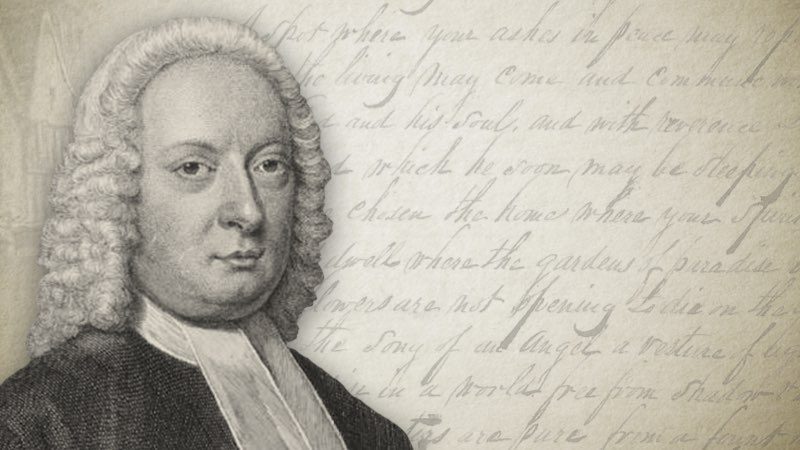
John Gill (1697-1771) was a Strict and Particular Baptist preacher and theologian. He was appointed the Pastor of Goat Yard Chapel, Horsleydown, Southwark, serving this position for fifty-one years. He was the first Baptist to write an exhaustive systematic theology, setting forth High-Calvinistic views and a clear Baptist polity which became the backbone for the churches subscribing to them.
John Gill, (1) Commentary On First Thessalonians (Complete)
John Gill, (2) Commentary On Second Thessalonians (Complete)
John Gill, (3) Commentary On First Corinthians
John Gill, A Biography By George Ella
John Gill, A Lecture By George Ella
John Gill, Doctrinal And Practical Body Of Divinity
John Gill, Extracts
John Gill, Identifying The Biblical Covenants (Complete)
John Gill, The Cause Of God And Truth
-
1 Corinthians: Chapter 3, Verse 4
“For while one saith, I am of Paul, etc.]” This shows what their envying and strife, and divisions were about, and from whence they sprung; and which serve, to strengthen the proof, and support the charge of carnality brought against them; for when one sort made a party for Paul, and set up him as their minister above all others; and said “another, I am of Apollos,” Preferring him for his eloquence above Paul, or any other preacher, as appears from (1 Corinthians 1:12) there was a third sort for Cephas, whom they cried up as superior to the other two, or any other man; and a fourth were for Christ, and despised all ministers whatever: “are ye not carnal?” All this was a demonstration…
-
1 Corinthians: Chapter 3, Verse 3
“For ye are yet carnal, etc.]” The Syriac reads it, ˆwtna rsbb, “ye are in the flesh”: a phrase the apostle elsewhere uses of men in an unregenerate state; but this is not his meaning here, as before explained, but that carnality still prevailed among them, of which he gives proof and evidence: “for whereas there is among you envying, and strife, and divisions, are ye not carnal, and walk as men?” They envied each other’s gifts and knowledge, strove about words to no profit, entered into warm debates and contentions about their ministers, and went into factions and parties, which were distinguished by the names they were most affected to; in all which they gave too clear evidence of their prevailing carnality, that they…
-
1 Corinthians: Chapter 3, Verse 2
“I have fed you with milk, etc.]” It is usual with the Jews to compare the law to milk, and they say, that “as milk strengthens and nourishes an infant, so the law strengthens and nourishes the soul;” but the apostle does not here mean hrwt lç blj, “the milk of the law”, as they call it, but the Gospel; comparable to milk, for its purity and wholesomeness, for the nourishing virtue there is in it, and because easy of digestion; for he designs by it, the more plain and easy doctrines of the Gospel, such as babes in Christ were capable of understanding and receiving: and not with meat; the more solid doctrines of the Gospel, and sublime mysteries of grace; the wisdom of…
-
1 Corinthians: Chapter 3, Verse 1
“And I, brethren, could not speak unto you, etc.]” Though the apostle was a spiritual man himself, had spiritual gifts, even the extraordinary gifts of the Spirit, could judge all things, had the mind of Christ, and was able to speak the wisdom of God in a mystery, yet could not speak it to them, “as unto spiritual;” Not but that they had the Spirit of God in them, and a work of grace upon them; for they were, as the apostle afterwards says, the temple of God, and the Spirit of God dwelt in them; they were washed, sanctified, and justified, in the name of the Lord Jesus, and by the Spirit of our God; but had not that spiritual discerning, or judgment in…
-
1 Corinthians: Chapter 3, Introduction
In this chapter the apostle returns to the charge of schisms and contentions upon the Corinthians, which were the occasion of the epistle; and reproves them for their divisions, which were about their ministers; and gives them their just and due character, and who, though they were useful and commendable in their places, were not to be gloried in; and especially it was a great piece of weakness and folly, to set up one against another, when they had an equal interest in them all. Having, in the latter part of the preceding chapter, made mention of the spiritual man, the apostle tells the Corinthians, to whom he writes, that he could not address them as spiritual, but as carnal; and not as perfect men,…
-
1 Corinthians: Chapter 2, Verse 16
“For who hath known the mind of the Lord, etc.]” The deep counsels of his heart, the scheme of salvation by Jesus Christ, as drawn in his eternal mind, the sense of the Spirit of God in the writings of the Old Testament, the things of the Spirit of God, or the doctrines of grace more clearly revealed under the Gospel dispensation; not any natural man, by the light of truth and strength of reason, has known any of these things. The apostle either cites or alludes to (Isaiah 40:13) “that he may instruct him?” Not the Lord, who needs no instruction from any, nor can any teach and instruct him, nor would any be so bold and insolent as to attempt it nor does…