John Gill
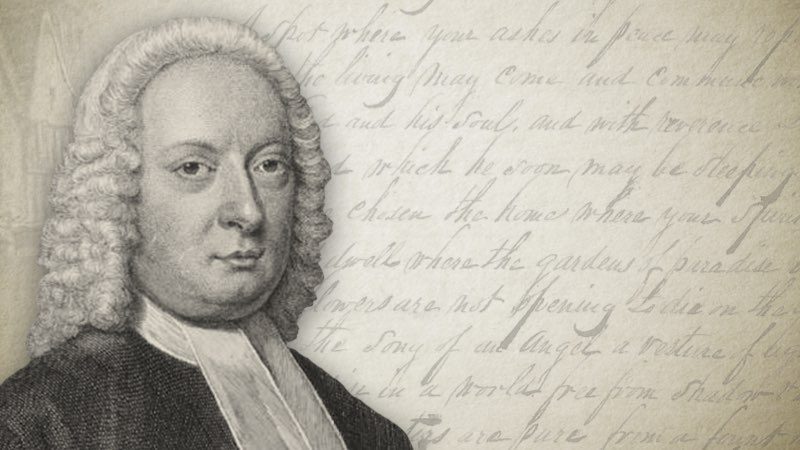
John Gill (1697-1771) was a Strict and Particular Baptist preacher and theologian. He was appointed the Pastor of Goat Yard Chapel, Horsleydown, Southwark, serving this position for fifty-one years. He was the first Baptist to write an exhaustive systematic theology, setting forth High-Calvinistic views and a clear Baptist polity which became the backbone for the churches subscribing to them.
John Gill, (1) Commentary On First Thessalonians (Complete)
John Gill, (2) Commentary On Second Thessalonians (Complete)
John Gill, (3) Commentary On First Corinthians
John Gill, A Biography By George Ella
John Gill, A Lecture By George Ella
John Gill, Doctrinal And Practical Body Of Divinity
John Gill, Extracts
John Gill, Identifying The Biblical Covenants (Complete)
John Gill, The Cause Of God And Truth
-
1 Thessalonians: Chapter 4, Verse 8
“He therefore that despiseth, etc.]” The Vulgate Latin adds, “these things”; these exhortations now delivered, the commandments given by the Lord Jesus Christ, and the will of God above declared; he that rejects these things with contempt, takes no notice of them, and acts not according to them, “despiseth not man;” Not men only, the apostles of Christ, and ministers of the Gospel; for, by despising these exhortations, they themselves were despised, though not alone: but God; Father, Son, and Spirit; God the Father, whose will was their sanctification, even to abstain from fornication, and every act of uncleanness, which, if not attended to, was a despising of him; and the Lord Jesus Christ, by whom, and for whose sake they were entreated and exhorted,…
-
1 Thessalonians: Chapter 4, Verse 7
“For God hath not called us, etc.]” The Syriac version reads “you”. This is another reason to enforce the above exhortations, and to caution them against the above unclean practices, taken from the end of the effectual calling by the efficacious grace of God, which is not “unto uncleanness” Of any sort, as before specified. This they had lived in before their calling, and were now called from it into communion with Christ, who loves righteousness, and hates iniquity; and by the Gospel, which teaches to deny ungodliness, and worldly lusts, and to forsake all impurity, both of flesh and spirit: “But” This call is “unto holiness” Of life and conversation in general, and to chastity in thought, look, word, and actions in particular; for…
-
1 Thessalonians: Chapter 4, Verse 6
“That no man go beyond, and defraud his brother in any matter, etc.]” Or “in this matter”, as the Syriac version. This is commonly understood of transgressing the bounds of justice and equity between men and men; and of cheating and defrauding in trade and business, by increasing or lessening the value and prices of goods by the buyer and seller, by not keeping to the bargain, contract, covenant, or sample, by false weights and measures, and by taking the advantage of the weakness and ignorance of men; all which is aggravated by dealing thus with a brother; (see 1 Corinthians 6:8) and this hint is thought the rather necessary, since Thessalonica was a place of great trade and business. But the matter, or business…
-
1 Thessalonians: Chapter 4, Verse 5
“Not in the lust of concupiscence, etc.]” Or “passion of lust”; for the mere gratifying and indulging of that; for a man so to possess his vessel, is to cherish the sin of concupiscence, the first motions of sin in the heart, by which a man is drawn away, and enticed; to blow up the flame of lust, and to make provision for the flesh to fulfil the lusts thereof: “even as the Gentiles which know not God;” For, though they knew him, or might know him with a natural knowledge, by the light and works of nature, yet they knew him not savingly and spiritually, as he is revealed in the word, of which they were destitute; or as the God of all grace,…
-
1 Thessalonians: Chapter 4, Verse 4
“That everyone of you should know how to possess his vessel, etc.]” By which may be meant, either a man's wife, or his body, and it is not very easy to determine which, for the Jews call both by this name. Sometimes they call a woman μlwg, which the gloss says is a “vessel” unfinished. It is reported, that when R. Eleazar died, Rabbenu Hakkadosh would have married his widow, and she would not, because she was hçwdq lç ylk, “a vessel of holiness”, greater than he. Moreover, it is said, that “he that forces (a young woman) must drink wxyx[b, “in his own vessel” how drink in his own vessel? though she be lame, though she be blind, and though she is stricken with…
-
1 Thessalonians: Chapter 4, Verse 3
“For this is the will of God, even your sanctification, etc.]” Which is another reason to enforce the above exhortation. “Sanctification” is internal or external. Internal sanctification is the work of the Spirit of God, and is a principle of spiritual life in the soul, a divine and spiritual light in the understanding, a flexion of the will to the will of God, and a settlement of the affections on divine things, and is an implantation of every grace in the heart. External sanctification arises from this, and lies in holiness of life and conversation; and is what is chiefly designed, as appears both by what goes before, and follows after: and this is “the will of God”; the will of his purpose and decree;…