John Gill
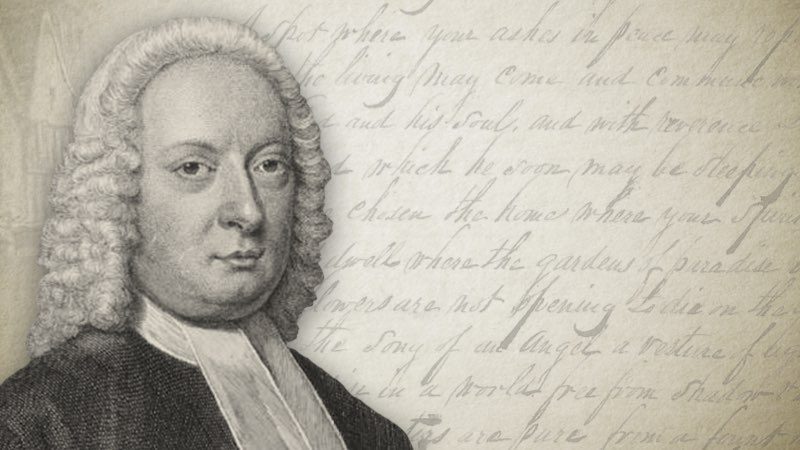
John Gill (1697-1771) was a Strict and Particular Baptist preacher and theologian. He was appointed the Pastor of Goat Yard Chapel, Horsleydown, Southwark, serving this position for fifty-one years. He was the first Baptist to write an exhaustive systematic theology, setting forth High-Calvinistic views and a clear Baptist polity which became the backbone for the churches subscribing to them.
John Gill, (1) Commentary On First Thessalonians (Complete)
John Gill, (2) Commentary On Second Thessalonians (Complete)
John Gill, (3) Commentary On First Corinthians
John Gill, A Biography By George Ella
John Gill, A Lecture By George Ella
John Gill, Doctrinal And Practical Body Of Divinity
John Gill, Extracts
John Gill, Identifying The Biblical Covenants (Complete)
John Gill, The Cause Of God And Truth
-
1 Corinthians: Chapter 2, Verse 3
“And I was with you in weakness, etc.]” Meaning either the weakness of his bodily presence, the contemptibleness of his voice, and the mean figure he made as a preacher among them, both with respect to the matter and manner of his ministry in the eyes of many; or his lowly and humble deportment among them, not exerting the power and authority Christ had given him as an apostle; but choosing rather to work with his own hands, as he did at Corinth, to minister to his own necessities, and those of others; or the many persecutions which he endured there for the sake of preaching a crucified Christ; and which he sometimes calls “infirmities”; (see 2 Corinthians 12:9,10) wherefore it is added, “and in…
-
1 Corinthians: Chapter 2, Verse 2
“For I determined not to know anything among you, etc.]” This was a resolution the apostle entered into before he came among them, that though he was well versed in human literature, and had a large compass of knowledge in the things of nature, yet would make known nothing else unto them, or make anything else the subject of his ministry, “save Christ, and him crucified:” He had a spiritual and experimental knowledge of Christ himself, and which he valued above all things else; and this qualified him to make him known to others; and which knowledge he was very willing and ready to communicate by preaching the Gospel, which is the means of making known Christ as God’s salvation to the souls of men;…
-
1 Corinthians: Chapter 2, Verse 1
“And I, brethren, when I came to you, etc.]” This account the apostle gives of himself is occasioned, either by what he had said in the latter part of the preceding chapter, concerning the choice God has made of the foolish, weak, base, and despicable things of the world, and of his calling them by his grace both to fellowship with the saints in common, and therefore he accommodated his ministry unto them, and in particular to the ministry of the word, of which he himself was a like instance and an example; or else by what he had declared in (1 Corinthians 1:17) of the same chapter, that he was sent to preach the Gospel, “not with wisdom of words;” Which he here reassumes,…
-
1 Corinthians: Chapter 2, Introduction
The apostle, in this chapter, pursues the same argument as before, that the Gospel needed not the wisdom and art of men: this he illustrates by his own example; and then he extols the Gospel above all the wisdom of men; and observes how it comes to be made known to men, even by the Spirit of God: hence it follows, that it is to be taught in his words, and not in the words of men; and that it can be only known and judged of by the spiritual, and not by the natural man. He instances in himself, and in his own ministry, when at Corinth, where he preached the Gospel in a plain and simple manner, without using the ornaments of speech,…
-
1 Corinthians: Chapter 1, Verse 31
“That, according as it is written, etc.]” (Jeremiah 9:23,24). “He that glorieth, let him glory in the Lord;” Not in his own wisdom, riches, and strength; but in Christ, as his wisdom, righteousness, sanctification, and redemption.
-
1 Corinthians: Chapter 1, Verse 30
“But of him are ye in Christ Jesus, etc.]” These words, as they direct to the proper object of glorying, Christ, so they show the high honour the called ones are brought to in and through Christ, and are opposed to their outward meanness, folly, weakness, poverty, and contempt. They are first of God the Father, of his own rich free grace and goodness, without any regard to any motive, merit, or desert of theirs, put into Christ by electing grace, in whom they are preserved and blessed; and which is their original secret being in him; and is made manifest by regenerating grace, by their being made new creatures; which also is not owing to their blood, or to the will of the flesh,…