-
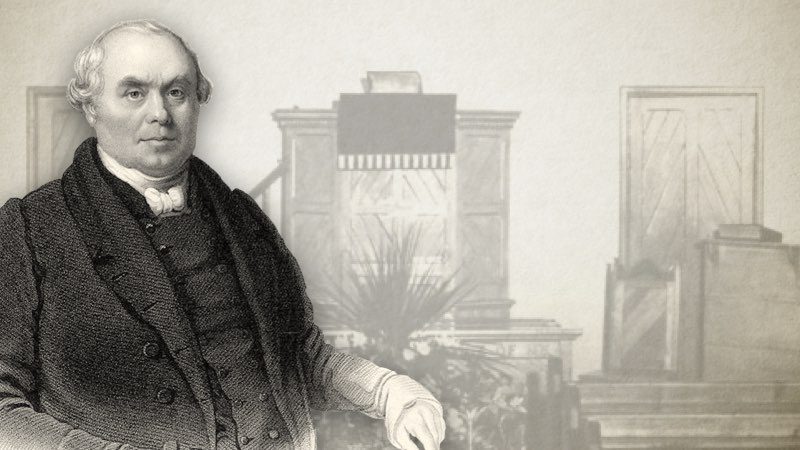
John Collet Ryland (1723-1792) And The Restructuring Of Baptist History
A number of modern writers who preach common-grace and duty-faith as redemptive means in evangelisation, view John Collet Ryland as a Hyper-Calvinist. Such a person, a recent BOT article tells us, does not appeal to sinners, “directly encouraging them to trust him (Christ), and appealing to them to do so now.” Obviously, given such criteria, Ryland’s critics know nothing of his extensive gospel ministry or are deliberately introducing a new conception of what ‘directly encouraging sinners’ means. Most of their ‘encouragement’ is found in their slogan ‘God’s provisions and man’s agency’ which stresses the need for man to use all his supposed natural abilities and duties to grasp out and take God’s provisions in Christ. Ryland affirmed that salvation was all of grace. Only then…
-
Why So Particular?
To be described as being particular about things is not always a compliment. In fact it is sometimes used as a polite put down as much as to say, ‘He’s very fussy’, or ‘She’s hard to please’. This is often the impression given when some Christians, usually Baptists, describe themselves as ‘Strict and Particular’. One can imagine someone new to the phrase wincing slightly at the expression. The picture of an austere old aunt or a disciplinarian teacher might spring to mind. Hair combed, laces tied and sitting quietly. Overly strict and very particular. Strict Of course the real meaning of the term is quite different and has more to do with the historical development of theology in certain churches. Congregations who practise strict communion…
-
A Sharp Letter To An Unbeliever
July 12, 1830 My dear Sister, I am truly rejoiced that the Lord has given you an inquiring mind. You will not be distressed when I say that I have discovered that your views of salvation by free grace are by no means clear, as your letter plainly evinces; for in speaking of some of your relations you say, "I wish they would fix their minds above this world." This expression shows that you do not believe "there is no health in us." We could as soon make a new world as begin a spiritual work in our souls. It is this doctrine that lays man so low in the dust. You have expressed a great wish to see me, and that others anticipate my…
-
There Is The Sign
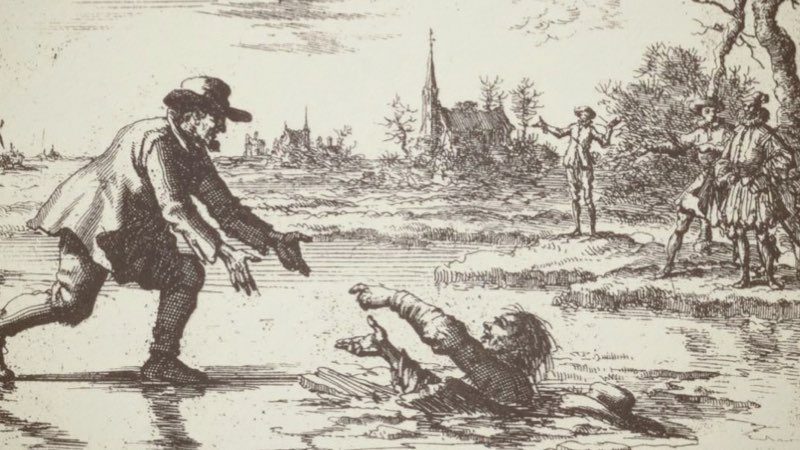
The late Mr. Hatton related the following, stating that the circumstance was well known to him: Many years ago the late Mr. Gadsby was going into the country to preach, and, as was his wont in his younger days, was walking; when he was joined by a “simple faith” professor: Religion soon became the subject of conversation. Mr. G. maintained that true faith was not man's work but the work of the Holy Spirit in the hearts of his people, and that without this there can be no real satisfaction for a quickened soul, hungering and thirsting after an assurance of his salvation; while his companion maintained that it was the duty of every man to believe. “There is the Word,” said he, “and we…
-
80. Epipodius And Alexander
Epipodius Of Lyons, And Alexander, The Greek, Martyred For The Testimony Of The Evangelical Truth, At Lyons In France; The One Beheaded, And The Other Crucified, About The Year 179 In the seventeenth year of the Emperor Marcus Aurelius, there were slain, among other pious martyrs at Lyons in France, Epipodius, a citizen of Lyons, and Alexander, a Greek by birth; whose imprisonment, suffering, and death occurred in this wise: When the heathen thought that the Christian name was entirely extirpated at Lyons and Vienne, and that no person who confessed it was remaining, these two, as the remainder of the Christians there, were betrayed, accused, and, three days afterwards, placed before the tribunal of the Governor. There they were interrogated in regard to their…
-
10 Bible Doctrine – Do The Strict And Particular Baptists Have A Framework Of Doctrine?
A Transcript Of The Video Study In our previous study, I introduced to you several prominent men and women belonging to the Strict and Particular Baptists of past centuries. The question which now arises—Do the Strict and Particular Baptists have a framework of doctrine around which they organize their teachings? The answer is yes, they do have a framework of doctrine, which can be extracted from their writings. Now, in my view, these writings should be arranged under one of two general categories—First, the 17th and 18th century preachers, who tended to approach the gospel doctrinally and systematically; Second, the 19th and 20th century preachers, who seemed to be more inclined to approach the gospel practically and experientially. Of course, this is not a hard…