John Gill
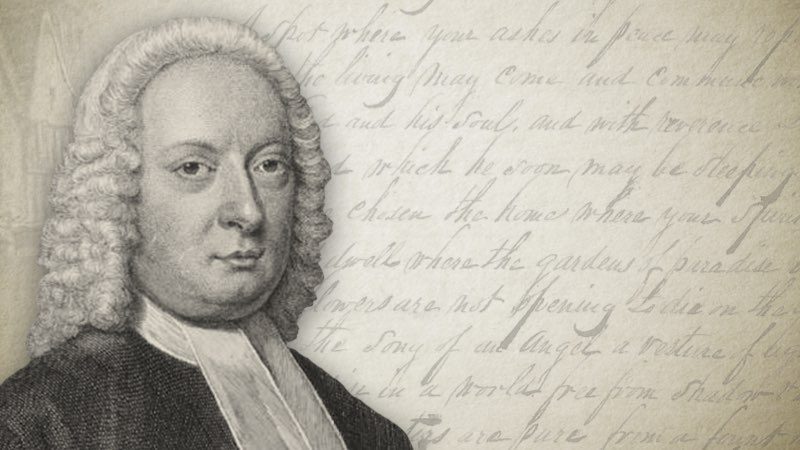
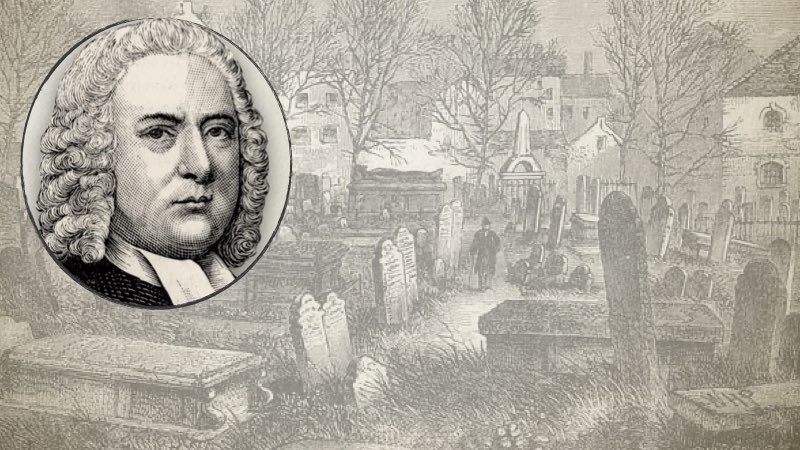
John Gill (1697-1771) was a Strict and Particular Baptist preacher and theologian. He was appointed the Pastor of Goat Yard Chapel, Horsleydown, Southwark, serving this position for fifty-one years. He was the first Baptist to write an exhaustive systematic theology, setting forth High-Calvinistic views and a clear Baptist polity which became the backbone for the churches subscribing to them.
John Gill, (1) Commentary On First Thessalonians (Complete)
John Gill, (2) Commentary On Second Thessalonians (Complete)
John Gill, (3) Commentary On First Corinthians
John Gill, A Biography By George Ella
John Gill, A Lecture By George Ella
John Gill, Doctrinal And Practical Body Of Divinity
John Gill, Extracts
John Gill, Identifying The Biblical Covenants (Complete)
John Gill, The Cause Of God And Truth
-
John Gill And The Free Offer Of The Gospel
John Gill (1697-1771) was a Particular Baptist preacher and theologian. For fifty-one years he served as pastor for the Goat Yard Chapel (Carter Lane) meeting in London. He is best known for writing the first Baptist systematic theology and a complete set of commentaries on the Old and New Testament Scriptures.
-
Body Of Divinity: The Being (Existence) Of God (DB1/C1)
Having undertaken to write a System of Theology, or a Body of Doctrinal Divinity; and Theology being nothing else than a speaking of God, or a discoursing concerning him; his nature, names, perfections, and persons; his purposes, providences, ways, works, and word: I shall begin with the Being of God, and the proof and evidence of it; which is the foundation of all religion; for if there is no God, religion is a vain thing; and it matters not neither what we believe, nor what we do; since there is no superior Being to whom we are accountable for either faith or practice.
-
Body Of Divinity: Introduction
Having completed an Exposition of the whole Bible, the Books both of the Old and of the New Testament; I considered with myself what would be best next to engage in for the further instruction of the people under my care; and my thoughts led me to enter upon a Scheme of Doctrinal and Practical Divinity, first the former and then the latter; the one being the foundation of the other, and both having a close connection with each other. Doctrine has an influence upon practice, especially evangelical doctrine, spiritually understood, affectionately embraced, and
-
The Life And Death Of Elizabeth Gill
I need not tell you what is the occasion of my reading these words to you at this time. This is done not so much on your account as on my own. You must permit me, this afternoon, to preach rather to myself and family than to you; though I hope what may be delivered may be of some service among you also. The apostle in this chapter exhorts the Thessalonians to a diligent discharge of several duties of religion, which became their character and profession; whereby they would be serviceable to one another, please God, and adorn the doctrine of Christ Jesus. He signifies, that they needed not to be wrote unto concerning brotherly love, because they were taught of God to love one…
-
The Life And Death Of John Gill
John Gill was born at Kettering, in Northamptonshire, Nov. 23,1697. His mind was seriously impressed with divine things when he was about twelve years of age. Mr. Wallis, of Kettering, having preached a sermon from Gen. 3:9, “And the Lord God called unto Adam, and said unto him where art thou?” These interrogations sounded in his ears, and pierced his very soul. “Sinner, where art thou? What a wretched condition art thou in! What will be thy state eternally? Art thou able to endure everlasting burnings?” He now began to see and feel, the depravity of his nature, the exceeding sinfulness of sin, and his need of salvation by Christ. The Lord was soon graciously pleased to reveal his Son in him, and afford him…
-
1 Corinthians: Chapter 3, Verse 5
“Who then is Paul? and who is Apollos? etc.]” The apostle’s name being used, and he a party concerned, could speak the more freely upon this head, and ask what they thought of himself, and other preachers, whether they were more than men? what authority and power they had, whether they looked upon them as the authors of a new religion, or the founders of a new sect, that were to go by their names? and directs them what light to consider them in, how that they were “but ministers by whom ye believed:” They were servants to Christ and to his churches, and not lords; they did not assume any dominion over men, or pretend to lord it over God’s heritage; there is but…