John Gill
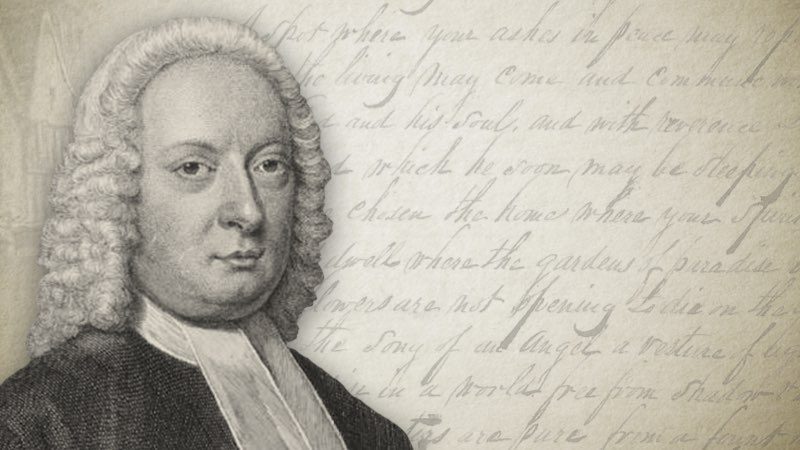
John Gill (1697-1771) was a Strict and Particular Baptist preacher and theologian. He was appointed the Pastor of Goat Yard Chapel, Horsleydown, Southwark, serving this position for fifty-one years. He was the first Baptist to write an exhaustive systematic theology, setting forth High-Calvinistic views and a clear Baptist polity which became the backbone for the churches subscribing to them.
John Gill, (1) Commentary On First Thessalonians (Complete)
John Gill, (2) Commentary On Second Thessalonians (Complete)
John Gill, (3) Commentary On First Corinthians
John Gill, A Biography By George Ella
John Gill, A Lecture By George Ella
John Gill, Doctrinal And Practical Body Of Divinity
John Gill, Extracts
John Gill, Identifying The Biblical Covenants (Complete)
John Gill, The Cause Of God And Truth
-
2 Thessalonians: Chapter 3, Verse 13
“But ye, brethren, &c.” The rest of the members of the church, who were diligent and industrious in their callings, minded their own business, and did not trouble themselves with other men's matters, took care of themselves, and their families, and were beneficent to others: “be not weary in well doing;” Which may be understood generally of all well doing, or of doing of every good work; which is well done when done according to the will of God, in faith, and from a principle of love, and in the name and strength of Christ, and with a view to the glory of God: or particularly of acts of beneficence to the poor; for though the idle and lazy should not be relieved, yet the…
-
2 Thessalonians: Chapter 3, Verse 12
“Now them that are such, &c.” For this was not the case and character of them all. Did such practices generally obtain, no community, civil or religious, could subsist. And the apostle wisely distinguishes them from others, that the innocent might not be involved in the charge. “We command and exhort by our Lord Jesus Christ;” Using both authority and entreaty; taking every way to reclaim them, commanding in the name of Christ and beseeching for the sake of Christ “that with quietness they work:” With their own hands, at their proper callings, and so support themselves, provide for their families, and have something to give to them that are in need; by which means they will live peaceable and quiet lives, in godliness and…
-
2 Thessalonians: Chapter 3, Verse 11
“For we hear that there are some, &c.” This is the reason of the order or command given in (2 Thessalonians 3:6) for withdrawing from disorderly persons. When the apostle was with them, he observed that there were idle persons among them, and therefore gave orders then, that if they would not work, they should not eat; and in his former epistle, having intelligence that there were still such persons among them, he exhorts them to their duty, and puts the church upon admonishing them; and still information is given him, that there were some such persons yet among them; for as the apostle had the care of all the churches upon him, so he kept a correspondence with them, and by one means or…
-
2 Thessalonians: Chapter 3, Verse 10
“For even when we were with you, &c.” At Thessalonica in person, and first preached the Gospel to them, “we commanded you, that if any would not work, neither should he eat;” The Ethiopic version reads in the singular number, “when I was with you, I commanded you”; using the above words, which were a sort of a proverb with the Jews, and is frequently used by them, lyka al yad, or sygn al y[l, “that if a man would not work, he should not eat”. And again, “he that labours on the evening of the sabbath (or on weekdays), he shall eat on the sabbath day; and he who does not labour on the evening of the sabbath, from whence shall he eat (or…
-
2 Thessalonians: Chapter 3, Verse 9
“Not because we have not power, &c.” To forbear working, or require a maintenance from the churches to whom we minister, since Christ has ordained, that they that preach the Gospel should live of the Gospel; (see 1 Corinthians 9:4-6,14). This the apostle says to preserve their right of claim, when and where they should think fit to make use of it; and lest other ministers of the word, who could not support themselves as they did, should be hurt by such an example; and lest covetous men should make use of it to indulge their sin, and improve it against the maintenance of Gospel ministers: wherefore the apostle observes to them, that they did not do this, as conscious that they had no right…
-
2 Thessalonians: Chapter 3, Verse 8
“Neither did we eat any man's bread for nought &c.” Or freely, at free cost, without paying for it; he signifies, that what they ate, they bought with their own money, and lived on no man, without giving him a valuable consideration for what they had; though if they had not paid in money for their food, they would not have ate it for nought, since they laboured among them in preaching the Gospel to them; and such labourers are worthy of their maintenance, (Luke 10:7) though the former sense is the apostle's here: “but wrought with labour and travail night and day:” Not only laboriously preaching the Gospel to them, as often as they could have opportunity, but working very hard and incessantly with…