John Gill
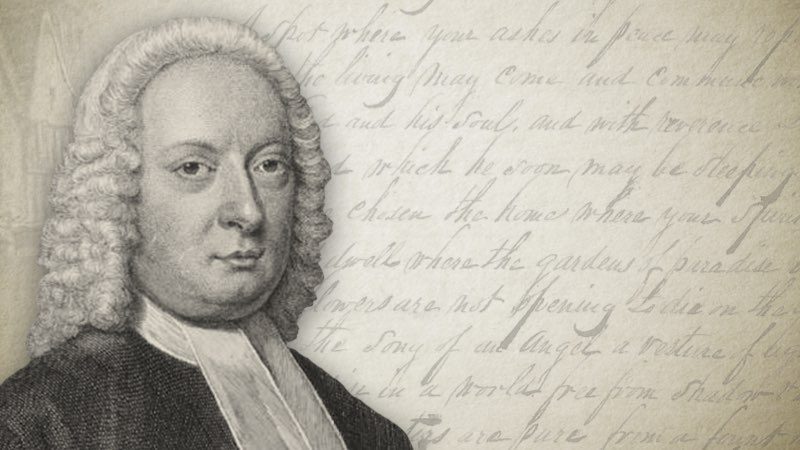
John Gill (1697-1771) was a Strict and Particular Baptist preacher and theologian. He was appointed the Pastor of Goat Yard Chapel, Horsleydown, Southwark, serving this position for fifty-one years. He was the first Baptist to write an exhaustive systematic theology, setting forth High-Calvinistic views and a clear Baptist polity which became the backbone for the churches subscribing to them.
John Gill, (1) Commentary On First Thessalonians (Complete)
John Gill, (2) Commentary On Second Thessalonians (Complete)
John Gill, (3) Commentary On First Corinthians
John Gill, A Biography By George Ella
John Gill, A Lecture By George Ella
John Gill, Doctrinal And Practical Body Of Divinity
John Gill, Extracts
John Gill, Identifying The Biblical Covenants (Complete)
John Gill, The Cause Of God And Truth
-
1 Thessalonians: Chapter 3, Verse 4
“For, verily, when we were with you, etc.]” In presence, in person, as they then were in heart and affection; when they were first among them, and preached the Gospel to them: “we told you before;” Before it came to pass; “that we should suffer tribulation:” Which they might say by virtue of Christ's prediction to all his disciples, that they should have tribulation in the world; and upon its being the common case of God's people, and the usual way through which they enter the kingdom; and the Apostle Paul might foretell this, upon the discovery that was made to him how many things he should suffer for the sake of Christ, and which therefore he always, and in every place expected; and he…
-
1 Thessalonians: Chapter 3, Verse 3
“That no man should be moved by these afflictions, etc.]” Which the apostle endured for the sake of preaching the Gospel among them, and which he feared might be a means of troubling their minds, of shaking their faith, and moving them from the hope of the Gospel; for though none of these things moved him, who was an old soldier of Christ, and used to hardness, and an apostle of Christ; yet these were young converts, and not used to such things, and therefore might be staggered at them, and be offended, as stony ground hearers are; and though the apostle hoped better things of them, yet was he concerned for them, that no one among them might be unhinged by them, or succumb…
-
1 Thessalonians: Chapter 3, Verse 2
“And sent Timotheus our brother, etc.]” In a spiritual relation, having the same heavenly Father, and belonging to the same Jerusalem, which is free, and the mother of us all; of the same household and in the same relation to Christ, the firstborn among many brethren; or their brother in the ministry, who was employed in the same business, and did the same work they did; or he is so called, on account of that strict and intimate friendship which subsisted between them, by virtue of which they stuck as close as brethren, or closer to one another than brethren usually do: “and minister of God;” Of his making, and not man's; of his calling and sending, and of his blessing and succeeding; and who…
-
1 Thessalonians: Chapter 3, Verse 1
“Wherefore when we could no longer forbear, etc.]” Or “bear”, as the word properly signifies; or “bear that”, as the Ethiopic version reads; that is, “that desire”, as the Arabic version renders it; that ardent and longing desire of seeing them again, expressed in the latter part of the preceding chapter; which was as fire in their bones, and was retained with great pain and uneasiness; but now they could hold it no longer, and like Jeremiah, (Jeremiah 20:9) were weary with forbearing, and could not stay; or it was like a burden, which they stood up under as long as they could, even Paul, Silas, and Timothy, but now it became insupportable: “we thought it good to be left at Athens alone:” That is,…
-
1 Thessalonians: Chapter 3—Introduction
In this chapter the apostle expresses his great love to the Thessalonians, by sending Timothy to then, to establish and comfort them; and declares his satisfaction with the things he brought of them, and concludes the chapter with fervent prayers for them: such was his affection for them, that he chose rather to be left alone at Athens, and send Timothy to them, though so very dear and useful to him, as his characters show, to the end that they might be established and comforted, (1 Thessalonians 3:2) And not be shaken with the afflictions the apostles met with, seeing these were no other than what God had appointed them to; and besides, they had been apprized of them before hand by the apostle, (1…
-
1 Thessalonians: Chapter 2, Verse 20
“For ye are our glory and joy.]” Or “our joy”, as the Syriac, Arabic, and Ethiopic versions read; this is a repetition, and a confirmation of what is before said; and signifies that these saints were then the glory of the apostles, being the seals of their ministry; and whom they gloried of and rejoiced in, and hoped and believed they would be such, as would be their joy and crown in time to come, and for ever.