John Gill
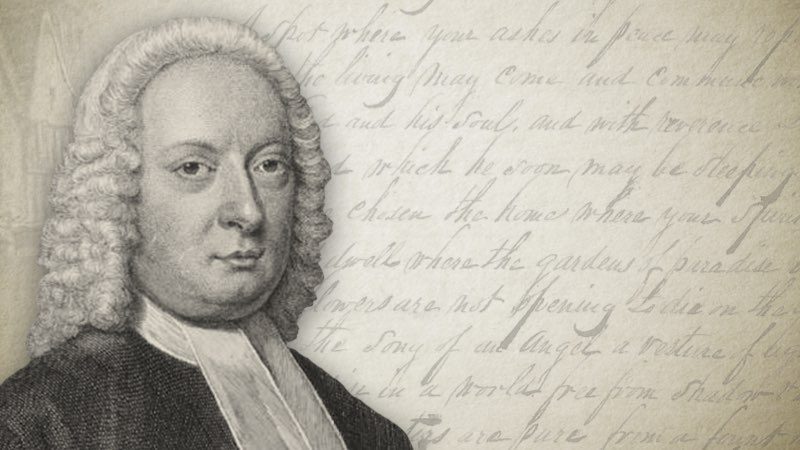
John Gill (1697-1771) was a Strict and Particular Baptist preacher and theologian. He was appointed the Pastor of Goat Yard Chapel, Horsleydown, Southwark, serving this position for fifty-one years. He was the first Baptist to write an exhaustive systematic theology, setting forth High-Calvinistic views and a clear Baptist polity which became the backbone for the churches subscribing to them.
John Gill, (1) Commentary On First Thessalonians (Complete)
John Gill, (2) Commentary On Second Thessalonians (Complete)
John Gill, (3) Commentary On First Corinthians
John Gill, A Biography By George Ella
John Gill, A Lecture By George Ella
John Gill, Doctrinal And Practical Body Of Divinity
John Gill, Extracts
John Gill, Identifying The Biblical Covenants (Complete)
John Gill, The Cause Of God And Truth
-
1 Thessalonians: Chapter 2, Verse 13
“For this cause also thank we God without ceasing, etc.” As for their election of God, (1 Thessalonians 1:4) so for their effectual calling by his grace, to his kingdom and glory, just now mentioned, as well as for their reception of the word of God as such, hereafter expressed; since their having it and receiving it, and the effectual operation of it in them, were owing to the goodness and grace of God, and therefore required a constant sense of the favour, and thankfulness, without ceasing, for it. The apostle having at large considered the manner of his and his fellow ministers' entrance among them without guile, flattery, covetousness, or any sinister view, and with all simplicity, integrity, labour, diligence, affection, and tenderness, returns…
-
1 Thessalonians: Chapter 2, Verse 12
“That ye would walk worthy of God, etc.” In imitation of him; not of his perfections, which are inimitable, but of his works; and these not of his power and wisdom, but those of kindness and beneficence, and of righteousness and holiness; and in conformity to his revealed will, which is good, perfect, and acceptable; and agreeably to his Gospel, that that may be adorned, and not blasphemed; and particularly, in a manner worthy of the calling wherewith saints are called by him: since it follows, “who hath called you unto his kingdom and glory;” Which instance of the grace of God carries in it many arguments, and lays many obligations on the persons interested in it, to walk in their lives and conversations worthy…
-
1 Thessalonians: Chapter 2, Verse 11
“As you know, etc.” This is added to the end of the last verse in the Arabic version, and which begins this verse thus, “as one of you, and as a father comforting his sons, so we”, etc. but for what is said in the former verse, an appeal is made both to God and to the Thessalonians, so that there is no need of adding such a clause there; it properly stands here in connection with what follows, “how we exhorted;” To flee from wrath to come, and to Christ for refuge; to look to, and believe in him, as the only Saviour of lost sinners; to perform the duties of religion, and to continue in the faith; to cleave to Christ, and walk…
-
1 Thessalonians: Chapter 2, Verse 10
“Ye are witnesses, and God also, etc.” Not so much to what goes before as to what follows after, relating to their holy walk and conversation among them, the more open part of which they were witness of; and for the more secret part God is appealed to, who is acquainted with the springs of actions, as well as with actions themselves: “how holily, and justly, and unblamably we behaved ourselves among you that believe.” The Syriac version joins the last clause of the preceding verse with this, and reads the whole thus, “ye are witnesses, and God also, how purely and justly we preached unto you the Gospel of God, and how unblamable we were among all that believed”; referring the former part to…
-
1 Thessalonians: Chapter 2, Verse 9
“For ye remember brethren, our labour and travail, etc.” The great pains they took, even to weariness. The Vulgate Latin version renders the last word, “weariness”; and the Arabic version, “anxiety”; and the Ethiopic version, “affliction”; it is to be understood both of corporeal and spiritual labour, working with their hands and preaching the Gospel; this could not but be remembered by them, since it was not a year ago they were with them: “for labouring night and day;” At our handicraft, or “at the work of our hands”, as the Syriac version renders it; which they continually attended to, even night and day, when they were not preaching the Gospel, or disputing with the Jews, or praying and conversing with those that believed, or…
-
1 Thessalonians: Chapter 2, Verse 8
“So being affectionately desirous of you, etc.” Not of theirs but them; not of glory from them, nor a maintenance by them, but of their spiritual and eternal welfare; were as fond of them as a nursing mother is of her children, who, when absent from them but ever so little a while, longs to see them; (see 1 Thessalonians 2:17) and (1 Thessalonians 3:1,5- 8), “we were willing:” Took the utmost pleasure, delight, and complacency: “to have imparted unto you, not the Gospel of God only;” The sincere milk of the word, which they did freely, fully, and for their spiritual good and profit, without any regard to any advantage of their own: “but also our own souls, or “lives”;” Which is the highest…