John Gill
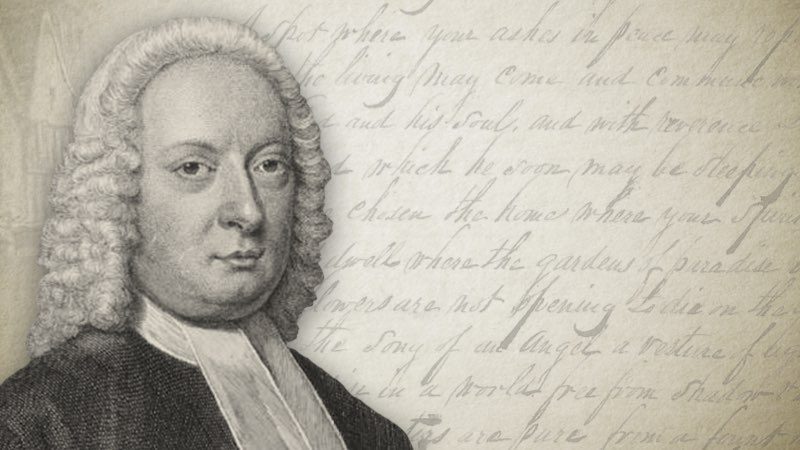
John Gill (1697-1771) was a Strict and Particular Baptist preacher and theologian. He was appointed the Pastor of Goat Yard Chapel, Horsleydown, Southwark, serving this position for fifty-one years. He was the first Baptist to write an exhaustive systematic theology, setting forth High-Calvinistic views and a clear Baptist polity which became the backbone for the churches subscribing to them.
John Gill, (1) Commentary On First Thessalonians (Complete)
John Gill, (2) Commentary On Second Thessalonians (Complete)
John Gill, (3) Commentary On First Corinthians
John Gill, A Biography By George Ella
John Gill, A Lecture By George Ella
John Gill, Doctrinal And Practical Body Of Divinity
John Gill, Extracts
John Gill, Identifying The Biblical Covenants (Complete)
John Gill, The Cause Of God And Truth
-
1 Thessalonians: Chapter 1, Verse 6
“And ye became followers of us, and of the Lord, etc.” So far followers of them as they were of Christ, in embracing the Gospel, submitting to the ordinances of it, professing the name of Christ, and suffering for his sake; the Alexandrian copy reads, “of God”, and others, “of Christ”: “having received the word;” The Gospel, the word of truth, peace, and righteousness, and of salvation by Christ; which they received not as the word of man, but of God; and that “in much affliction;” Referring to the uproar made by the baser sort of people, instigated by the unbelieving Jews, and the trouble they gave to Jason and other brethren, mentioned in (Acts 17:1,5-9) and this is a considerable commendation of them, that…
-
1 Thessalonians: Chapter 1, Verse 5
“For our Gospel came not unto you, etc.” The apostle calls the Gospel “our Gospel”, not because he and his fellow ministers were the authors of it; for in this respect it is solely of God, being the produce of his wisdom and grace, and by the revelation of Jesus Christ, hence he calls it the Gospel of God in (1 Thessalonians 2:2,8,9) nor because they were the subject of it, for they preached not themselves, but a crucified Christ, and him only, though it was a stumblingblock to some, and foolishness to others; but because it was committed to their trust, and they were the preachers of it, and agreed in the ministration of it; and it is opposed to, and is distinct from,…
-
1 Thessalonians: Chapter 1, Verse 4
“Knowing, brethren beloved, your election of God.” Which intends not an election to an office, for this epistle is written not to the officers of the church only, but to the whole church; nor to the Gospel, the outward means of grace, since this was common to them with others, and might be known without the evidence after given; nor does it design the effectual calling, sometimes so called for this is expressed in the following verse as a fruit, effect, and evidence of the election here spoken of, which is no other than the eternal choice of, them to everlasting life and happiness: this is of God, an act of God the Father, made in Christ Jesus before the world began, and which springs…
-
1 Thessalonians: Chapter 1, Verse 3
“Remembering without ceasing, etc.” The phrase “without ceasing”, is, by the Vulgate Latin, Syriac, and Ethiopic versions, joined to the last clause of the preceding verse; and the remembrance the apostle speaks of is either a distinct thing from the mention made of them in prayer, and suggests that they bore them on their minds at other times also; or it is the same with it; or rather a reason of their mentioning of them then, because they remembered them, and the following things of theirs: “as your work of faith;” By which is meant not the principle of faith, for as such that is God's work, the product of his grace, and the effect of his almighty power; but the operative virtue and exercise…
-
1 Thessalonians: Chapter 1, Verse 2
“We give thanks to God always for you all, etc.” For all the members of this church, Jew or Gentile, rich or poor, greater or lesser believers, officers or private Christians; for their being a church, for the gifts bestowed on them, for the graces hereafter mentioned that were wrought in them and exercised by them; the glory of all which is given to God, and thanks for the same, which shows them to be gifts of his, and not in the least owing to any merits of men: the apostle ascribes nothing to their free will, previous dispositions and qualifications, diligence and industry; nor does he attribute anything to himself and to his companions, who were only ministers by whom these believed; but he…
-
1 Thessalonians: Chapter 1, Verse 1
“Paul, and Silvanus, and Timotheus, etc.” These are the persons concerned in this epistle, and who send their greetings and salutations to this church; Paul was the inspired writer of it, and who is called by his bare name, without any additional epithet to it, as elsewhere in his other epistles; where he is either styled the servant, or apostle, or prisoner of Christ, but here only Paul: the reason for it is variously conjectured; either because he was well known by this church, having been lately with them; or lest these young converts should be offended and stumble at any pompous title, which they might imagine carried an appearance of arrogance and pride; or because there were as yet no false apostles among them,…