John Newton
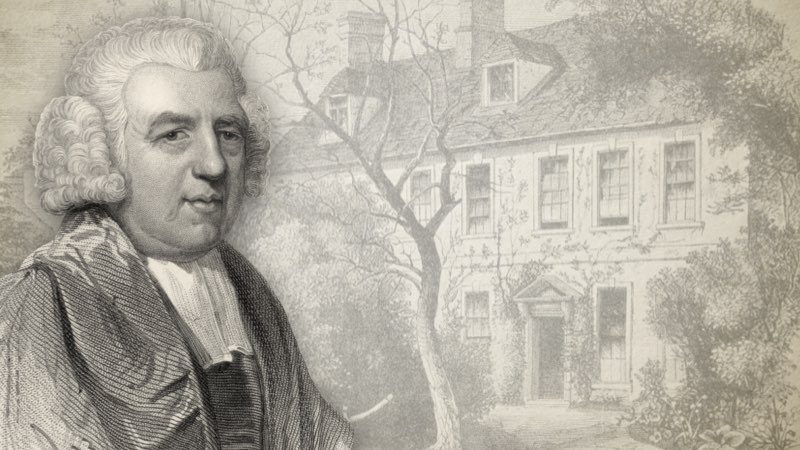
John Newton (1725-1807) was an English Anglican preacher, hymn writer and humanitarian. Prior to faith in Christ, he served as the captain of slave ships and made a living in the slave trade. After his conversion to Christ, he renounced slavery and became one of the leading abolitionists in England. He was ordained a cleric in the Church of England serving as parish priest at Olney, Buckinghamshire, for twenty years. Among Evangelical circles, he is best known for his hymns, among which are “Glorious Things Of Thee Are Spoken” and “Amazing Grace”.
John Newton Hymn Studies
-
May The Grace Of Christ Our Savior
May the grace of Christ, our Savior, And the Father’s boundless love, With the Holy Spirit’s favor, Rest upon us from above. Thus may we abide in union, With each other and the Lord; And possess, in sweet communion, Joys which earth cannot afford.
-
John Newton’s Study
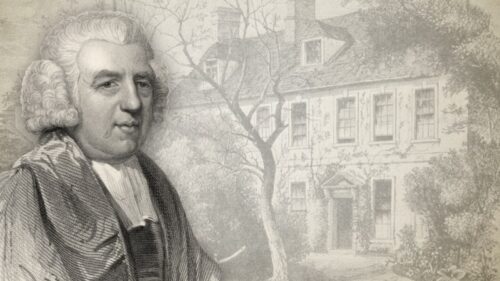
The accompanying illustration represents John Newton's study in Olney Vicarage, which is now much as it was more than a century ago, when he resided there for sixteen years, from I764. The Vicarage was rebuilt and enlarged for him by Lord Dartmouth, and he entered upon this new abode in October, 1767. His reflections upon the occasion are as follow:— "I am desirous to set this apart as a day of solemn prayer, to ask the Lord to afford us His gracious presence in our new habitation, and I desire to humble myself before Him for my faint sense and poor improvement of all His mercies, and to make a new surrender of myself and my all to His service. I am a poor wretch…
-
The Removal Of John And Mary Newton’s Caskets
On Wednesday, January 25th, 1893, a ceremony of singular interest was celebrated at Only Church, when the remains of John Newton, and of Mary, his wife, were re interred in the parish churchyard. The following is a an extract from his will, which will be read with interest:— “In the name of God, Amen. I, John Newton, of Coleman-street-buildings, in the parish of St. Stephens, Coleman-street, in the city of London, being through mercy in good health, and of sound and disposing mind, memory, and understanding, although in the seventy-eighth year of my age, do, for the settlement of my temporal concerns, and for the disposal of all my worlds estate which it has pleased the Lord in His good providence to give to me,…
-
Let Us Therefore Come Boldly
Some of the points covered in this sermon: • Identifying the main structure of Hebrews 4:14-16 • Examining Paul’s purpose for writing the Epistle to the Hebrews • Explaining how the gospel of grace in the New Testament is the same gospel of grace in the Old Testament • Highlighting the three offices ordained by God to meet the sinner’s need—(1) king, to rule the sinner; (2) prophet, to represent God to the sinner; (3) priest, to represent the sinner to God • Highlighting the three parts to the office of priest • Explaining how Jesus, the Son of God, perfectly fulfills the three parts as the sinner’s great high priest • Connecting the intercession of Christ with the petitions of His people • Explaining…
-
Could The Creatures Help Or Ease Us
Some of the points covered in this sermon: • This hymn speaks about the indispensable duty and exceptional privilege of God’s people to petition the Lord in time of need • Explaining where the doctrine of petition fits within the framework of sovereign grace • The first stanza emphasizes the necessity of God’s people to petition the Lord—the believer is rebuked for self-sufficiency, designed to produce conviction (a wounding of the heart) • The first four lines of the first stanza speak about the inadequacy of helpers other than God; the last four lines speak about the folly of forgetting God • The second stanza is an encouragement for God’s people to petition the Lord—the believer is put in remembrance of God’s all-sufficiency, designed to…
-
Biographical Sketches Of John Newton
1. Ken Connolly, “The Church In Transition” John Newton's father was the master of a ship in the Mediterranean trade and at sea when John was born in London. His mother was a frail, sweet-natured, God-fearing Dissenter who wished above all that her boy might become a minister. She died when he was only seven. John joined his father at sea when he was only eleven. By then he had spent two years in a boarding school and had acquired a rudimentary knowledge of Latin. He served on his father's vessel from 1737 until 1742. John was then transferred to serve as a midshipman on a "man-of-war," named the Harwich. That situation brought him to a position independent of parental supervision Consequently, John Newton…