-
Church Officers: Representative Documents
This is the first article setting forth representative documents that support the truth that Baptist Churches have always had pastors and deacons as their Biblical church officers. I. Representative Confessions of Faith The First London Confession of 1644/46 and the Second London Baptist Confession of Faith of 1677/89 are no doubt the two most influential Confessions of faith in existence.…
-
Compendium of Baptist History
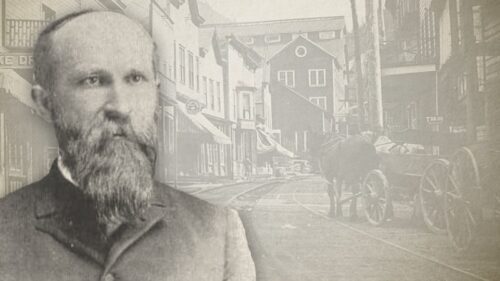
J. A. Shackelford completed his "Compendium of Baptist History" in 1891. It was not his original intent to write a history of the Baptists, but rather prepare a chart "which would give a bird's eye view of Baptist History, with its relations to the Catholic hierarchy, and the branches of the Romish church." However, the amount of material acquired through…
-
Chapter 1: True and False Churches
An unusual interest has, of late, been awakened in the study of church history. This is a hopeful indication. It shows that many are disposed to turn away from human organizations, and seek for the true church of Christ, as revealed in the Gospels. It is worse than folly to suppose that the Saviour left his work so incomplete that…
-
Chapter 2: The Significance of Baptism
The advent of John the Baptist into the world was not an unexpected event. Although his birth had not been announced by angels, as was Christ's, yet God had declared, "I will send my messenger and he shall prepare the way before me."—Mai. 3:1. "Behold, I will send you Elijah the prophet before the coming of the great and dreadful…
-
Chapter 3: The Definition Of The Church
Before proceeding further it will be necessary to examine into the meaning of the word "church." This word has come to be used in such a broad sense that it takes in and is applied to any religious organization, or society, whether a Scriptural church or not. By some writers it is made to "include the entire body of professed…
-
Chapter 4: The First Church
The night before his crucifixion the Saviour formally assembled his disciples in an upper room in Jerusalem, and with them he instituted the Memorial Supper. This was the closing act of his life as far as it related to his church, and was well calculated to remind it continually of the responsibility which rested upon it as the executor of…