Edwin White
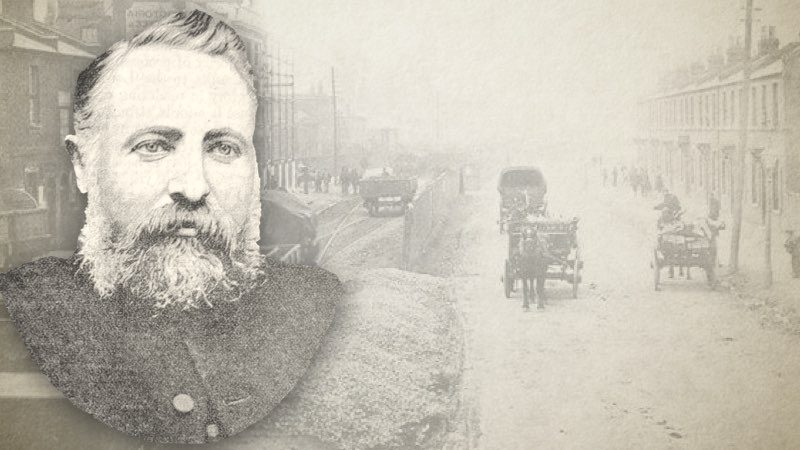
Edwin White (1846-?) was a Strict and Particular Baptist preacher. His first pastorate was with the church meeting at Orphington (1877-1879). After two years, the communion question cropped up, the majority of members deciding to throw the Table open. He forthwith resigned his office. His second pastorate was with the church meeting at Clare, Suffolk (1881-1887). After six years of blessed ministry, he resigned the office due to health reasons. His third pastorate was with the church meeting at Woolwich, Enon Chapel (1891-1919). In 1911 was elected president of the Metropolitan Association of Strict Baptist Churches.
-
The Character Of God’s Ministers
Do these creatures which the prophet saw in his vision represent the ministers of God? I think so. They had wings to fly with, and wings to hide their body; self should always be hid. They had the hands of a man to reach forth to help the needy, struggling soul and lift up the downcast. They had the face of a man, indicating their intelligence; the face of a lion to show their unfaltering courage;
-
The Final Destination Of The Blessed
We learn from God's Word that the final destiny of men will be according to what they have been in this world. The destiny will be fixed according to character; and what we have been here will be the test of where we shall be for ever and ever. At the last great day there will be a separation. We cannot be separated here on earth, for the Master said concerning the wheat and the tares, "Let both grow together until the harvest.'' If we try to separate the hypocrites from the godly we are very likely to make a mistake. We might exclude the real child of God, and take in the hypocrite. But the Master knows, and we have His words, that He…
-
Our Churches: Their Life And Consecration
There is something unique about our Churches, for they are the most ancient and the most scriptural. We claim the true apostolic succession. We can give well-grounded reasons for our existence, for our customs and practices. They are not based upon human tradition nor do we follow the laws of expediency. We can show divine authority for the doctrines we hold and the ordinances we observe. Our Churches exist because God has founded them, and they continue because He dwells in them.
-
Comfort For The Afflicted
“Lord, behold he whom Thou lovest is sick.” This was the tender, urgent appeal of the sisters of Lazarus sent to Jesus. This is still true of many of the Lord’s people, confined to their sick-room, unable to attend the public means of grace. We who enjoy these privileges would not forget them, as there they find reading God’s precious Word and spiritual literature helpful, more so on account of their circumstances.
-
The Need Of An Evangelistic Spirit In Our Churches
The following address was given by Edwin White at the Annual Meeting of the Metropolitan Association of Strict Baptist Churches (MASBC) in March 1903. Herein Mr. White underscores the biblical mandate to preach the gospel to all sinners, especially in the hearing of the unconverted. Mr. White was a Hyper-Calvinist, and so were the churches he was addressing. They rejected the notion that saving faith is a spiritual and/or legal duty of the unregenerate and denounced the practice of free offers of the gospel.
-
The Ministry Which God Will Own And Bless
Brethren, at you request I submit some thoughts on this important subject, and, with no further words of introduction, proceed to observe, firstly, I. That to attain this great object WE MUST RIGIDLY ADHERE TO THE WORD OF GOD. We believe that the truth He has revealed and given us to preach will best commend itself to men's consciences, and that we shall approve ourselves unto God by continually drawing from the resources which He has provided for our use.