George Ella
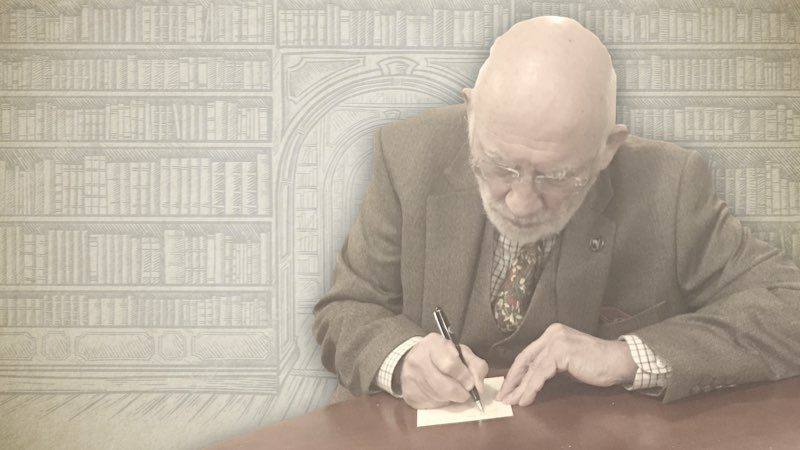
George M. Ella, born February 1939 in Yorkshire, England, has lived most of his life on the European Continent. He is a retired Senior Civil Servant formerly employed in teaching, post-graduate teacher-training, chairing examination boards and curricula work. He holds degrees from London, Hull, Uppsala, Essen, Duisburg and Marburg universities with doctorates in English Literature and Theology. Dr. Ella has written regularly since the seventies for a number of magazines and newspapers and published numerous books on Church History, including biographies of William Cowper, William Huntington, James Hervey, John Gill, Augustus Montague Toplady, Isaac McCoy and Henry Bullinger besides works on doctrine and education. He is currently finishing the third volume of his series 'Mountain Movers'; a biography of John Durie; a work on Law and Gospel and further study material for the Martin Bucer Seminar. Dr. Ella is still internationally active as a lecturer and is a Vice-President of the Protestant Reformation Society. He is keenly interested in missionary work and has written on the spread of the Gospel amongst the Same people of Lapland, the people of India and the Native Americans. This present volume follows Dr. Ella's 'The Covenant of Grace and Christian Baptism', also published by the Martin Bucer Seminar. George Ella is married to Erika Ella, nee Fleischman, a former government administrator, and they have two sons Mark (41), Director of a Polytechnic College in Bremerhaven and Robin (39), Leading Senior Physician in a newly-built Geriatric and Psychiatric clinic in Dessau.
George Ella on Doctrinal Matters
George Ella's Biographical Sketches
-
A Sinner Becomes A Saint: William Huntington’s Conversion
One evening, Huntington was sitting by the fireside reading his Bible when he came across the words, “At that day ye shall know that I am in my Father, and ye in me, and I in you,” John 14:20. These words were at first incomprehensible to Huntington as he had not experienced being ‘in Christ’ and being thus a new creature. “There must be some secret between Christ and those whom He will save, that I am ignorant of,” he exclaimed. As he thought on these things all his sins paraded themselves before him and all his false hope disappeared in a twinkling. Great conviction came upon him but his first thoughts were of hatred to God for putting him in such a position. He…
-
Exaggerated Claims Concerning Andrew Fuller And False Information Regarding ‘High-Calvinists’
Dear Sir, 1795-1835 was a time of widespread revival with Anglican Robert Hawker preaching to thousands, Independent William Huntington equalled his efforts and Baptist William Gadsby founding 45-50 churches filled with new converts. The PBs were not inactive in this time but Mr Cook confuses Gill’s orthodoxy with Fuller’s. Gill had one of the largest Particular Baptist congregations in Britain, outnumbering Fullers by far. Contemporary evangelical magazines objecting to Fullerism’s ‘gangerous’ effect on church growth were legion. However, in 1814, Fuller claimed that his churches had shrunk greatly to an average of fifty members and had been steadily on the decline for 25 years. Church increase was due to split-offs due to Fullerite Liberalism. Yet Fuller confessed that other evangelical denominations were growing. By 1889…
Further Study
The Free Offer: Biblical and Reformed, By David Silversides (Marpet Press, 2005)
Calvinism: An Introduction and Comparison with the Main Historic Christian Alternatives With the Principal Relevant Historical Councils and Creeds Stephen Paynter April 2020
Responsibilities And Duties: Radical Views Expressed By Sam Waldron And Curt Daniel
-
Kiffin, Knollys and Keach: Rediscovering our English Baptist Heritage
The news that Carey Publications were to publish the lives of these three 17th century Baptists filled me with a feeling of hopeful expectancy. The three Ks have aided my own understanding of the ways of God immensely and I know from my correspondents that there is an awakened, wide-spread interest in them. Michael Haykin’s book thus comes at a most appropriate time. My expectancy was dampened by Robert Oliver’s foreword in which he takes up his pet theme, Hyper-Calvinism, and back-projects it onto the teaching of Kiffin and Co., arguing that they were against it, whereas they had nothing to do with it, or rather, nothing to do with this modern controversy which is forced onto the churches, leaving havoc and destruction in its…
-
The Difference Between John Gill’s Free Declaration of the Gospel to Sinners and the Banner of Truth’s ‘Free Offer’
Dear Brother: What is the difference between Gill’s ‘free declaration of peace and pardon, righteousness, life and salvation to poor sinners’ and the ‘free offer’ and ‘duty faith’ of those who deny outright that Gill appealed to all men everywhere to repent and believe the gospel? The difference is that Gill keeps to the gospel as fulfilling what the law could not do, namely provide ‘free grace’. Modern harsh critics of Gill such as friends of the Banner of Truth and Reformation Today, cannot give up their trust in the law for salvation and sanctification. They start with preaching the gospel of duties until faith comes (sic!) and end with preaching sanctification and holiness through keeping the law. There is no room for free grace…
-
Tobias Crisp (1600-1643): Exalter Of Christ Alone
Tobias Crisp served the Lord during a time of civil war and ecclesiastical unrest. There were threats of a papal take-over in the Established Church and Amyraldianism, Arminianism, Grotianism and Socinianism were flooding into the country to water down the faith inherited from the Reformers and defended by the Puritans. Crisp found these new religions false as they did not exalt Christ. Entering the ministry as an unconverted man This ‘holy and judicious’ person, as Augustus Toplady describes Crisp, was born into a family of London sheriffs and aldermen and was educated at Eton, Cambridge and Oxford, finishing his studies by gaining a D.D.. He married Mary Wilson, an Alderman’s daughter, and the couple were blessed with thirteen children. He was ordained Rector of Brinkworth…
-
Letter To The Editor Of The Evangelical Times
Dear Sir, John Legg`s article ‘Preaching the gospel properly’, claims to be a review of John Gosden’s book on the GS Articles, though it is nothing but an attack on the Gospel Standard Churches. This is a great pity for the book`s sake. I am not a member of the GS churches; nor even a Baptist, but I found the great bulk of extensive theology expressed in Gosden’s book, Biblical, refreshing and extremely relevant to our modern age. By not keeping to his subject, Mr Legg has missed the very teaching which might have cleared up his misunderstandings. All Mr Legg’s difficulties cannot be solved in the space of an ET letter. Two comments must suffice. Legg accuses the GSBs of denying the sinner’s responsibility…