
Jared Smith
Jared Smith served twenty years as pastor of a Strict and Particular Baptist church in Kensington (London, England). He now serves as an Evangelist in the Philippines, preaching the gospel, organizing churches and training gospel preachers.
Jared Smith's Online Worship Services
Jared Smith's Sermons
Jared Smith on the Gospel Message
Jared Smith on the Biblical Covenants
Jared Smith on 18th Century Covenant Theology (Hyper-Calvinism)
Jared Smith on the Gospel Law
Jared Smith on Bible Doctrine
Jared Smith on Bible Reading
Jared Smith's Hymn Studies
Jared Smith on Eldership
Jared Smith's Studies In Genesis
Jared Smith's Studies in Romans
Jared Smith on Various Issues
Jared Smith, Covenant Baptist Church, Philippines
Jared Smith's Maternal Ancestry (Complete)
-
Lord, Dismiss Us With Thy Blessing
Some of the points covered in this sermon: • This hymn is a petition to the Lord, that He might prepare His people for another journey on their pilgrimage through the world • Explaining what it means to be a stranger and a pilgrim, using the framework of sovereign grace as a backdrop • Each stanza of the hymn highlights a separate petition • Stanza 1—a petition for refreshment on our journey • Stanza 2—a petition for growth on our journey • Stanzas 3—a petition for perspective on our journey
-
Keep Silence All Created Things
Some of the points covered in this sermon: • Highlighting the subject and theme of the hymn—God providentially governs all things and events, according to His decree from eternity • Examining the decree of God as it aligns with the framework of sovereign grace • Exploring the four stanzas of the hymn, showing how each stanza calls attention to a particular aspect of God’s decree and the believer’s response to it • Stanza 1: God’s decree is majestic—we sing to the Lord, rather than fuss against Him • Stanza 2: God’s decree is comprehensive—we trust in the Lord, rather than despair in our distresses • Stanza 3: God’s decree is mysterious—we resign ourselves to the Lord, rather than contend against Him • Stanza 4: God’s…
Further Study
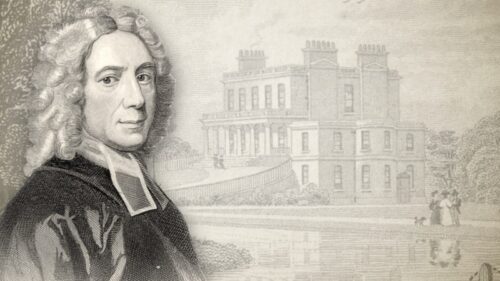
Great God, How Infinite Art Thou
-
Historic Divisions
Some of the points covered in this sermon: • Underscoring four reasons why a response to Dispensationalism should be given • Highlighting the two principles of interpretation upon which the entire scheme of dispensational teachings is based • Giving special attention to the first principle of interpretation—all history must be interpreted segrementally • Showing why 2 Timothy 2:15, which is the basis for their interpretive principle of history, does not support their newfangled hermeneutic • Pointing out six major errors in the dispensational system of teachings • First, the framework is theologically flawed • Second, the seven divisions of history are arbitrary • Third, the authority for human accountability is misplaced • Fourth, the number of authorities for human accountability is excessive • Fifth, the…
-
Dispensations Of Disgrace
Some of the points covered in this sermon: • Providing a historic backdrop to Dispensationalism • Defining a ‘dispensation’ according to the signification of Scofield • Highlighting the first of two primary principles of interpretation which undergird the Dispensational framework—“rightly dividing the word of truth” • Explaining the basic fabric of the Dispensational framework—a timeline with eternal extensions, seven major events, seven major dispensations, seven major themes, seven major covenants • Distinguishing between the Dispensational and Calvinistic use of biblical language • Explaining how Dispensationalists have invented different plans of salvation • Showing why Dispensationalists sideline the first three dispensations • Showing why Dispensationalists focus on the fourth and fifth dispensations • Explaining the difference between Dispensationalism’s view of God’s “elect people” based on race,…
-
Dispensations Of God’s Grace
Some of the points covered in this sermon: • Reviewing the structure of Genesis 5:1-6:8 • Reviewing the structure of Genesis 5:3-32 • Showing the structure for each of the ten tables of descendants • Affirming the biblical term and concept of “dispensation” • Explaining how every member of the human race is a dispensation of God’s grace • Distinguishing between the unregenerate, who are dispensations of God’s common grace unto creation, under the authority of the covenant of works; and the regenerate, who are dispensations of God’s special grace unto salvation, under the authority of the covenant of grace • Closing with a challenge based on the teachings of James 4, Ephesians 5 and Psalm 90
-
From Grace To Glory
Some of the points covered in this sermon: • Reviewing the structure of Genesis 5:3-20 • Highlighting the two great doctrines which stand out from the text—regeneration and glorification • Explaining the link between election, redemption, regeneration and glorification, according to the framework of sovereign grace • Explaining the meaning of regeneration, according to John 15 and Ephesians 4 • Explaining the meaning of glorification, according to 1 Corinthians 15 • Affirming the link between grace and glory by comparing the framework of sovereign grace with Romans 9, Romans 8, Romans 5, 1 Peter 5 and Psalm 84 • Highlighting the similarities and differences between regeneration and glorification