-
The Life And Death Of John Gill
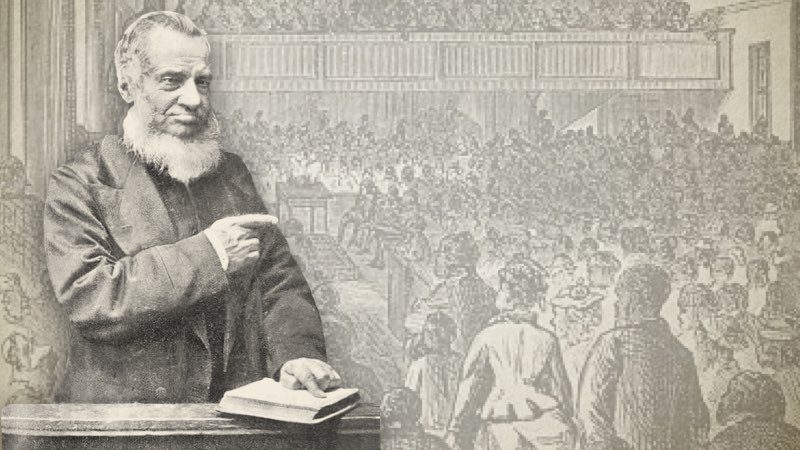
John Gill was born at Kettering, in Northamptonshire, Nov. 23,1697. His mind was seriously impressed with divine things when he was about twelve years of age. Mr. Wallis, of Kettering, having preached a sermon from Gen. 3:9, “And the Lord God called unto Adam, and said unto him where art thou?” These interrogations sounded in his ears, and pierced his very soul. “Sinner, where art thou? What a wretched condition art thou in! What will be thy state eternally? Art thou able to endure everlasting burnings?” He now began to see and feel, the depravity of his nature, the exceeding sinfulness of sin, and his need of salvation by Christ. The Lord was soon graciously pleased to reveal his Son in him, and afford him…
-
The Life And Death Of Jonathan Franklin
Jonathan Franklin, Baptist. Mr. Franklin was formerly pastor of the Baptist Church at Croydon. He afterwards removed and took the charge of a people that separated from the church at Little Alie Street, under the care of Mr. William Shenston. They first worshipped in a small wooden building in Chapel Street, Mile End Road; from thence they removed to Redcross Street, in 1808, where Mr. Franklin laboured nearly twenty-six years; finishing his course in May 1833. His grave in Bunhill is E. and W. 67,—N. and S. 23; but, there is no stone erected to his memory.
-
A Report On The Annual Meeting In Support Of The Earth Vessel
To the Ministering Brethren—to the Members of the Church of Christ at Crosby Row—and to all who gave their countenance and help at the Annual Meeting on behalf of The Earthen Vessel, on Tuesday, May 17, 1853, this small expression of my gratitude is presented with feelings of increasing desire that my labours may be more than ever devoted to the bringing together, building up, and feeding of a portion of the ransomed church of the living God. Riding this morning, (Wednesday, May 18th) from Paddington to Wantage, in Berkshire, (where I hope to preach the gospel of God) my mind has been stirred up with a desire to address a few words to you expressive of my sincere thanks for every token both of…
Further Study
Where Are We Safe In These Times?
-
The Life And Ministry Of William Williams
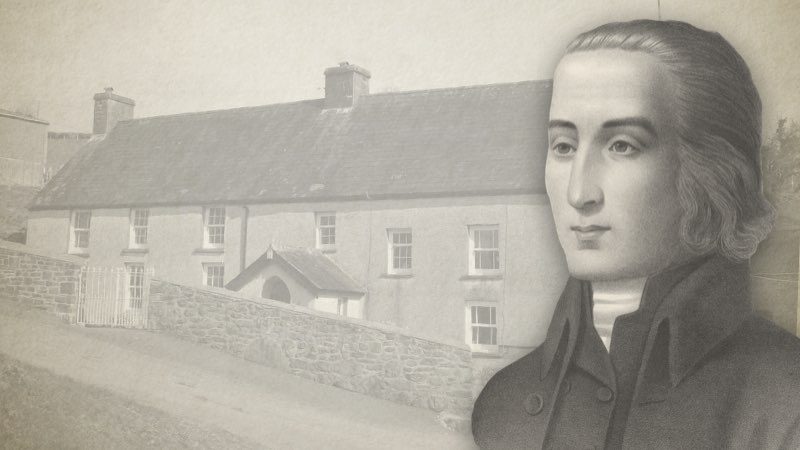
William Williams was born, in 1717, at Cefnycoed, in the parish of Llanfair-ar-y-bryn, Carmarthenshire. He was well educated, as he was intended for the medical profession. "His religious feelings," says his biographer, "were at first painful. His convictions of sin were deep and alarming; but his subsequent joy proportionably high." In 1740 he was ordained a deacon by the Bishop of St. David's, and had the curacies, for three years, of Llanwrtyd and Llanddewi Abergwesin. Whitefield, with whom, and the other Methodists, including the Countess of Huntingdon, he became intimate, encouraged him to become an itinerant preacher, and the bishop consequently would not give him "full orders." He did not suffer so much as some of the Methodists did; but he was more than once…
-
The Life And Ministry Of William Hammond
William Hammond (B.A.) was one of the early Calvinistic Methodist preachers, he afterwards joined the Moravians, and was buried in the Moravian burying-ground, Chelsea, in 1783. He wrote his autobiography in Greek, but it was never published. He was educated at John's College, Cambridge. His hymns were printed in 1745, and he wrote a work entitled, "The Marrow of the Church." There is a preface giving some account of a weak faith, a full assurance of faith, &c.
-
The Life And Ministry Of Israel Atkinson
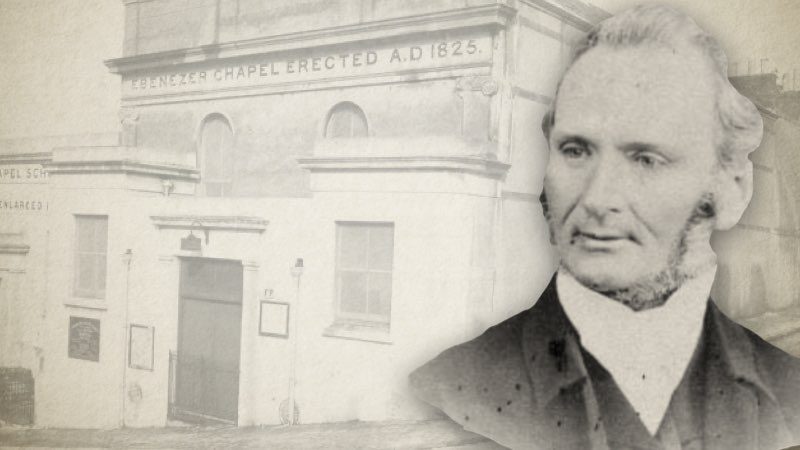
Mr. Geo. Murrell, of St. Neot’s, gave out the 132d Psalm; after which, Mr. Field, of Greenwich, read part of Eph. 4. Mr. Murrell, of St. Neot's, then gave out the second part of the 132d Psalm. Mr. Samuel Milner, of London, then stated the nature of a of a gospel church, basing his remarks on l Tim. 3:15, "The house of God, which is the church of the living God, the pillar and ground of the truth." Mr. Milner first stated that the church was a company of faithful men and women, united together for gospel purposes, on gospel principles. He said it was common on these occasions to give our reasons for dissent; but we take higher ground. We conceive the New Testament…