-
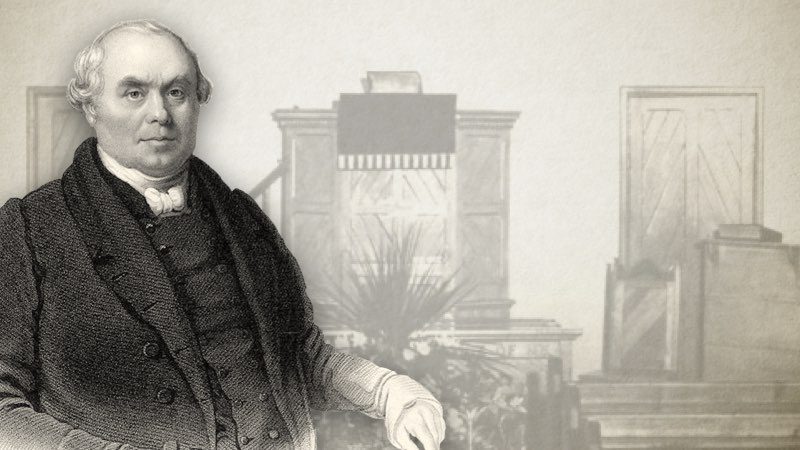
William Carey: Using God’s Means to Convert the People of India (Part 1)
My reason for publishing this account of William Carey and his Indian mission on my website. On 18-21 February, 2010 a conference will be held at Muscle Shoals, Alabama under the theme ‘The Quagmire of Hyper-Calvinism’. The key speaker will be Dr. Michael Haykin who will lecture on Andrew Fuller as a missionary pioneer. The myth that Andrew Fuller pioneered a missionary movement is superstitiously believed by Dr. Haykin and his circle but the Baptist Missionary Society Fuller helped to found came at the rear end of a long line of Christian missionary organisations whether church based or, like the BMS, a para-church movement. Andrew Fuller was not the instigator of this missionary society but William Carey who urged the Baptists to act as other…
-
The Learned And Great Find The Doctrines Of Grace Great Foolishness
October 28th, 1830 My dear Brother, I arrived safely at Sutton on the Saturday afternoon. I saw Mr. de Merveilleux, and had a little conversation with him. I believe him to be a lover of gospel truth, and I hope that you will call upon him when you go to Stamford. I met a few friends at his house, and spoke a few words to them. They seemed very desirous to hear, and, I trust, are spiritually hungering after the bread of life. My friend Philpot is ill, and not able to preach. He is coming to see me next week. He is a dear child of God. I shall be glad to hear in your next letter what advances you are making in religion.…
-
What Is The Real Gospel?
The ‘gospel’ is claimed and proclaimed by every Christian tradition and denomination and most preachers will happily tell us it means ‘good news’. Yet every denomination’s gospel differs in one way or another, so a sincere enquirer might well be left wondering, “What is the real gospel?”. The Apostle Paul acknowledged there was another gospel, a false gospel, that really is no gospel at all. He knew the difference between grace and works, between salvation accomplished and applied freely by Jesus Christ to God’s elect, and salvation offered conditionally as a possibility to everyone. If salvation is accomplished and applied by Jesus Christ it is God alone who saves sinners and we must acknowledge His sovereignty in salvation. If our gospel offers the possibility of…
-
The Offense Of The Gospel
September 3, 1830 My dear Brother, I intend (D.V.) to be at Oakham on the 14th or 15th, but I hope to be with you on the 14th by the Leicester coach, as I intend to return that way the following week, for I cannot conveniently be absent from so large a parish any longer. But you will be quite willing to part from a troubler of Israel in a few days. I shall give the greatest offence, I have no doubt, in speaking against much of the religion of the present day, which is nothing but the work of Satan, but is very near and dear to the flesh, and you will feel very loath to give it up—as unwilling as the Jews were…
-
Irresistible Grace
A lecture given by George Ella at the Protestant Reformation Society, August 27th, 2009, Wycliffe Hall, Oxford, England Irresistible grace represents the traditional ‘I’ in the acronym ‘TULIP’. So now I shall tease you a little. The name ‘Tulip’ comes from the same Turkish root as ‘turban’ and the flower of that name was introduced by the Turks to Europe as a symbol of the spreading Ottoman Empire, or the TULIP ERA as the Islamising of Europe was called. The popular strains Tulipa turkestanica and Tulipa kurdica point to this. Why the Turkestan turban-shaped talismanic Tulip and Turkoman black merchants robes were chosen as Christian symbols of faith and ministry by post-Reformation parties, must be the subject of another lecture. The T-U-L-I-P, beautiful as it…
-
An Everlasting Task For Arminians
A Letter To Mr. Edward Smyth, Formerly Of Trinity College, Dublin. To Which Are Added, Lines In Praise Of Free Will I. THE PREFACE A Few Hints To Them That Are Sanctified By God The Father, Preserved In Christ Jesus, And Called. Beloved, in reading the word of God, it becomes us ever to remember that the sacred pages are a transcript of the perfections of the infinite God, who is the "high and lofty One that in habiteth eternity, whose name is Holy;" a Being whose omniscient eye beholds the end from the beginning, who worketh all things after the counsel of his own will, and will do all his pleasure; who "bringeth the counsel of the heathen to nought, and maketh the devices…