
Jared Smith
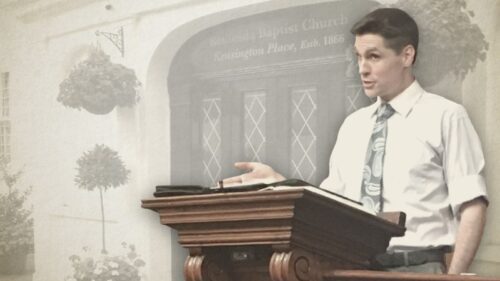
Jared Smith served twenty years as pastor of a Strict and Particular Baptist church in Kensington (London, England). He now serves as an Evangelist in the Philippines, preaching the gospel, organizing churches and training gospel preachers.
Jared Smith's Online Worship Services
Jared Smith's Sermons
Jared Smith on the Gospel Message
Jared Smith on the Biblical Covenants
Jared Smith on 18th Century Covenant Theology (Hyper-Calvinism)
Jared Smith on the Gospel Law
Jared Smith on Bible Doctrine
Jared Smith on Bible Reading
Jared Smith's Hymn Studies
Jared Smith on Eldership
Jared Smith's Studies In Genesis
Jared Smith's Studies in Romans
Jared Smith on Various Issues
Jared Smith, Covenant Baptist Church, Philippines
Jared Smith's Maternal Ancestry (Complete)
-
A Biography of John Hazelton, by William Styles (Complete), Jared Smith On Various Issues, William Styles, A Memoir Of John Hazelton (Complete)
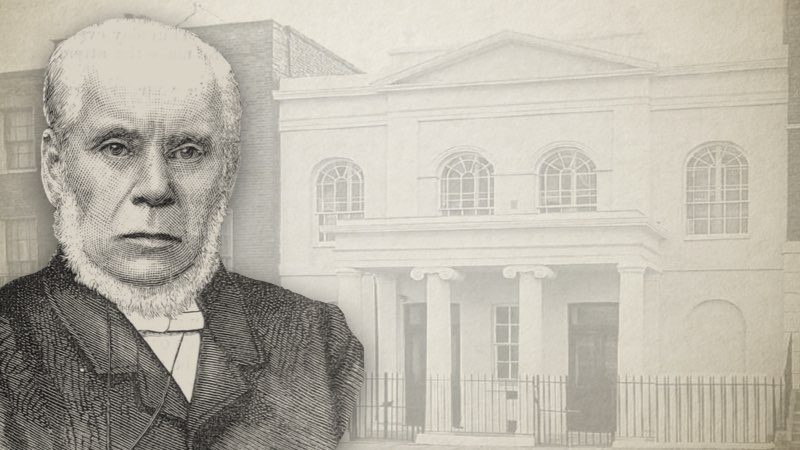
John Hazelton: What He Can Teach Us
On Friday, 21st March 2014, Dr. Matthew Hyde delivered the annual lecture for the Strict Baptist Historical Society at Bethesda Chapel.[1] After the lecture, he and I shared a brief exchange on the subject of high-calvinism and nineteenth-century Strict Baptist pastors. Since one of these pastors, John Hazelton, had been connected with the church that I pastor,[2] his name naturally came up. Subsequent to our chat, Dr. Hyde graciously gave me one of his copies of William Styles’, “John Hazelton: A Memoir”. I believe Baptists should be familiar with the life and ministry of John Hazelton for three reasons: First, the life and ministry of John Hazelton is worth knowing because he was one of the leading Baptist ministers in the city of London during…
-
Preface
The subject of eldership in Baptist circles has been one of the most misunderstood issues of recent years, with the result that it has become fashionable and even considered orthodox for churches to supplement or replace a single pastor with a team of ‘elders’. I contend this mode of governance is unscriptural, impractical and unconventional. This pamphlet is designed to argue the case why Baptist churches should retain their historic practice of appointing one bishop/pastor, assisted by a group of deacons. I have completed a comprehensive textbook on this subject, which is under review for publication. In the interim, this pamphlet is an abridged preview of the larger forthcoming work, and I extend special thanks to Adam Nixon who encouraged the pamphlet’s preparation, and to…
-
An Introduction To Eldership
It is commonplace to hear it staunchly affirmed by preachers that the term elder is one and the same with bishop and pastor; that the term is usually used in the plural, indicating the early churches were overseen by a plurality of elders. Hence, it is argued, if churches today are to reflect the most Scriptural form of governance, then elders must be appointed as overseers. • Some believe there is parity among the elders, wherein all share equal authority as teachers/rulers; whereas others believe there is a difference between the elders, wherein some are set apart with a gift for teaching and others with a gift for ruling. • Some will only use the title Elder to identify the office, whereas others will also…
-
1. Elders Are Unofficial Leaders Never Elected Or Appointed To An Office
The Biblical term ‘elder’ was based upon the traditional cultural understanding of what the word universally meant. For in every culture and community, elders are the patriarchs and matriarchs of local and extended family units. These elders are never elected or appointed to an office—they merely assume this unofficial role of leadership by virtue of age, wisdom and influence. An example of continuity in the practice and use of the term surviving with its meaning intact from earliest times until today is cited with perfect clarity by S. M. Stiegelbauer in her paper on the First Nation Elders, published in The Canadian Journal of Native Studies.[1] With reference to the Inuit people who today still inhabit the Arctic regions which include Canada, researcher Stiegelbauer writes:…
-
2. The Terms Elder, Bishop And Pastor Are Not Interchangeable
When the term elder is used within Christian circles, it conjures up ideas of ecclesiastical clergy, either elected to office by the congregation, or appointed to office by the denomination. In fact, it is only within Christian churches that the term elder is made to mean something other than persons honored in virtue of their age, wisdom and influence. This irregular interpretation is rooted in a flawed hermeneutic of several biblical texts which refer to elders. It is assumed, because a few scripture passages use the term elder when identifying a bishop/pastor, that therefore, most (if not all) references to elders in the early churches must be bishops/pastors. The absurdity of this presupposition is comparable to one who boasts that all disciples must be apostles,…
-
3. Evangelists, Bishops And Deacons Are The Only Permanent Offices Recognized In The New Testament
Ephesians 4:11: “And he gave some, apostles; and some, prophets; and some, evangelists; and some, pastors and teachers;” The apostles and prophets were temporary offices, laying the foundation for both the establishment and edification of Christian churches—apostles were primarily sent to organize new churches; prophets were appointed to nurture existing churches. The evangelists and pastor-teachers are permanent offices carrying out a similar function as the apostles and prophets, respectively— evangelists (missionaries) are appointed to preach the gospel with a design to organize new churches; pastors-teachers are appointed to teach the gospel with a design to manage existing churches. That pastors-teachers are one and the same with bishops is affirmed by the Apostle Peter, who identifies the Lord Jesus Christ by both titles—1 Peter 2:25: “For…