-
Reflections On Some Recent Banner Of Truth Criticisms Regarding William Huntington And Avarice
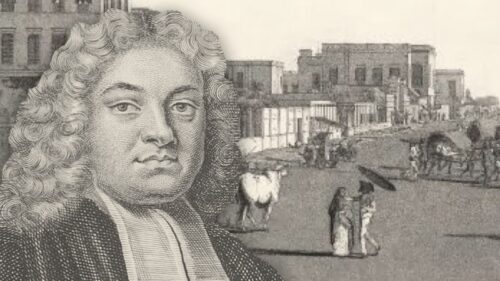
The Banner critics portray Huntington as living like an Eastern Nabob in the lap of luxury. Providence Chapel paid their pastor a salary of £100 per annum at the beginning of his ministry but this was rapidly doubled. This was not an unusual amount. Rowland Hill, the only London pastor who could compete in numbers received half to a third more salary than Huntington. James Hervey (1714-1758) received £180 per year and also the profits from a farm which had been in the family for generations. In spite of his popularity, Hervey’s congregations was only half that of Huntington’s. Pastors in patronised livings, however, often received between £600 and £1,000 a year. Many Evangelical clergymen such as Moses Browne, Vicar of Olney when John Newton…
-
A Sinner Becomes A Saint: William Huntington’s Conversion
One evening, Huntington was sitting by the fireside reading his Bible when he came across the words, “At that day ye shall know that I am in my Father, and ye in me, and I in you,” John 14:20. These words were at first incomprehensible to Huntington as he had not experienced being ‘in Christ’ and being thus a new creature. “There must be some secret between Christ and those whom He will save, that I am ignorant of,” he exclaimed. As he thought on these things all his sins paraded themselves before him and all his false hope disappeared in a twinkling. Great conviction came upon him but his first thoughts were of hatred to God for putting him in such a position. He…
-
Kiffin, Knollys and Keach: Rediscovering our English Baptist Heritage
The news that Carey Publications were to publish the lives of these three 17th century Baptists filled me with a feeling of hopeful expectancy. The three Ks have aided my own understanding of the ways of God immensely and I know from my correspondents that there is an awakened, wide-spread interest in them. Michael Haykin’s book thus comes at a most appropriate time. My expectancy was dampened by Robert Oliver’s foreword in which he takes up his pet theme, Hyper-Calvinism, and back-projects it onto the teaching of Kiffin and Co., arguing that they were against it, whereas they had nothing to do with it, or rather, nothing to do with this modern controversy which is forced onto the churches, leaving havoc and destruction in its…
-
Tobias Crisp (1600-1643): Exalter Of Christ Alone
Tobias Crisp served the Lord during a time of civil war and ecclesiastical unrest. There were threats of a papal take-over in the Established Church and Amyraldianism, Arminianism, Grotianism and Socinianism were flooding into the country to water down the faith inherited from the Reformers and defended by the Puritans. Crisp found these new religions false as they did not exalt Christ. Entering the ministry as an unconverted man This ‘holy and judicious’ person, as Augustus Toplady describes Crisp, was born into a family of London sheriffs and aldermen and was educated at Eton, Cambridge and Oxford, finishing his studies by gaining a D.D.. He married Mary Wilson, an Alderman’s daughter, and the couple were blessed with thirteen children. He was ordained Rector of Brinkworth…
-
John Brine (1703-1765) And His Contemporaries As Seen By Modern Revisionists
Part II: Brine’s Theology In his Treatise on Various Subjects Brine says his calling is to defend the doctrines and principles of our religion, and to vindicate the sacred Word of God. As time is less than our subject craves, I shall select a few of his defences and vindications relevant to today’s debate and deal with justification, duty-faith, redemption, regeneration and sanctification. Justification Biblical justification involves the full salvation of sinners, including election, union with Christ, adoption, forgiveness of sins, imputation, redemption, regeneration and sanctification. Today’s Pseudo- Reformed claim that justification is a mere legal formality from God’s side pronounced when sinners exercise duty-faith. Sanctification then fills justification’s empty vessel by adherence to a cut-down moral law. Brine, arguing in his Defence of Justification…
-
John Brine (1703-1765) And His Contemporaries As Seen By Modern Revisionists
Part I. Brine’s Life First, a few words of explanation. You might think there is more George Ella and our present contemporaries in this lecture than John Brine and his. This is because there is a good deal of John Brine in George Ella and most of our contemporaries positively hate John Brine so we must deal with them firmly but fairly or Brine has taught us in vain. So I am very blunt and particular in my evaluation of Brine’s reception today amongst our self-styled ‘Moderate Calvinists’. Nowadays, these moderately Reformed ministers who strive immoderately to muzzle us are rejecting every single doctrine of the Reformation, ridiculing and condemning those who do not share their errors. Whether I speak in Germany, Britain, the USA…