Jared Smith
Jared Smith served twenty years as pastor of a Strict and Particular Baptist church in Kensington (London, England). He now serves as an Evangelist in the Philippines, preaching the gospel, organizing churches and training gospel preachers.
Jared Smith's Online Worship Services
Jared Smith's Sermons
Jared Smith on the Gospel Message
Jared Smith on the Biblical Covenants
Jared Smith on 18th Century Covenant Theology (Hyper-Calvinism)
Jared Smith on the Gospel Law
Jared Smith on Bible Doctrine
Jared Smith on Bible Reading
Jared Smith's Hymn Studies
Jared Smith on Eldership
Jared Smith's Studies In Genesis
Jared Smith's Studies in Romans
Jared Smith on Various Issues
Jared Smith, Covenant Baptist Church, Philippines
Jared Smith's Maternal Ancestry (Complete)
-
2 Examples Of The Gospel Law
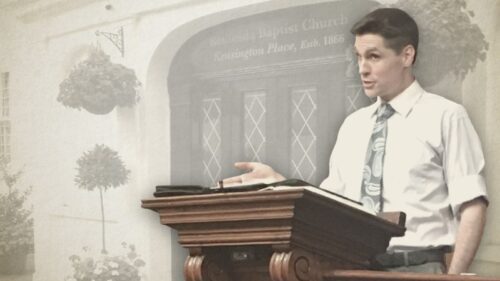
I’d like to welcome you back for another study in the Word of God. In our previous study, I tried to answer the question—What Is The Gospel Law? In a nutshell, I believe the gospel law is a living union—the living union of the soul with the Lord Jesus Christ. Now, at the close of last week's study, I mentioned that I wanted to share with you some examples of the gospel law from the Bible, but I realized after I finish last week's teaching, that I failed to tie together two loose ends. So, before we look at some examples, I’d like to review with you the diagram that I presented to you last time. I call it the Framework of Sovereign Grace. And…
-
1 What Is The Gospel Law?
I’d like to invite you to take your Bible. We're looking at Galatians chapter 6 and I'll be reading for you the second verse. While you're turning there, let me make a comment about the unpolished onscreen notes. If you follow my teaching ministry regularly, you'll know that I have more polished notes than the ones you see on the screen. This week and probably the next three to four weeks after, I’m going to be extremely busy and I just don't have the time to make the regular preparations I usually give to these recorded teachings, and so I've opted to continue using onscreen notes, but I'm afraid you're going to have to put up with my handwritten notes, and I'll be making them…
-
Why Do We Mourn Departed Saints
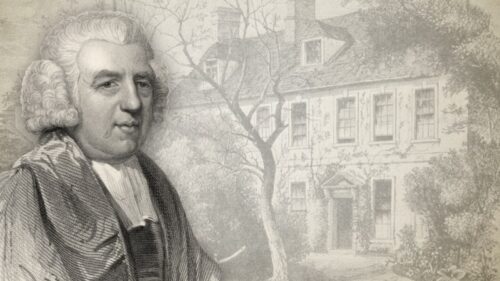
The Apostle Paul instructed the churches at Colosse to teach and admonish one another in psalms, hymns and spiritual songs. And that's what I intend to do by explaining the meaning of this hymn—Why Do We Mourn Departed Saints? I like to explain the meaning of the hymn against the backdrop of the Framework of Sovereign Grace, which is God's master plan for the ages. You'll notice the hymn was written by Isaac Watts. This was an 18th century sovereign grace Congregational preacher, also known as the father of Hymnody. Now, there's three stanzas to the hymn. I’d like to read them to you.
-
All The Way My Savior Leads Me
The Apostle Paul instructed the churches at Colosse to teach and admonish one another in psalms, hymns and spiritual songs. That's what I intend to do by explaining the meaning of this hymn—All The Way My Savior Leads Me. And I’d like to give an explanation according to the Framework of Sovereign Grace, which is God's master plan for the ages. You'll notice the hymn was written by Fanny Crosby. This was a 19th century American poet and composer. In fact, she wrote more than 8,000 hymns, of which of course, this is one of them. Allow me to read for you the three stanzas of the hymn:
-
Now Thank We All Our God
The Apostle Paul instructed the believers at Colosse to teach and admonish one another in psalms, hymns and spiritual songs. That is what I hope to do by explaining the meaning of this hymn, against the backdrop of the Framework of Sovereign Grace.
-
The Articles Of Faith, Biddenden Chapel
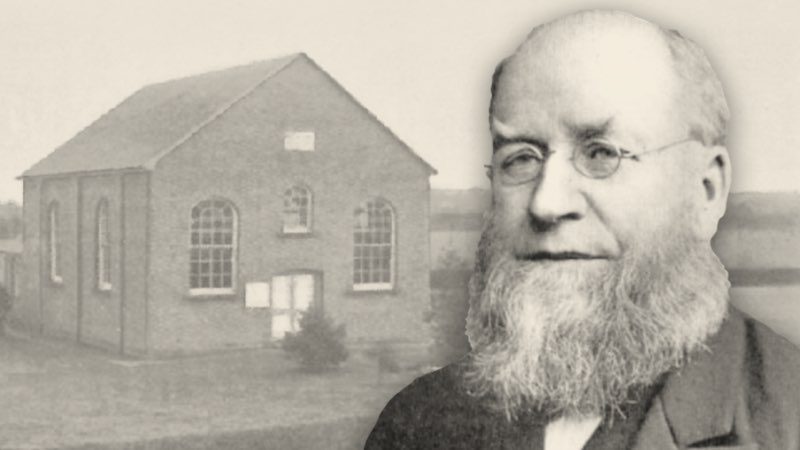
With the combined energies and resources of a deacon belonging to Tilden Chapel in Smarden, and a farmer residing in Lashenden, a Strict and Particular Baptist Chapel was built in 1880. Two years after the chapel opened, a church was organized and John Kemp was appointed the first pastor. He served the fellowship until his death in 1932, a total of 52 years. Biddenden Chapel, 1880 John Kemp, Pastor