-
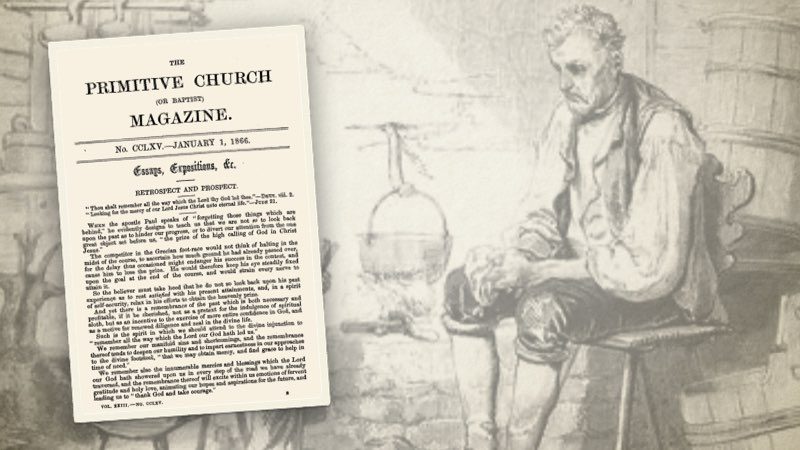
A Blow Struck At The Root Of Fullerism
The following letter originated in a conversation upon Mr. Fuller’s sentiment, viz. “faith the duty of the unconverted,” between the writer and the gentleman to whom it is addressed, in which this question was put, by the former, to the latter. Is the peculiar faith of God’s elect, or the faith of the operation of God, a duty of the moral law? It has long appeared to me, that this question is the grand hinge upon which the controversy between Mr. Fuller, and others, about faith, turns; and that, upon this ground, the Fullerian system must stand or fall; must be fully established, or eternally demolished. Some argue against Mr. Fuller’s notion, from man’s inability, concluding, that the faith in dispute cannot be the natural…
Further Study
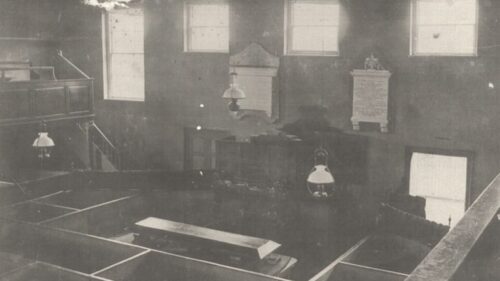
The Life And Ministry Of Job Hupton
-
A Specimen Of Hercules Collins’ Teachings
The Reformed Baptists are under the impression they represent the teachings of the 17th century Particular Baptists (17th PB’s). They believe the 17th PB’s were Moderate-Calvinists. During the 18th century, there arose a new generation of preachers who deviated from their forefathers, running to the extremes of Hyper-Calvinism. These hyper teachings killed evangelism which in turn suffocated the churches. To the rescue came Andrew Fuller, who in the latter part of the century restored the Particular Baptists to their former glory. Evangelism was reintroduced and churches could breathe again. As you might expect, the Hyper-Calvinists believe this to be a false narrative. However, you probably have seldom, if ever, heard their side of the story. I will present it from my perspective (as a Hyper-Calvinist).
-
Notes On “Fullerism”
A main error of Mr. Fuller—and perhaps it was that in which his system, and the arguments by which he defended it, originated—consisted in the excessive and anti-scriptural ideas he formed of the accountableness of man. He attached obligations to him as a free agent, which, in fact, never devolved upon him by any law of his Creator, and invested him with a responsibility for talents which he never possessed. Because man is naturally obliged as a creature to love and obey God, according to the extensive purity and requirements of the Divine law, be maintained that the same reason in which his natural obligation as a creature was founded obliged him also, as a sinner, to believe in the Lord Jesus Christ for salvation…
Further Study
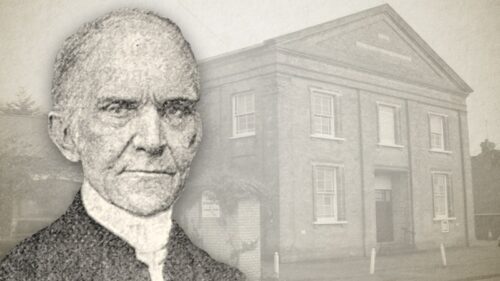
The Life And Ministry Of George Wright
-
Precious Faith
This we have not by nature. So far are we from being capable of faith in Christ, in a state of unregeneracy, that it is altogether contrary to our nature. God created Adam holy, and placed him in the garden of Eden in a state of sinless perfection; but he by disobedience merited the displeasure of Heaven, and being the head of the covenant of works, plunged not only himself, but the whole human race into a state of sin, degradation, misery, and death; and the word of God declares us all to be sinners of the deepest dye—dead in trespasses and sins, and blinded by the god of this world. We are all like sheep gone astray; and so fallen are we, that by…
-
The Nature And Increase Of Faith
Faith is the gift and the operation of God. It comes by the Holy Spirit’s power rising and strengthening the sublimest faculties of the soul, and is really a regeneration—a rebegetting—a revival of life from the dead. Thus the believer is said to be “born of the Spirit,” because it is the Spirit’s office in the covenant of grace to regenerate, and because it is the promise concerning the Spirit to all, “even as many as the Lord our God shall call.” And thus also the Christian is said to be “born, not of blood, nor of the will of the flesh, nor of the will of man, but of God.” When the principle of divine life and light is given to the soul, it…
-
On Faith
As faith is no way to be understood so well as by its effect, we cannot do better than trace it in its operations, for as it is a divine principle, emanating from God and taking possession of his beloved family, disposing them to love and serve God with all their hearts and souls, working in them both to will and to do of His own good pleasure; so it is a grace that human reason can never comprehend, nor fallen nature submit to, nor the will of man embrace, as this faith is the gift of God, Eph. 2:6, and without it it is impossible to please God, for what is not of faith is sin. Thus it appears that without this divine principle…
Further Study

“God Is For Me”