
Jared Smith
Jared Smith served twenty years as pastor of a Strict and Particular Baptist church in Kensington (London, England). He now serves as an Evangelist in the Philippines, preaching the gospel, organizing churches and training gospel preachers.
Jared Smith's Online Worship Services
Jared Smith's Sermons
Jared Smith on the Gospel Message
Jared Smith on the Biblical Covenants
Jared Smith on 18th Century Covenant Theology (Hyper-Calvinism)
Jared Smith on the Gospel Law
Jared Smith on Bible Doctrine
Jared Smith on Bible Reading
Jared Smith's Hymn Studies
Jared Smith on Eldership
Jared Smith's Studies In Genesis
Jared Smith's Studies in Romans
Jared Smith on Various Issues
Jared Smith, Covenant Baptist Church, Philippines
Jared Smith's Maternal Ancestry (Complete)
-
Counsellor
Some of the points covered in this sermon: • Reviewing the three main parts of Isaiah’s prophecy concerning the Messiah, as recorded in Isaiah 9:6 • Explaining the meaning of the term “counsellor” • First, Christ is Counsellor, with the Father and the Spirit, in the eternal decree of creation, providence and salvation • Second, Christ is Counsellor, to the angelic host • Third, Christ is Counsellor, to the non-elect humans • Fourth, Christ is Counsellor, to the elect humans • Highlighting four ways Christ is Counsellor to the elect—as Prophet, Priest, King and Vine
-
The Mighty God
Some of the points covered in this sermon: • Reviewing the three main parts of Isaiah’s prophecy concerning the Messiah, as recorded in Isaiah 9:6 • Showing the significance of the third name given to Christ (“The Mighty God”) in relation to the other four names • Providing a definition for the Hebrew term translated “mighty” • Examining how the term “mighty” is used with reference to God in Deuteronomy 10 and Romans 9 • Explaining how Christ is “The Mighty God” before the incarnation • Explaining how Christ is “The Mighty God” after the incarnation • Outlining the main features of the Person of the Lord Jesus Christ • Showing how a proper view of the Person of Christ touches every aspect of a believer’s…
-
The Everlasting Father
Some of the points covered in this sermon: • Reviewing the three main parts of Isaiah’s prophecy concerning the Messiah, as recorded in Isaiah 9:6 • Explaining the difference between the first Person of the Godhead identified as the “Father”, and the second Person of the Godhead identified as the “Everlasting Father” • Showing how Christ is the Everlasting Father of creation • Showing how Christ is the Everlasting Father of providence • Showing how Christ is the Everlasting Father of the elect as their covenant head • Showing how Christ is the Everlasting Father of the elect in regeneration and sanctification • Showing how Christ is the Everlasting Father of the new administration of the gracious covenant
-
The Prince Of Peace
Some of the points covered in this sermon: • Highlighting the three main parts of Isaiah’s prophecy concerning the Messiah, as recorded in Isaiah 9:6 • Providing a definition of “prince” and “peace” • Explaining how Christ is the Prince (or Captain) of the sinner’s health and welfare • Showing how the covenant of grace is often called a covenant of peace • Linking the covenant of peace in Ezekiel 37:26, with the covenant of peace in Hebrews 13:20,21 • Exploring the four passages where this Greek term translated “prince” appears in the New Testament • Providing a comprehensive overview on the doctrine of the “Prince of Peace”, by comparing and contrasting these four passages—Acts 3:12-15; Acts 5:29-32; Hebrews 2:9,10; Hebrews 12:1,2
-
I Need The Affirmation Of Thy Love, O Lord
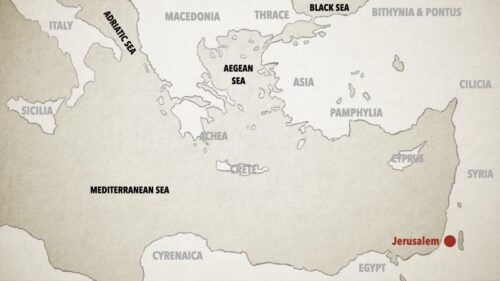
Some of the points covered in this sermon: • Providing an overview of the Apostle Paul’s three evangelistic campaigns against the backdrop of a geographical timeline • Tracing the time and location around which the events of Acts 14:20-22 occurred • Highlighting the term “confirmed”, providing a definition for the Greek term and the number of time it appears in the New Testament • Tracing the time and location around which the events of Acts 15:30-35 occurred • Tracing the time and location around which the events of Acts 15:36-41 occurred • Tracing the time and location around which the events of Acts 18:18-23 occurred • Tying together these four texts, by comparing and contrasting the way in which the term “confirmed” is used in each passage…
-
Churches Should Appoint Elders?
Churches are among the only communities in the world which view 'elders' as an appointed or elected office. The universal and historically recognized meaning of the term refers to unofficial leaders of a community, distinguished by their age, wisdom, wealth and influence. They are not appointed or elected to an office of eldership. Rather, they assume an informal role of leadership when the younger members of the community acknowledge them as elders. Indeed, this is precisely how the term is used in the scriptures. The appointment or election of persons to an eldership is based squarely on ecclesiastical edicts and traditions, which are read into the scriptures. Over the last sixty years, many Baptist churches have adopted these traditions. Regardless of the Reformed Baptists claiming…